Travel packing hacks are practical methods for fitting more into less luggage, but only if you match the technique to the fabric and trip type.
Rolling works for thin cotton and wool layers yet wastes space on jeans and sweaters, which stay folded. The eBags packing cubes one traveler carried for five years without frayed seams show how much the right tool matters.
Packing Cubes
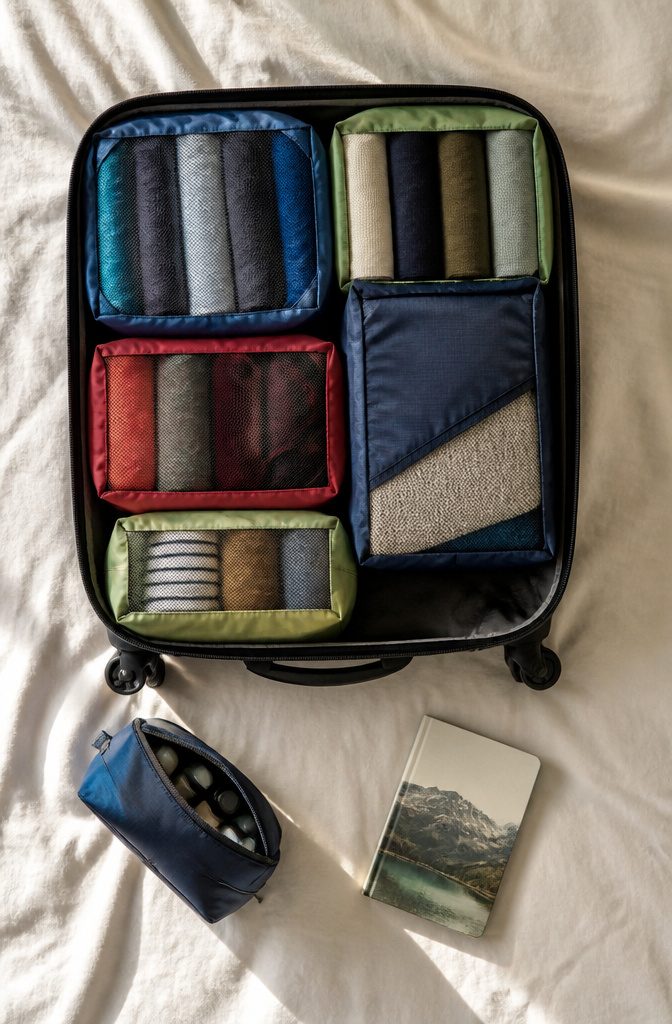
Packing cubes turn a standard carry-on into something closer to a filing cabinet.
Clothes rolled or folded into these zippered rectangles stack flat, and because each cube holds one category (tops in one, bottoms in another, or a complete outfit per cube), nothing unravels the moment you open the bag at security or the hotel.
The eBags brand comes in enough sizes and colors that most travelers find a set that matches their bag dimensions, and after five years of regular use they still hold shape without frayed seams.
What surprised me, reading through recommendations from regular travelers, is how the habit of unpacking changes: instead of lifting individual items into a drawer, some people drop the entire cube in and treat it as a portable dresser compartment.
That only works if the cube itself is clean, which is why the separate-cube-for-dirty-clothes method gets mentioned so often. One large cube for worn items, zipped shut, keeps the rest of the load fresh through multi-stop trips.
The compression is modest, not dramatic, but the real gain is structural. A soft-sided carry-on without cubes sags into empty corners and odd bulges; with cubes, every inch of the rectangular interior earns its keep.
Veken makes a popular alternative with a five-star rating across more than 10,000 reviews, though eBags still dominates the recommendations I found from long-term users.

How to Compress:The cube is compressed by the middle zipper; Using steps: 1)Fold and flatten clothes 2)Pack clothes in the cube and zip the front zipper 3) Put a finger on the back of the middle zipper when compressing to avoid zipper get stuck in fabric
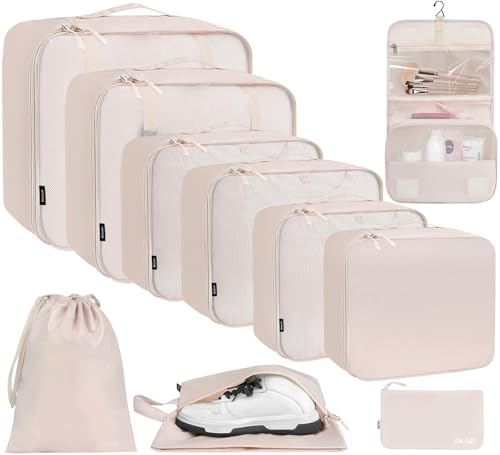
PREMIUM FABRIC: Smooth nylon fabric protects your clothes from wrinkles and stains; High performance feature makes sure these packing cubes can bear high density wear and tear during traveling
Rolling Clothes
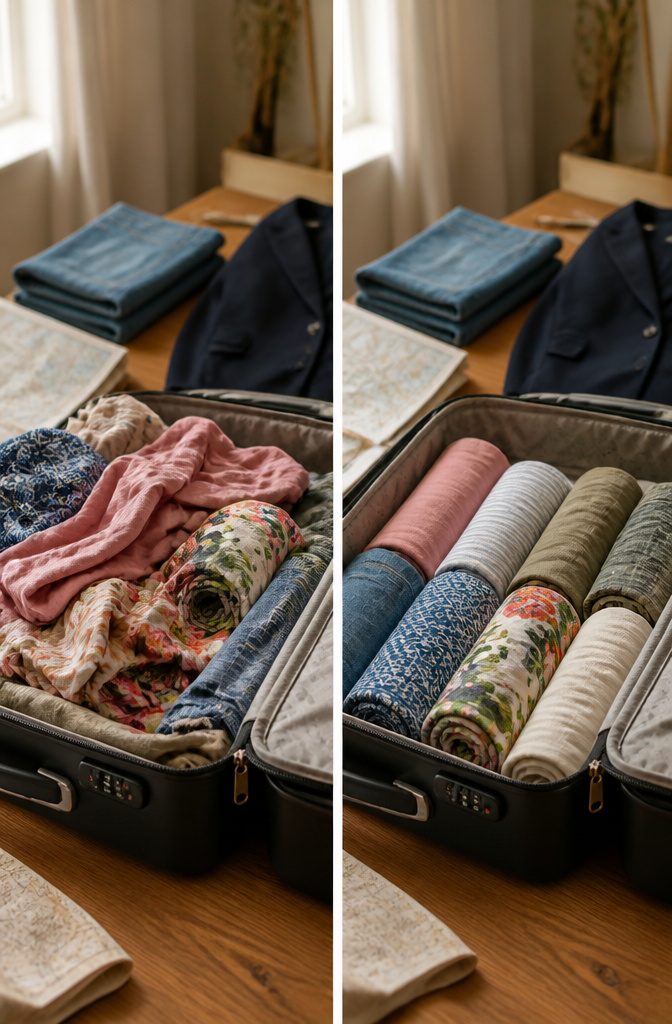
Rolling clothes instead of folding them is the single most repeated packing tip for a reason: it works best on thin, lightweight fabrics like cotton tees, nylon layers, and wool base layers, where a tight cylinder squeezes into gaps that folded rectangles leave open.
The technique itself is simple. Lay the item face-down, fold in the sleeves if there are any, then roll from the bottom hem upward, keeping tension even so the roll stays firm.
For an even tighter result, the military roll tucks the loose end back into itself, which also helps the roll hold its shape when you stuff it into a packing cube.
The wrinkle reduction is real, but conditional. A tight roll minimizes the hard crease lines you get from folded stacks, yet rolling can still leave clothes looking slept-in, especially on the return trip when repacking happens in a hurry.
Thicker items fight back. Jeans and sweaters tend to bulge out of their rolls and actually occupy more space than a flat fold would, so those stay folded and layered on top.
Structured pieces are the real exception. A blazer or button-down with shape to protect needs a hanger slipped inside the collar, sleeves folded inward, and placement at the very top of the bag so nothing crushes the shoulders.
A lightweight plastic hanger beats wood for weight, and it means you hang the jacket straight up at the hotel instead of hoping the room has enough spare hooks.

6 Set Compression Packing Cubes - If you'll be preparing multiple outfit options for your travel, you no longer have to sacrifice style for luggage space when you come across BAGSMART PACKING CUBES. Large for jackets, sweaters, and trousers, Medium for shirts, and blouses, Small for underwear, drawstring can be used as a laundry bag to separate your dirty/wet clothes or shoes.

Travel Vacuum Bags: Effortlessly maximize your packing efficiency with our travel vacuum bags. These bags compress clothes by up to 80%, significantly reducing the space they occupy. This not only optimizes your luggage space but also leaves ample room for other travel essentials.

TRUE SPACE SAVING: 6 set compression packing cubes work just like a vacuum sealer. After the clothes are packed, use the compression zipper in the middle of the bag to help flatten the clothes and expel excess air, saving up to 60% of storage space. Say goodbye to bulky packing and make the most out of every inch
Wear Bulky Items
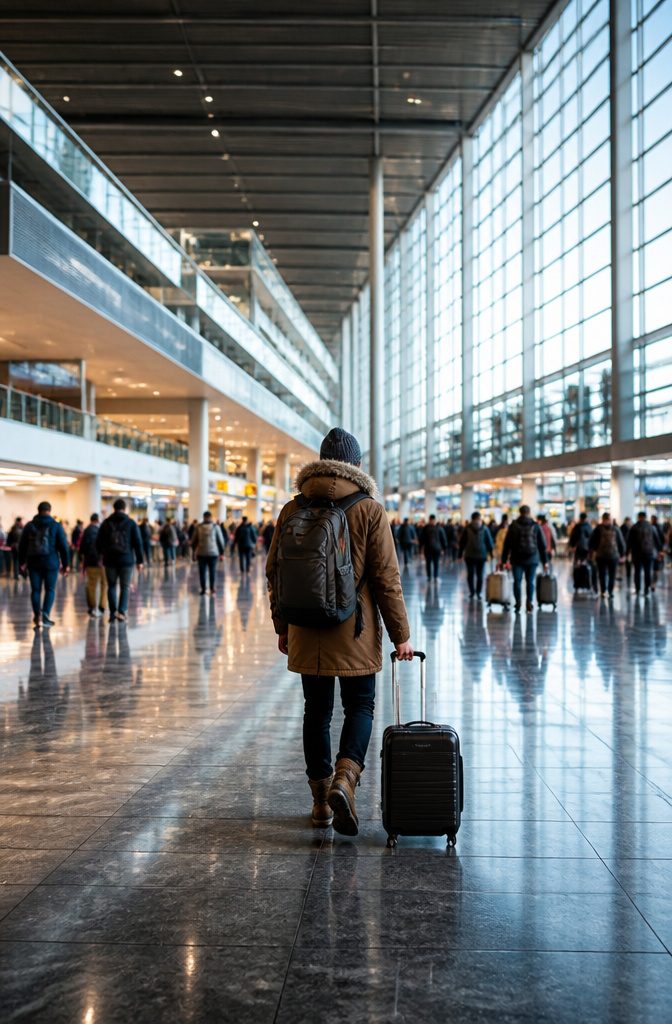
A puffy parka or clunky pair of boots can eat a solid chunk of your suitcase before you pack a single shirt. The fix is obvious enough that it borders on cliché: wear the bulky stuff onto the plane.
Boots alone can easily run five pounds, and a winter jacket adds another couple. That is weight and volume you do not have to fit in a bag or argue with a scale about.
The catch is the airport itself.
Heavy boots slow you down at security, especially if the laces tangle. I have watched people fumble for ten minutes in the TSA line because they did not think about how fast their footwear comes off and goes back on.
A jacket that keeps you warm at the gate turns into a furnace once you are seated, so I board ready to strip layers and use the coat as a blanket.
My own rule for what counts as bulky enough: if the item takes up more than its own folded footprint in the suitcase, it goes on my body, not in the bag.
Hiking boots, down parkas, and thick wool sweaters all clear that bar.
Running shoes and a light fleece do not. The discomfort is real but brief, and the payoff at the luggage scale is immediate.

𝐒𝐌𝐀𝐑𝐓 𝐓𝐑𝐀𝐕𝐄𝐋 𝐎𝐑𝐆𝐀𝐍𝐈𝐙𝐀𝐓𝐈𝐎𝐍: Acteon Compression Cubes function as luggage packing cubes for travel and carry on packing cubes, keeping clothes neatly packed with travel cubes for packing that fit easily in carry on luggage and suitcases

FLEXIBLE SEPARATE CLEAN & DIRTY SIDES: Air-breathable for fresh clothes + Water & Odor Resistant side w/ Waterproof Zippers for dirty clothes. Flexible Divider allows you to efficiently pack 100% (4" deep) on either side of the cube.

8 Piece Packing Cubes: Our suitcase organizer bags set come in various sizes to accommodate all your essentials, from clothes and shoes to cosmetics and electronics. The travel bags organizer for luggage make anything organized
Shower Caps for Shoes
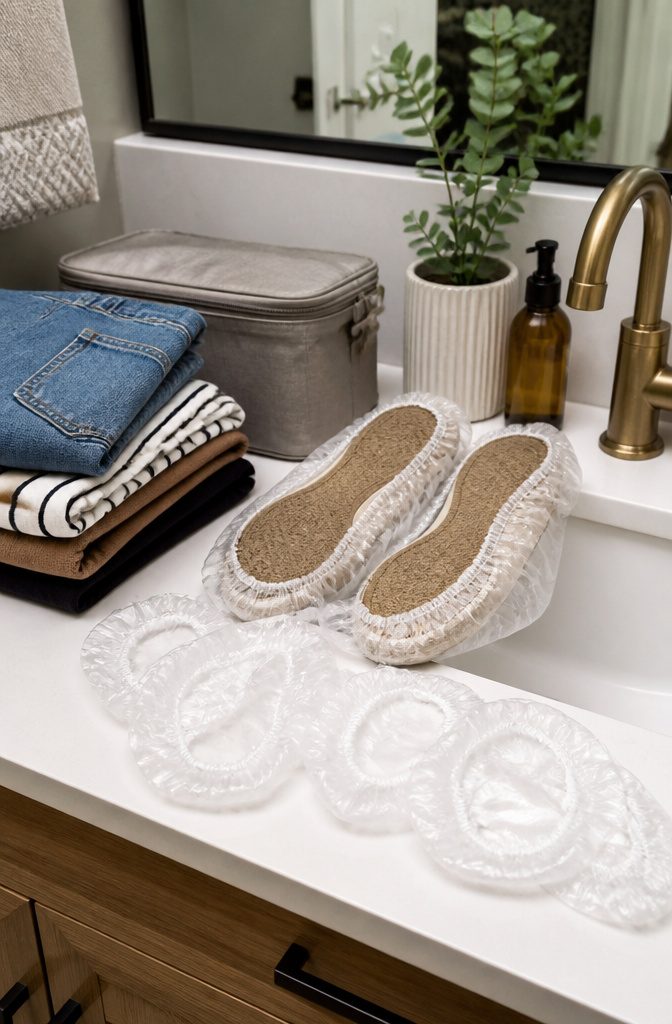
Dirty shoe soles have a way of finding every clean shirt in a suitcase, and the fix costs about a dollar apiece.
Disposable shower caps wrap around the bottom of a shoe like a snug bag, blocking grit and pavement residue from brushing against clothes.
I picked this up from hotel housekeeping routines, where the complimentary caps in most rooms get pressed into exactly this service.
The usual alternatives each carry a penalty. Dedicated shoe bags run bulkier and stiffer, eating space in a tight carry-on.
Plastic grocery bags work in a pinch but tear easily and look like trash during a security shuffle. Shower caps stay light, conform to the shoe shape, and sit flat against a packed layer once the sole is covered.
A stack of them lives in my dopp kit now, pulled fresh for each trip and left behind when the vacation ends.

Rolling Duffle Bag With Wheels : The suitcases with wheels is made from waterproof and wear-resistant Oxford cloth and polyester lining,Features durable metal zipper, there are four removable and install-able 360°silent universal wheels (including a spare wheels)

Hanging Garment System: This travel garment bag features an external hook that easily hangs on hotel closet rods. The internal hanging loop lets you use your own hanger, turning it into a convenient hanging clothes travel bag that securely fits 1–2 suits or dresses (supports suit sizes below 50 with shoulder widths under 20.5"). Adjustable straps help reduce wrinkles during travel

TRAVEL STORAGE BAGS: Roll-up travel storage bags for space-saving storage of garments, towels, and more; not recommend duvets or bulky clothes
Pack by Outfit
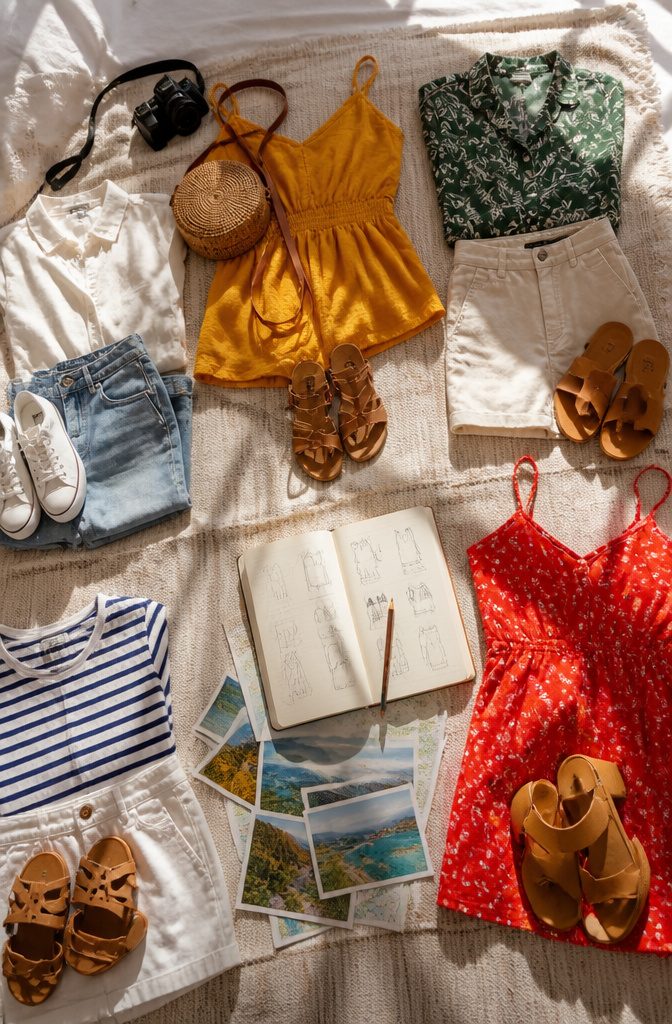
Planning every outfit head-to-toe before a trip sounds excessive until you count what actually comes home unworn. I used to pack by pulling out pieces I liked and hoping they would work together.
They didn’t. Now I lay each complete outfit on the bed, shoes and accessories included, and photograph it for reference.
The math that governs this: one bottom needs at least two tops, or it is dead weight in the suitcase. A pair of pants that only works with one shirt is a liability, not an option.
The real trap is packing for imaginary events. That dress for a "nice dinner that might come up" or the heels for a rooftop bar you saw in a magazine rarely leave the bag.
A better test is to print your itinerary and map outfits to actual plans: this for the walking tour, this for the casual dinner you already booked. If an item has no full outfit assigned, it stays home.
One traveler I read about always wears everything she takes and nothing goes to waste; the discipline is the same whether you pack by type or stack complete outfits together.
Either way, the goal is eliminating the orphan piece that drags down your morning decision-making and your luggage weight.

Stress-Free Traveling: Packing cubes help sort, organize, and quickly locate items, reducing the stress of packing. Keep your belongings in order, and avoid the frustration of unpacking for just one item. Enhance your journey with efficient organization.

Premium Fabric: Smooth and durable fabric protects clothes from wrinkles and stains; high performance feature makes the packing cubes can bear high density wear and tear during traveling; water-repellent feature protect your clothes from spill or leaks

OlarHike ALL INCLUDED packing cubes make packing easy and stress-free.
Leave Space for Souvenirs
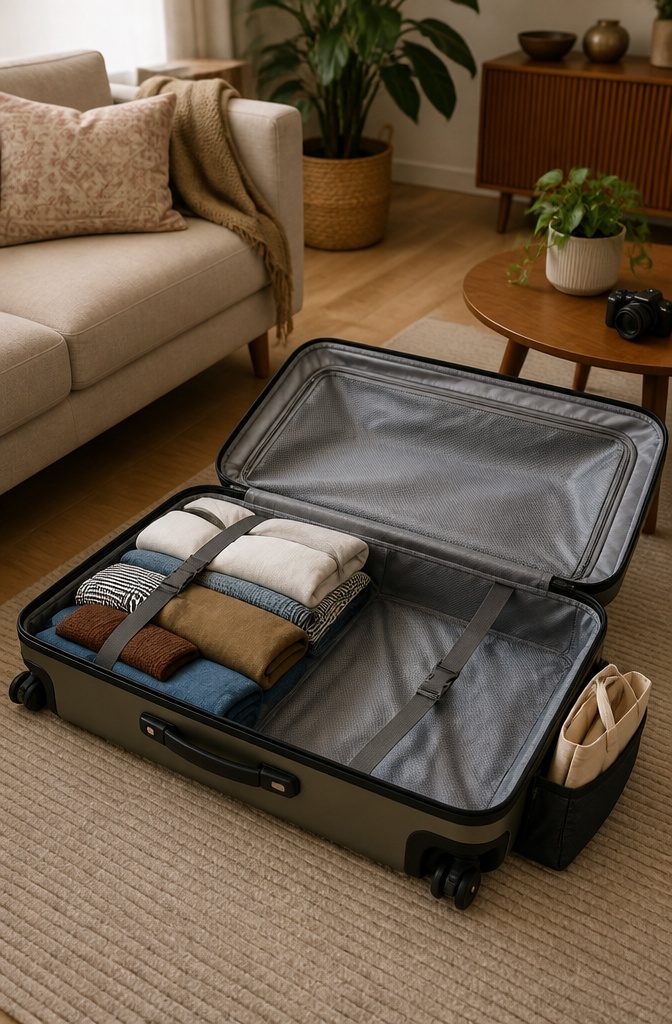
I leave 15 to 20 percent of my suitcase empty on the way out, every time. The math is simple: souvenirs happen, and so does sloppy repacking in a dim hotel room at six in the morning.
I have had to abandon a pair of worn-out shoes and a stack of brochures at a hotel trash can in Rome because I packed the bag full on departure and bought a bottle of olive oil on day three.
The expanding feature on a suitcase is for the return leg, not the outbound flight. Save it.
A foldable shopping bag lives in my outer pocket as backup.
It has carried overflow home when the main bag hit its zipper limit. For bulkier items like a jacket, compression bags squeeze out the air and buy back inches without adding weight.
The combination of reserved space and a backup plan has kept me from every post-trip regret except that one pair of shoes.
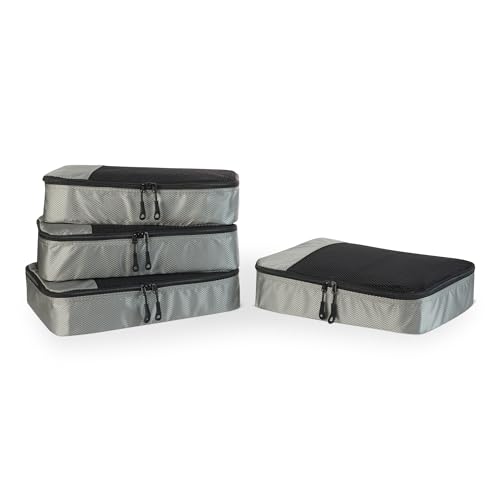
SPACE-SAVING DESIGN FOR TRAVEL & HOME: Compact and efficient at 13.75'' L x 9.75'' W x 3'' H (each), these packing cubes fit perfectly in suitcases, duffel bags, backpacks, and totes, making them ideal for business trips, vacations, camping, and cruises. You can also use them at home to maximize closet space and keep items organized and easy to find.

TRUE SPACE SAVING: BAGSMART 6 set compression packing cubes work just like a vacuum sealer. After the clothes are packed, use the compression zipper in the middle of the bag to help flatten the clothes and expel excess air, saving up to 60% of storage space. Say goodbye to bulky packing and make the most out of every inch

8PC Set Large Capacity:Different sizes of travel essential bag sets can store classified clothes, dirty clothes, bras, underwear, footwear, cosmetics, towels, toiletries and electronic accessories. It is a good travel companion.
Ziploc Bags for Liquids
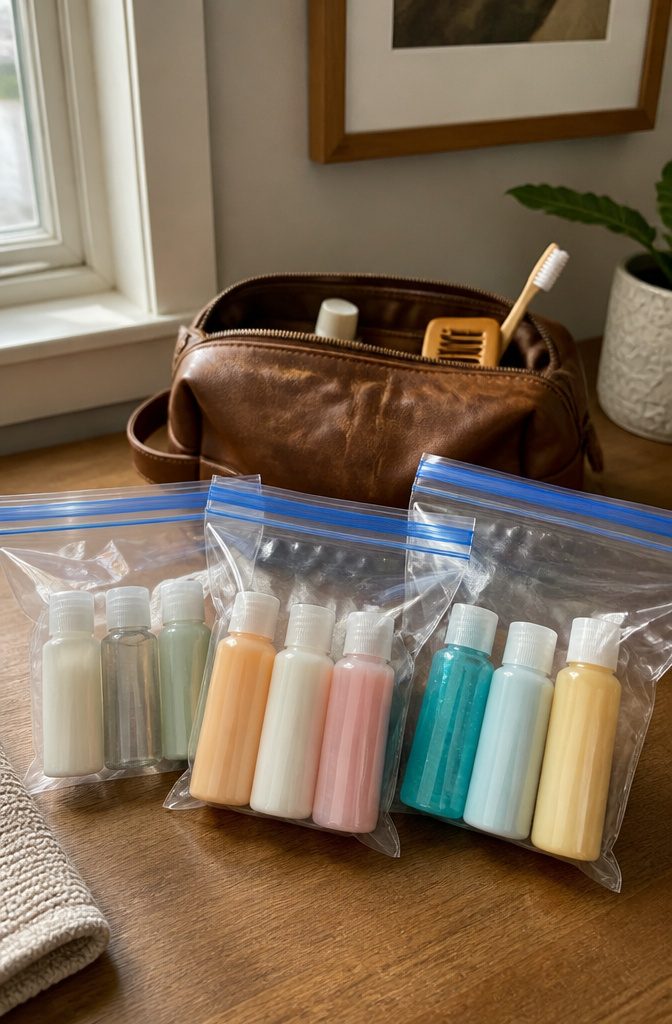
A quart-sized Ziploc bag is the only shield standing between your shampoo and every clean shirt you packed.
The TSA requires all liquids in containers of 3.4 ounces or smaller to fit inside one, and that single rule has saved my luggage more than once.
Double-bag the bottle itself by sealing it in a smaller Ziploc before it goes into the quart bag.
Plastic wrap under the cap helps, too. Still, pressure changes at altitude will defeat almost any seal eventually.
A bottle of conditioner I thought was bombproof leaked through both bags on a flight to Portland, but the mess stayed contained instead of coating my bag’s lining. I now pack liquids in the suitcase pocket I care about least.

All-in-One Organization for Your Travel Needs - This 9-piece set includes four compression cubes (S/M/L/XL) for systematic packing: S for underwear/socks, M for T-shirts and shirts, L for jeans and light sweaters, and XL for coats or bulky items. Also features two PVC toiletry/makeup bags, a machine-washable laundry bag, a shoe bag, and a multi-purpose zippered pouch—keeping your luggage tidy and efficient.

How to Compress: The cube is compressed by the middle zipper; Using steps: 1)Fold and flatten clothes 2)Pack clothes in the cube and zip the front zipper 3) Put a finger on the back of the middle zipper when compressing to avoid zipper get stuck in fabric

Includes one small and one medium Thule Compression Packing Cube
Luggage Scale
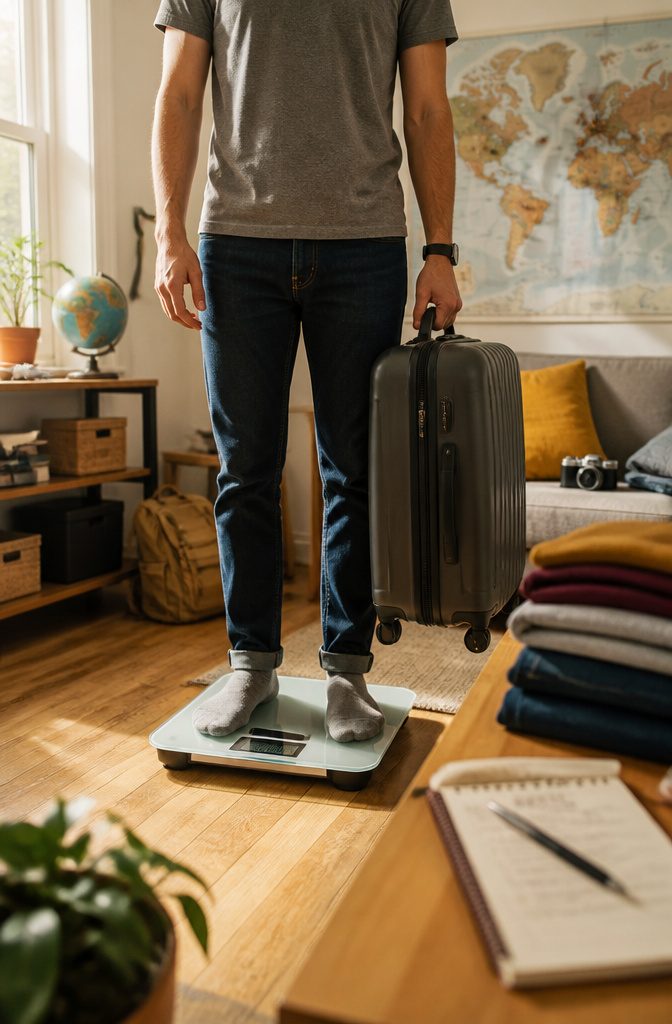
A $10 luggage scale pays for itself the first time it keeps you under the limit.
The alternative is the bag-shuffle at the check-in counter with a line behind you, or the flat overweight fee that starts around $50 on most domestic carriers and climbs past $100 for international flights.
I weigh everything the night before, then again right before I leave, because souvenirs and last-minute additions have a way of sneaking in.
The small digital scales run on a coin cell battery and hook under the suitcase handle.
You lift, wait for the beep, and read the number. Accuracy matters most at the margins: a bag that reads 49.8 pounds at home might hit 51 on the airport scale, so I leave a two-pound buffer.
I stopped carrying mine on short domestic trips where I only use a carry-on. The scale lives in my checked-bag drawer now, pulled out for longer hauls or when I know I’ll be bringing things back.
For a ten-dollar item, the math is simple. One saved fee covers a decade of scales.

𝐒𝐌𝐀𝐑𝐓 𝐓𝐑𝐀𝐕𝐄𝐋 𝐎𝐑𝐆𝐀𝐍𝐈𝐙𝐀𝐓𝐈𝐎𝐍: Acteon Compression Cubes function as luggage packing cubes for travel and carry on packing cubes, keeping clothes neatly packed with travel cubes for packing that fit easily in carry on luggage and suitcases

SPACE-SAVING DESIGN FOR TRAVEL & HOME: Compact and efficient at 11'' L x 6.75'' W x 3'' H (each), these packing cubes fit perfectly in suitcases, duffel bags, backpacks, and totes, making them ideal for business trips, vacations, camping, and cruises. You can also use them at home to maximize closet space and keep items organized and easy to find.

WHAT'S INCLUDED – EXACT SIZES: 5-piece travel packing set — 4 packing cubes, all 4 inches deep: Extra Large (17.5" × 12.75"), Large (13.75" × 12.75"), Medium (13.75" × 9.75"), Small (11" × 6.75"), plus a Laundry Bag (20.5" × 15.75") for separating worn clothes from clean ones. Designed to fit standard carry-on and full-size checked luggage.
Carry-On Essentials
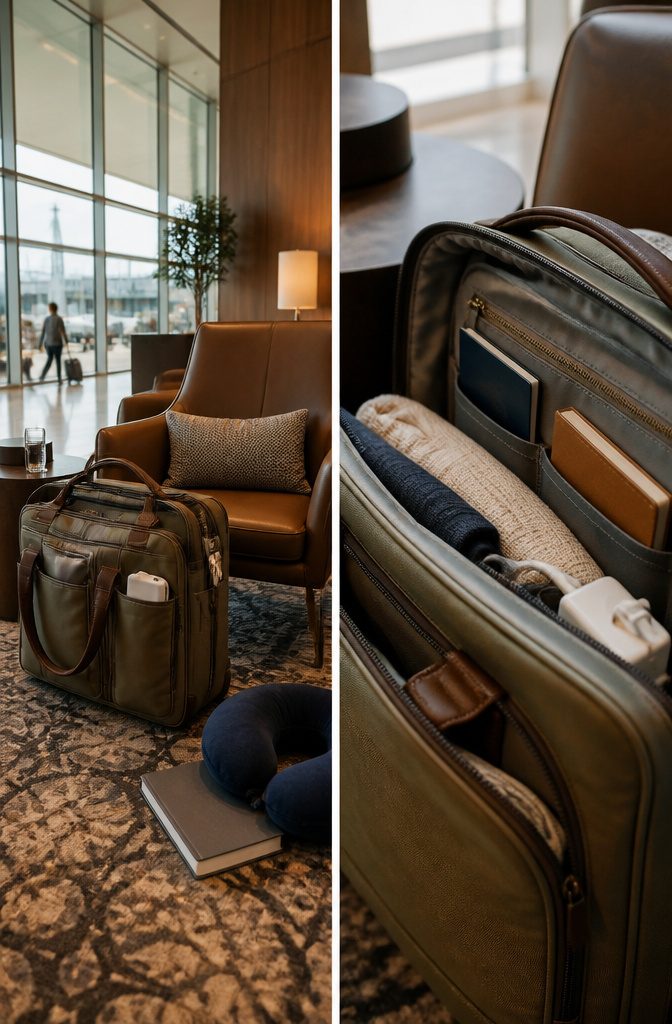
A carry-on is not where you put what is left over after the checked bag is full. It is where you put what you cannot afford to lose.
Every medication you need for the trip belongs in the bag at your feet, not in the hold. The same goes for chargers, jewelry, anything breakable, and anything you would pay to replace at airport prices.
A change of clothes, underwear, and socks rounds out the 24-hour kit. The goal is simple: if the conveyor stops and your checked bag does not appear, you sleep in a bed, not in what you flew in.
The sources split on how to carry it. One writer packs a backpack plus a carry-on roller; another relies on a single tote that fits under the seat.
The tote approach has a useful catch: if overhead bins are full, gate agents can force-check a roller even at the last minute. A bag that slides under the seat stays with you.
One traveler uses a 40-by-70-inch Turkish cotton peshtemal as a blanket on the plane, then as a towel or temple cover-up later. Versatility matters when space is tight.
I have had the bag-go-missing day exactly once.
What I had: medications, one clean outfit, my phone charger. What I had not packed: a second pair of underwear, any socks that were not on my feet, and a toothbrush.
The pharmacy in the terminal closed ten minutes before I found it. Pack the carry-on for the first day as if the checked bag is never coming back.

UNIQUE DOUBLE-LAYERED STRUCTURE: MATEIN travel garment bag is designed with two separate compartments offering double the storage capacity to accommodate twice the amount of suits. Both compartments have 2 adjustable tie-down straps and a foam-padded middle strap to keep your garments in place, preventing wrinkles and ensuring they stay neat. This travel suit bag enhances the convenience and efficiency of packing for business trip

DURABLE CONSTRUCTION: Top crafted from 100% polyester, this large duffel bag for travel is durable, able to withstand the rigors of travel to keep your belongings secure

Made with durable 1200D two-tone polyester and EVA reinforcement to resist tears and scuffs. The interior hanger bracket secures the hangers, while the fold-out design helps reduce wrinkles in suits and dresses during travel.
Compression Bags
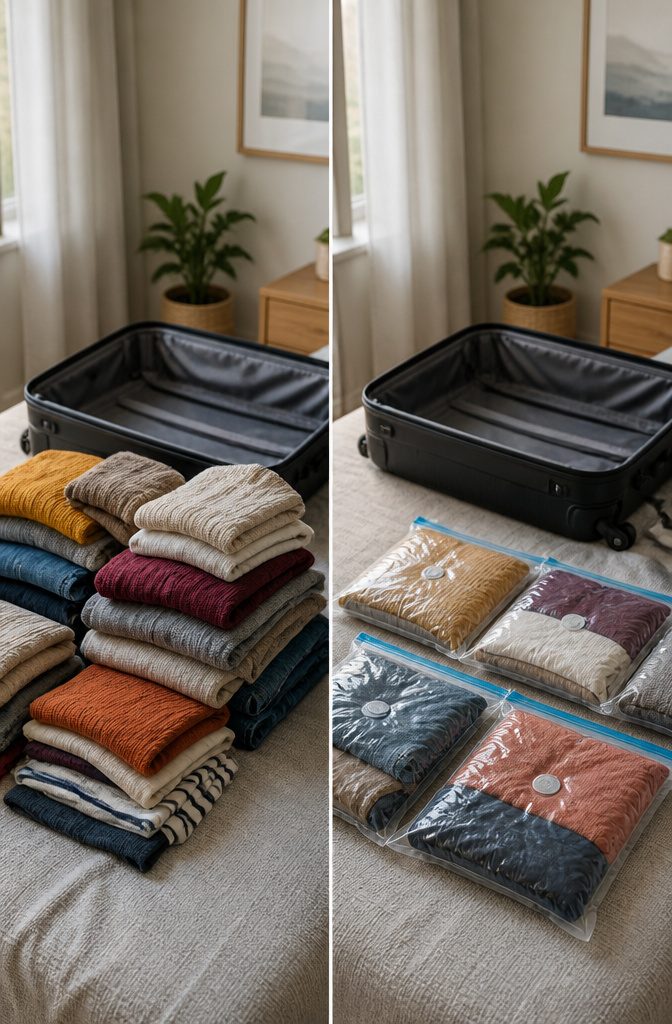
Air takes up more space in a jacket than most people realize.
Compression bags pull that air out manually, shrinking a puffy coat to a fraction of its packed size without any vacuum machine. The difference from packing cubes matters more than the marketing suggests.
Cubes organize; compression bags remove volume. For a rain shell or down layer, that removal is what gets the zipper closed.
The catch is pressure. Airlines pressurize baggage holds, but not uniformly, and the cheap roll-top bags handle it worse than the zip-seal style.
I have watched a bag fail on a flight to Denver, seams split open, the jacket inside re-inflated to its full bulk by the time it hit the carousel. The roll-top had looked fine at sea level.
After that, zip-seal compression bags became the only kind I would trust in checked luggage. For carry-on, where the bag stays in the cabin and pressure stays steady, either style works.
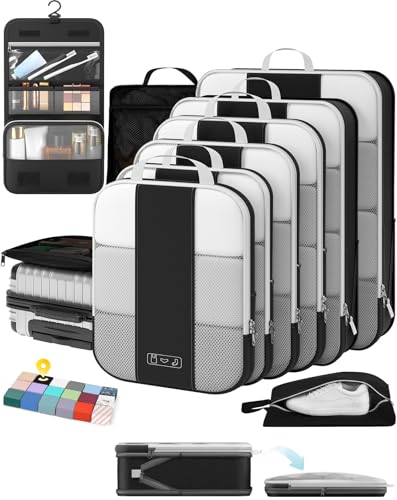
All-in-One Travel Storage Solution - Say goodbye to chaotic packing! This comprehensive set includes four compression packing cubes in varying sizes (XL, L, M, S) to accommodate everything from bulky coats to delicate tops. Plus, enjoy added convenience with a hanging toiletry bag, shoe bag, machine-washable laundry bag, and versatile pouch—all designed to keep your luggage perfectly organized and clutter-free.
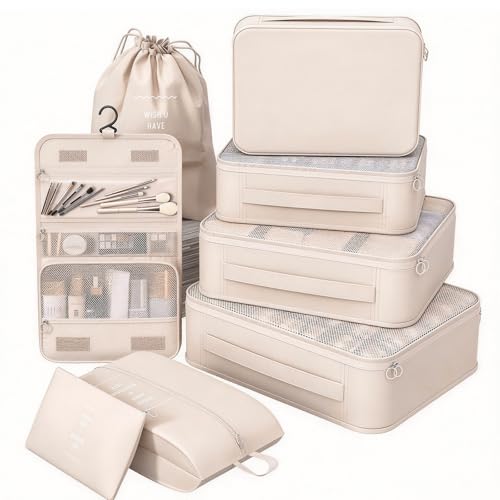
Premium Durable Material Travel Bags: Our luggage packing cubes made of tear-resistant polyester with reinforced stitching, our travel cubes for packing feature water-repellent fabric to shield clothes from spills. Built to withstand frequent travel wear, travel organizer protect belongings reliably trip after trip.
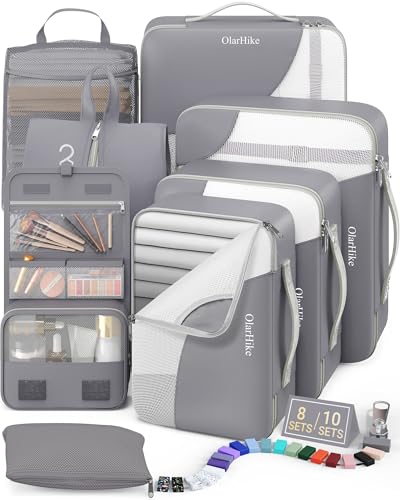
Built to Last: Our packing cubes are crafted from high-quality polyester fabric, selected for its exceptional durability. Designed to withstand the rigors of travel, they feature reinforced stitching and robust zippers, offering reliable protection for your belongings trip after trip
Packing Lists
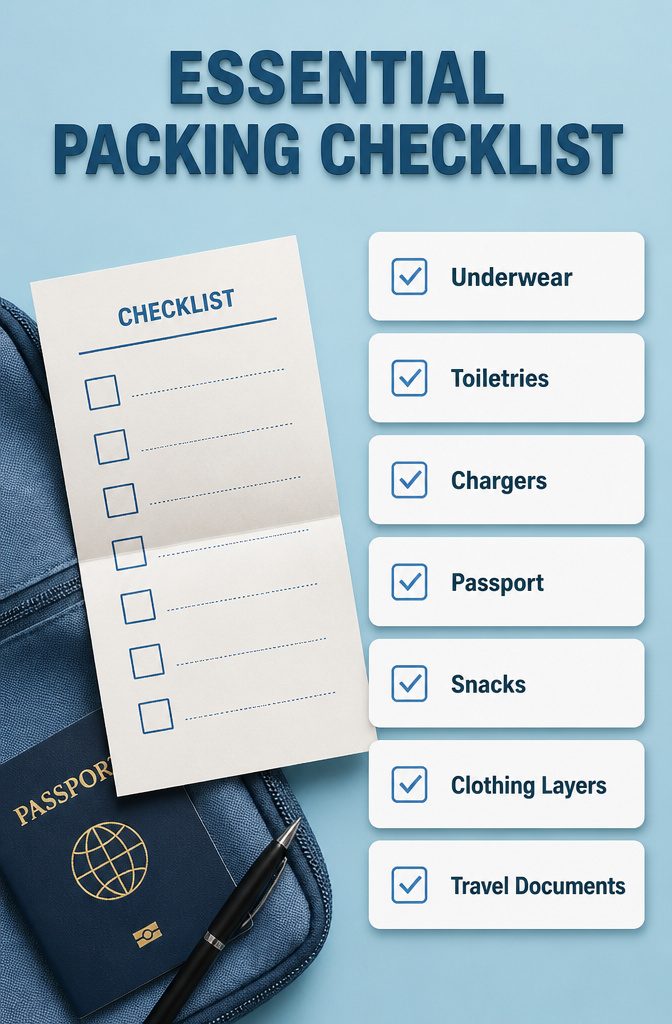
A packing list lives or dies by whether you actually use it, and paper still wins for me.
I keep mine on a single sheet, folded into my carry-on, because checking a phone in the middle of packing means checking everything else on that phone too.
The physical act of crossing off underwear with a pen is what saves me from another morning in a Paris pharmacy buying overpriced basics.
Digital lists fail in exactly the moment you need them most. The Google Drive doc stays open on a laptop, sure, but my hands are full of clothes and my screen is across the room.
Phone notes get buried under screenshots and gate-change alerts. A decade of refining a master list has helped, but only because it lives on paper where my eyes already are.
The real value is the pre-pack two days out. Lay everything on the bed, check it against the list, then walk away.
That distance reveals what you grabbed out of habit versus what the trip actually requires. The list gets shorter every year, not longer, because the mistakes keep teaching.
Clothing Choices
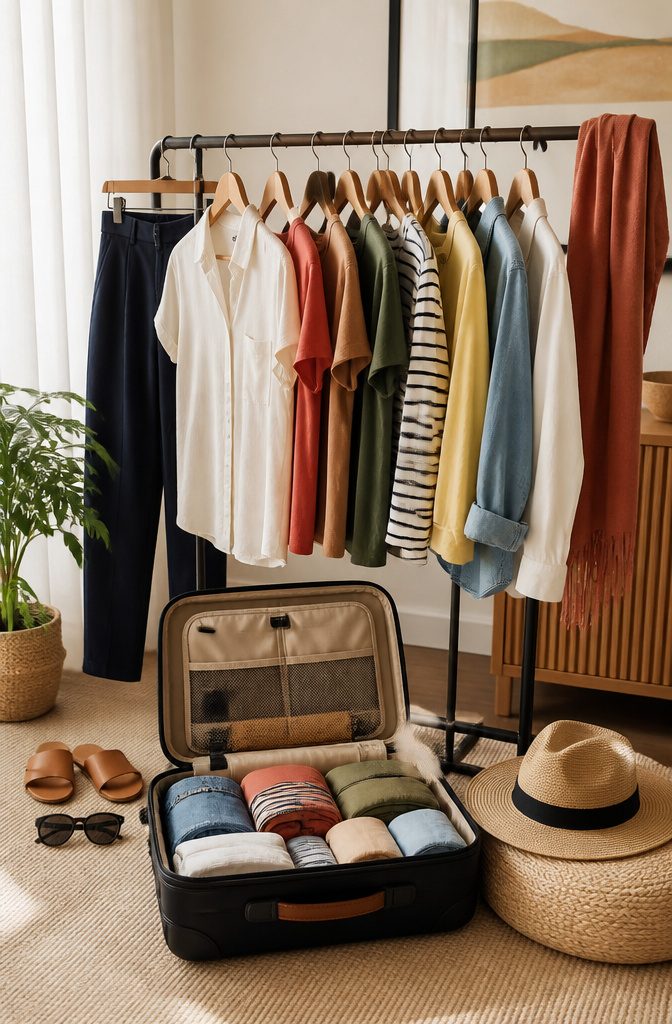
Polyester dries fast enough to hang overnight in a hotel bathroom, which matters more than any marketing label about "travel fabric."
I learned that after paying extra for a merino tee that stayed damp until checkout. The three-color rule keeps every top pairing with every bottom: two neutrals and one accent, nothing that works with only one other piece.
Reversible clothing stretches this further, one shirt worn eight ways means eight mornings without repetition. Wrinkle resistance is non-negotiable, tightly folded bags crease cotton past steaming out.
I stopped buying single-purpose items, the shirt that only matches one pair of pants, the dress reserved for dinner. Planning outfits head-to-toe before leaving, laying them out and photographing, cuts morning decisions and proves what actually mixes.
Colorful pieces still work if they hit the three-color palette; a bright red dress against temple stone photographs better than beige ever would.
Footwear Limits
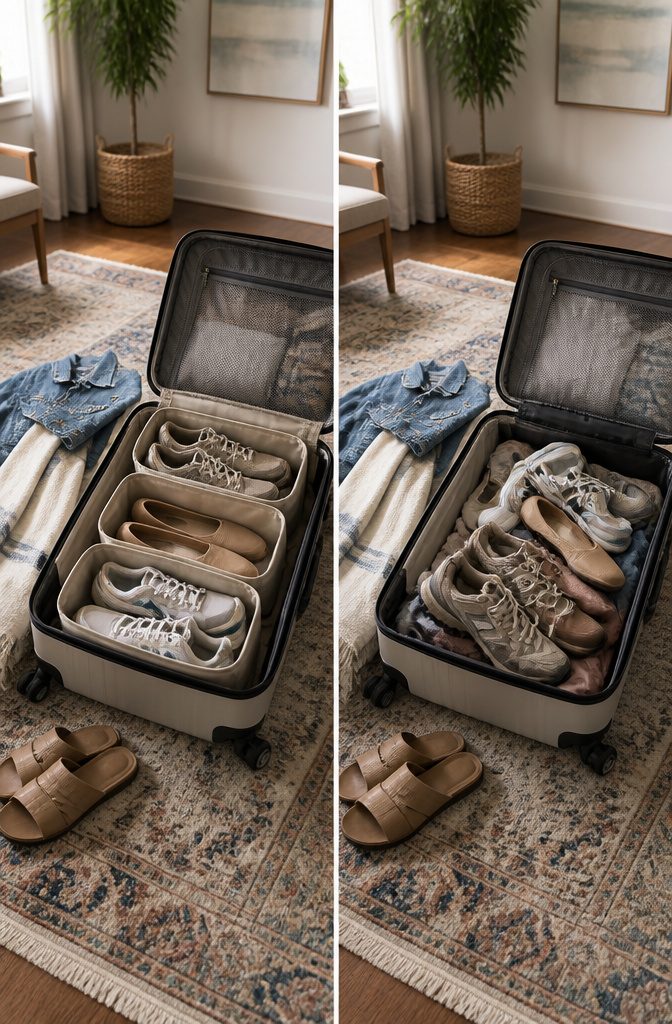
Shoes eat more luggage space than anything else you pack. Three pairs covers a two-week trip if you choose right: one pair of comfortable walking shoes, one versatile flat for day or evening, and one pair you can exercise in.
The walking shoes stay on your feet through the airport so they never touch your bag.
On a trip to Europe last fall, I walked twelve miles in a single day in leather sandals that also worked with a skirt at dinner.
The dress shoes I packed for that same trip, convinced I would need them, never left the bag.
Fabric shoe bags keep dirty soles off clean clothes. If you are deciding between a fourth pair and leaving room for something you might actually buy, skip the shoes.
Toiletries
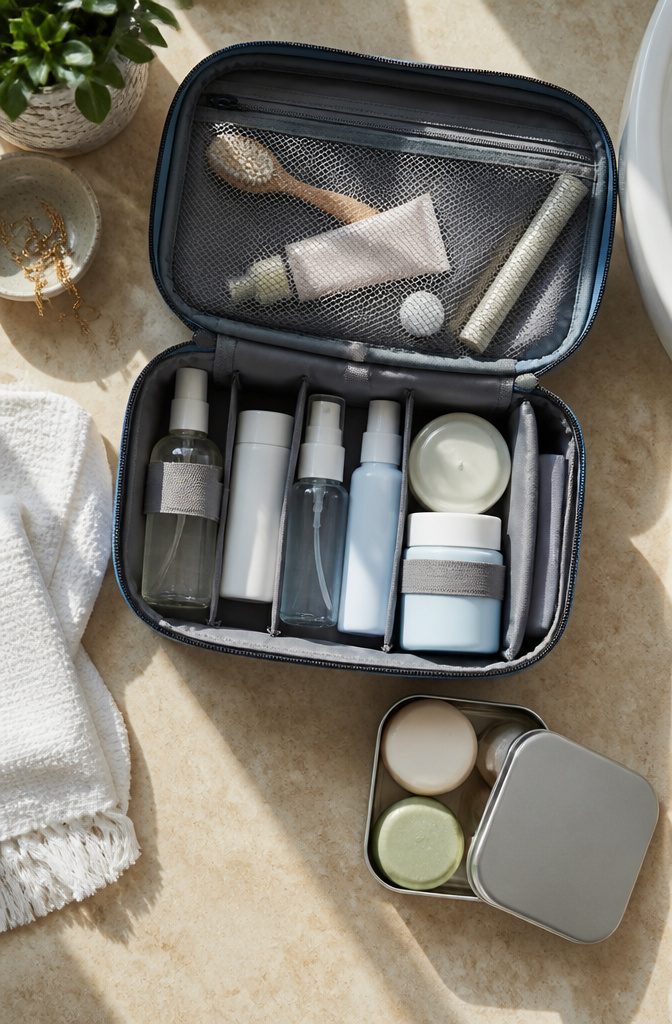
TSA caps liquids at 3.4 ounces per container, a hard limit that shapes every toiletry decision for a carry-on.
I learned the solid-shampoo lesson the hard way: a bar I packed once melted in a hot rental bathroom, leaving a waxy smear across a dopp kit and the clothes beside it.
The format saves space and dodges the ounce-counting entirely, but it needs its own small tin and a dry spot to live.
Travel-size bottles of the products you already use beat buying unfamiliar minis that your skin or hair may reject mid-trip. Still, some things are cheaper to pick up at destination than to haul through security.
Shower gel falls in that category for me; hotels stock it, and grocery stores abroad sell perfectly good small bottles for the handful of days I’ll need them.
The space and weight I save on those basics let me carry the specific face serum and sunscreen I know work, which matters more than the convenience of a borrowed bar of soap.
Organizational Tools
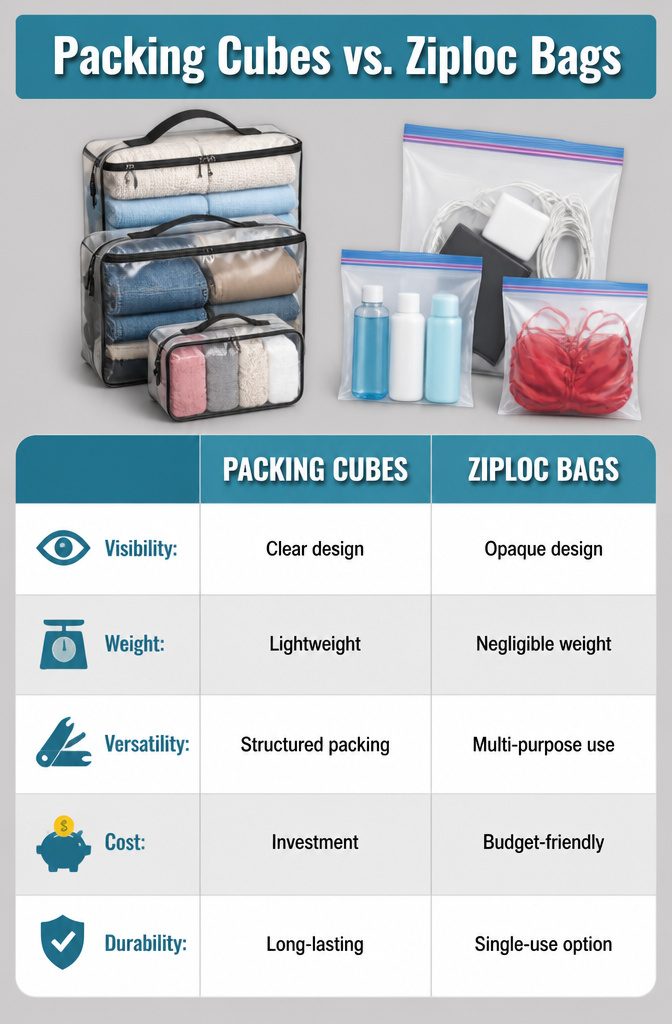
Packing cubes earned their keep on a five-year test, and the clear ones have the edge because you see the contents without unzipping.
I tried the compression style once and abandoned them; the extra zipper adds weight and the vacuum effect wrinkles clothes I needed to wear straight out of the bag.
One cube holds tops, another bottoms, a third undergarments, and that system stays intact even when I skip full unpacking for an early train.
Ziploc bags are the tool that costs nothing and keeps delivering. A quart-sized bag holds the liquid rule for airport security, and the gallon size corrals chargers, separates clean from dirty, or wraps a wet bathing suit.
I have used reusable bags for market hauls and laundry, but the cheap sealable ones win for spill protection; wrap a bottle in plastic wrap inside the bag and the rest of your luggage stays dry.
The clear packing cube is the one upgrade worth paying for.
Frequently Asked Questions
What are the best travel packing hacks?
Use packing cubes to turn your bag into organized compartments, roll lightweight fabrics like cotton tees and nylon layers, and wear bulky items such as boots and winter jackets onto the plane.
These three moves together protect your clothes from wrinkles, free up interior space, and keep you under weight limits without buying new gear.
How can I avoid overpacking?
Plan every outfit head-to-toe before you leave, photograph it for reference, and apply the rule that one bottom needs at least two tops or it stays home.
Leave 15 to 20 percent of your suitcase empty on the outbound trip so you have room for souvenirs and sloppy repacking.
What should I pack in my carry-on?
Pack every medication you need for the trip, all chargers and jewelry, anything breakable, and a full change of clothes including underwear and socks.
Treat your carry-on as a 24-hour survival kit for the day your checked bag does not show up.