The best games to play on car rides in 2026 are the ones you are willing to abandon.
They range from zero-prep classics like I Spy to printed bingo cards you customize for the route, and the single difference between a game that lasts twenty miles and one that dies in three minutes is whether someone in the car can name a replacement the instant the current one stalls.
The three-minute rule, borrowed from the article’s own advice, is what saves a long trip: no vote, no discussion, just a new game and dissolved scores.
1. I Spy
The obvious problem with I Spy is darkness.
Once the sun drops, every guess turns into "Is it the speedometer?" and the game collapses into frustration. Daylight is its only real requirement.
The classic version uses color, shape, or starting letter, and the first player to guess correctly becomes the next spy.
One rule keeps it moving on the road: each person gets a single guess before the object disappears past the rear window. Without that limit, a semi-truck or exit ramp ends the round unfairly.
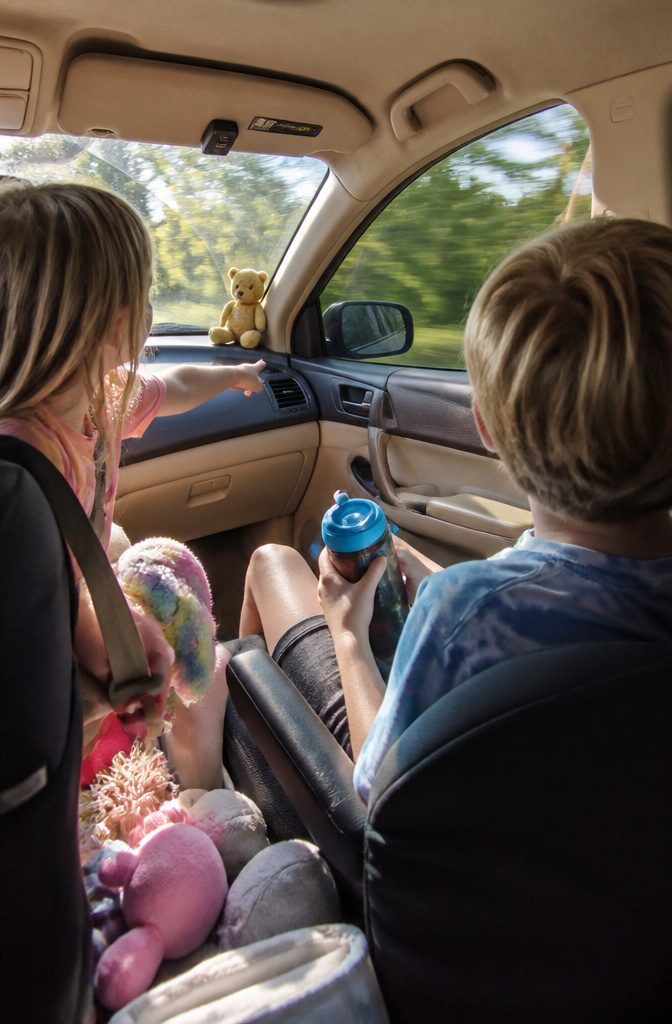
A simple variation that extends the life of the game is restricting spies to objects inside the car.
The cabin shrinks the field enough that younger kids can compete without losing interest, and it forces everyone to notice details they normally ignore, the worn patch on the seatback or the particular blue of a sibling’s water bottle.
That narrow focus also builds vocabulary faster than highway billboards do. A child who has already named "vermillion" and "cylindrical" in one round carries those words into the next trip.
Age two and up can participate, though the youngest players usually need help with letter sounds.

Educational Gameplay: Based on the popular I Spy books, this game enhances observation skills and cognitive development, encouraging children to think critically and pay attention to detail.


FOR THE WHOLE FAMILY: Turn family road trips and moments of in-between time into great family fun. Games on the Go is a collection of 50 games and activities that can be played anywhere at any time.
2. The License Plate Game
Two versions of the license plate game have survived long enough to still matter, and they ask completely different things of the people in the car.
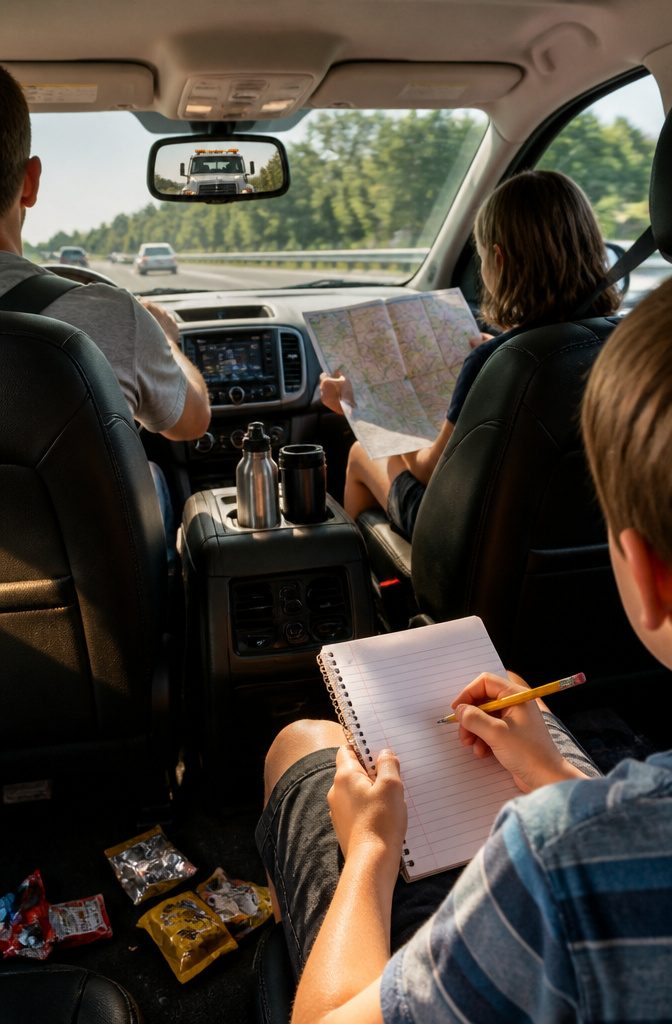
The first is pure geography: spot plates from as many states as possible and track them on a printed map or a simple list.
Whoever calls a state first claims it, and the person with the most colored-in states at the end of the trip wins.
This version only pays off on interstate drives where the traffic pulls from across the country. Stick to local roads and you will see the same three states until everyone loses interest.
The second version turns every plate into a letter puzzle. Someone reads off the characters, everyone races to build a phrase from them, and the car votes on a winner.
A plate reading DR8BAB might become "Donald reads eight books about bats" or "Dinosaurs ride eight brown army bikes." Points are optional; the voting does the work.
That second version keeps moving even when the traffic is local, but it has its own patience threshold.
After the fifth hour on the highway, inventing fresh phrases from yet another Ohio plate starts to feel like homework. The game stops being about speed and becomes a test of who can still stand the alphabet.
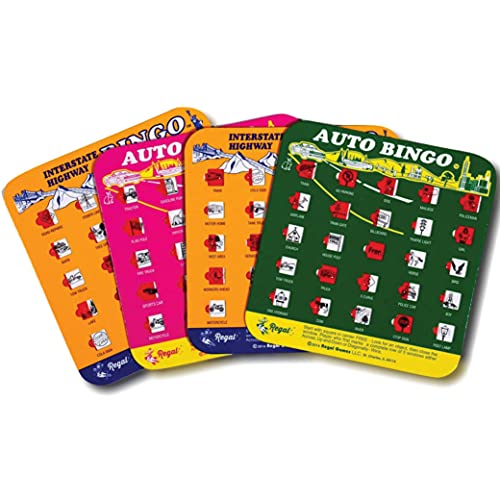
MESS-FREE TRAVEL FUN - Enjoy classic road trip entertainment with finger-tip shutter bingo cards featuring easy-slide windows. No loose chips, markers, or daubers required. Includes Interstate Highway and Auto Bingo games with colorful illustrations that keep kids and adults engaged during long drives.

ENDLESS FUN: This car bingo game features over 200 unique items 9 themes to spot on the road like trucks, signs and landmarks to keep kids entertained for hours. You can also customize your own with 2 blank bingo cards.

🔎 Are you a parent looking for a fun and exciting way to keep your kids entertained during your next road trip? Look no further than Road Trip Scavenger Hunt!
3. 20 Questions
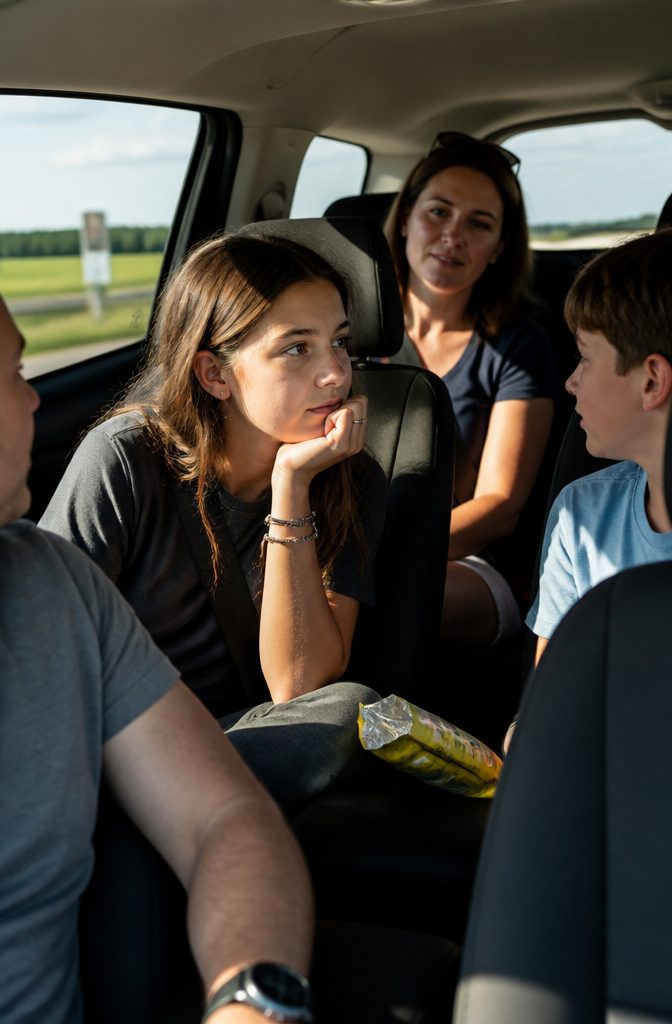
Twenty questions is a guessing game with real cognitive payoff: one person thinks of a person, place, or thing, and everyone else gets up to twenty yes-or-no questions to narrow it down.
The classic opener asks whether it is an animal, vegetable, or mineral, though some players now use person, place, or thing instead.
Either frame works; the point is the same. You want your first questions to split the remaining possibilities roughly in half, the way a good binary search works.
Opening with "Is it bigger than a breadbox?" wastes a question on size when you still do not know if the answer is a feeling, a country, or a spider. Save the breadbox until you have narrowed to physical objects.
I have watched kids get sharper at this without noticing.
Framing a yes-no question forces you to articulate what you actually need to know, and hearing the answer trains you to update your mental model with new information rather than clinging to your first guess.
That is the skill the game builds: logical thinking through question formation, not luck.
Stick to familiar categories with younger players, their favorite stuffed toy or cartoon character, so the questions stay within reach. The twenty-question limit keeps rounds short enough that no one disengages before the reveal.

EDUCATIONAL GAME: Interactive US license plate spotting and matching sticker game that makes learning state geography fun and engaging during road trips.
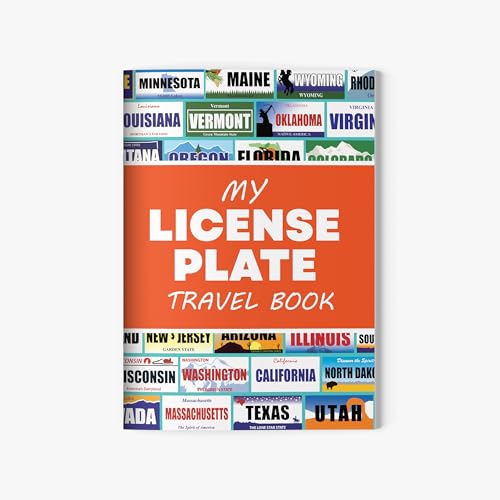
ENDLESS ROAD TRIP ENTERTAINMENT: Turn "Are we there yet?" into hours of fun! This 12-pack of License Plate Game books keeps kids engaged spotting license plates from all 50 US states, making any car ride an exciting adventure.

A KICKSTARTER SUCCESS - Create and solve vanity license plates on a word game adventure.
4. Road Trip Bingo
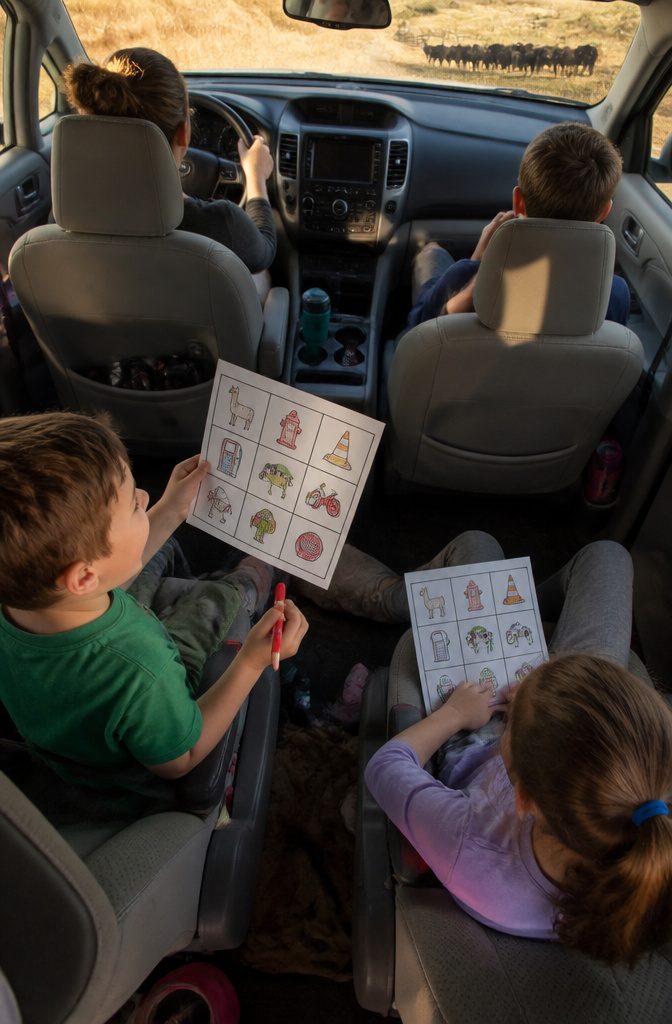
Road Trip Bingo works because the cards force you to notice what you normally blur past.
A cow in a pasture, a red barn, a motorcycle passing in the opposite lane, a water tower on the horizon; each item shifts a passenger from screen to window, and the first to complete a row calls it out.
Store-bought cards cover generic American roadside scenery, which means half the squares sit empty on a desert stretch or stay unmarked for hours.
Homemade cards win on specific routes because you write in the water towers and dairy farms you know are coming, or the wind farm outside Bakersfield your kids spotted last summer.
The density of the card controls the pace. A 5×5 grid with common items finishes in twenty minutes on a busy interstate.
Tighter grids or rarer sightings stretch a single game across a whole afternoon. Traffic patterns matter too: rural two-lanes with long sightlines let players call items early, while dense highway driving favors quick-to-spot choices like license plates and semi trucks.
I make two versions for any long day, one loose for morning energy and one tighter for the slog hours after lunch when the car goes quiet.


Various vehicles and creatures for kids to ride.

🚗 Engaging Conversations: Features 100 thought-provoking questions to spark meaningful discussions during your travels.
5. Would You Rather
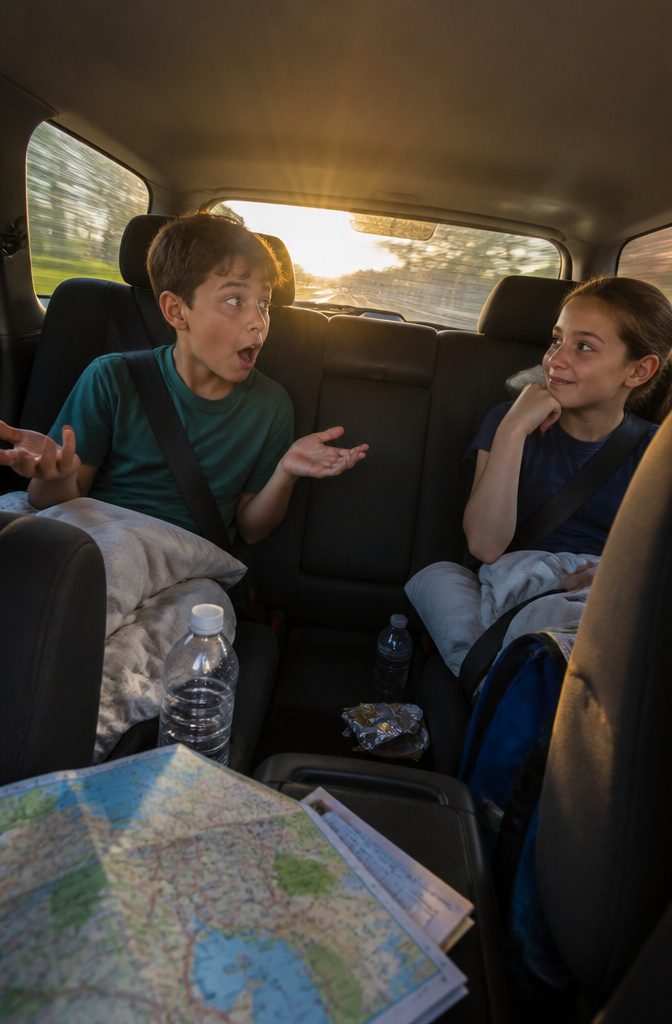
The best Would You Rather questions sit right on the edge of believable.
Someone has to pick between two specific, slightly uncomfortable scenarios, and the longer everyone stares at the ceiling thinking, the better the question was. Absurd hypotheticals about fighting a horse-sized duck wear out fast.
Grounded ones, like whether you’d rather eat only gas station food for a month or sleep in a Walmart parking lot for a week, force people to weigh actual downsides they can picture.
Themed rounds keep it from going stale. On camping trips, my family runs a wilderness version: drink only lake water you’ve boiled yourself, or eat only the fish you catch.
Food themes work between cities, debating whether you’d give up cheese or bread forever while everyone watches for the next exit sign. Travel disaster rounds become competitive storytelling, each person trying to invent a worse realistic scenario than the last.
The format dies when someone tries to be clever with logic traps, the "I’d just bring a ladder" response that breaks the frame.
House rules: pick one, no loopholes, explain your suffering in detail. That constraint is what makes the answers worth hearing.


🔎 Looking for an exciting way to keep both kids and adults entertained during your road trips? Look no further than the trivia game "Smartest in the Car"!
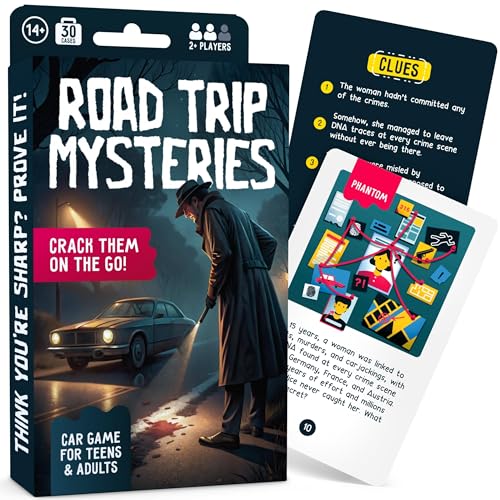
🕵️♂️ Become a Detective On the Go: Turn any trip into an adventure with Road Trip Mysteries. Use deduction and imagination to solve thrilling cases by asking the right questions.
6. The Alphabet Game
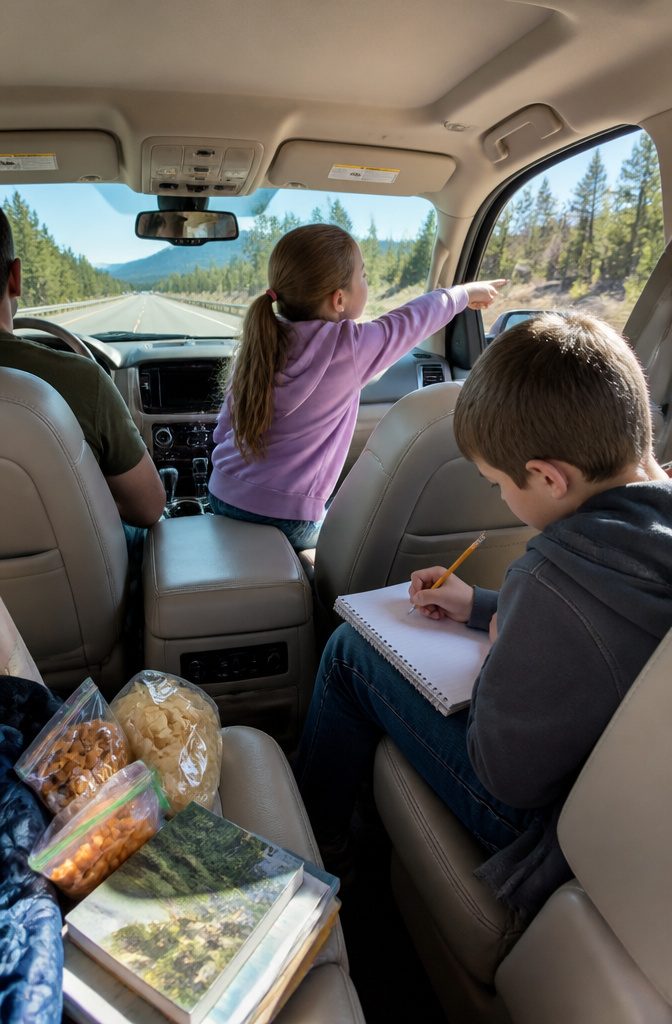
The Alphabet Game sounds simple until someone shouts "Exit ramp, E!" while another player insists the letter has to start the word, not just appear in it. That argument usually ends the round faster than finding Z ever would.
The rule that saves the game: letters must start the word, and every player needs their own instance of each letter — no stealing someone else’s "Applebee’s" once it’s been called.
Billboards on interstate highways make this almost too easy. A single sign for "Exxon" or "QuikTrip" hands out three hard letters in one glance, and the game wraps up in minutes.
Rural two-lanes stretch it out for miles, which most players prefer. The hunt for a genuine X — not counting the symbol itself on a speed limit sign — can last half a state.
Some groups ban commercial names entirely and stick to objects: antenna, barn, cow.
Others allow license plates, which one variation limits to just the letter shapes rather than the words. The version that works best changes with the road you’re on, and switching mid-trip keeps it from going stale.


7. Storytelling Relay
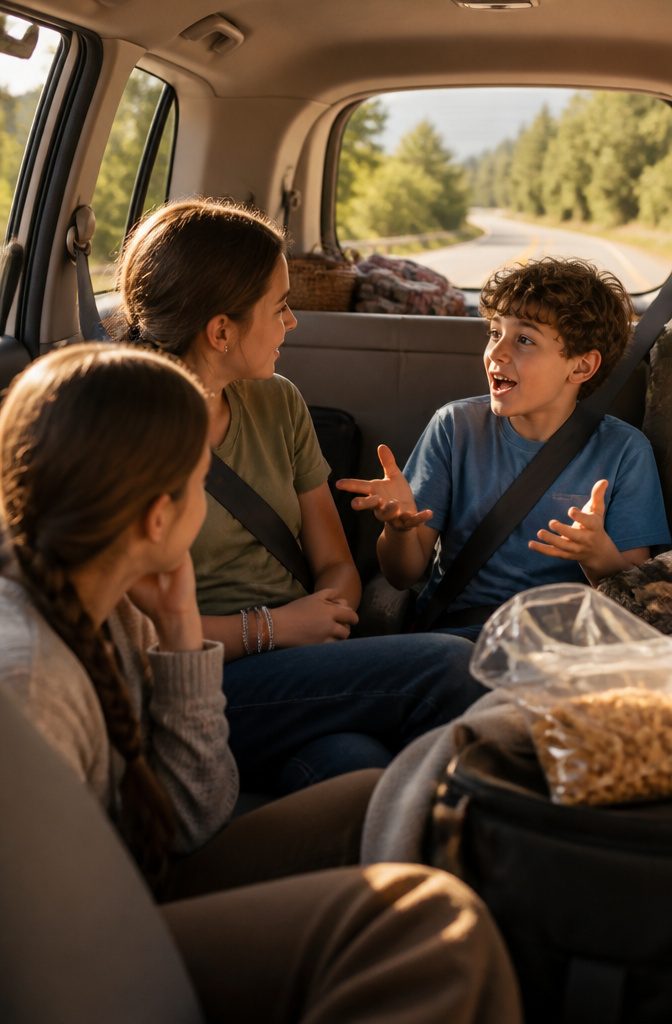
The "yes, and" rule keeps a collaborative story from collapsing into chaos.
Each player adds exactly one sentence that accepts what came before and builds on it, no exceptions. Someone opens with "The astronaut forgot her helmet," and the next person cannot pivot to "Suddenly a dragon appeared."
They are stuck with that forgetful astronaut. The constraint forces creativity in a tighter frame.
Three players is the workable minimum, and four or five is better.
With only two people the rhythm turns into a polite tennis match, each player waiting for the other to rescue the plot. Add a third voice and the story develops momentum nobody controls alone.
Around sentence five the whole thing always threatens to fall apart. The opening premise has been stretched just far enough that someone wants to break character, introduce a time machine, kill off the protagonist.
That is the moment the rule matters most. Whoever holds at sentence five, accepting the accumulated absurdity instead of rebooting it, usually saves the game for another ten minutes of genuinely surprising turns.

Gift set family bundle comes with 4 Road Trip Bingo Cards (Red, Blue, Orange & Yellow)........Plus a Bonus Storage Bag!

30 Bingo Game Boards & A Storage Bag: This set includes 30 reusable double-sided bingo game boards, providing hours of interactive fun for both kids and adults. With plenty of boards included, it’s perfect for families, groups, road trips, or travel buddies. The convenient storage bag keeps all boards neatly organized and easy to carry anywhere.
8. Name the Artist
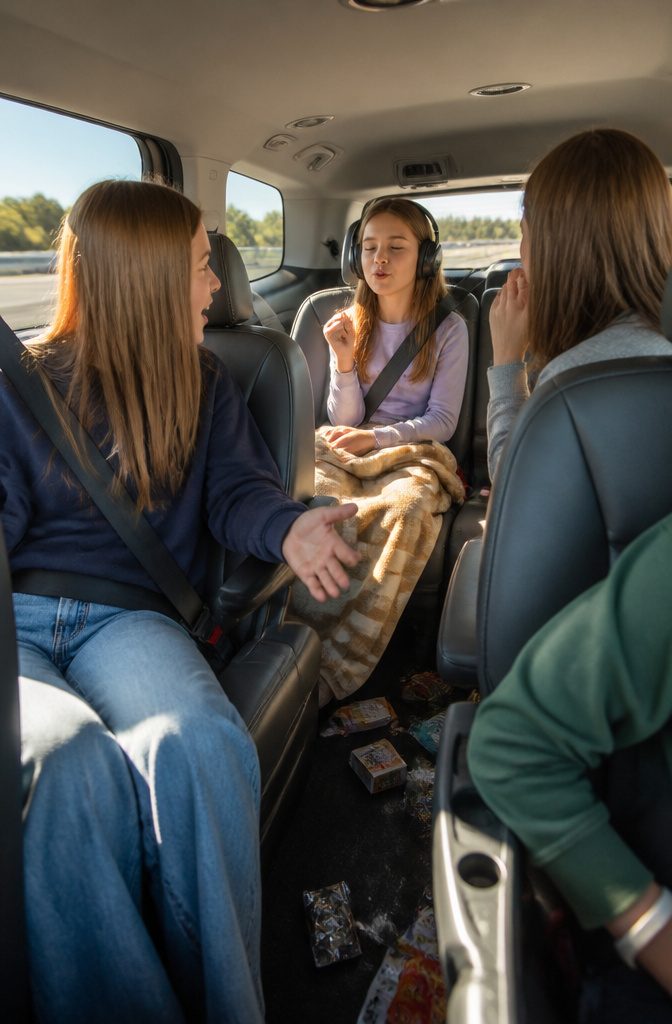
Radio used to make this easy. A song came on, someone hit the button, and the first passenger to call out the artist earned a point.
The same format works for song titles or release years, and some groups keep a running tally all the way to the destination. The catch is what happens when a car holds both a teenager and a grandparent.
A shared playlist of top-forty hits from the last three to five years can bridge part of that gap, but the game fractures fast when no one station reaches every generation.
Streaming has made it worse. Curated playlists and algorithmic feeds mean nobody in the car is hearing the same surprise at the same moment.
One passenger’s Spotify knows their indie folk; another’s pushes regional country. The randomness that once leveled the field, that dropped an eighties power ballad between two current pop tracks, has been engineered out.
Without that unpredictability, the game turns into a contest of who controls the aux cord, not who recognizes what the road serves up.
Some groups solve this by limiting the pool in advance: movie soundtracks, TV themes, or one decade only.
Others abandon the radio entirely and have one passenger hum or sing a line while everyone else guesses. It takes more work, but at least everyone is playing the same song.

Scratch Off Technology

🎁 Fun and Learning in One Game – Letter Tycoon is a must-have for word game enthusiasts. Its engaging gameplay and captivating design bring family and friends together for memorable, mind-challenging fun, perfect for any occasion.

Guess the Secret Word: Inspired by the most popular online word game that broke the internet, 5-Letter Wordlet is the wordle style party game families and friends can enjoy together.
9. Categories

The alphabetical categories game works like this: someone picks a subject, food or movies or countries, and you cycle through the alphabet naming one for each letter.
Apple, banana, cherry. The no-repeats rule is what keeps it honest; once someone names Brazil, nobody else can use it for B, and the list of usable answers shrinks as you go.
Pressure builds near the end of the alphabet.
By the time you reach X, Y, and Z, the category has been picked almost clean. Someone always panics and offers "xylophone" as a food, which starts the argument over whether it counts.
"Types of cheese" is a category that ends friendships. Brie and cheddar go fast, then someone claims queso and half the car disagrees on whether processed dip counts.
By the second round, when the easy answers are gone, the game stalls out in bickering over whether cottage and farmer’s cheese are different things.
Stick to foods in general, or movies, or anything broad enough that you won’t run dry by M.

REUSABLE TRAVEL ENTERTAINMENT FOR KIDS: Those 2-pack travel books will keep your kids engaged during long car rides, flights, and everyday, designed for kids ages 4–8. Each book includes 22 fun travel-ready activity pages that wipe clean easily, allowing children to replay games again and again, making it a road trip essential for families.

KEEP KIDS BUSY ON THE GO: This travel activity kit is packed with hands-on fun for road trips, flights, restaurants, waiting rooms, and travel downtime. A practical choice for long road trip essentials and car ride toys, it gives kids plenty to doodle, build, fidget, create, and play while making entertaining airplane travel toys for flights and family adventures.

10. The Grocery Game
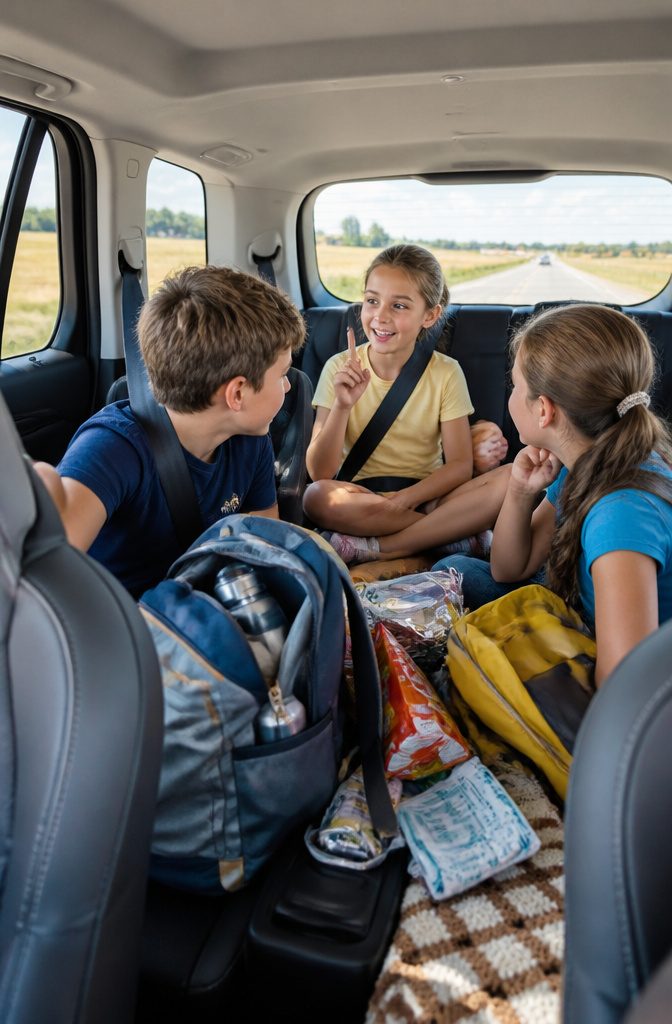
Two ways to play this one, and the difference matters more than the name suggests.
The version that works better for younger kids runs on memory, not guessing: the first player opens with "I went to the store and I’m buying apples," and the next repeats that item and adds one of their own, building a chain that lengthens until somebody forgets the sequence.
Food, household goods, or something completely made up all count, which keeps the ground level enough that a six-year-old’s narrower knowledge base isn’t a handicap.
The yes-or-no guessing version narrows the same grocery domain but drops the memory element. One player thinks of an item, and everyone else asks only yes-or-no questions until someone lands on it.
The constraint to produce aisles and pantry staples makes this easier than 20 Questions, where the answer could be the concept of justice or a cloud formation a child hasn’t encountered yet.
Grocery items are concrete, familiar, and bounded by what a family actually walks past in a store.
The cumulative memory version wins for mixed-age groups.
A seven-year-old can hold their own against an adult because the challenge is sequential recall, not breadth of knowledge, and the invented products let younger players contribute something absurd instead of conceding defeat on categories they haven’t learned.
The guessing version works faster if the car is restless and you need a hard endpoint; first correct guess ends the round, and you can set a point total to call a winner before the next rest stop.

4-in-1 Road Trip Game Pack – Keep the whole family entertained with fun car games for kids ages 7+ and beyond!


Put the laws of motion to the test with our patented Q-BA-MAZE 2
Why Games Fail and How to Recover
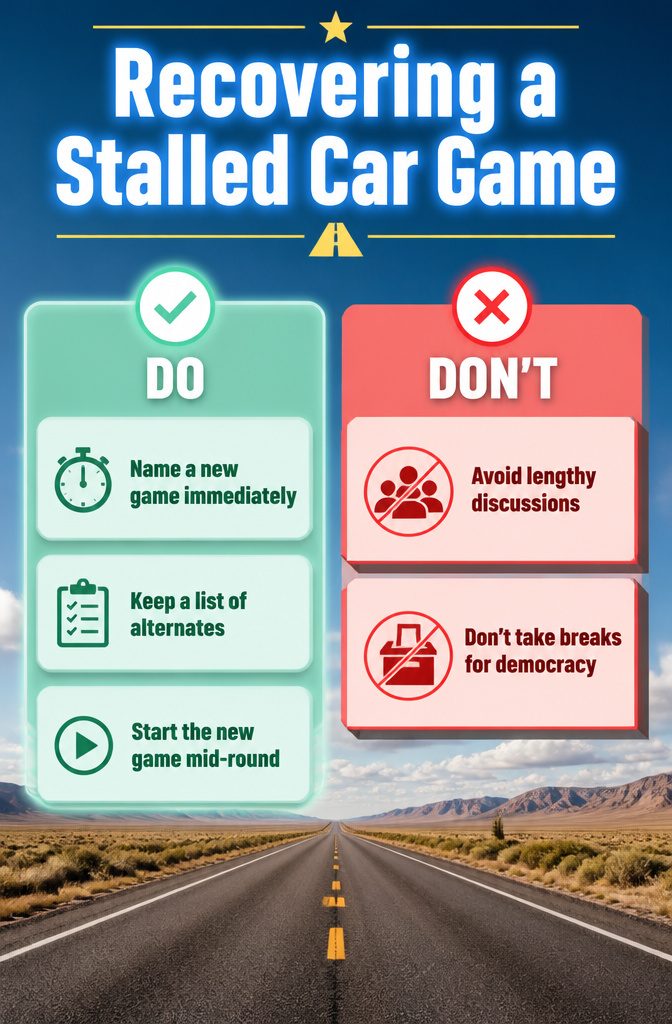
A car ride game dies in one of three ways, and the sound is always the same: the silence before someone says "this is boring."
One kid quits outright and stares out the window. The route changes, and the license plate game you started in Oregon quits working when you hit the empty stretch before Nevada.
Or one player, usually the adult who road-tripped through the nineties, has memorized every answer and the rest of the car is guessing in the dark.
The escalation is predictable. First one person checks out, then the bored player starts baiting the others, and within ten minutes the back seat is a courtroom of grievances over rules nobody wrote down.
The three-minute rule is the only recovery that works: if a game stalls for a full three minutes, someone names a new one, no discussion, no democratic vote. Democracy in a moving vehicle just extends the stall.
The named game starts immediately, even mid-round, and the old score dissolves. Keeping a short list of alternates in your head, or literally on a card in the glove box, makes the switch faster than the complaints can regroup.
The games that survive a long trip are not the cleverest ones; they are the ones you are willing to abandon.
What the Games Actually Teach
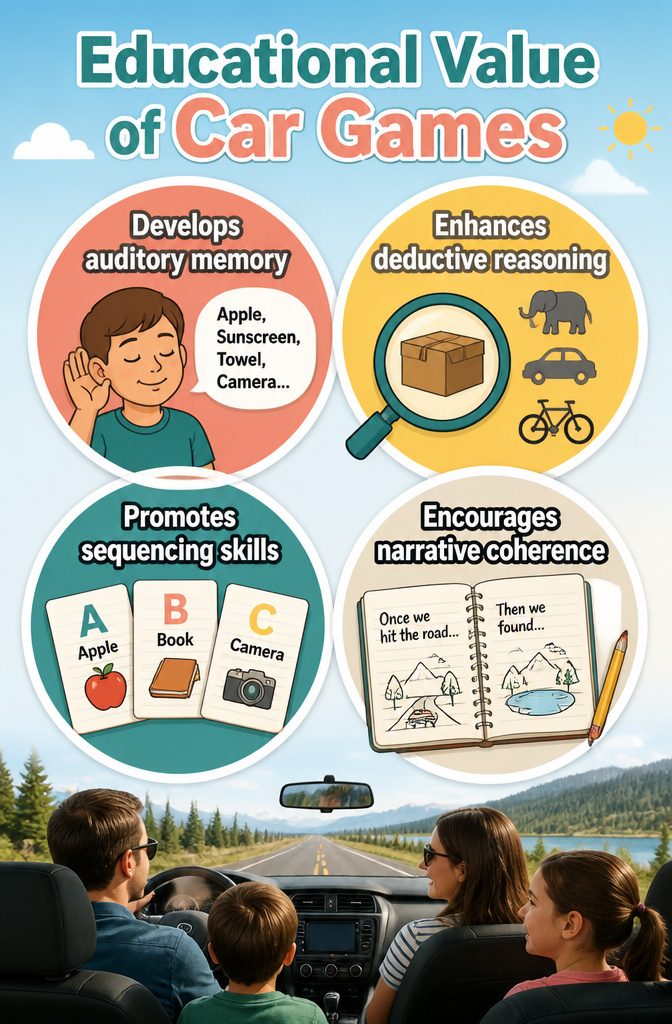
The hidden value of car games sits exactly where parents and road-trip captains usually ruin it: the moment you announce that something is "educational," the kid’s brain checks out.
Observation in I Spy works because finding a red barn before your sister does carries actual stakes.
Memory games like the grocery-list build where one player starts with "I’m packing for vacation and bringing an apple" and each person adds an item plus the full chain back, that recursive recitation drills auditory memory the way flashcards never could, since the social penalty of breaking the chain is immediate and visible.
Deductive logic in 20 Questions sharpens when a player learns that "Is it bigger than a breadbox?" eliminates half the universe in one cut.
The alphabet variation on the memory game, adding items in A-to-Z order, smuggles in sequencing and vocabulary without the worksheet stigma.
Storytelling relay teaches narrative structure incidentally: the next player has to accept what came before and move it forward, which is basically the definition of plot coherence.
The learning stops working the second you name it. Call 20 Questions "critical thinking practice" and watch a twelve-year-old deflate in the passenger seat.
The skill-building happens in the competitive frame, not the pedagogical one. Keep the frame intact, and the skills accumulate whether anyone notices or not.
Variations Worth Keeping in the Glove Box
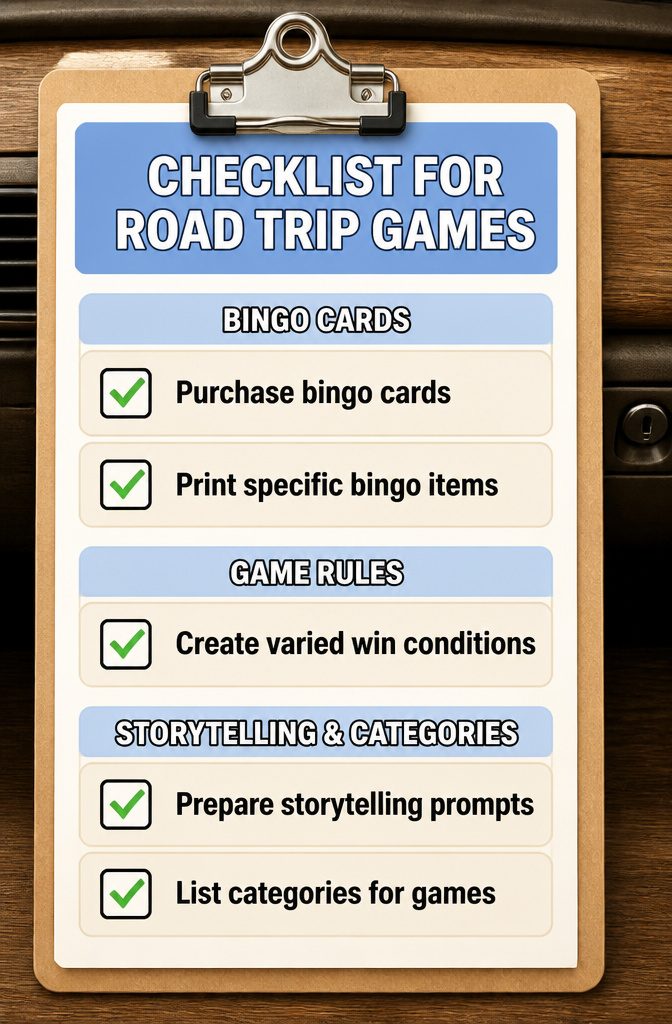
A set of printed bingo cards lives in the glove box of most cars that carry kids for good reason.
The physical card changes the game: a child crossing off a box with a pen stays occupied longer than one calling out sightings and forgetting them.
Buy the boards or print your own before you leave; the work of making them is half the point, since a card built for a specific route turns the drive into a scavenger hunt with stakes.
Cows, red cars, billboards, stop signs, 55 mph signs, wind turbines, graveyards, the list from the sources is a start, but the real value is in the edit.
Drop the items you passed before the game started and add the specific overpass or fruit stand your passengers will hit in twenty minutes.
Rule modifications matter more than the cards themselves.
One trip with a four-year-old and a twelve-year-old in the same back seat only saved the game after we split the win condition: the younger player needed a single row, the older had to fill the entire board.
No one had announced this in advance; the twelve-year-old suggested it after the first round collapsed in tears. That single change is the reason the cards still come out on every drive.
For the storytelling games, a folded sheet of prompts in the same glove box prevents the blank-stare stall. Category lists work the same way: printed, not remembered, because remembered lists shrink to the same five items under pressure.
Frequently Asked Questions
What are some fun games to play on car rides for kids?
I Spy, 20 Questions, and Road Trip Bingo all work well for kids, with no equipment needed beyond a printed bingo card.
The article recommends these because they build observation, logic, and memory through competition rather than instruction. Kids as young as two can join I Spy, while the grocery game and storytelling relay let mixed-age groups play on even footing.
How do you play the License Plate Game?
There are two versions: geography and wordplay. In the first, players spot plates from different states and track them on a map or list, which only pays off on interstate drives with national traffic.
In the second, someone reads the plate characters and everyone races to build a phrase, like turning DR8BAB into "Donald reads eight books about bats," then the car votes on a winner.
What is the Alphabet Game?
Players find words starting with each letter of the alphabet in order from A to Z, with the rule that letters must start the word, not just appear in it.
Every player needs their own instance of each letter; no stealing someone else’s "Applebee’s" once called. Interstate billboards make it almost too easy, while rural two-lanes stretch the hunt for a genuine X across half a state.