Packing tips for travel work best when they account for the gap between what you plan to bring and what you actually use.
The author learned this the hard way in Lisbon, where two extra outfits, a "maybe" sweater, and a second pair of jeans added 22 pounds to a roller bag that cracked a wheel on cobblestones.
Starting a full week before departure, with a list that sits open for days, is what prevents that kind of last-minute overpacking.
1. Make a Packing List
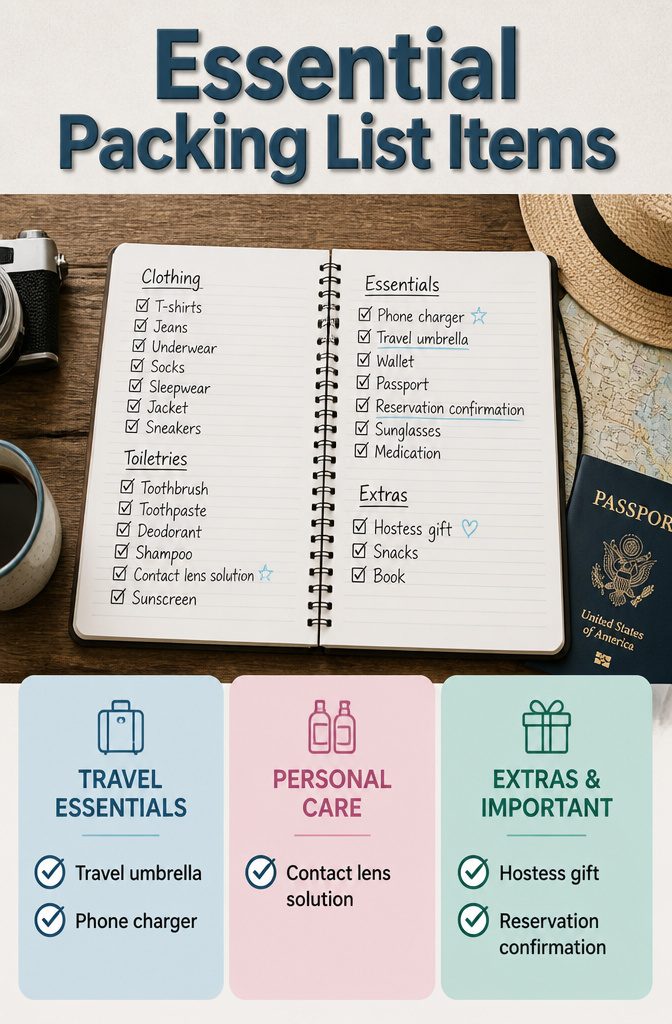
A packing list sits open on my phone for days before any trip, and that early start matters more than the list itself.
The habit grew out of one too many mornings of standing at the front door, sure I’d forgotten something, unable to name what.
If an item never makes it onto the list, it rarely makes it into the suitcase — a rule that sounds obvious until you’re buying a $40 phone charger at an airport kiosk.
The list itself reduces stress in a way that feels almost mechanical. Crossing items off gives the brain a fixed point in the chaos of departure.
I keep mine in a notes app, but the format matters less than the fact that it exists outside my head, where vacation optimism tends to edit out essentials like "contact lens solution" and "the actual reservation confirmation number."
Starting early also lets the list evolve. A day after I write it, I’ll remember the travel umbrella; two days later, the hostess gift for the friend putting me up.
That running quality connects directly to the next step, where the list turns into actual clothes in an actual bag.
Without the buffer of time, you’re packing from memory under pressure, and memory, in my experience, drops exactly the items you use every single morning.

Premium Fabric: Smooth and durable fabric protects clothes from wrinkles and stains; high performance feature makes the packing cubes can bear high density wear and tear during traveling; water-repellent feature protect your clothes from spill or leaks

How to Compress:The cube is compressed by the middle zipper; Using steps: 1)Fold and flatten clothes 2)Pack clothes in the cube and zip the front zipper 3) Put a finger on the back of the middle zipper when compressing to avoid zipper get stuck in fabric
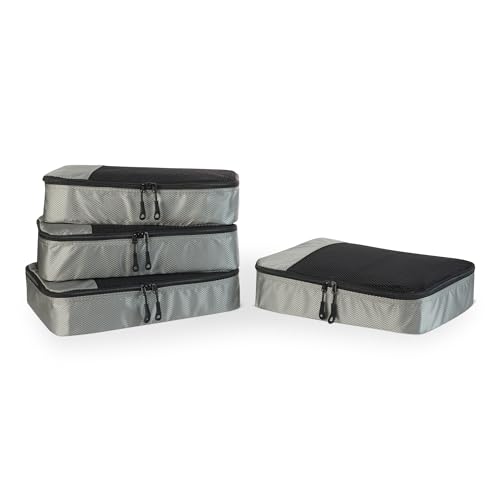
SPACE-SAVING DESIGN FOR TRAVEL & HOME: Compact and efficient at 13.75'' L x 9.75'' W x 3'' H (each), these packing cubes fit perfectly in suitcases, duffel bags, backpacks, and totes, making them ideal for business trips, vacations, camping, and cruises. You can also use them at home to maximize closet space and keep items organized and easy to find.
2. Start Packing a Week Before Departure
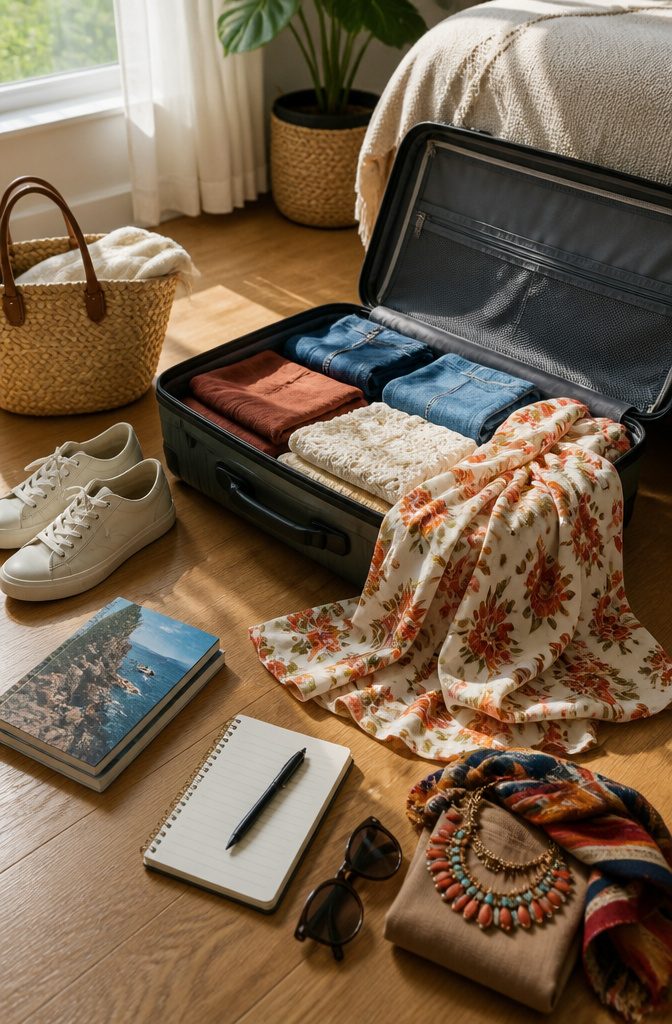
Last-minute packing looks efficient until the zipper fights back. The suitcase that closes in ten minutes on departure morning usually holds three shirts that never leave the hotel and the charger you forgot on the nightstand.
Starting a full week out breaks that cycle in two ways: time to notice what you actually need, and time to catch the bra that works with the off-the-shoulder blouse before the drawer is already closed.
The one-week timeline is deliberate. Around day seven, lay out the clothes and accessories you intend to bring, then live with the pile.
Anything you reach for instead, or anything you realize is missing, gets swapped in. By day three or four, the first draft of the suitcase is half full and the mistakes are still fixable without stress.
Day two is for the items you cannot pack early, the ones still in rotation, and for a final walk through the bathroom cabinet.
Early starts also protect against the packing delusion that favorite pieces will mix and match themselves into outfits once you land. They rarely do.
A week gives you space to try combinations on, to spot the gap, and to pare back before the weight piles on. The list itself becomes the place to overpack; the suitcase only gets what survives the edit.

Package Includes: You will receive 2pcs (1 pair) luggage wheels with 8 screws. NOTE: Wheels are NOT universal, please measure your old wheel size, and carefully confirm the size through the picture details, make sure that your hole pitch distance (from hole center to hole center) and wheel base size are the same as our products, otherwise it is not applicable

50mm Luggage Wheel Replacement: This replacement luggage wheel will extend your luggage life and lead ways to protect the environment and make the world more sustainable

Hole spacing: 3.3cm/3.9cm/4.5cm/3cm (1.3 inches/1.54 inches/1.77 inches/1.18 inches) Wheel diagonal spacing: 95mm/3.74inch and 93mm/3.66inch Please take out the damaged wheel and compare it with the picture, compare the number of screw holes and the diameter between the screw holes
3. Plan Outfits Ahead of Time
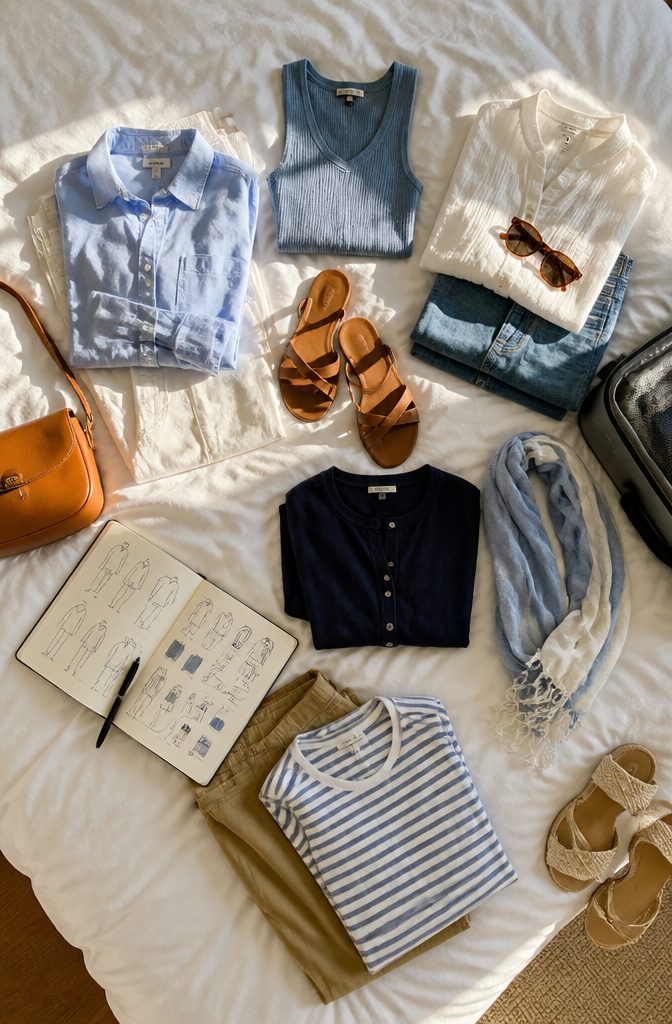
Planning outfits head-to-toe before a trip cuts the "just in case" impulse that fills half a suitcase with clothes you never touch.
Lay each complete look out and photograph it, shoes and accessories included, and you have a ready reference that kills the morning "what do I wear?" debate in your hotel room.
A narrow color scheme helps the same pieces work harder.
Choose versatile items that shift from daytime sightseeing to dinner without a full change, and one bottom can pair with three different tops instead of sitting in your bag as a single-use option.
The trap is packing individual pieces you like rather than assembled looks.
A shirt that needs a specific belt you left home, or pants that only work with the shoes that did not make the cut, becomes dead weight fast. Plan the outfit, not the option.
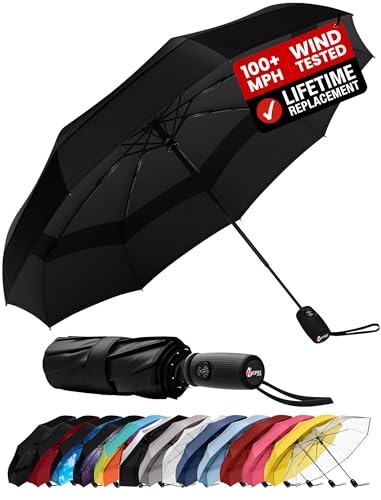
AWARD-WINNING WINDPROOF DESIGN: Engineered to outperform ordinary umbrellas, this compact folding umbrella withstands extreme conditions with reinforced fiberglass ribs, a vented canopy, and strong fabric. Tested to 100MPH, Repel is resistant to flipping and breaking where others fail. Portable and sturdy, it expands wide for large coverage against rain, UV light, and storms, making it the strongest and most dependable travel essential accessory or a classic gift

ULTRA COMPACT MINI DESIGN: Made for days when space is limited, this mini travel umbrella folds down small for easy storage in purses, crossbody bags, backpacks, briefcases, carry-ons, and glove compartments. Its lightweight, portable design keeps dependable rain protection close without adding unnecessary bulk, making it ideal for daily commutes, school, work, vacations, cruises, and unpredictable weather
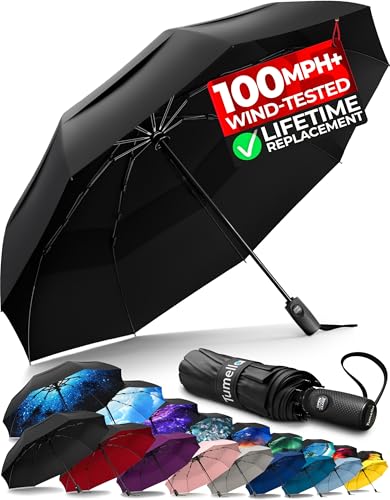
FAVORITE PICK ON NBC TODAY: Tumella’s compact folding umbrella is built to resist winds up to 100MPH. Our windproof frame features 9 full fiberglass ribs, giving it unmatched performance in high winds and sudden gusts. The ribs in other umbrellas are made of a combination of fiberglass and metal, making them structurally weaker so they bend or break easily in stormy conditions. Designed with your daily in-and-out routine in mind — whether you’re commuting, running an errand, or walking your dog.
4. Pack Versatile Clothing That Mixes and Matches
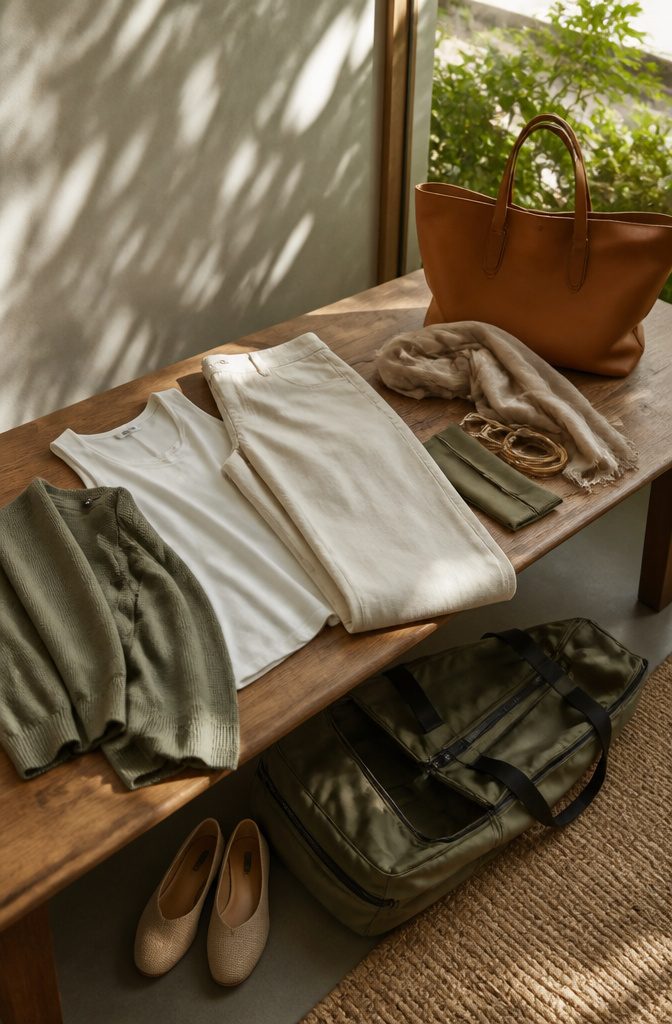
A pair of black pants can anchor three days of outfits without anyone noticing the repeat.
Layering replaces bulk: a light sweater over a breathable tee handles morning chill and afternoon sun, and a waterproof jacket keeps you outside when rain hits rather than stuck indoors.
Scarves work triple duty as warmth, plane blanket, and the accent piece jewelry would have been.
The real space thief is heavy denim. Jeans weigh down a bag, refuse to dry after a soaking, and sit like wet cardboard against your skin.
On a six-hour train ride or after a downpour, that rigidity turns miserable fast. Elastic-waist pants, slip-on styles, or a simple dress pack flatter and adapt to more situations.
Every item should earn its spot by pairing with at least two others. If it only works one way, it stays home.


Biotrue Hydration Plus Multi-Purpose Solution keeps MORE MOISTURE on your contacts (for 12 hours compared to original Biotrue Multi-Purpose Solution, based on a laboratory study).

【2 in 1 Design】Double Sided design, one for the eyeglasses, the other for contact lenses and its accessories. Save space and convenient for daily use or travel, no matter you want to wear your eyeglasses or contact lens.
5. Wear Your Bulkiest Items on the Plane
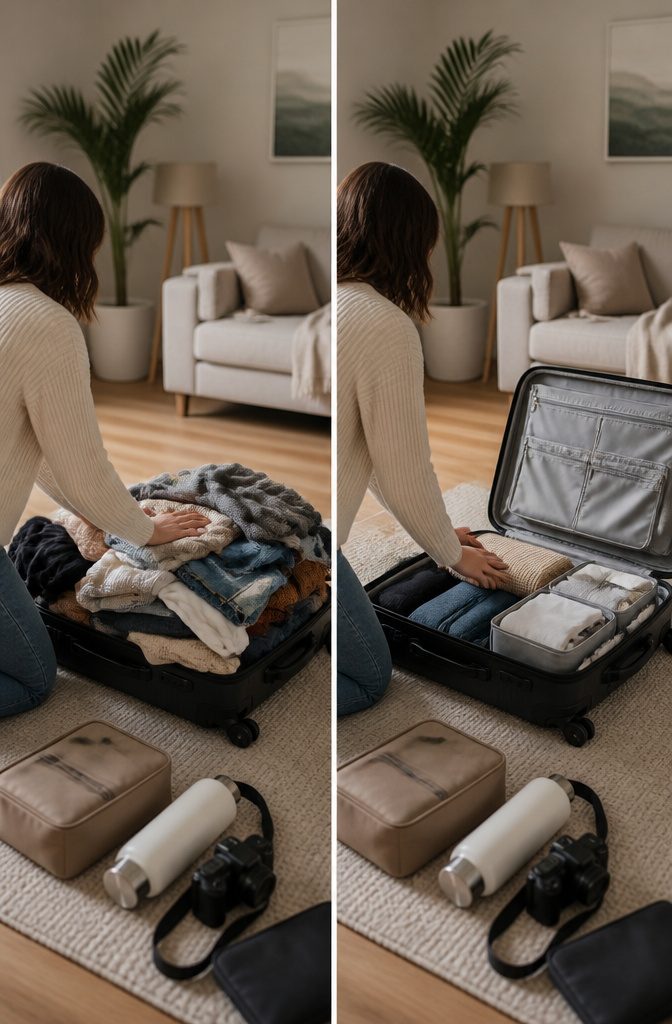
A puffy parka or thick pair of boots swallows a solid chunk of suitcase space before you have packed anything else.
Wear those items to the gate and you get the cubic inches back. I have swapped hiking boots for the flatter pair I carry in my tote once seated, and used my coat as a blanket on the plane.
The same logic applies to any heavy layer. A down jacket for a cold-climate trip, thick-soled walking shoes, even a bulky sweater under a lighter jacket all work.
Layering lets you shed pieces once the cabin warms up, and airports run cold anyway. One source mentioned slipping into slippers after boarding, which solves the comfort problem without the luggage cost.
Shoes remain the heaviest single category for most travelers. Limiting what goes in the bag starts with choosing which pair stays on your feet through transit.
The pair you wear does not have to be the pair you keep wearing; it just has to be the pair that would have eaten the most room.
The tradeoff is real.
You will look less put-together at security, and you will juggle layers while finding your seat. For me, that fifteen seconds of awkwardness buys enough space for an extra day of clothes, which matters more on a long trip.

𝐋𝐚𝐫𝐠𝐞 𝐂𝐚𝐩𝐚𝐜𝐢𝐭𝐲- Medium size: 10.6''L x 3.9''Wx 6.7''H. Large size: 12.2''L x 5.5''Wx 7.5''H. Toiletry bag can perfectly organize your necessary toiletries accessories and travel essentials.

MULTIPLE STORAGE COMPARTMENT - 4 separate compartments keep items organized and in place well, 2 main compartments with mesh pockets and elastic bands keep items upright, easy to grab exactly what you need
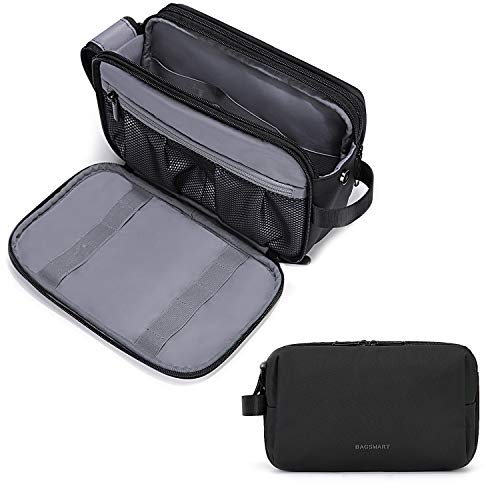
𝐋𝐚𝐫𝐠𝐞 𝐜𝐚𝐩𝐚𝐜𝐢𝐭𝐲: Mens toiletry bag medium size: 10.6''L*3.9''W*6.7''H, large size: 12.2''L*5.5''W*7.5''H. Different sizes meet the needs of various buyers, with the large size capable of holding all the toiletries for a family
6. Minimize the Number of Shoes Packed
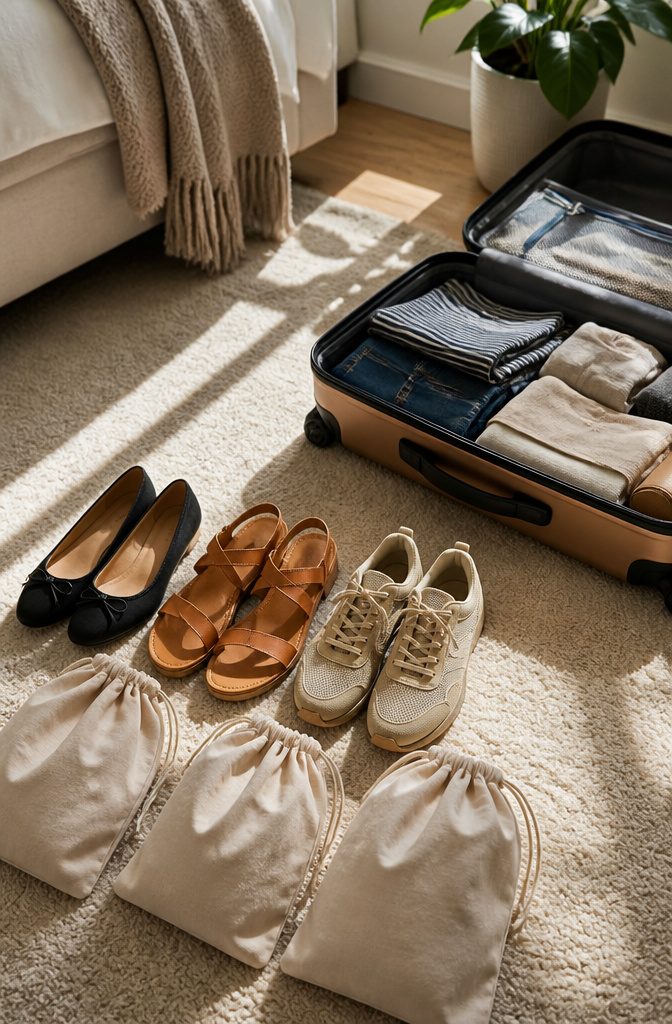
Shoes eat more suitcase space than almost anything else you pack.
A single pair of boots or running shoes can easily fill a small packing cube on their own, which is why limiting yourself to two or three versatile pairs changes how much room you have left for everything else.
The right shoe does the work of two or three. A flatform sandal comfortable enough for a full day of walking can still pair with a skirt at dinner.
Black flats that work with jeans and dresses mean one pair covers city walking and nicer evenings without a second bag. Fabric shoe bags keep the soles away from your clothes.
The bulkiest pair belongs on your feet during transit, not in your luggage. Wearing your heaviest shoes through the airport frees up that packed space and keeps your bag lighter.
One woman I know of managed an 18-day trip to Africa with just three pairs, including sandals that handled beach, day, and evening duty. Three pairs is enough for a week or longer if each one earns its place.

Premium Fabric: Smooth and durable fabric protects clothes from wrinkles and stains; high performance feature makes the packing cubes can bear high density wear and tear during traveling; water-repellent feature protect your clothes from spill or leaks

5-PIECE TRAVEL CUBE SET, EXACT SIZES: 4 suitcase packing cubes for travel — Extra Large (17.5"×12.75"), Large (13.75"×12.75"), Medium (13.75"×9.75"), Small (11"×6.75") — plus a Laundry Bag (20.5"×15.75"). All cubes are 4" deep and sized to cover every clothing category for women and men. Fits standard carry-on and full-size checked luggage.

Stress-Free Traveling: Packing cubes help sort, organize, and quickly locate items, reducing the stress of packing. Keep your belongings in order, and avoid the frustration of unpacking for just one item. Enhance your journey with efficient organization.
7. Use Packing Cubes for Organization
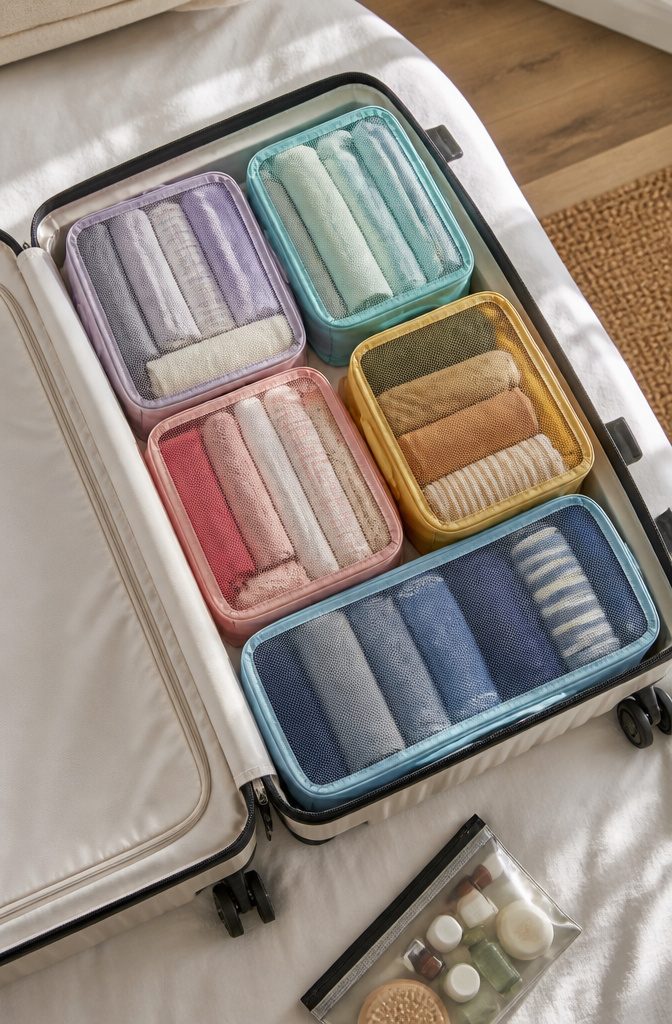
Packing cubes turn a jumbled suitcase into something you can actually work with.
Light fabric and mesh panels let you sort clothes by type or by outfit, and the structure they add means you can lift out a cube at your hotel instead of spreading everything across a drawer you’ll just have to repack in the morning.
The compression matters more than you’d expect. These cubes squeeze out air and create flat blocks that stack like building pieces, which is what makes them more space-efficient than rolling or bundling alone.
One cube can hold your clean shirts, another your pants, a third your undergarments; when laundry day hits, swap one cube to dirty clothes and the system stays intact.
Packing cubes beat out every other method, including bundling and rolling. They’re reliable, efficient, and make for easy organization.
That reliability is what sells it for multi-stop trips where you’re living out of a bag for a week.
Roll softer items like t-shirts and underwear, fold stiffer pieces like dress shirts and khakis into the cubes, and you have a morning routine that takes sixty seconds instead of ten minutes of digging.
For anyone skeptical that cubes are just for hyper-organized types, consider using one simply for pajamas, or for tomorrow’s outfit when an early train means packing in the dark.

Package Included: Set of 2, 70 x 24mm Luggage Suitcase Replacement Wheels. Each wheel comes with 2 length axles, 2 screws, 2 washers, 1 wrench.

Size Compatibility Note: please measure carefully before ordering! We suggest removing the old wheel to measure the screw center hole spacing and the overall wheel size to ensure these suitcase replacement wheels fit your case; Even a 2-3mm difference can cause failure

Durable Rubber Construction: Use rubber material to integrally molded, mute, wear-resistant design, matched with double bearings for flexible rotation that can withstand substantial weight
8. Keep Essential Items in Your Carry-On
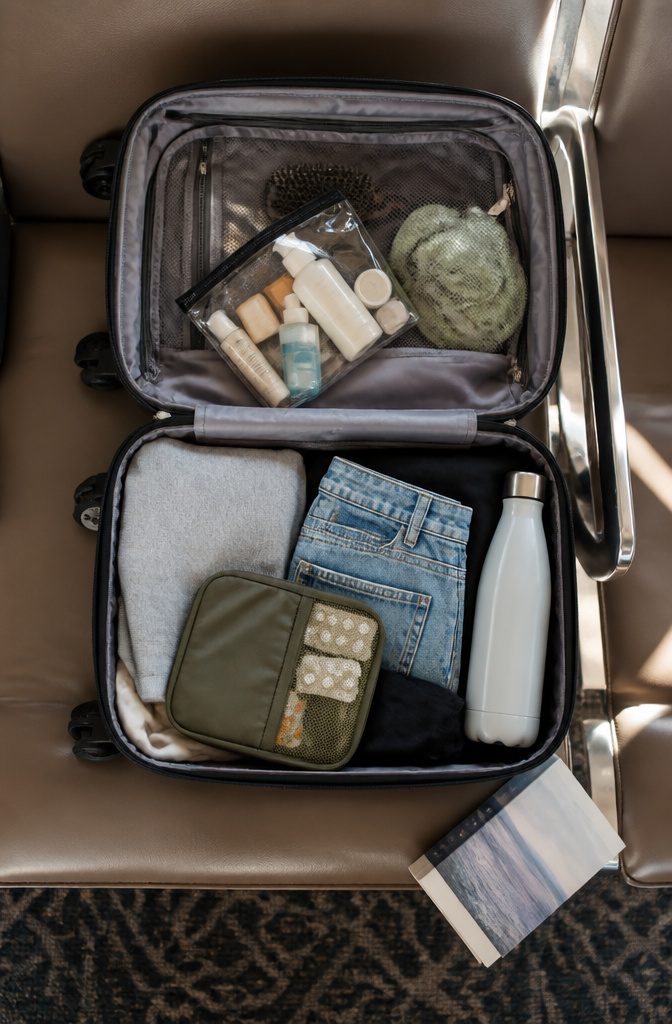
A checked bag can vanish for a day or three, and the difference between a ruined arrival and a tolerable one sits entirely in what you kept with you on the plane.
I always assume the suitcase below me is heading somewhere else entirely.
Medications go in the carry-on, always, along with a spare change of clothes, contact lenses if you wear them, and anything you would genuinely struggle to replace in 24 hours.
Toothbrush, chargers, a layer for the cold cabin. The TSA 3-1-1 rule governs any liquids or gels: containers no larger than 3.4 ounces, or 100 milliliters, all inside a single quart-sized bag.
Toothpaste, lotion, shampoo, shaving gel, mouthwash, each one counted against that limit. Anything bigger gets checked, or it gets left at security.
A reusable water bottle slips through empty and fills past the checkpoint.
Reading material lives on a phone or tablet instead of hogging space. The goal is simple: if your checked luggage takes its own vacation, you land able to sleep, dress, and function until it catches up.

Durable Design to Windproof: This is Durable umbrella for men and women. The SY Compact umbrella have Black aluminum frame and 8 Fiberglass Ribs ensure resistance to wind gusts. Even when flipped inside out it will flip back without any damage.
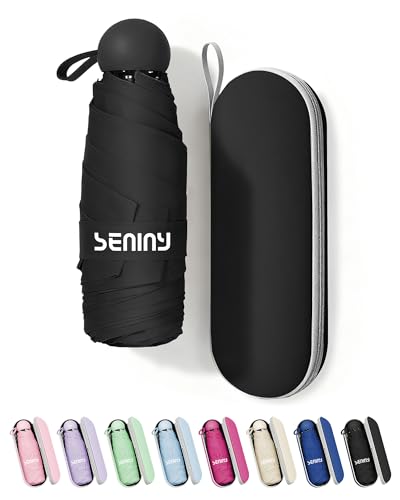
【Collapsible Mini Umbrella】From travel essentials, these umbrellas offer 40.2“ of coverage yet fold down to a compact 6.9” for easy portability, saving space in your backpack. Effortless open and close for seniors and kids
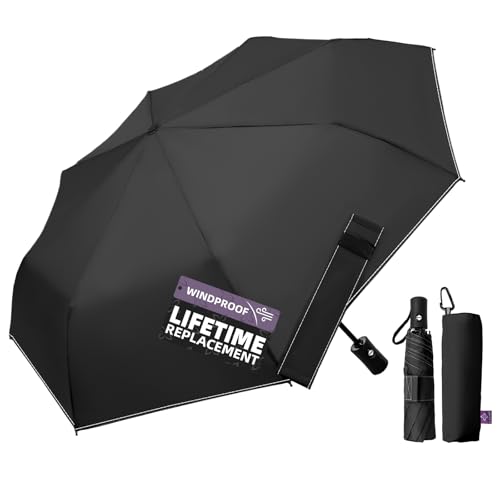
【Windproof Umbrella】Engineered with an 8-rib steel frame reinforced by double fiberglass ribs at each tip, The high-quality Pongee fabric, offering excellent tensile strength. withstands 8-level winds (≈38~46mph). Even if flipped inside out during a storm, it can be easily reopened and used again. The strap features a durable 3M VELCRO STRAP for secure closure, ensuring long-lasting durability.
9. Use Solid Toiletries to Avoid Spills
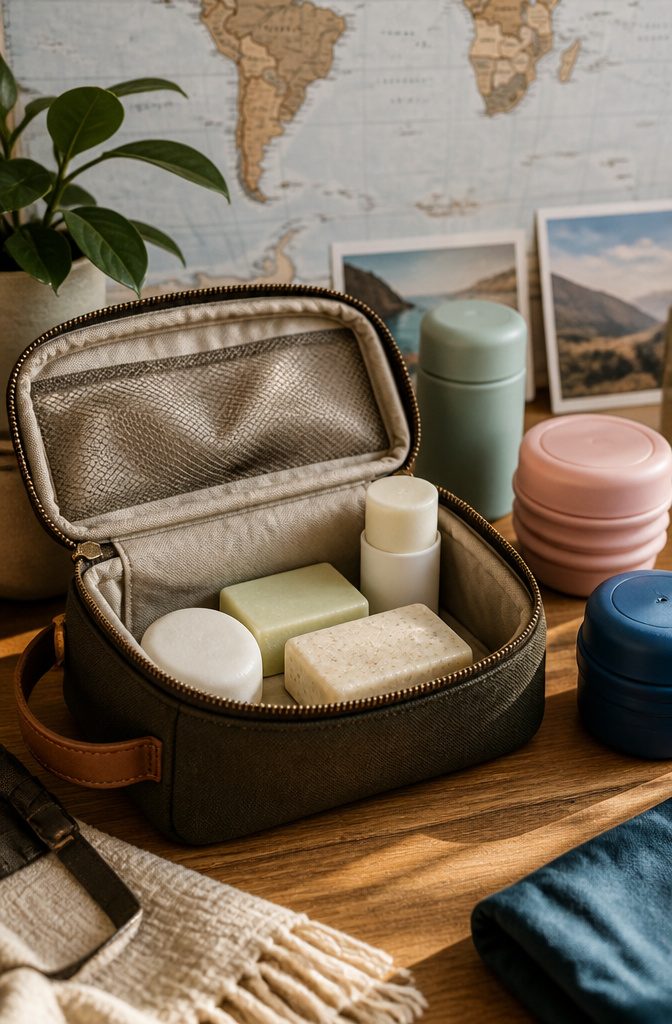
Solid toiletries remove both the leak risk and the TSA math.
The agency’s 3-1-1 rule limits carry-on liquids to 3.4-ounce containers inside a single quart bag, and even compliant bottles burst under pressure or rough handling. A shampoo bar never does.
Neither does solid deodorant, solid perfume, or a conditioner block. You skip the plastic baggie entirely, gain back the luggage space, and cut out single-use packaging while you’re at it.
If you still need some liquids, seal them inside a zip-close bag before tucking them into a dopp kit or wash pouch. The solid option wins for anything you can find in bar form.

Deep cleans and disinfects contact lenses using hydrogen peroxide

Portable Size for Travel Carrying: The cute contact box is small and compact, which is convenient to carry your contacts and a variety of tools that you will use in your purse, handbag or car or any small space when you go outdoor travel, camping, sports, office, school or daily use

Portable Size for Travel Carrying: The cute contact box is small and compact, which is convenient to carry your contacts and a variety of tools that you will use in your purse, handbag or car or any small space when you go outdoor travel, camping, sports, office, school or daily use
10. Pack a Small Laundry Bag for Dirty Clothes
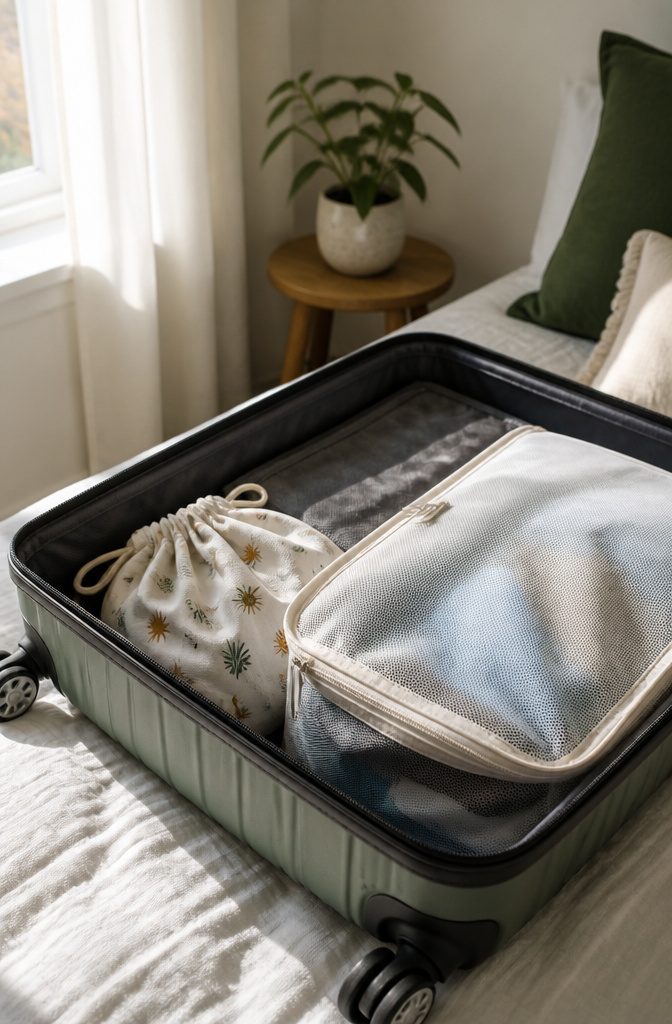
A dedicated laundry bag keeps clean clothes from picking up the smell and grit of what you have already worn. On a longer trip, that separation matters more than you might expect.
Lightweight fabric options fold down to almost nothing in the corner of your suitcase, and some travelers simply repurpose a spare packing cube for the job, dumping the whole thing straight into the washing machine at home.
Others prefer a waterproof pouch or sealable bag for wet swimwear, which stops moisture from creeping into the rest of your luggage and saves you from that musty greeting when you open your suitcase.
Either approach works; the point is having a barrier in place before you need it, not improvising with a hotel plastic bag that tears on day three.

Dimension: Medium-10.8'‘L x 3.5"W x 7.9H(folded); Large-12.6'‘L x 4.5"W x 9H(folded); 4 separate compartments with zip and back open pocket for great organization. Suitable for your family trip to pack all men, women , and kids toiletries

COMPACT-SIZED FOR TRAVEL-SIZED ESSENTIALS - 10.4 x 4.5 x 8 inches【6.1L】. The space-efficient hanging toiletry container can hold all your travel essentials: cosmetics, travel-sized shampoo, Conditioner, and Skin care products

Smart & Tidy at a Glance: No more digging through messy bags! The main compartment features elastic straps and mesh pockets to securely hold bottles and jars. Dual-zip sections let you grab items even when partially open, while the clear window offers quick visibility. Everything has its place—neat and effortless
11. Store Delicate Items in Your Shoes
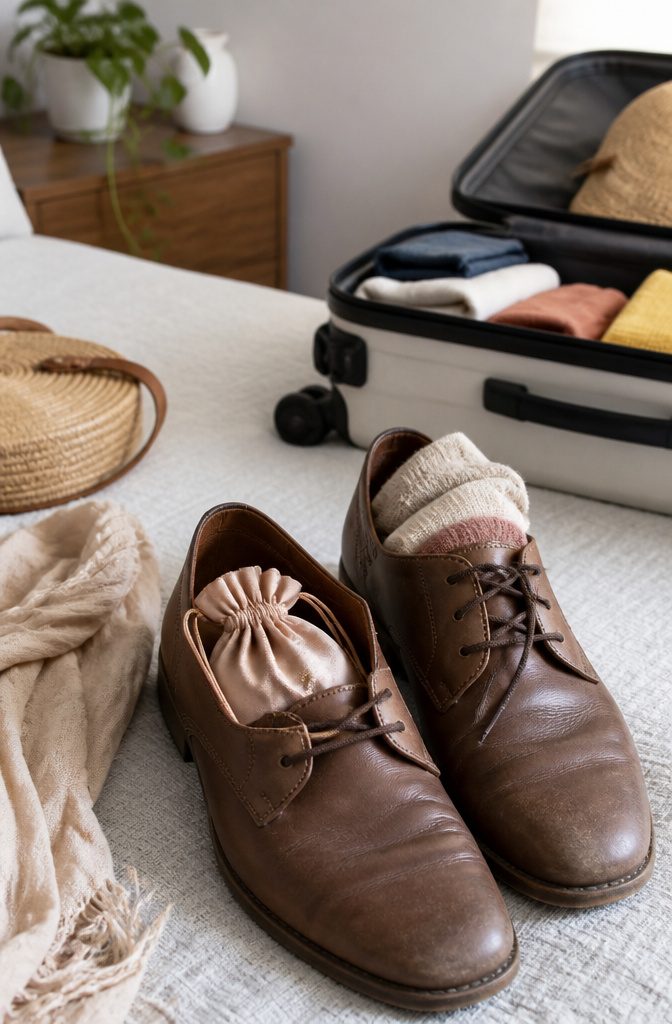
The inside of a shoe is dead space that can earn its keep if you pack it deliberately. Socks stuffed into the toe box cushion small electronics or a jewelry case against the pressure of other bags pressing down.
The heel cup fits a wrapped pair of sunglasses or a compact charger, and the gap between two laced shoes stacked sole-to-sole holds a soft pouch of earrings that would otherwise rattle loose in a side pocket.
I used to leave shoes hollow and let them collapse, which wasted the cavity and let the uppers crease.
Now I treat each shoe as its own small packing cube, choosing what goes in based on the shape: rounded toe boxes for rounded objects, narrow heels for flat ones.
A few pairs of socks fill the remaining gaps so nothing shifts in transit. Sealable bags help for anything that might leak, but for dry items the socks do the padding on their own.
12. Bring a Refillable Water Bottle
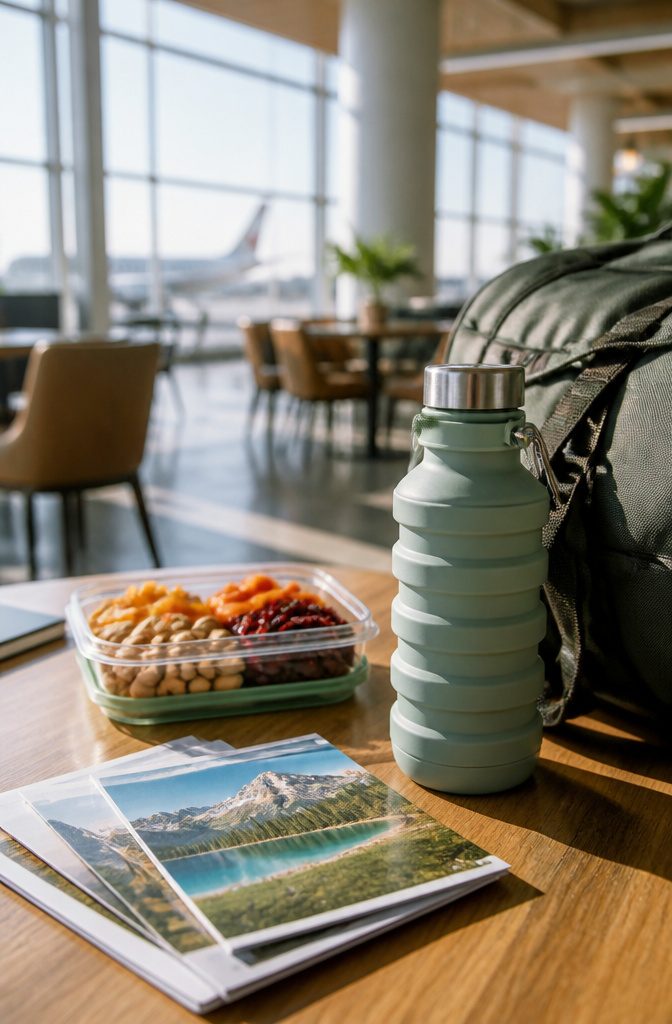
A collapsible silicone bottle lives in my travel bag now, though it took one dry flight to Vancouver Island to make the switch permanent.
The bottle must be completely empty at TSA screening, which means draining it at the checkpoint or packing it that way from home. Metal or rigid plastic bottles work fine too; the agents only care that no liquid sloshes inside.
Once through, most airports have refill stations near the gates, and the apps that map them keep improving.
The real payoff is skipping the $4 airport water and the single-use plastic that comes with it. On Salt Spring, the tap water tastes clean and cold, so the bottle stays full from breakfast ferry to evening hike without another purchase.
13. Use a Day Bag for Daily Excursions
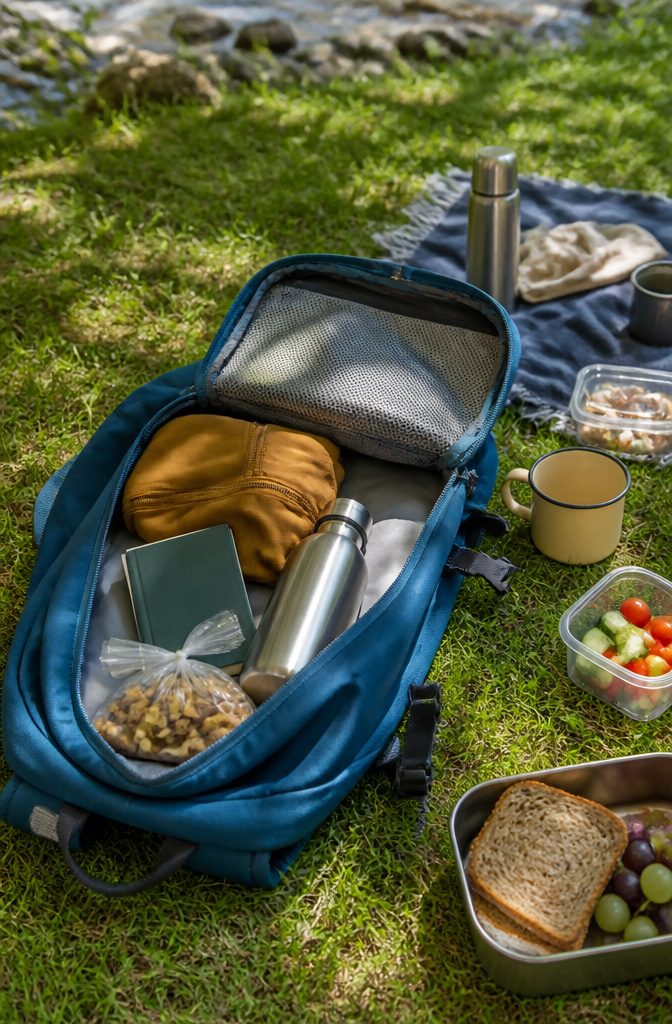
A collapsible day pack folds small enough to tuck inside your main luggage, then unfurls when you need something lighter than a full suitcase for city walks or a spontaneous hike.
The best ones roll down to nearly nothing, so they do not eat the space you fought to protect.
What goes inside differs from your main bag in both bulk and purpose. A day bag carries only what the next eight hours demand: phone, wallet, water bottle, maybe a sweater and an e-reader.
Your main luggage holds the rest, back at the hotel. Rick Steves caps group tour members at one 9" × 21" × 14" carry-on plus a small day pack; the day pack is what you walk with, the carry-on is what you stow.
The mistake is treating your purse or pockets as the day bag. They fill fast, force returns to the hotel, and mid-trip bag purchases waste money and time.
A dedicated day bag, packed from home, skips that drain. Cross-body styles sit harder to steal from; backpacks or totes handle bulk when you are hauling snacks and layers for two.
Test it loaded before you fly.
Walk a block fully packed. If window-shopping feels like work, thin it out.
14. Weigh Luggage Before Leaving
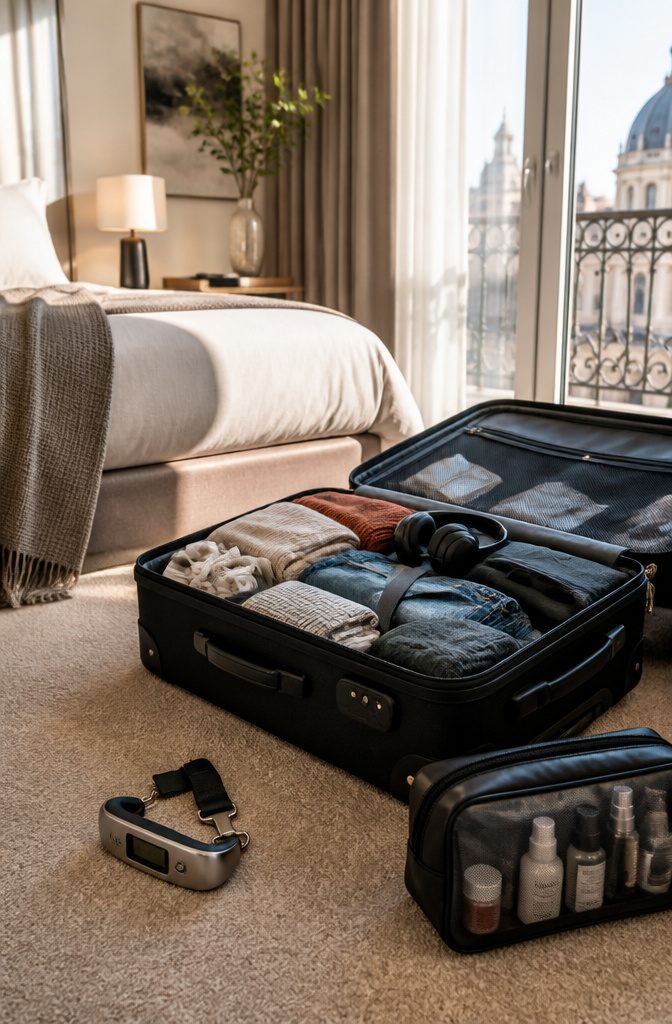
A luggage scale pays for itself the first time it saves you from the scramble.
Most major airlines top out at 50 pounds for a checked bag, and stepping over that line means either a fee or the indignity of kneeling on the airport floor, moving socks into your carry-on while the line behind you watches.
The scale itself runs about $10, small enough to tuck into a side pocket and bring back for the return flight when souvenirs have shifted the math.
I weigh everything the night before, not the morning of.
The margin matters because home scales lie about luggage; they are built for people standing still, not for a soft duffel whose handles keep slipping. A dedicated scale hooks to the bag, lifts clean, and reads true.
The real test comes on the way home.
Souvenirs, extra layers, a bottle of olive oil you forgot to declare: the bag that left at 48 pounds lands at 52. Having the scale in the hotel room lets you rebalance then, not at the check-in counter with an agent waiting.
15. Leave Room for Souvenirs
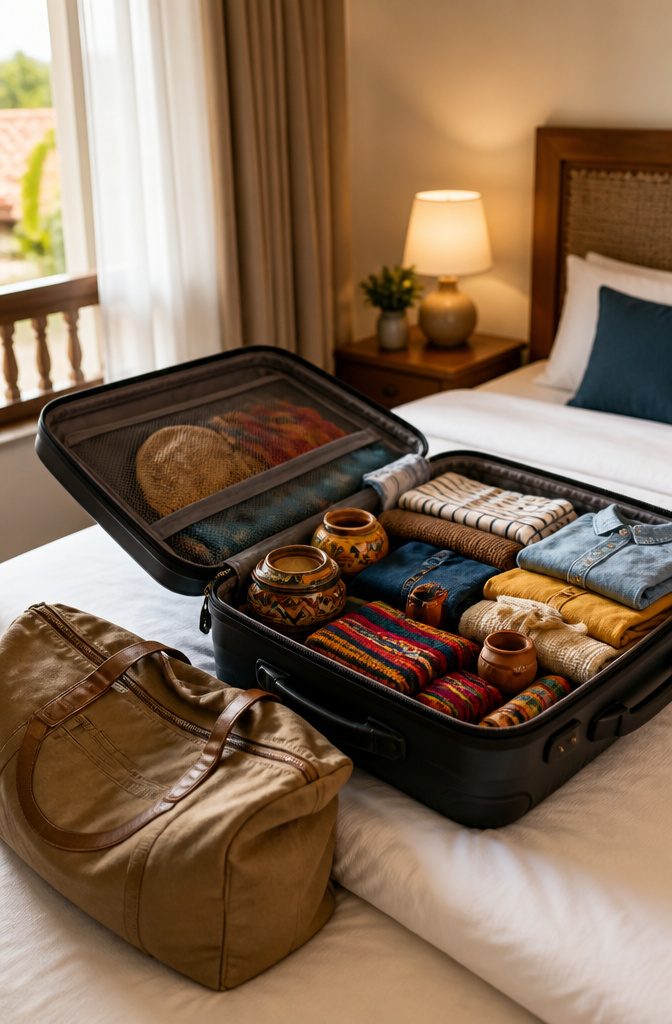
Souvenirs expand in your memory and, unfortunately, in your suitcase.
The rolled linen blouse that left so much extra room on the way out will be a crumpled mess beside a ceramic bowl and three jars of local honey on the return.
Expandable compartments are best saved for the trip home, when you can unzip that extra two inches of depth and breathe again.
A featherweight nylon bag folded into a corner at departure costs almost nothing in space and can become your carry-on for the flight back.
That leaves your main bag, now stuffed with dirty laundry that always seems to bulk larger than it went in, to be checked through. The valuables stay with you, overhead or under the seat.
Some travelers underpack by a full outfit or two from the start, treating that gap as reserved real estate.
Others rely on compression cubes to squeeze the worn clothes smaller for the return leg. Either approach works; the mistake is assuming you will resist the pottery shop or the market entirely.
What I Keep Within Reach
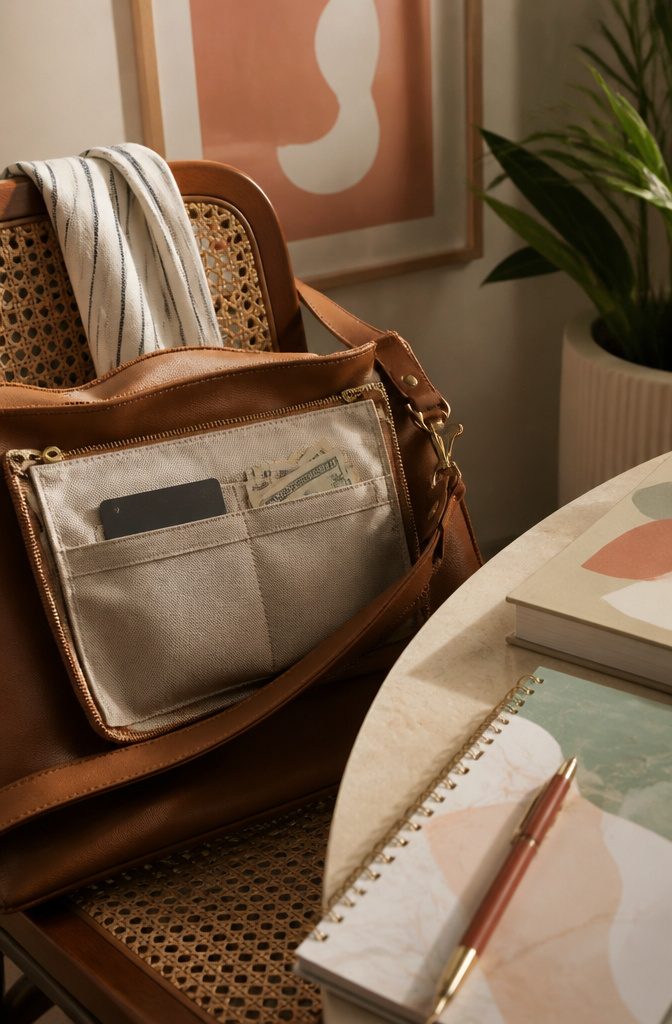
A spare credit card and a folded bill or two belong somewhere your hand does not go for coffee or tickets.
I keep mine in a flat pouch pinned to the inside of my crossbody strap, not in the bag itself.
A neck wallet works, or a slim belt worn under a shirt, though I find the bra pouches and leg wallets more fuss than they are worth for anything larger than a single folded note.
The point is separation: your everyday wallet can vanish or empty itself while this backup stays against your body, even while you sleep.
Pick a spot inconvenient enough that a pickpocket would need to undress you, but convenient enough that you remember it exists when the ATM eats your only debit card on a Sunday in a town you do not know.
This is not your carry-on emergency kit, which holds the phone charger and the snack. This is the fund that keeps you housed and moving if the rest of your money disappears.
Health Items I Actually Pack
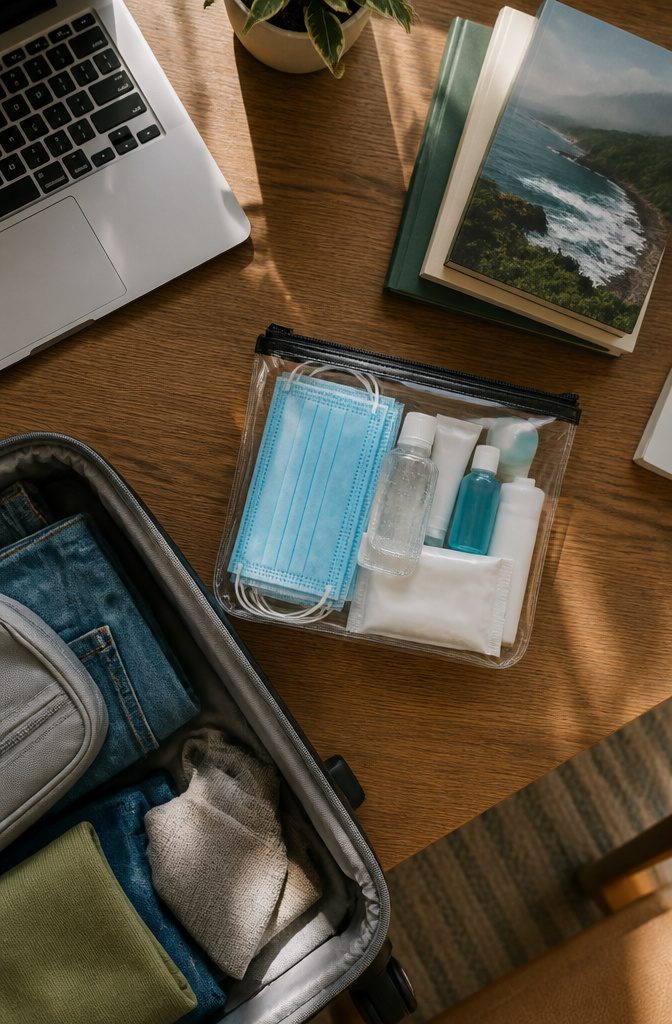
A small pouch of masks and hand sanitizer lives in the outer pocket of every bag I carry onto a plane.
The sources are right that these items need to be reachable without digging; I keep a spare mask folded flat in case the first strap snaps or a seatmate needs one.
Hand sanitizer gets used after tray tables, seatbelt buckles, and any surface in a crowded gate area. That much is standard advice.
What changed my packing was treating the whole health kit as a grab-and-go unit that never gets opened at home.
I keep pain reliever, cold medicine, throat lozenges, and a basic first aid kit in a separate zip bag that lives inside my suitcase even between trips.
Refill it when something runs low, and it is ready for the next departure. Sunscreen, insect repellent, and antibacterial ointment join the kit for outdoor trips; personal prescriptions stay in my carry-on, never checked.
The mistake I made was scattering these across multiple pockets.
Consolidating into two pouches, one for hygiene and one for medicine, means I know exactly where to reach when I need something at 30,000 feet or in a hotel room at midnight.
How My Packing Changes by Trip Type
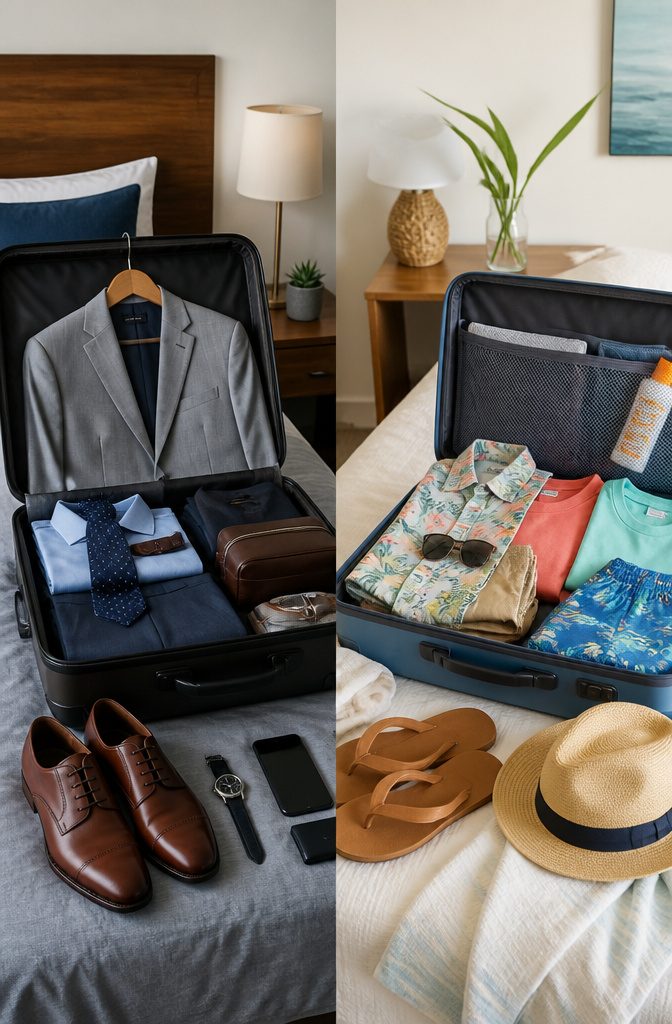
Business travel and leisure travel pull the same core list in opposite directions. For a weekend conference, the blazer I would never bring to a beach rental becomes the item that earns back its space by doing dinner duty too.
Three pairs of shoes is my hard ceiling for any trip, but which three changes completely: loafers, running shoes, and one heel for client dinners versus sandals, trail runners, and flip-flops for a Costa Rica rental.
The toiletries bag shrinks for business, where hotel dispensers suffice and I am not cooking my own meals.
Leisure, especially a self-catering week on Salt Spring, means the spice kit and the good knife edge out an extra pair of jeans.
Laundry access is the variable that matters most. A hotel with same-day service lets me pack four days for a ten-day trip; an island cottage with a clothesline means I bring the quick-dry shirt I would normally skip.
What Went Wrong on My Last Trip
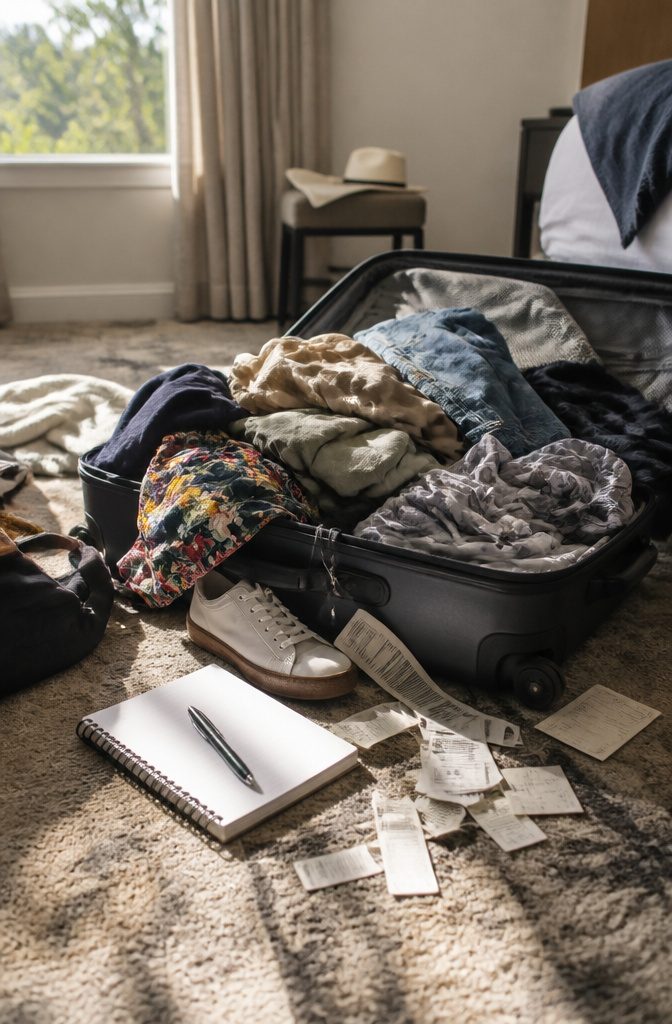
The 22-pound roller bag I dragged through Lisbon’s cobblestone alleys last May taught me what overpacking by even two extra outfits actually costs.
I had laid out everything the night before, felt certain I’d pared down, then tossed in a "maybe" sweater and a second pair of jeans at 11 PM.
Those jeans never left the bag. The sweater came out once, for dinner I could have worn my travel dress to.
Each morning, the full bag forced me to unpack half of it to find one shirt, and repacking for the train to Porto took twenty minutes I could have spent at the pastelaria.
The weight also mattered: my shoulders ached by day three, and one cracked cobblestone later, I was replacing a wheel for €35. Now I force the 5-4-3-2-1 method even when it feels stingy.
Five socks, five underwear, four tops, three bottoms, two pairs of shoes, one hat. The "maybe" pile stays home.
Frequently Asked Questions
What are the best packing tips for travel?
Start with a packing list you build days ahead, begin packing a full week before departure, and plan complete outfits rather than individual pieces.
Wear your bulkiest items on the plane, limit shoes to two or three versatile pairs, and use packing cubes to compress clothes and keep them organized.
Keep medications, a change of clothes, and other essentials in your carry-on in case your checked bag gets delayed.
How do I pack efficiently for a trip?
Choose a narrow color scheme so every piece mixes and matches, and photograph each complete outfit head-to-toe so you have a ready reference.
Roll softer items like t-shirts into packing cubes, fold stiffer pieces, and fill dead space inside shoes with socks or small items. Weigh your bag the night before with a dedicated luggage scale to avoid surprise fees at the airport.
What should I keep in my carry-on?
Always pack medications, a spare change of clothes, contact lenses if you wear them, and anything you would struggle to replace in 24 hours.
Add your toothbrush, chargers, a layer for the cold cabin, and a reusable water bottle you can fill past security.
Keep liquids and gels to 3.4-ounce containers inside a single quart-sized bag per TSA rules, and consider solid toiletries like shampoo bars to skip the liquid limit entirely.