A week-long packing list is a system for fitting seven days of clothing, toiletries, and gear into a single carry-on without checking a bag. The catch is that most people pack twice what they need because they mistake variety for preparedness. The 3-to-1 rule fixes this: eight shirts and two pairs of pants yield sixteen combinations, enough for a full week without the suitcase bursting at the seams.
Clothing Essentials
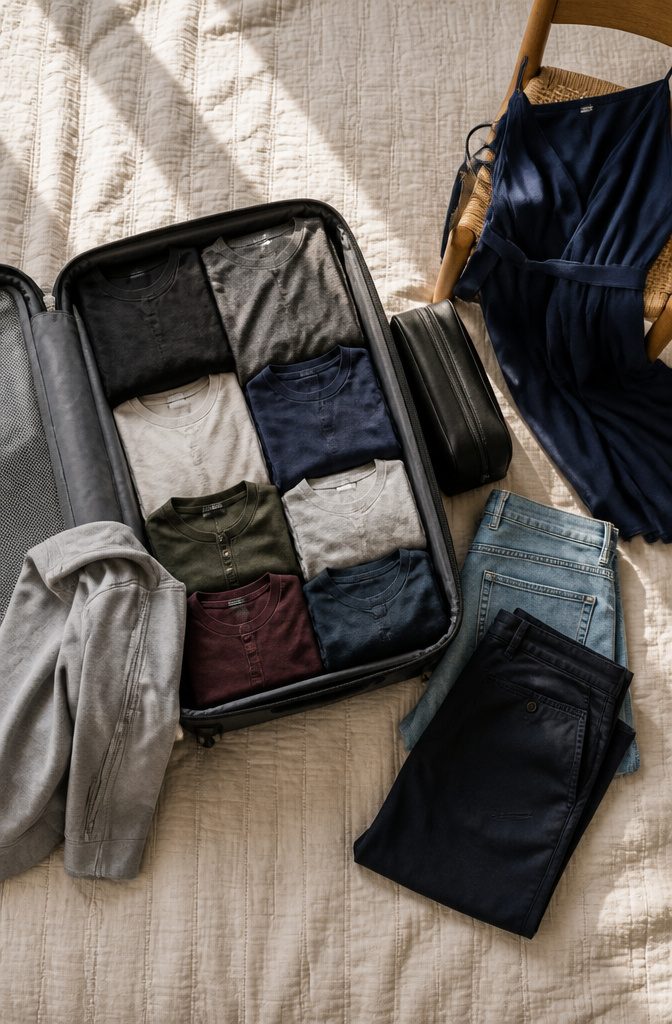
The 3-to-1 rule for tops to bottoms is what keeps a week-long bag from ballooning into checked luggage. For seven days, that works out to roughly eight shirts and two pairs of pants: four tank tops and four regular tops, plus two travel pants that hide smudges and sink-wash easily. I used to pack a separate outfit for each day, and the bag always came back half-unworn.
A single dress fills the gap for dinners or anything the pants-and-top combinations cannot cover. For outerwear, one to three pieces handles most weather: a light sweater, a packable rain jacket if the forecast looks wet, and maybe a third layer if evenings drop cold. Dark colors mix better and forgive stains between washes.
Breathable fabrics that stay fresh longer than cotton let you re-wear pieces without looking like you have been living out of a backpack. Two pairs of pants and eight tops gives you sixteen combinations, more than enough for a week without the suitcase bursting at the seams.

All-in-One Organization for Your Travel Needs - This 9-piece set includes four compression cubes (S/M/L/XL) for systematic packing: S for underwear/socks, M for T-shirts and shirts, L for jeans and light sweaters, and XL for coats or bulky items. Also features two PVC toiletry/makeup bags, a machine-washable laundry bag, a shoe bag, and a multi-purpose zippered pouch—keeping your luggage tidy and efficient.

How to Compress:The cube is compressed by the middle zipper; Using steps: 1)Fold and flatten clothes 2)Pack clothes in the cube and zip the front zipper 3) Put a finger on the back of the middle zipper when compressing to avoid zipper get stuck in fabric

Stress-Free Traveling: Packing cubes help sort, organize, and quickly locate items, reducing the stress of packing. Keep your belongings in order, and avoid the frustration of unpacking for just one item. Enhance your journey with efficient organization.
Toiletries
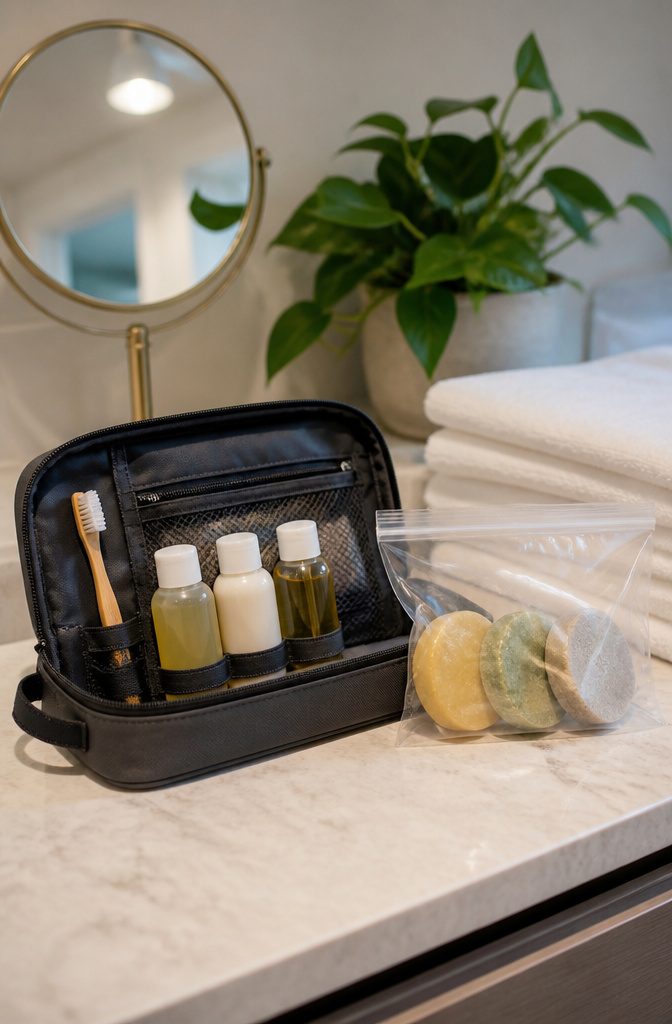
Toothpaste, shampoo, conditioner, and body wash all count against the TSA’s 3.4 ounces (100 milliliters) limit when you fly carry-on, and every bottle has to fit inside one clear quart-sized bag. I learned the hard way that a nearly-full 6-ounce bottle of conditioner gets confiscated even if only a quarter remains. Solid bars bypass the rule entirely and remove any risk of a shampoo explosion across clean clothes, though I still use a small dopp kit to corral the rest.
Toothbrushes top the list of forgotten items at 22% of travelers leaving them behind, so I keep a dedicated pouch that acts as its own mental checklist. A hotel front desk will usually spare you if you forget one, but medication and contacts belong in your carry-on, not your checked bag, since those cannot be replaced mid-trip.

【Easy to squeeze】This plastic travel size bottle design softer that it's easy to squeeze.easy to control dosage and dispense.Can be refilled and reused.The flat cap design makes it easy to open and close

TSA approval: 4 pack 3.4 oz travel bottles for toiletries are TSA approved that allows for unobstructed boarding. The tsa approved travel bottles are great for shampoo, conditioner, shower gel, lotion, hand sanitizer and ect. Additionally, the travel kit comes with a zippered clear transparent toiletry bag, which saves space, easy storage, and transportation. The travel size bottles are must have traveling accessories

Printed Directly On The Bottle: Unlike ordinary bottles with peel-off stickers, these travel containers feature labels printed directly on the bottle for a cleaner look and easier identification. The printed-on design helps keep the bottles neat, simple, and convenient to use.
Electronics
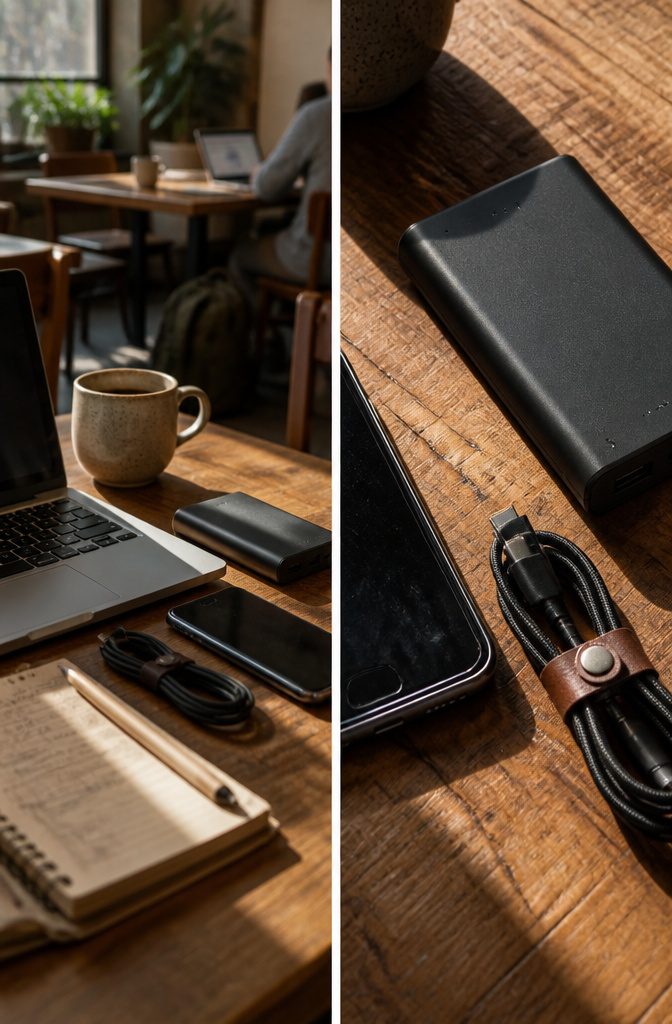
A portable power bank is the one electronic I never leave behind, because a dead phone in an unfamiliar city is not an adventure story you want to live. The sources agree on this: keep your phone and charger accessible the moment you step off the plane, and add a power bank for outlets you cannot find. I have learned to look for a wall adapter with two USB ports rather than one, then pack only the cords that match my devices. For international trips, the adapter must carry the country’s standard plug shape.
The laptop question comes up on every week-long trip I plan. A camera, extra memory cards, and backup batteries earn their weight if you shoot seriously. A laptop earns its weight only if your work demands it, or if you edit photos nightly. For reading, navigation, and the digital travel journal most of us keep now, a smartphone handles it. Earbuds or headphones matter more than a second screen.
A waterproof phone case sits in my bag only for water trips, and a phone stand or tripod lives there only if I am traveling alone and want photos that include me. The rest is dead weight by day three.
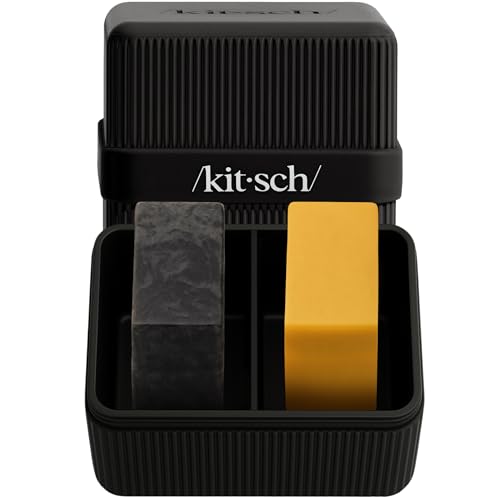
ORGANIZED TRAVEL MADE EASY – Keep your bars neat and mess-free with this 2-compartment soap travel case. Designed to store shampoo, conditioner, and body bars, this compact bar soap case doubles as a sleek soap container for stress-free packing.

DEEPLY CLEANSES & NOURISHES SCALP — Infused with rosemary and biotin, this volumizing shampoo bar gently cleanses fine, delicate strands from roots to ends, nourishing your scalp while leaving hair feeling refreshed, softer, and shinier.
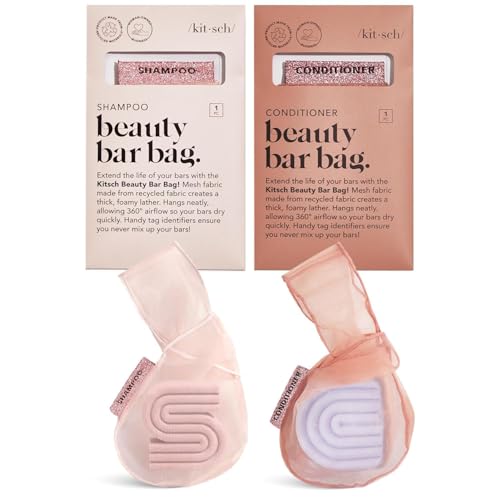
YOUR ON-THE-GO SOAP SAVER BAG & SOAP HOLDER – This patented soap bag and soap saver bag is the perfect travel companion for keeping your soap bars neat and portable. Use this convenient bar soap pouch and soap bar bag as a travel-friendly holder for work, gym, school, or outdoor adventures—making soap bags for soap bars easy to carry anywhere you go.
Travel Documents
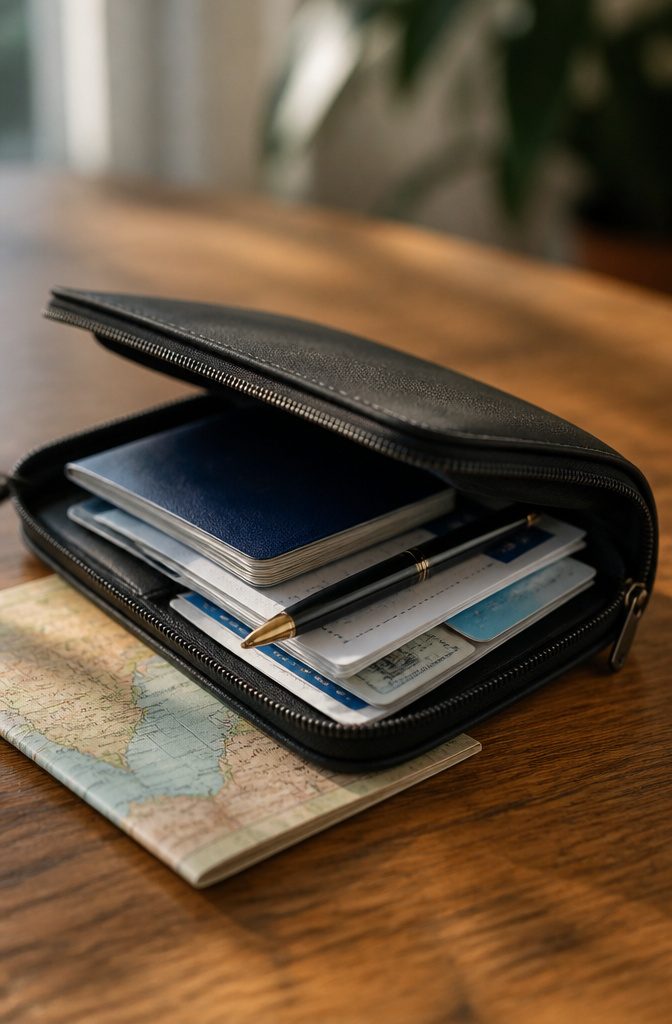
Paper still wins for backup. I used to travel phone-only, storing everything in Dropbox, until I landed in Florence with a dead battery and a customs agent who wanted proof of onward travel. The kiosk had no charging station. That was the last trip I ran without printed boarding passes and a one-page itinerary tucked into my passport cover.
Your passport belongs in your personal item, never in checked luggage. Same for visas, which can take weeks to replace and cost you the trip entirely. I keep originals in a slim interior pocket and photocopies in a separate bag. Digital copies help, but cloud access fails exactly when you need it: no signal, drained phone, or that one airport with WiFi slower than dial-up.
Driver’s license and health insurance card ride with the passport. Travel insurance details go there too. The goal is one grab-and-go pouch that stays on your body or within arm’s reach the entire journey. I learned that after nearly missing a ferry to Victoria because my documents were buried in an overhead bin.

PACK OF 2 & GREAT VALUE:Package includes 2pcs dual port wall charger enabling you keep one at home, one at work and one for traveling. Great valued alternatives to the brand. Various vibrant colors available to easier to identify which one is for your gadgets

Premium Performance: Dual-USB output with a total current of 5V/2.1A and input with 100-240V enables you to charge two mobile devices simultaneously at high speed. It can really save you time.
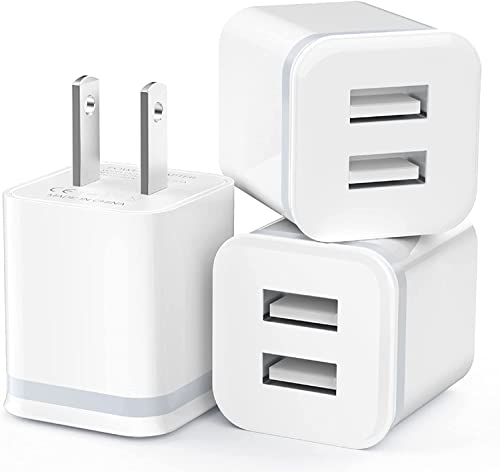
Model: XT5549 Widely Compatibility: USB plug adapter Replacement for iPhone 14 13 12 11 Pro Max SE XS XR X/8/7/6/6S Plus SE 5S/5/5C 4S, Pad, Pod, Samsung Galaxy, Note, HTC, LG, Motorola, Google Pixel and more cell phones.
Miscellaneous Items
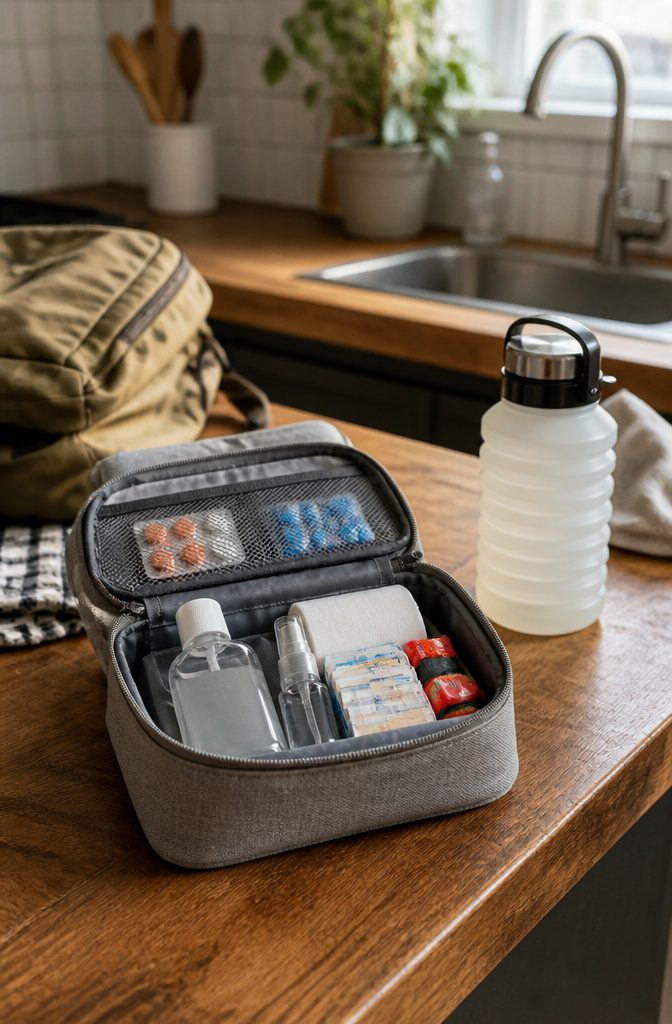
A minimal first-aid kit earns its space with three things: bandages, antibiotic ointment, and pain relievers like Tylenol or Advil. Everything else, from fever reducers to cold medicines, can be bought at a pharmacy when you land. I used to overpack here until a trip to Italy where I carried a full thermometer and children’s Benadryl I never touched. The regret came later, in Southeast Asia, when I had nothing at all and spent a morning hunting basics in Bangkok heat.
Hand sanitizer belongs in the same small pouch. So do throat lozenges and any prescriptions you genuinely cannot replace abroad.
The water bottle question depends on your destination. A reusable bottle refilled at airport fountains saves money in European cities with drinkable tap water. In places where it isn’t, a collapsible bottle paired with a small drop-in purifier beats buying plastic all week. I pack the bottle empty and stuff the cavity with my charging cords, which keeps the bag tidy and protects the adapter. The space is worth it if you treat the bottle as storage, not just hydration.
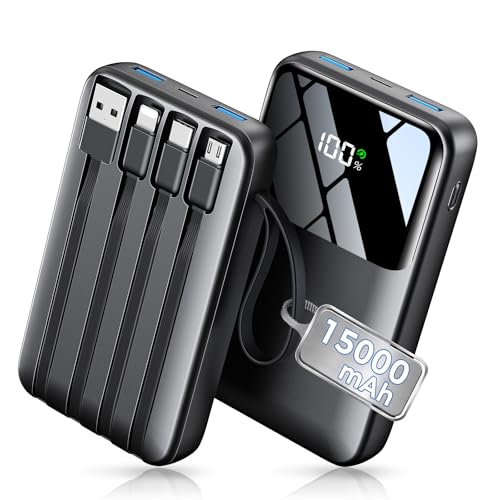
Up to 3.5 Phone Charges On the Go: Compact and easy to carry, this 15,000mAh power bank keeps you powered for travel, commuting, and emergencies. Charges iPhone 17 up to 3.5 times, Samsung S26+ up to 2.5 times, and AirPods Pro up to 20 times.
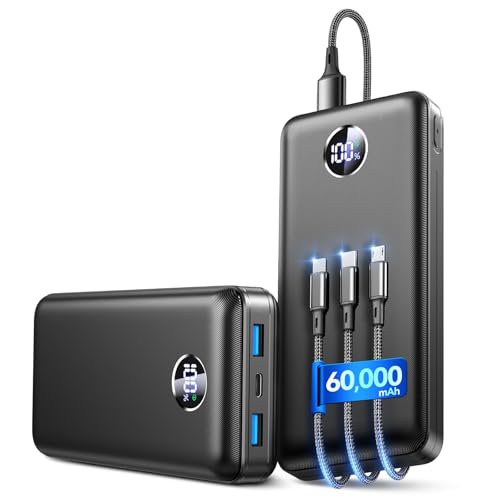
Large Power Bank Capacity: Engineered with a premium 60,000mAh battery pack, the portable charger delivers multiple full charging cycles to keep your essential devices powered for days. It provides up to 10 full charges for an iPhone, making it a reliable power solution for travel, camping, school, hiking, and emergency use. Stay connected during blizzard power outages, extended beach vacations, and other outdoor adventures.

🔋Double the Capacity, JUST 35% HEAVIER: With twice the capacity of standard power banks, this 20,000mAh portable charger with built-in cords powers an iPhone 16 up to 3 times, Galaxy S24 up to 2.9 times, and Google Pixel 9 up to 2.3 times, perfect for weekends away, business trips, or vacations.(Note: This 77Wh power bank complies with airline carry-on regulations for batteries under 100Wh and must be placed in carry-on baggage.)
Footwear
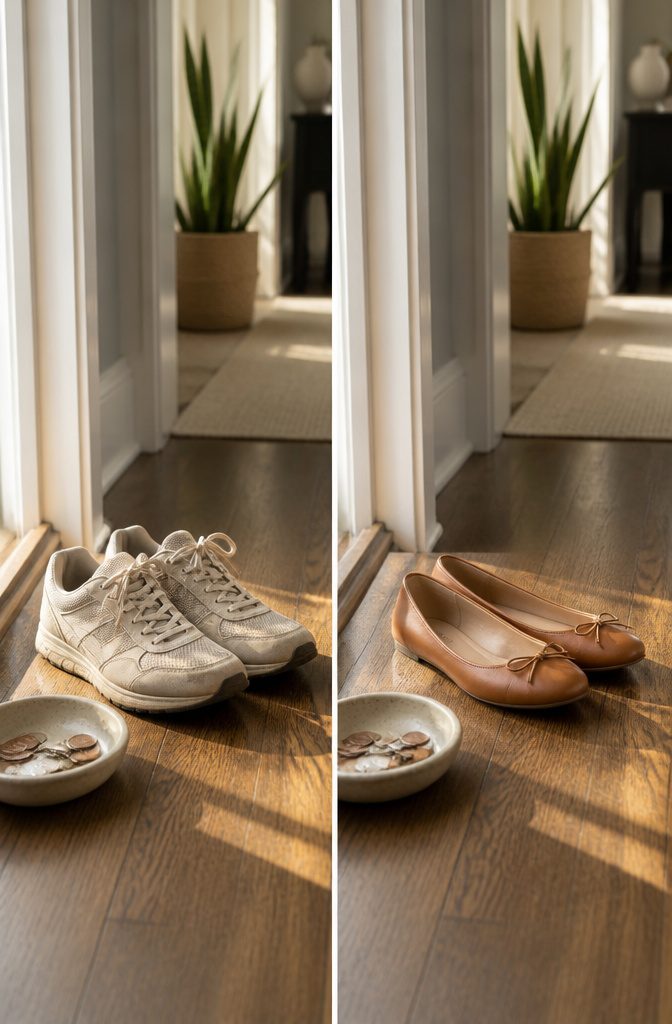
Two pairs of shoes will carry you through a full week if you choose them right. One comfortable walking shoe and one versatile pair that can dress up covers almost every situation without the weight of a third option.
For the walking shoe, support matters more than style. The hours add up fast on cobblestones, airport terminals, and the trail behind your rental that looked short on the map. I spent one trip in Florence with shoes that were fine for an hour, and by day three I was splitting my day into twenty-minute walking segments with coffee stops to recover. A broken-in pair with real structure saves both your feet and your itinerary.
The second pair should handle dinner reservations, casual museums, and anything the walking shoe looks too athletic for. A clean leather boot or a simple flat works, and in a pinch it can sub for the walking shoe if the first pair gets soaked.
Pack shoes sole-out at the bottom of your bag, or slide each into a grocery bag to keep street grit off your clothes. The pair you wear on the plane should be the bulkier one; that alone frees up the space of a small packing cube. Flip-flops are light and pack flat if your rental has a shared shower or pool, though they are not a substitute for real support.

Premium Fabric: Smooth and durable fabric protects clothes from wrinkles and stains; high performance feature makes the packing cubes can bear high density wear and tear during traveling; water-repellent feature protect your clothes from spill or leaks
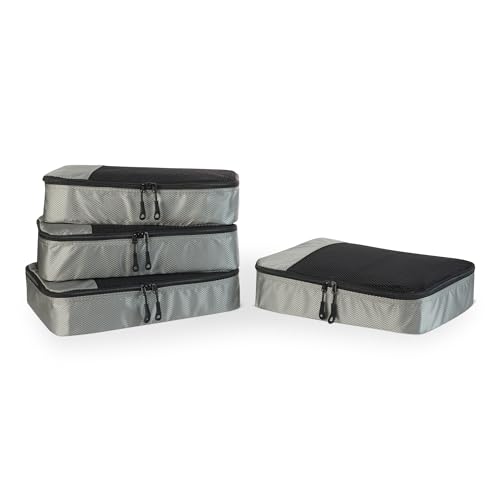
SPACE-SAVING DESIGN FOR TRAVEL & HOME: Compact and efficient at 13.75'' L x 9.75'' W x 3'' H (each), these packing cubes fit perfectly in suitcases, duffel bags, backpacks, and totes, making them ideal for business trips, vacations, camping, and cruises. You can also use them at home to maximize closet space and keep items organized and easy to find.

Premium Fabric: Smooth and durable fabric protects clothes from wrinkles and stains; high performance feature makes the packing cubes can bear high density wear and tear during traveling; water-repellent feature protect your clothes from spill or leaks
Outerwear

A single midweight jacket does more for a week-long trip than any stack of specialized layers. Fleece or a light puffy packs small enough to forget in your bag until an evening temperature drops twenty degrees and you are the one still comfortable at dinner outdoors. That happened to me once in coastal Maine, where afternoon sun gave way to fog so fast that people in paper-thin windbreakers were shivering through the walk back. One sweater or jacket, chosen for the weather you actually researched, beats guessing wrong with three.
Layering means each piece earns its space. A light jacket over a long-sleeve shirt handles most variable days; add or subtract rather than swap entire outfits. Waterproof or windproof outer layers matter more than insulation if rain is likely, since wet cold cuts deeper than dry cold. Thermal underwear belongs on the list only for genuinely cold destinations, not for "just in case" packing that never leaves the bag. Scarves, gloves, and a hat take up little room and bridge the gap when a jacket alone is not enough, but skip them for warm-season trips where they serve no purpose you will actually meet.

Convenient Travel Set: This pack includes 5 empty refillable travel size bottles with black flip caps with stickers labels, perfect for carrying your toiletries while on the go.

Size That Fits Any Adventure : Tailor your travels with our compact and versatile Travel Size Toiletries set. Each of the 4 empty travel bottles is thoughtfully designed to fit snugly into your carry-on, ensuring you have all your essentials without compromising space.

Premium Quality: Our travel bottles are made of food-grade PET plastic, which is BPA free, lightweight and refillable with high chemical and impact resistance
Accessories
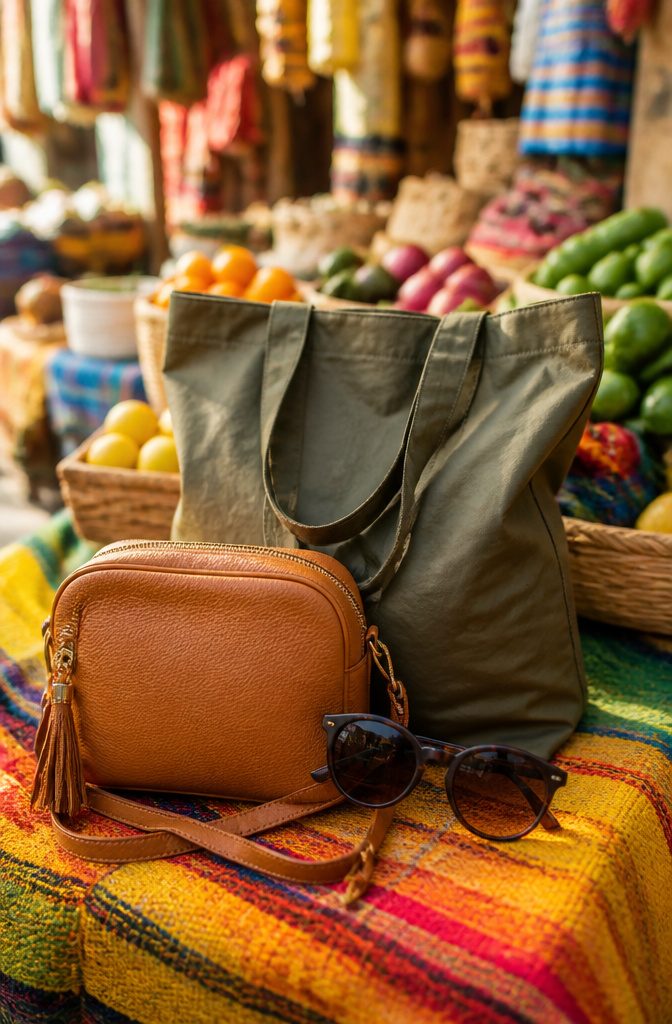
A week-long trip tempts you into bringing the full drawer. Sunglasses are non-negotiable, but one pair that actually blocks UV beats three fashion frames that stay wrapped in your bag. I learned that on a coastal trip where my backup aviators never left the case.
Hats follow the same rule. A crushable wide-brim for sun and a simple cap for wind or rain cover different conditions without crowding your pack. Belts, jewelry, and scarves add polish, yet two versatile pieces outlast five "just in case" options. Purses multiply fast. A small crossbody for daytime and a foldable tote for market stops are enough. That third bag you picture wearing to dinner? It stays home unless your itinerary genuinely demands it.
The real space wasters hide in the "maybe" pile. I have packed a second swimsuit, extra sunglasses, and a statement necklace I never unwrapped. Now I lay everything out, remove one item, and trust the edit. If it does not serve at least two outfits or two activities, it does not earn its weight in the carry-on.

TRAVEL ESSENTIALS FOR WOMEN, ALREADY PACKED - Travel size shampoo, conditioner, bar soap, toothpaste and deodorant, plus the small accessories you always forget. Sorted and ready to drop in your carry-on.

Excellent Drainage & Quick Drying : The soap case features a removable drainage tray that elevates your soap or shampoo bar, allowing water to drain away quickly. This helps your bar dry faster, extends its lifespan, and prevents it from becoming mushy.

💗WHAT IS IN THE SET - 2 rosemary shampoo bars and 1 coconut conditioner bar, 2.1 oz each (6.3 oz total). A plastic-free solid shampoo and conditioner set for women with fine, thinning, oily or curly hair. Easy to pack for travel and the gym.
Packing Techniques
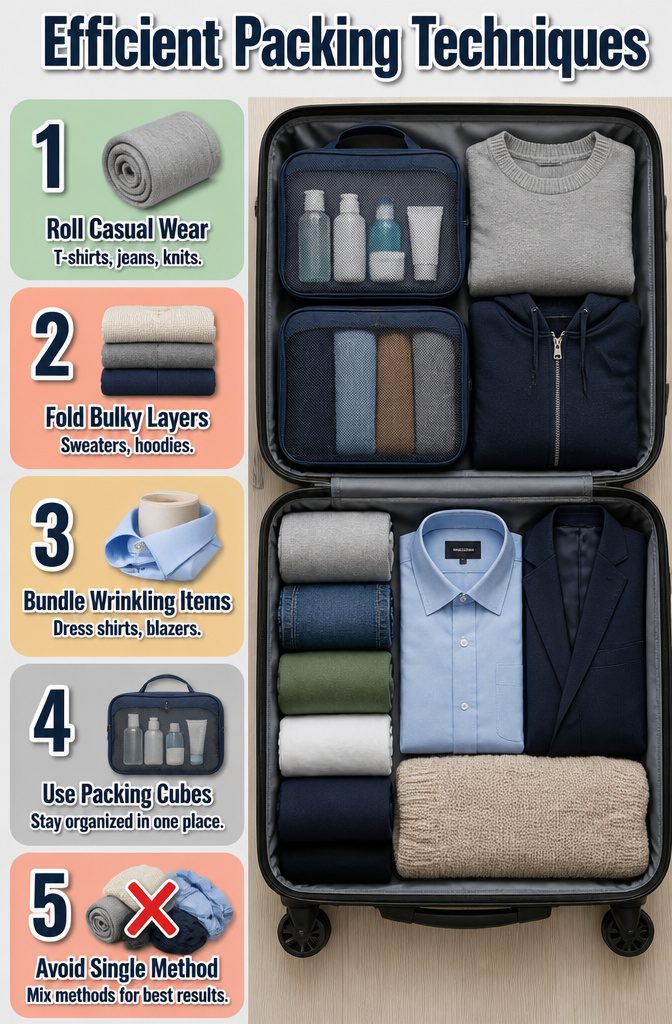
Packing cubes changed how I load a suitcase, though not the way I expected. I bought a set with flexible walls and a handle after reading too many glowing reviews, and the handle turned out to be the real win: one cube stays packed with travel-size toiletries, and carrying it to a shared bathroom beats juggling bottles. For staying organized in one place, they work. For saving space, less so. The cubes themselves add bulk, and the rigid ones fight back when you overfill them.
Rolling clothes versus folding is where the space actually appears. T-shirts, jeans, knits roll tight and come out with only light wrinkling. I rolled everything for a week on Salt Spring and learned the hard way that bulky sweaters and hoodies refuse to cooperate; they fold and stack better. Dress shirts and blazers need neither method. The bundling approach, wrapping each piece around a central core, takes longer but prevents the sharp creases folding creates.
Most trips need all three: roll the casual wear, fold the bulky layers, bundle anything that wrinkles badly. The mistake is committing to one method because it worked once. Rolling a blazer will ruin your first evening out.

【Universal Compatibility】: USB Charger Box compatible with iPhone Duo/18 Pro/18 Pro Max,Air/17/17e/17 Plus/17 Pro/17 Pro Max,16/16e/16 Plus/16 Pro/16 Pro Max,15/15 Plus/15 Pro/15 Pro Max,14/14 Plus/14 Pro/14 Pro Max,SE3/2/1,13/13 mini/13 Pro/13 Pro Max,12/12 mini/12 Pro/12 Pro Max,11/11 Pro/11 Pro Max,XS/XS Max/XR/X,8/8 Plus,7/7 Plus,6s/6s Plus,6/6 Plus,5s/5c/5,iPad Air/Air 2/iPad mini/mini 2/mini 4/iPad 4th gen/Samsung Galaxy/S26-S6 LG and More.

👍 2-Pack 40W Fast Charging Block- BECHAGE USB C Charger Block supports the Power Delivery and Quick Charge 3.0 fast charging functions with a total power of up to 40W. Our USB C Charger Plug Offers fast and efficient charging, Charge your iPhone devices from 0% to 60% in just 30 minutes.

【Premium Performance】Dual-USB Charger output cell phone charger with a total current of 5V/2.4A and input with 110-130V,It can simultaneously charge two mobile devices, allowing you to save more time
Travel Gear
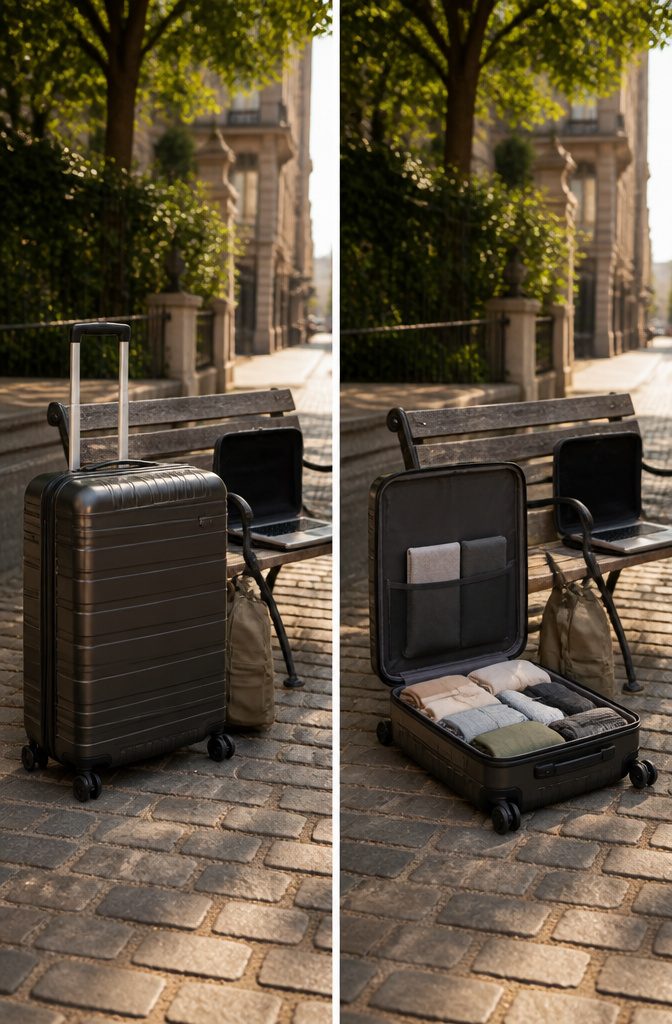
A 22-inch carry-on is the right shell for most week-long trips, and the only bag I trust to stay with me. Checked luggage saves you a middle-seat wrestling match overhead, but a suitcase routed through the wrong city on a Tuesday flight to Denver taught me what the carry-on is really for. That bag, with one change of clothes and a fresh shirt, kept me out of a wedding disaster after my checked roller took its own vacation.
Four wheels that rotate 360 degrees matter more than the brand stamped on the handle. The bags that failed me shared one flaw: wobbly frames that tipped on cobblestones or cracked where the telescoping handle met the shell. A sturdy handle and interior zip pockets for separating clean clothes from worn ones separate the bags that last from the ones that become airport trash. Two pieces, one large and one carry-on size, cover most trips if you are checking anything at all.
Backpacks work if your week involves trains or ferries where rolling is useless, but a 45-liter limit keeps the weight off your shoulders. For a family trip, two medium or large suitcases plus two carry-on backpacks handled a week; anything longer, or a trip where you know you will buy more than you brought, a third duffel or an empty case bought at the destination fills in.

40% Smaller & Lighter Portable Charger: Powered by the industry’s first TinyCell high-density battery technology, this ultra-compact 10,000mAh portable charger power bank is 40% smaller and 36% lighter than conventional chargers. Whether you are an office user slipping a mini small portable battery into a purse for commuting, or a student looking for lightweight college essentials, you get powerful daily carry convenience without the extra bulk to keep you powered on the go.

30% Smaller, Effortlessly Portable: Leveraging industry-first TinyCell high-density battery technology, we’ve shrunk 20,000mAh into a frame 30% smaller than other power banks of the same capacity. At just 11.5oz—the weight of a 330ml can of cola, it slides effortlessly into your crossbody bag.

[MINI SIZE. ULTRA PORTABLE CHARGER]: Roughly the size of an AirPods Pro case, this smallest power bank packs 10,000mAh of long lasting power into a tiny, nano footprint. Easily slide this ultra slim, credit card size charger into your skinny jeans, a pocket, or a small purse for a night out at a concert or Disney—giving students, women, and men maximum high capacity backup power with zero bulk.
Laundry on the Road
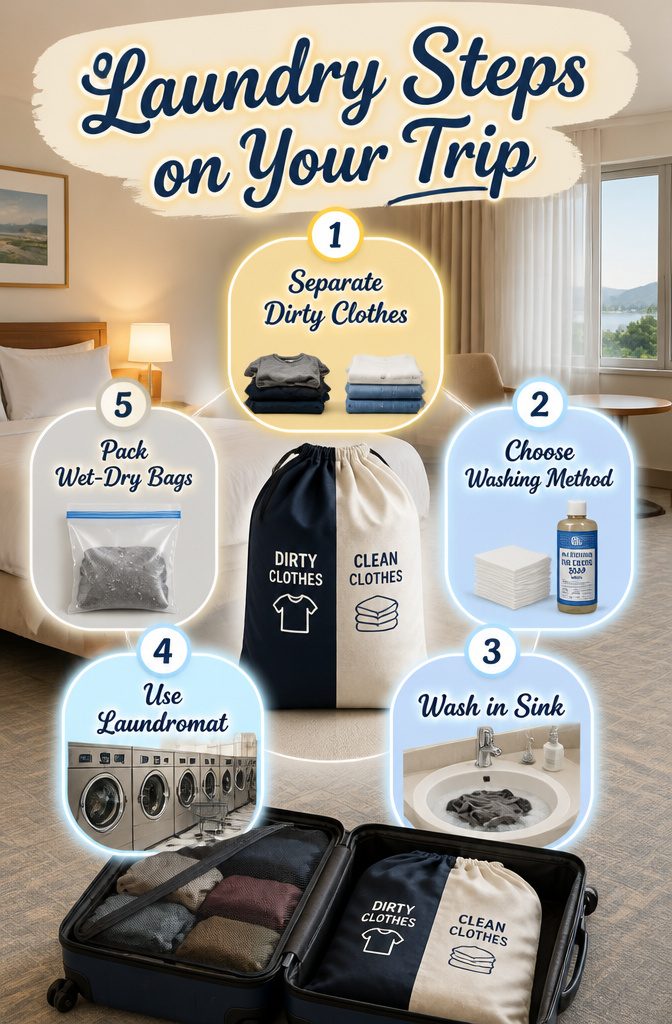
A laundry bag separates dirty clothes from clean ones inside your suitcase, and by day four of a seven-day trip that separation starts to matter. I used to throw everything together and tell myself I would sort it later. Later turned out to be the night before I flew home, with no time to wash anything.
Detergent sheets or a small bottle of Dr. Bronner’s soap give you two paths for sink-washing. The soap route doubles as body wash and shampoo, which saves packing separate bottles. A traveler I read about skipped the sheets entirely and used hotel soap instead, which works until the hotel stocks something that smells like industrial disinfectant and leaves your shirt smelling the same.
Sink-washing takes ten minutes of active work and a full day of waiting for cotton to dry. A laundromat costs more and eats an hour of your trip, but your clothes finish actually clean and dry. For a week-long trip, I do the math around day three: two more days of heat and humidity means sink-washing tonight, or one laundromat stop tomorrow that frees up the rest of the week.
Wet-dry bags or large Ziplocks handle the in-between days when something is too damp to pack but you are checking out in the morning.
Health and Safety
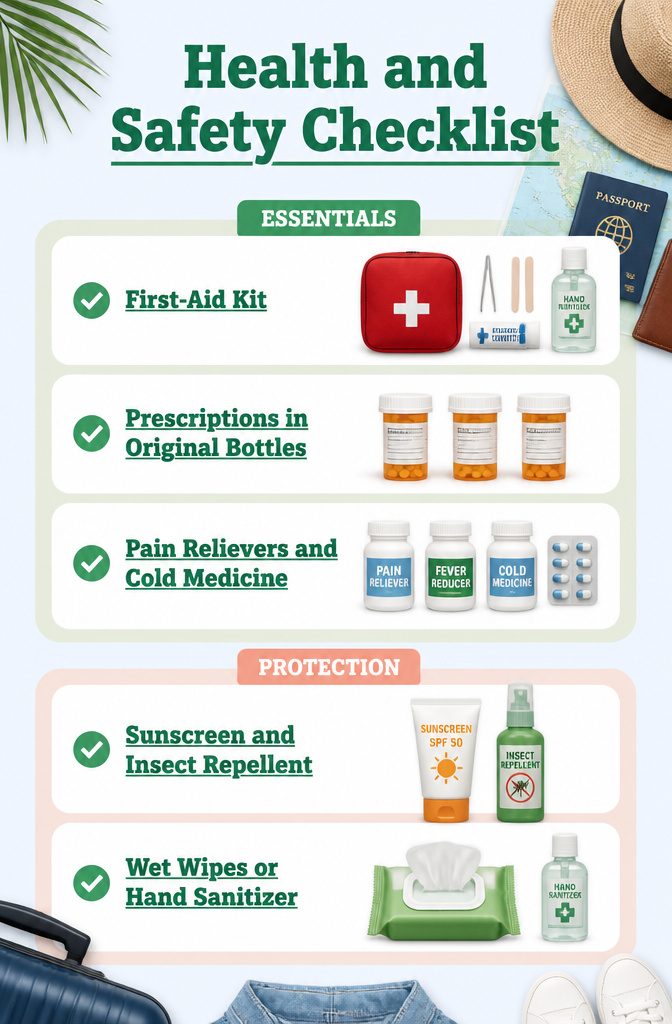
A minimal first-aid kit for a week away fits in a palm-sized pouch: tweezers, bandages, first-aid ointment, and a travel-sized hand sanitizer. That last one matters more than most people think. I used to toss a single bottle in my toiletries bag and call it handled, until a bout of food poisoning in a place with no pharmacy within walking distance taught me redundancy beats optimism.
Prescriptions stay in original bottles, always in your carry-on, never checked. TSA agents and customs officials both have reason to ask, and loose pills in a day-container read as suspicious. Digital copies of labels, stored in a secure cloud service, back you up if a bottle goes missing.
Pain reliever, fever reducers, cold medicine, and something for stomach trouble cover the common ailments sources flag repeatedly. Sunscreen and insect repellent belong here too, not just in toiletries, because both are health items before they are grooming ones. Throat lozenges and vitamins round out the kit without adding bulk.
The non-negotiables sit with your passport and ID in the same carry-on pocket: essential medication, wet wipes or hand sanitizer, and a change of clothes. If your checked bag spends three days on another continent, you need to keep going without it.
Frequently Asked Questions
What should I pack for a week-long trip?
A smart week-long packing list centers on eight shirts and two pairs of pants using the 3-to-1 rule for tops to bottoms, plus one dress for dinners or special occasions. Add toiletries in TSA-compliant sizes, a portable power bank, printed travel documents kept in your personal item, a minimal first-aid kit, and two pairs of shoes. The article breaks each category down with specific numbers so your bag stays carry-on sized without leaving essentials behind.
How do I pack light for a week-long trip?
Follow the 3-to-1 rule for tops to bottoms, which means roughly eight shirts and two pairs of pants for seven days, giving you sixteen combinations without bulk. Roll casual clothes, fold bulky layers, and bundle wrinkle-prone pieces rather than sticking to one method. Packing cubes help with organization, but they do not compress space the way rolling does. Dark, breathable fabrics that sink-wash easily let you re-wear pieces without looking rumpled.
What toiletries should I bring?
Pack toothpaste, toothbrush, shampoo, conditioner, and body wash in containers under 3.4 ounces, with all bottles fitting one clear quart bag. Solid bars bypass TSA limits entirely and eliminate spill risk. Keep medication and contacts in your carry-on, not checked luggage, since hotels can replace forgotten toothbrushes but pharmacies abroad may not match your prescriptions.
How many pairs of shoes should I pack?
Two pairs cover a full week: one broken-in walking shoe with real support, and one versatile pair that dresses up for dinners or museums. Wear the bulkier pair on the plane to free suitcase space. Flip-flops pack flat for shared showers or pools, but they do not substitute for proper support on long walking days.
What travel documents do I need?
Your passport, visas if required, driver’s license, health insurance card, printed boarding passes, and a one-page itinerary all belong in your personal item, never in checked luggage. Keep originals in a slim interior pocket and photocopies in a separate bag. Digital backups help, but paper still wins when your phone dies or airport WiFi fails.