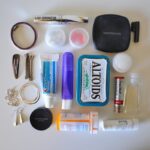
You can fit a full week into a carry-on in about twenty minutes, but only if you decide what earns its place before the suitcase opens. Most people skip that list and pay for it in bulk, fees, and a bag that face-plants every time they set it down. The 5-4-3-2-1 method fixes that: five tops, four bottoms, three pairs of shoes, two accessories, one jacket. Three pairs of shoes is the ceiling, not a suggestion, and the heaviest pair belongs on your feet at the airport.
1. Plan Outfits Before You Pack
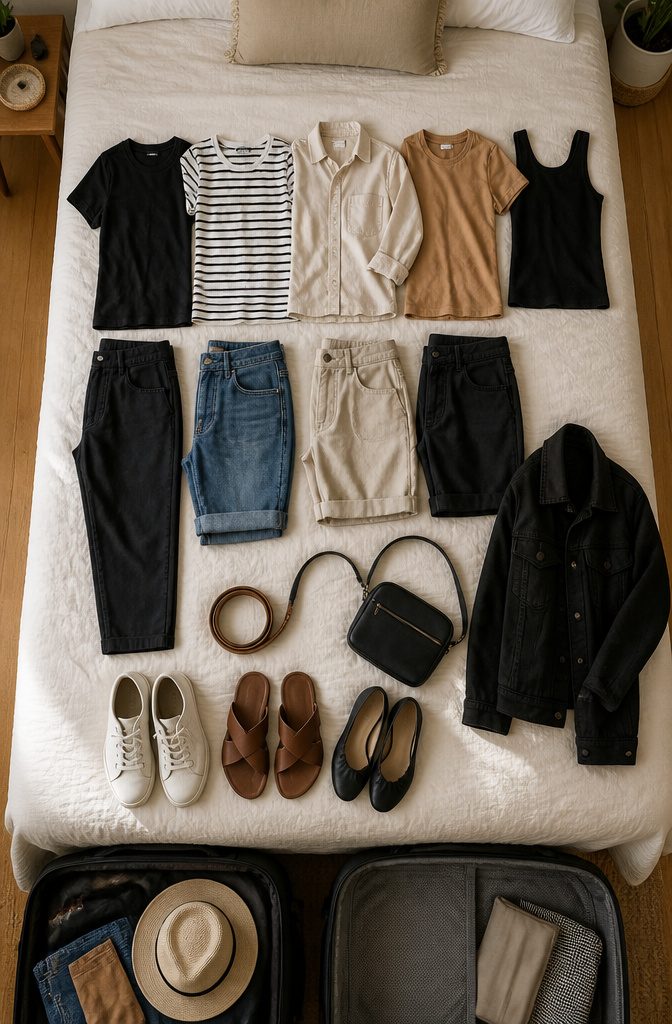
The 5-4-3-2-1 method keeps a week-long trip to five tops, four bottoms, three pairs of shoes, two accessories, and one jacket or dressy layer. That count forces each piece to earn its place. A single pair of dark pants might pair with three different shirts; one light scarf shifts a daytime outfit into evening territory. Shoes are where most travelers lose discipline. Three pairs is the ceiling: wear the heaviest ones to the airport and pack the lighter two.
A written list made before the suitcase opens stops the "just in case" additions that fill half the bag. Lay the chosen items out on a bed first. Seeing everything together reveals the redundancies a list hides. One extra shirt looks harmless on paper; next to the others, it is dead weight.

【8PC Set Large Capacity】Different sizes of travel essential bag sets can store classified clothes, dirty clothes, bras, underwear, footwear, cosmetics, towels, toiletries and electronic accessories. It is a good travel companion.

How to Compress:The cube is compressed by the middle zipper; Using steps: 1)Fold and flatten clothes 2)Pack clothes in the cube and zip the front zipper 3) Put a finger on the back of the middle zipper when compressing to avoid zipper get stuck in fabric

All-in-One Organization for Your Travel Needs - This 9-piece set includes four compression cubes (S/M/L/XL) for systematic packing: S for underwear/socks, M for T-shirts and shirts, L for jeans and light sweaters, and XL for coats or bulky items. Also features two PVC toiletry/makeup bags, a machine-washable laundry bag, a shoe bag, and a multi-purpose zippered pouch—keeping your luggage tidy and efficient.
2. Start With Shoes and Bulky Items
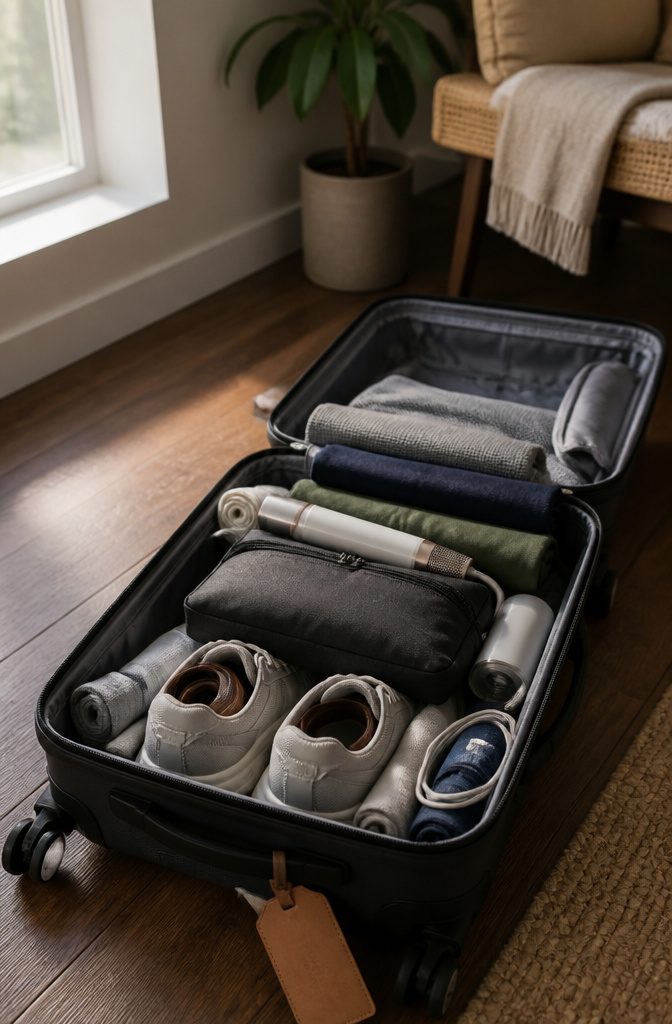
Shoes go at the bottom, sole-down against the wheel end of the suitcase. Their weight keeps the bag from tipping forward when you stand it up, and the hard shell of a boot or sneaker doesn’t care about the pressure from clothes above it. I learned this the hard way after a flight to Portland where my duffel-style bag kept face-planting every time I set it down.
The gaps around shoes are where socks, belts, and loose accessories disappear. Stuff a rolled belt into the hollow of a high heel, tuck underwear into the toe of a loafer, wedge a charging cable beside a sneaker’s arch. Shoe bags or even a basic zippered pouch keep dirty soles from grinding road dust into the blouse you packed for dinner. The pouch doesn’t need to be anything special; a grocery-store produce bag works in a pinch, though it tears by day three.
Heavy items beyond shoes belong down there too. A toiletry bag with full bottles, a thick paperback, the hair tool you swear by; all of it rides low and centered. Once that base layer is solid, the lighter stuff above it stays where you put it instead of sliding into a heap the first time the bag gets tossed onto a luggage belt.

【High Quality Shoe Organizer Bag】: Designed for travel people, our shoe bag is made of high quality twill fabric material, more environmentally friendly, waterproof, stronger and more durable than general Oxford cloth material, two-way circular zipper design, smoothly slide up and down, will not easily wear or break, safe for long time use.

TRUSTED BY TRAVELERS – AS FEATURED IN CNN UNDERSCORED: Selected among the best travel shoe bags by CNN Underscored, this bag holds up to 6 pairs of shoes when fully opened — more room than you'd expect from a compact 40 x 35 x 22 cm design. A thoughtful gift for birthdays, weddings, or any frequent traveler.

Stress-Free Traveling: Packing cubes help sort, organize, and quickly locate items, reducing the stress of packing. Keep your belongings in order, and avoid the frustration of unpacking for just one item. Enhance your journey with efficient organization.
3. Fold Structured Garments Flat
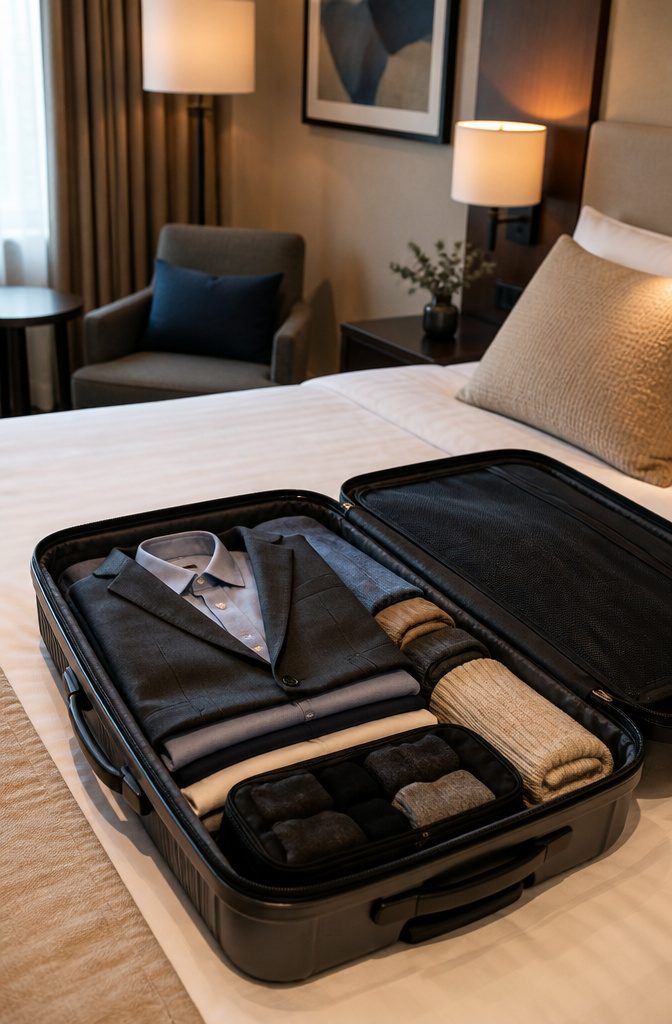
Flat folding is the move for anything with structure. Blazers, dress shirts, tailored jackets, heavier fabrics — these pieces need the support of a clean fold to keep their shape intact through transit. The method is straightforward: fold each garment into a relatively consistent square, then stack those squares neatly in your suitcase. Rolling works wonders for t-shirts and jeans, but folded structured garments arrive with fewer wrinkles than rolled ones, which matters when you’re heading straight from the airport to a dinner reservation.
The tradeoff is real. Folded pieces take up slightly more space than rolled items, and they do not compress as tightly. I pack folded stacks flat against the hard side of the suitcase, where they stay put and keep their edges crisp. The technique pairs well with rolling: reserve folding for your formal layer, roll the casual layer, and you protect the pieces that cost you the most to replace.

What Will You Get: BAGSMART 6 set compression packing cubes includes 1 large cube (11.6'' x 12.6''), 2 medium cubes (9.3'' x 13.2''), 2 small cubes (8.3'' x 11.6'') and a drawstring shoe bag (13'' x 17.7''). Different sizes can be used for different packing purposes, helping us quickly sort, organize and find our items while traveling

Travel Vacuum Bags: Effortlessly maximize your packing efficiency with our travel vacuum bags. These bags compress clothes by up to 80%, significantly reducing the space they occupy. This not only optimizes your luggage space but also leaves ample room for other travel essentials.

6 Set Compression Packing Cubes - If you'll be preparing multiple outfit options for your travel, you no longer have to sacrifice style for luggage space when you come across BAGSMART PACKING CUBES. Large for jackets, sweaters, and trousers, Medium for shirts, and blouses, Small for underwear, drawstring can be used as a laundry bag to separate your dirty/wet clothes or shoes.
4. Roll Casual Clothes Tight
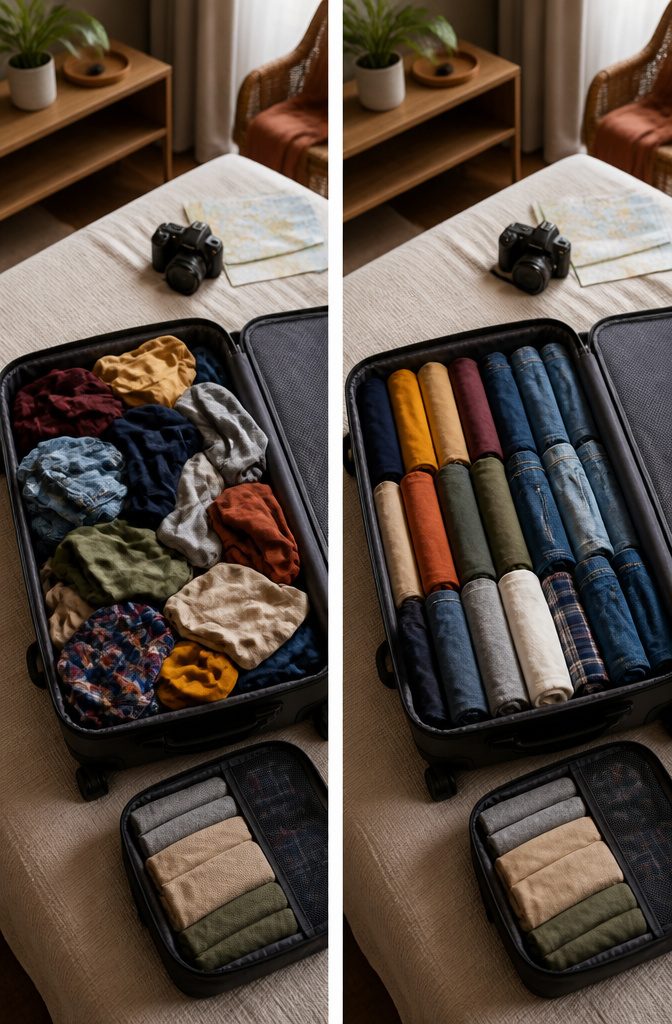
T-shirts and jeans pack smaller when rolled tight into cylinders rather than folded flat. The technique works best on knit fabrics, which resist creasing, while woven materials like dress shirts will still wrinkle. Lay the item flat, smooth it out, fold sleeves or legs inward to form a rectangle, then roll from the bottom up while keeping tension even. A tight roll compresses cotton knits to roughly half the folded bulk and creates pliable tubes that wedge into the gaps between bulkier folded items along the suitcase sides. I skip rolling anything with a crisp collar or structured shoulder, those stay folded on top, but a stack of rolled tees fills the dead space around shoes or a toiletry bag in ways folded stacks never manage. The tradeoff is upfront time: ten minutes of rolling at home saves more space than it costs, though a rushed, loose roll creases worse than a fold.

KEEP ORGANIZED - Perfect for minimizing clothing wrinkles clean when traveling ! A must-have traveling suitcase accessory, keeping your clothes compartmentalize and organized

PREMIUM QUALITY - Made from ripstop polyester for long lasting durability. Will last you for years of travel to come! Perfect for holding clothes for long trips or just an extra change of clothes for frequent business travelers.
PP composite material is with better toughness, anti-aging, more than 3-year service life.
5. Bundle Around a Core
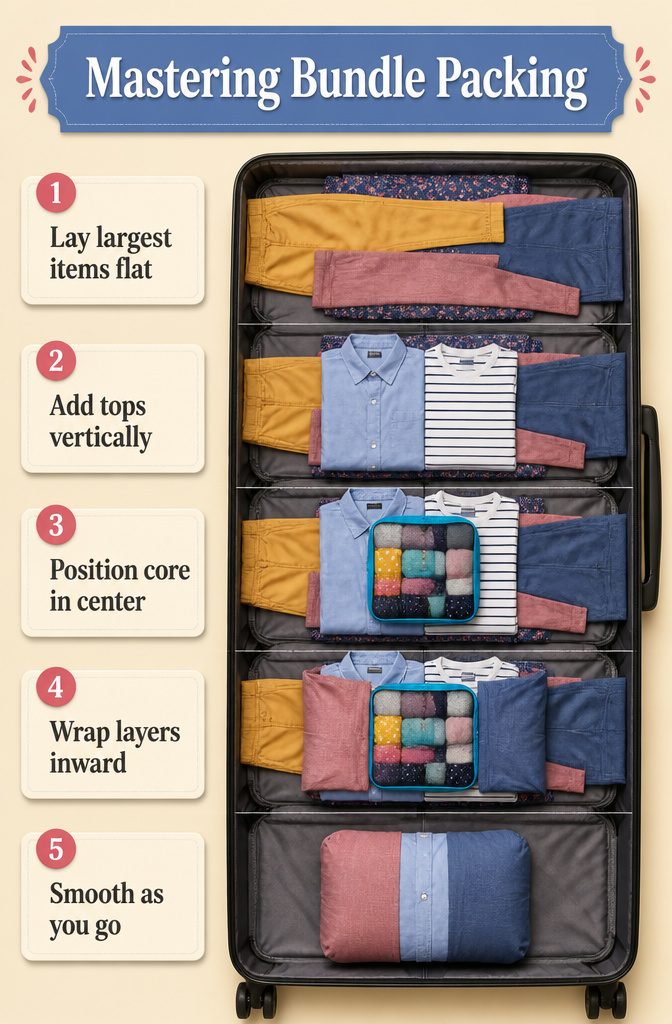
Bundle wrapping asks more of you than rolling clothes into tubes, but the payoff is the fewest wrinkles of any packing method. The catch is that reaching one shirt means unwrapping the whole bundle, so this works best when your destination has space to lay things out.
Your core should be small and somewhat soft: a packing cube stuffed with socks, a travel toiletry pouch, even a rolled-up belt. Lay your largest items flat first, pants and maxi skirts horizontal with legs extending to alternating sides, waistbands flipped 180 degrees each time. Add tops vertically in the same crisscross pattern, then place the core in the center and wrap each layer inward, smoothing as you go.
The bundle ends up more compact than you’d expect, with the tension of wrapped fabric holding everything together. Getting the tightness right takes a few tries: too loose and clothes shift, too tight and you create the very creases you were avoiding. For longer trips or when you need a blazer to look sharp straight out of the bag, the practice pays off.

Easy Packing: No need to put your suitcase on the floor. With the help of the folding luggage rack, your guests can easily open the suitcase at a comfortable height. Save time and effort

UNIQUE DOUBLE-LAYERED STRUCTURE: MATEIN mens garment bag is designed with two separate compartments offering double the storage capacity to accommodate twice the amount of suits. Both compartments have 2 adjustable tie-down straps and a foam-padded middle strap to keep your garments in place, preventing wrinkles and ensuring they stay neat. This travel garment bag enhances the convenience and efficiency of packing for business trip

MUTI-FUNCTIONAL COMPARTMENTS: Main compartment includes suit pocket and multiple interior zipper pockets, Mesh pocket is great for ties and bow ties; 2 zipper pocket storage belts shirts socks personal toiletries; a pocket with magic tape great for shoes. Organizer compartment great for passport, business card and other small items; Front Zipper pocket and Back invisible pocket for your documents notepads and magazine;the large garment bag keeps organized and takes the hassle out of packing
6. Stand Clothes Upright
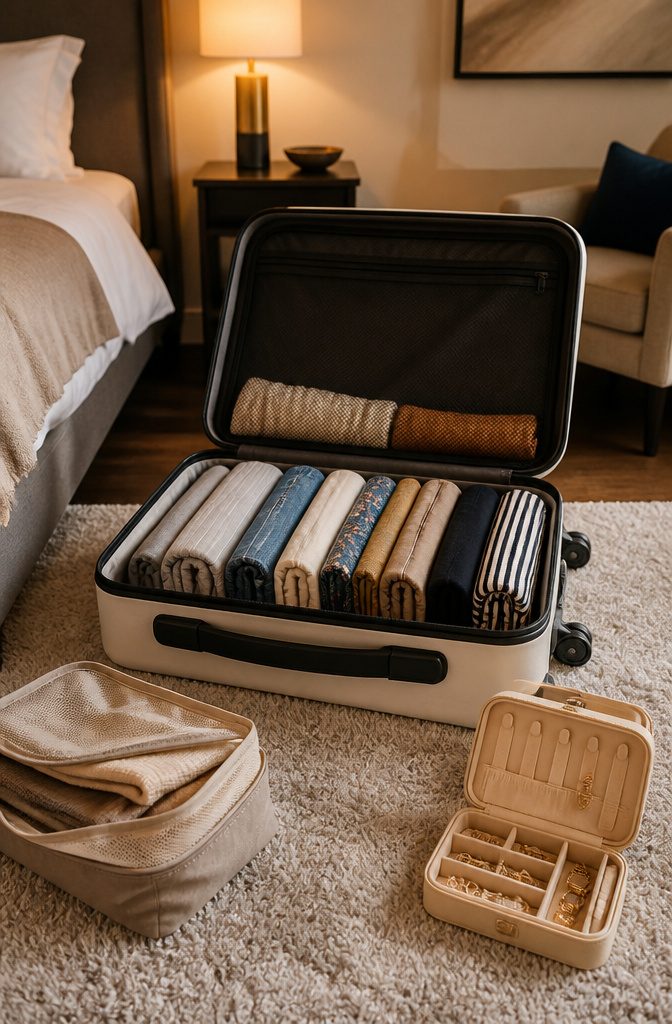
Marie Kondo’s folding method works in a suitcase the same way it works in a drawer: each garment becomes a small rectangle that stands on edge. You fold the sides of a top toward the center, tuck the sleeves, then fold lengthwise into halves or thirds until the piece can sit upright like a file folder. Pants get folded in half vertically, then into the same compact rectangle.
Standing clothes upright changes what you see when you unzip your bag. Every item is visible at a glance instead of buried under a stack. The method pairs naturally with packing cubes, which hold those upright rows in place during transit. One large cube handles bulkier layers, a medium one takes dresses, and a third manages tops. You sort by category as you fold, so finding tomorrow’s outfit means lifting one cube and scanning a single row of edges.
The tradeoff is time. Refolding after a hotel search takes longer than shaking out a rolled shirt. Soft-sided bags also complicate the upright approach; the walls flex enough that laying the rectangles flat sometimes protects the structure better than a true vertical file. For rigid hard-shell suitcases, the upright method holds its shape and its promise of visibility.

5-PIECE TRAVEL CUBE SET, EXACT SIZES: 4 suitcase packing cubes for travel — Extra Large (17.5"×12.75"), Large (13.75"×12.75"), Medium (13.75"×9.75"), Small (11"×6.75") — plus a Laundry Bag (20.5"×15.75"). All cubes are 4" deep and sized to cover every clothing category for women and men. Fits standard carry-on and full-size checked luggage.

PACK FASTER & ORGANIZE YOUR SUITCASE BETTER - An assortment of sizes (2PCS, 4 PCS or 6 PCS Set) allows you to keep your personal items well-organized and pack much faster than before. When it's time to unpack, simply place these travel cubes into the hotel drawers or closet.
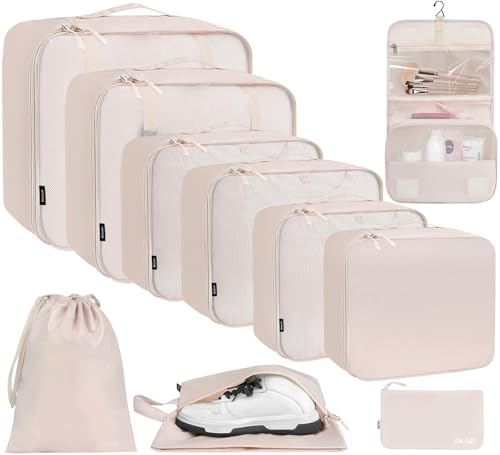
PREMIUM FABRIC: Smooth nylon fabric protects your clothes from wrinkles and stains; High performance feature makes sure these packing cubes can bear high density wear and tear during traveling
7. Sort Into Packing Cubes
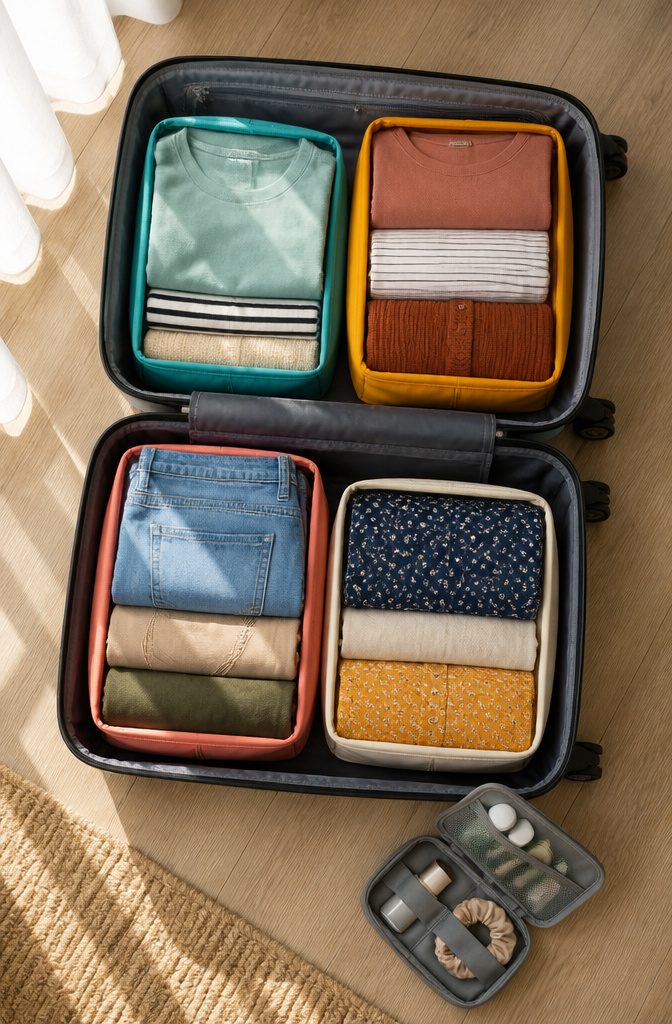
Packing cubes keep clothing sorted by outfit or type so nothing shifts during a flight or unpacks itself in a hotel drawer. I use one cube for tops, another for bottoms, and a third for the specific outfit I need first thing after landing. The clothes stay folded, the suitcase stays neat, and I can pull out exactly what I need without spreading everything across the bed.
Five separate tests back this method, though the benefit is organization, not compression. Packing cubes do not squeeze out air the way compression bags do; they simply hold your folded or rolled clothes in place. Pair them with a tight roll or a flat fold and you get both structure and space. One large cube also works as a dirty-laundry bag on the return trip, which saves me from hunting for a plastic sack at the hotel.
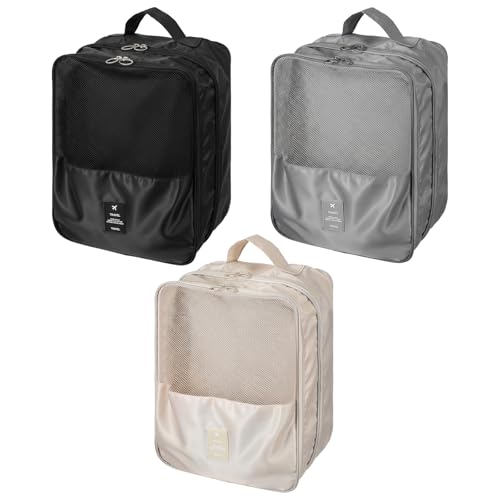
COMPLETE 3-PACK SET: Receive three premium shoe travel bags in stylish beige, gray, and black colors - perfect for organizing multiple shoe types or sharing with family members during trips and vacations.
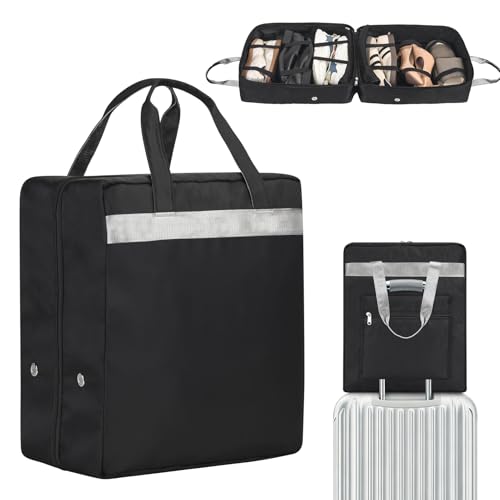
Premium Material for Effortless Travel: This travel shoe bag made from high-quality nylon fabric, offers excellent tear resistance, abrasion resistance, and water-resistant. Shoe storage bag effectively protecting your shoes from stains and damage during trips—so your footwear stays clean and protected wherever you go.

More durable. The travel shoe bags adopt waterproof nylon fabric with double stitching and two-way zippers, which is more durable to use.
8. Compress Bulky Items
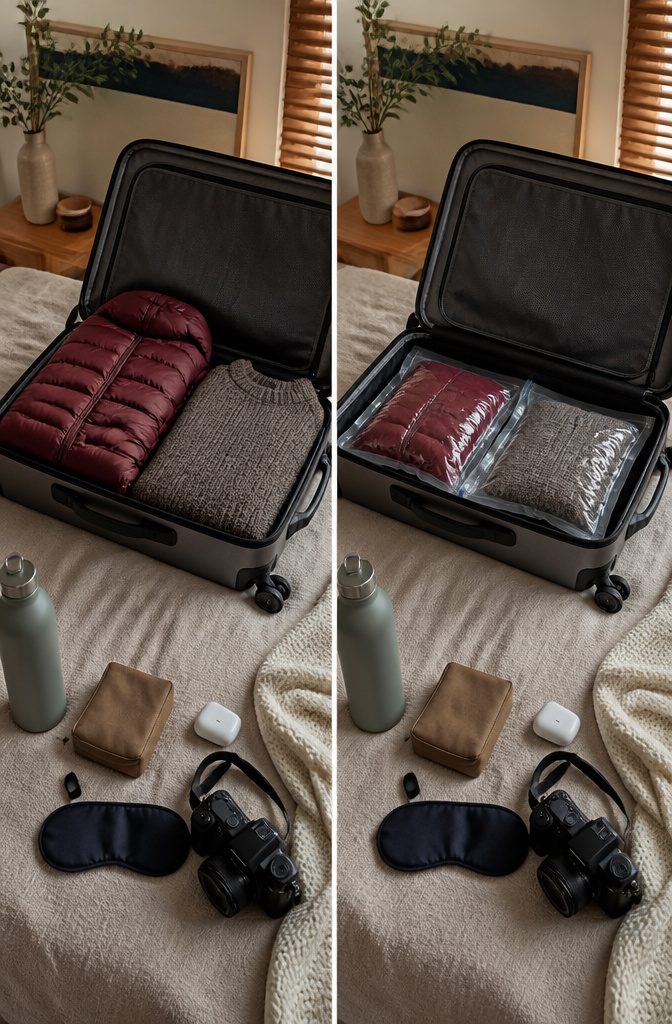
Compression bags pull the air out of puffy jackets and heavy sweaters so they stop eating half your suitcase. You seal the clothes inside, then roll the bag to force the air through a one-way valve. The volume drops dramatically, which is why these work differently than packing cubes: cubes organize and compress lightly, but compression bags flatten bulky items to a fraction of their original size.
The tradeoff is wrinkles. Roll the bag carefully and the clothes come out fairly smooth; rush it and you’ll spend your first morning steaming everything flat. One or two bulky items per bag is the practical limit, so a ski trip or winter getaway usually needs several. For me, the space gained outweighs the wrinkle risk on anything I wasn’t going to hang up immediately anyway.

4 Compression Packing Cubes for Every Trip: Includes 4 sizes to organize clothing for any journey—XL (17.3"×13"×3.5"), L (14.5"×10.6"×3.5"), M (11.8"×8.9"×3.5"), and S (9.8"×7.5"×3.1"). Easily separate jackets, shirts, pants, underwear, and accessories, making these compression packing cubes ideal for suitcases, carry-ons, backpacks, and travel organization

6 Set Compression Packing Cubes: Includes 1 large cube, 2 medium cubes, 2 small cubes and a drawstring shoe bag. Packing organizers of different sizes are used for different packing purposes
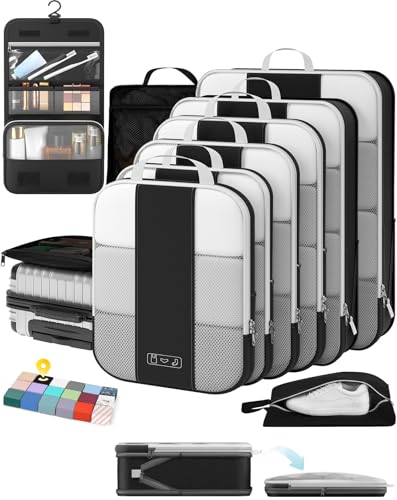
All-in-One Travel Storage Solution - Say goodbye to chaotic packing! This comprehensive set includes four compression packing cubes in varying sizes (XL, L, M, S) to accommodate everything from bulky coats to delicate tops. Plus, enjoy added convenience with a hanging toiletry bag, shoe bag, machine-washable laundry bag, and versatile pouch—all designed to keep your luggage perfectly organized and clutter-free.
9. Layer and Fill Every Gap
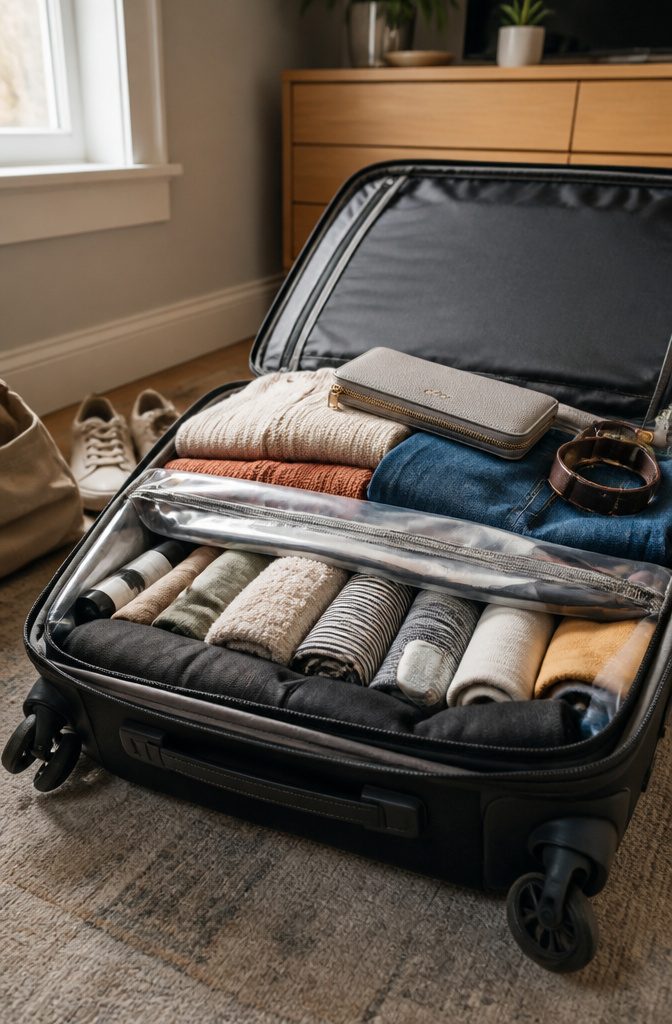
- Place heavier items at the bottom of the suitcase near the wheels so the bag stays upright and doesn’t tip over on airport tiles or hotel carpet.
- Roll or fold your main clothing layer and stack it on top, with lighter, more wrinkle-prone pieces closer to the lid where there’s less pressure from below.
- Slip a dry cleaning bag between each layer. Most fabrics have enough slip that stacks shift in transit; the plastic creates just enough drag to keep everything locked in place and actually reveals extra nooks you can use.
- Fill every corner and shoe cavity with socks, underwear, or accessories. Dead space is space you paid luggage fees to carry empty.
- Finish by tucking lightweight items into any remaining gaps, keeping one quick-change outfit and your travel documents within easy reach at the top.

TRAVEL WITH EASE: These packing cubes make it easy to keep your luggage organized and your clothes wrinkle-free

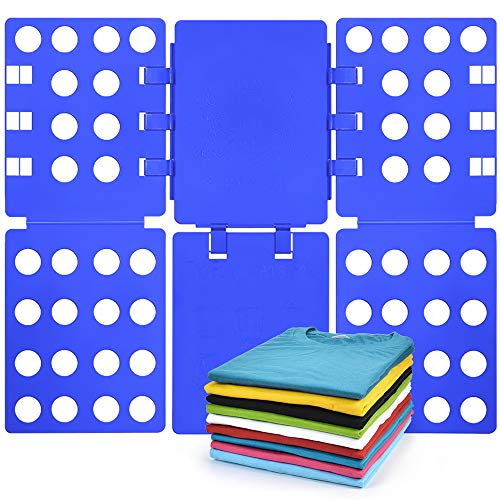
Effortlessly Neat Folds: Simply place your garment on the folding board and follow the easy steps. Anyone can achieve consistently neat folds with ease. Transform your messy piles into an organized, wrinkle-free closet

WRINKLE-FREE TRAVELING: Functional Packing Bag to travel effortless and crease-free with fine shirts or blouses and all accessories.
Rolling Versus Folding
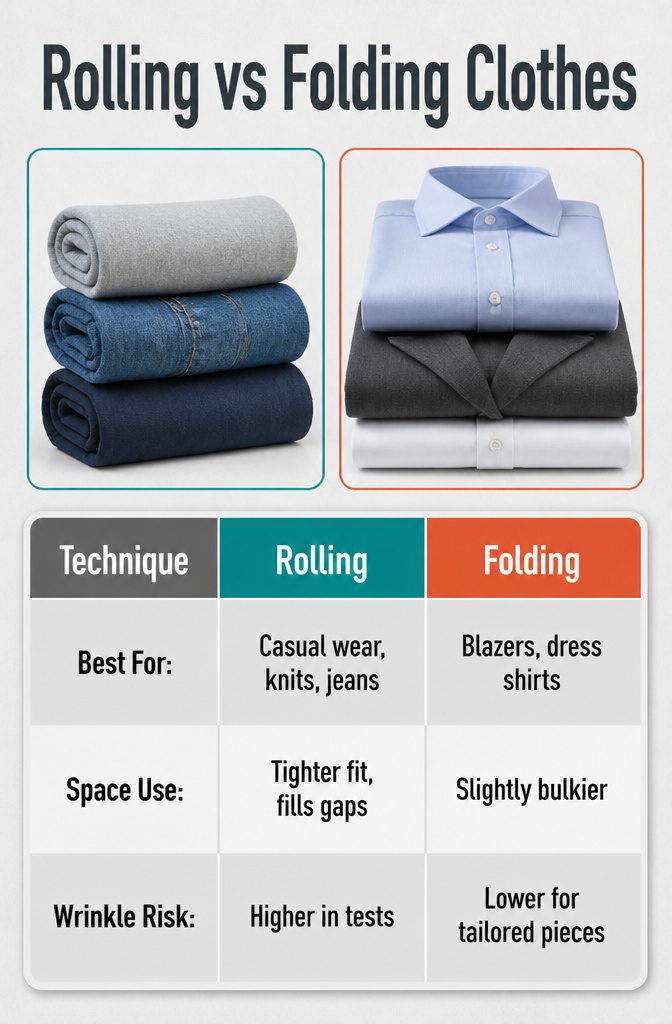
Rolling clothes usually saves more space than folding, but the tradeoff is real: in head-to-head tests, rolled garments wrinkled more. The gap closes when fabric enters the picture.
| Technique | Best For | Space Use | Wrinkle Risk |
|---|---|---|---|
| Rolling | Casual wear, knits, jeans | Tighter fit, fills gaps | Higher in tests |
| Folding | Blazers, dress shirts, structured items | Slightly bulkier | Lower for tailored pieces |
Knits and t-shirts roll well; blazers and dress shirts do not. The decision is split, not either-or. On my own trips, I reserve flat folds for anything with seams or structure that needs to keep its shape, and roll the soft, casual layer that fills the suitcase’s edges and corners. The KonMari fold sits in the middle: more organized than either, less space than rolling, fewer wrinkles than both in direct comparison.

Keep Suitcases Off the Floor: This set of 2 luggage racks is perfect for travelers or guests, elevating your suitcase to prevent bending over or dirtying the bed, making packing easy and reducing travel prep time

CONVENIENT SUIT GARMENT BAG: This garment travel bag is designed to keep clothes neat and organized during trips. With multiple pockets and a foldable structure, it works as a practical suit travel bag for business trips or weekend travel. The detachable shoulder strap allows flexible carrying, making it suitable as a carry on bag for men and women on the go.

Ultra-Portable Design: Engineered for the travel lifestyle, this hanger folds down to a compact 2.8 x 5.1-inch size and weighs just 1 oz (1.3 oz with clips), making it incredibly easy to pack in any bag
Packing Cubes Versus Compression Bags
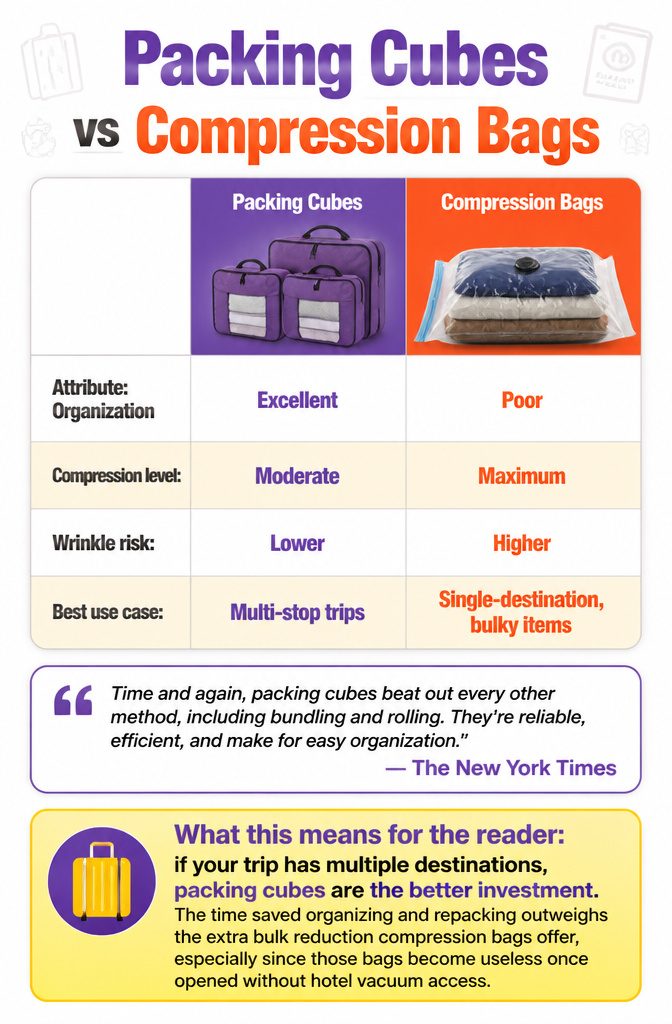
Packing cubes and compression bags solve two different problems, and choosing the wrong one for the trip means either a disorganized bag or wasted space. The cubes keep clothing sorted by outfit or category and make repacking at each stop quick, while true compression bags squeeze out excess air to shrink bulky items like sweaters or jackets down to their smallest volume.
| Attribute | Packing Cubes | Compression Bags |
|---|---|---|
| Organization | Excellent | Poor |
| Compression level | Moderate | Maximum |
| Wrinkle risk | Lower | Higher |
| Best use case | Multi-stop trips | Single-destination, bulky items |
The wrinkle tradeoff is real: compression bags force fabric into tight folds that set deep creases, and most hotel rooms do not have vacuums to reseal them for the return trip. That is a headache worth avoiding if you are moving between hotels.
"Time and again, packing cubes beat out every other method, including bundling and rolling. They’re reliable, efficient, and make for easy organization."
What this means for the reader: if your trip has multiple destinations, packing cubes are the better investment. The time saved organizing and repacking outweighs the extra bulk reduction compression bags offer, especially since those bags become useless once opened without hotel vacuum access.
Specific Packing Lists
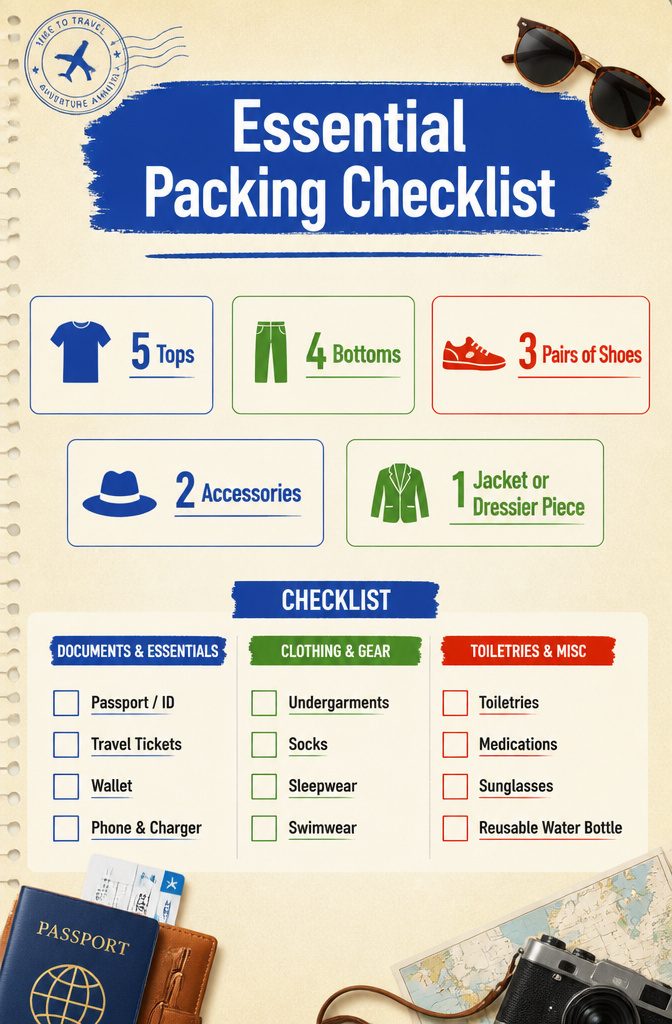
The 5-4-3-2-1 method gives you a hard cap that still covers a week away: five tops, four bottoms, three pairs of shoes, two accessories, and one jacket or dressier piece. The point is not the exact numbers but the ceiling they create. You pick items that mix, not outfits that fight.
Some travelers prefer other list-based frameworks. Minimalist lists work for carry-on diehards; exhaustive lists suit people who unpack specialty gear for each activity. Download a few templates and cut them down until the leftover items match your actual itinerary, not your closet’s greatest hits.
Packing by item rather than by planned outfit is where most of us overfill a bag. A "maybe I’ll wear this" shirt and a "just in case" skirt become dead weight because they were never designed to meet. Lists force the meeting to happen on paper, where the mistake costs nothing.
Jewelry and Accessories
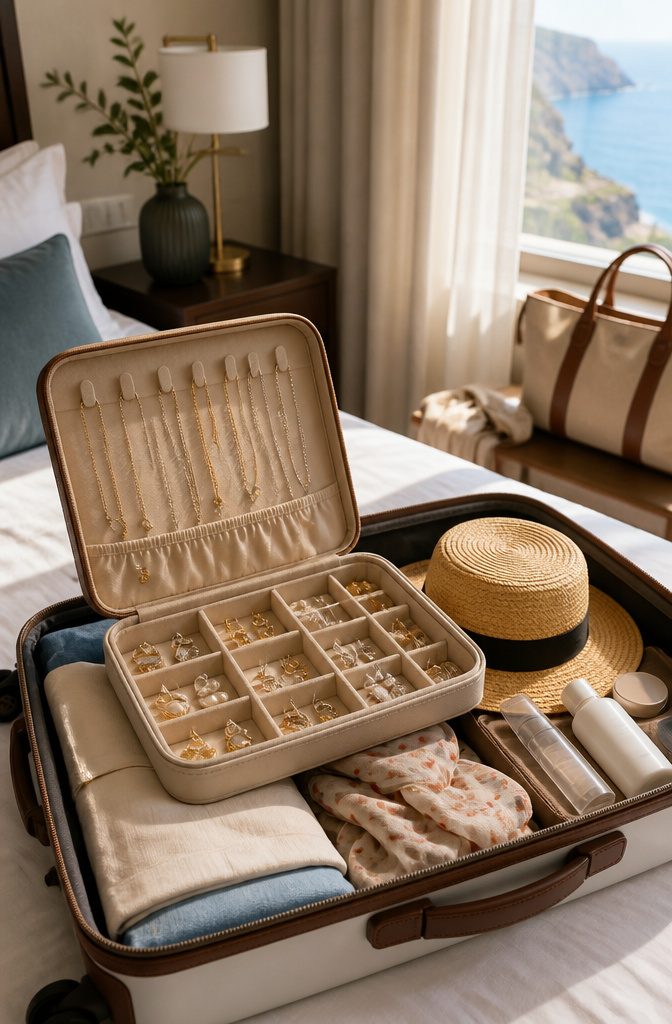
Jewelry is the kind of detail that can quietly wreck an outfit if you let it. A necklace chain tangled into a knot the size of a grape, an earring back gone missing at the bottom of your bag: these are the small failures that turn getting dressed into a ten-minute excavation. A travel jewelry organizer fixes this, and the decent ones keep necklaces separate from each other so they only tangle with themselves, not with everything else you own. I keep mine in a small compartment of the suitcase, not loose in a side pocket where it can slide around. The point is to know exactly where to reach without having to dig through layers of clothing while mentally inventorying what might already be lost. A separate bag or pouch for accessories is the practical floor here, not the ceiling; the ceiling is never having to wonder, at 7 a.m. in a hotel room, whether you packed that second earring at all.
Frequently Asked Questions
Is it better to roll or fold clothes in a suitcase?
Both. Rolling saves more space and fills gaps around bulky items, but it wrinkles fabrics more than folding. Fold structured pieces like blazers and dress shirts flat to keep their shape; roll casual knits and jeans tight to compress them to about half their folded bulk.
What is the least wrinkly way to pack clothes?
Bundle wrapping produces the fewest wrinkles of any method. You wrap layers of clothing around a soft core, like a packing cube stuffed with socks, crisscrossing pants and tops so the tension of the fabric holds everything smooth. The downside is that reaching one item means unwrapping the whole bundle, so it works best when you have space to lay things out at your destination.
How do you fit more clothes in a suitcase?
Plan outfits before you pack, use packing cubes to keep items sorted and stable, and wear your bulkiest shoes and jacket while traveling. The 5-4-3-2-1 method caps a week-long trip at five tops, four bottoms, three pairs of shoes, two accessories, and one jacket, which forces every piece to earn its place.
What should you pack first in a suitcase?
Start with shoes and heavy items at the bottom, near the wheels. Their weight keeps the bag from tipping forward when upright, and hard shoe soles do not mind pressure from clothes above. Stuff socks, belts, and small accessories into the gaps around them, then layer lighter clothing on top.