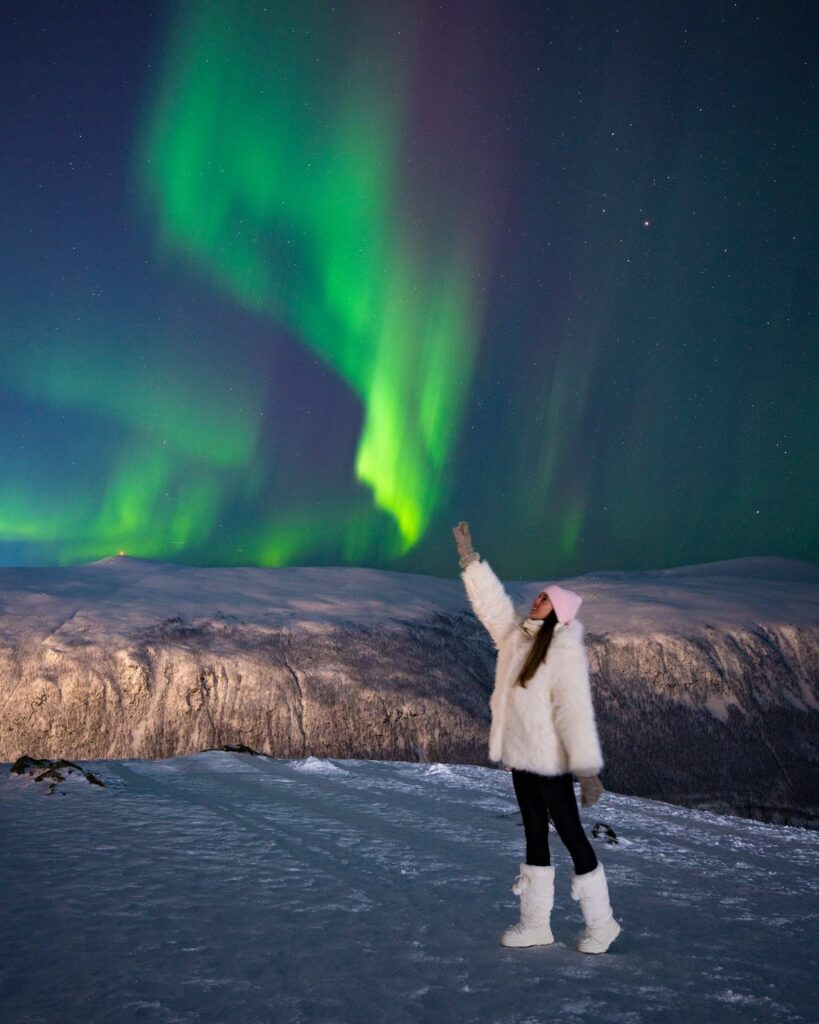
Clouds decide every aurora trip, so the idea that fits you is the one that lets you stay flexible for several nights: a camper van lets you drive toward a gap, while a glass igloo or a rorbu cabin keeps you put in comfort.
Timing narrows the choice further: the best viewing usually falls between 10 p.m. and 2 a.m., and the Best Months for Aurora Activity section below explains why November to March gives the deepest dark.
1. Top Locations for Viewing
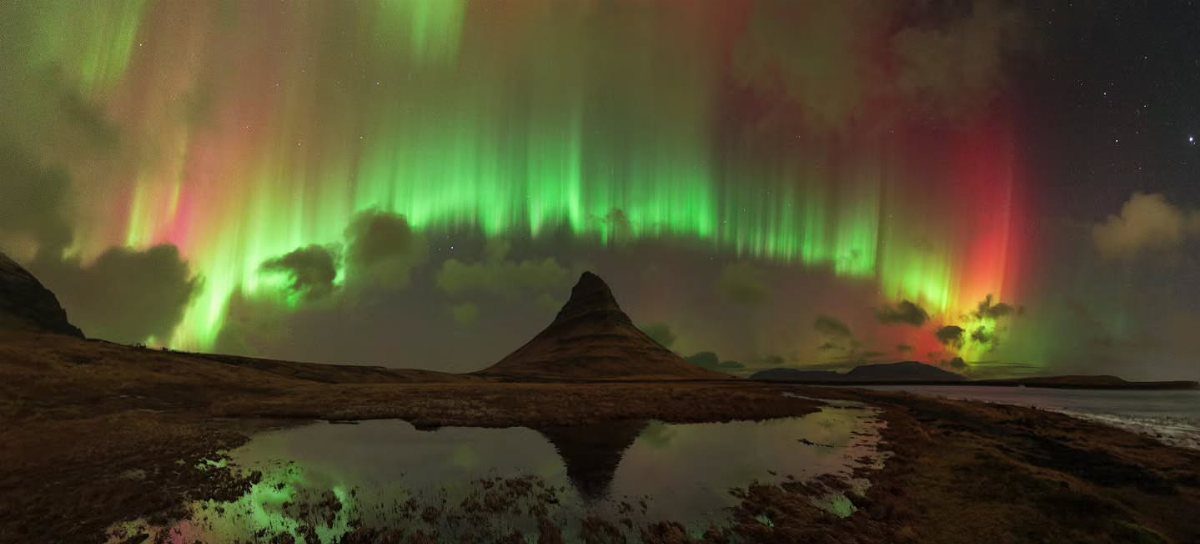
Kirkjufell in Iceland shows why place matters: a sharp peak with water in front of it gives the aurora something to stand behind and something to reflect in.
When I pick a destination, I look for that pairing of open northern sky and a still foreground.
Pick one base and give it several nights. A single clear night is never guaranteed, and the cost of extra nights is smaller than the cost of missing the show.
2. Glass Igloos
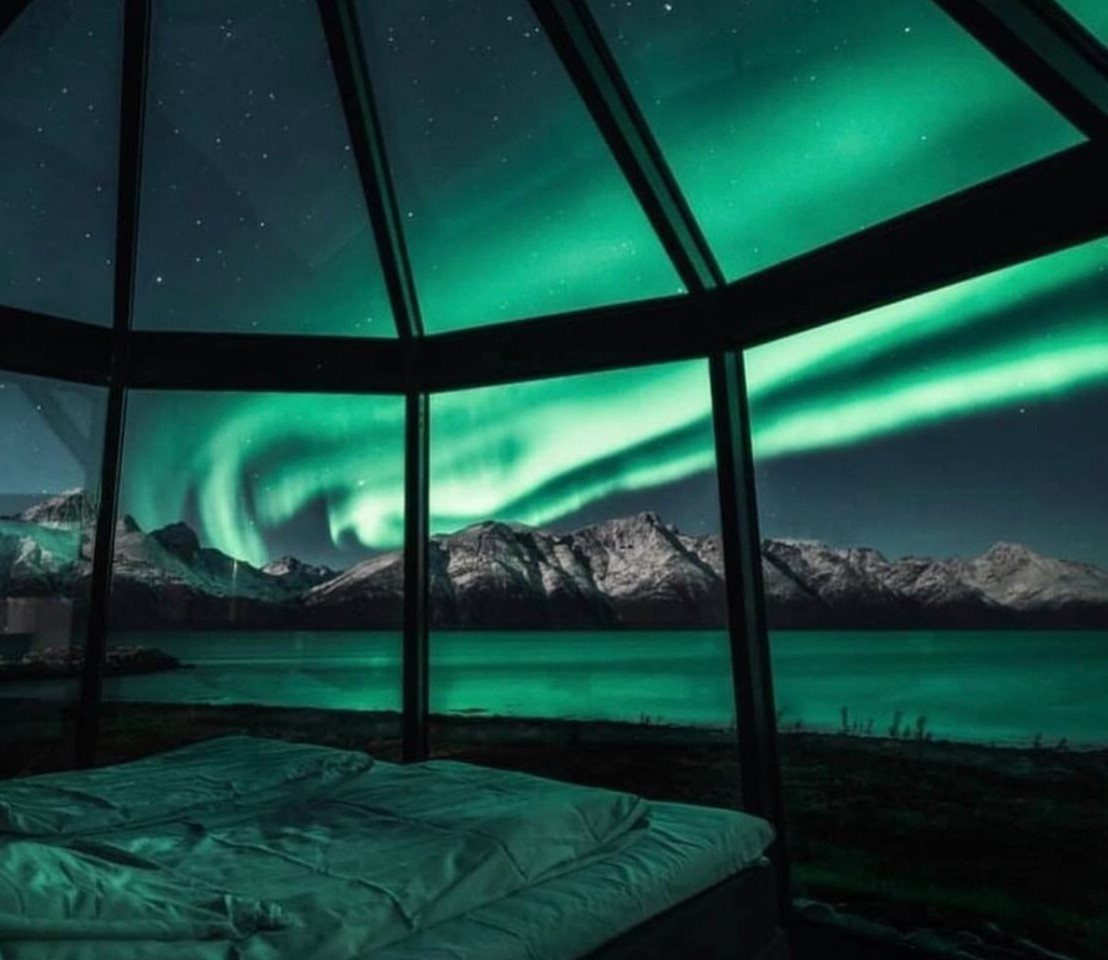
A bed under glass lets you watch the sky without leaving the blankets, and that is the whole appeal. The setting I’d want is a lake with snowy mountains beyond it, so the view is open in every direction.
It suits anyone who dislikes standing in the cold for hours. Price is the cost here: these stays run well above an ordinary room, and I’d read the cancellation terms before booking, because no one refunds you for cloud.
3. Aurora with a Tripod
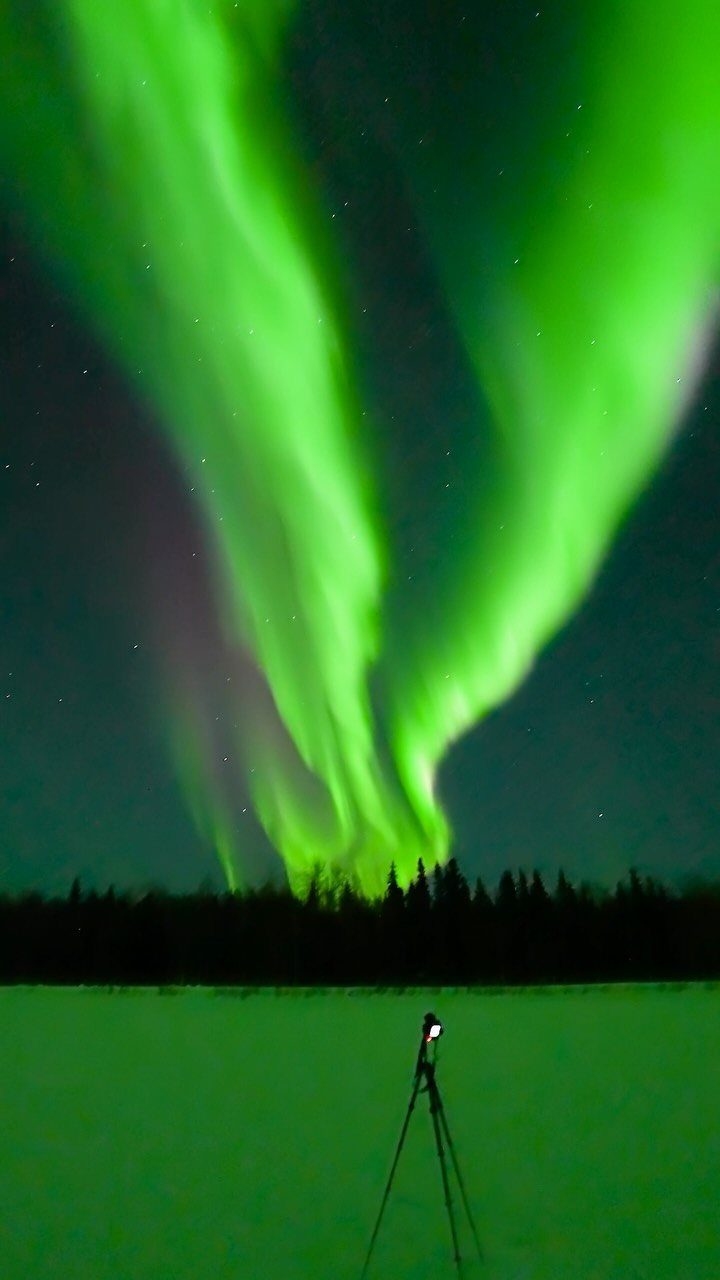
A tripod is the cheapest upgrade you can make to aurora photos. Handheld shots in the dark blur, while a camera on 3 legs can hold still for as long as the light needs.
Choose a spot with a dark tree line or open snowfield so the sky has a frame, and set the tripod up before the lights start, because fumbling with cold fingers in the dark wastes the best minutes.
I’d bring gloves thin enough to work the controls.
4. Reindeer Sleigh Ride
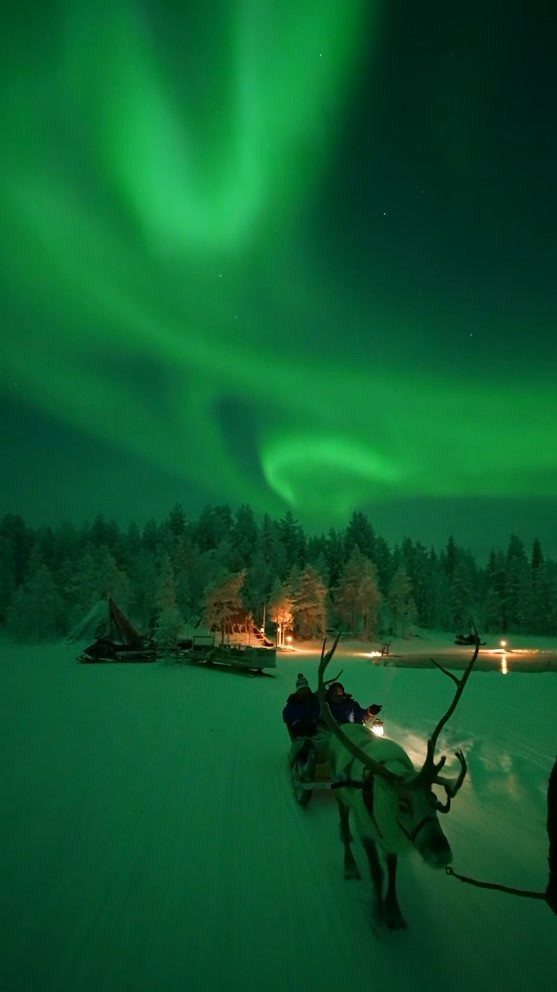
Reindeer pull a sleigh quietly through snowy woods, and the slow pace gives you time to watch the sky instead of a road. That quiet is the real draw.
A traditional winter ride is what this delivers, so it fits the traveler who wants to be pulled across snow, not the one who wants a quick photo stop.
I’d book it for an evening with a clear forecast, and dress warmer than seems sensible, since sitting still in a sleigh chills you faster than walking does.
5. Camper Van Road Trip
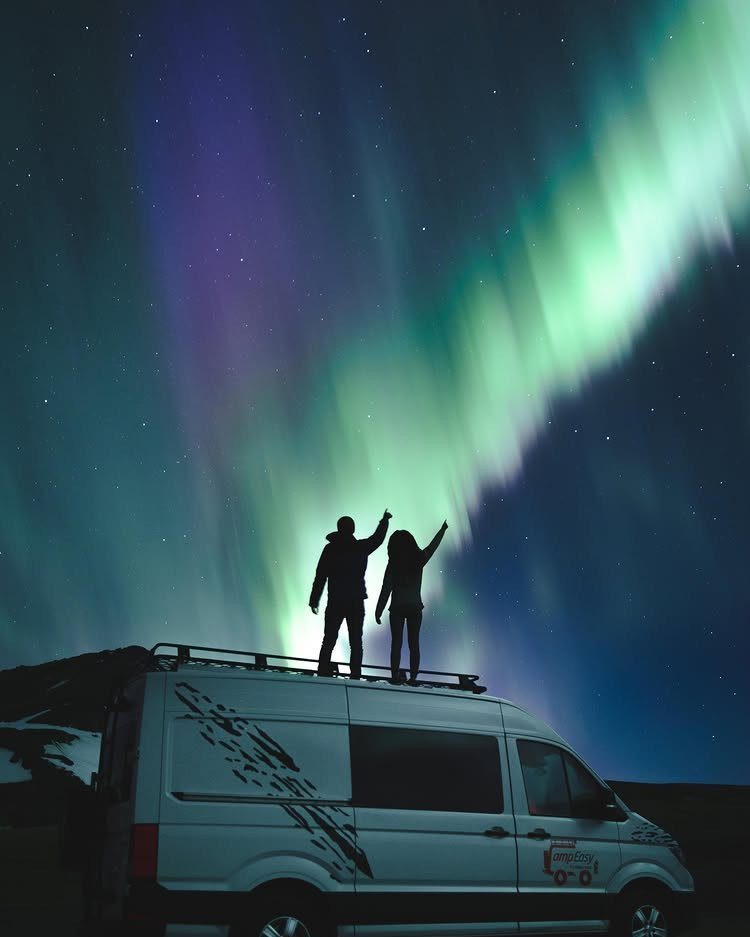
A camper van turns the search for clear sky into your own schedule. Park somewhere dark, climb up, and you get the open view that a couple on a roof enjoys.
I like it for flexibility: if clouds roll in, you drive toward a gap rather than hope.
Cold nights and long drives fall on you with a camper van, so sort out fuel, parking and heating in daylight, well ahead of the first dark stretch of road.
6. Northern Lights Cruise
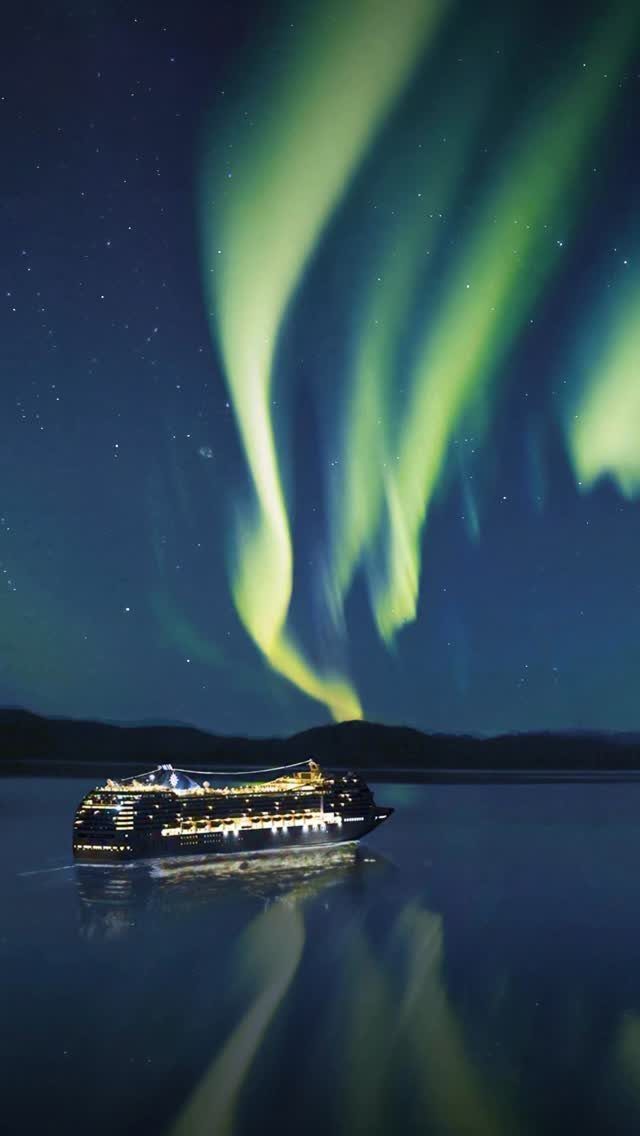
A ship moving across calm water at night puts you on the dark side of the coast, away from town lights, with mountains along the horizon. That position is what makes a cruise a good aurora platform.
I’d weigh it against land options: you cover a lot of distance while you sleep, but you can’t choose where to stop. Pack warm layers for the deck, and expect the best views to come late.
7. Scenic Train Ride
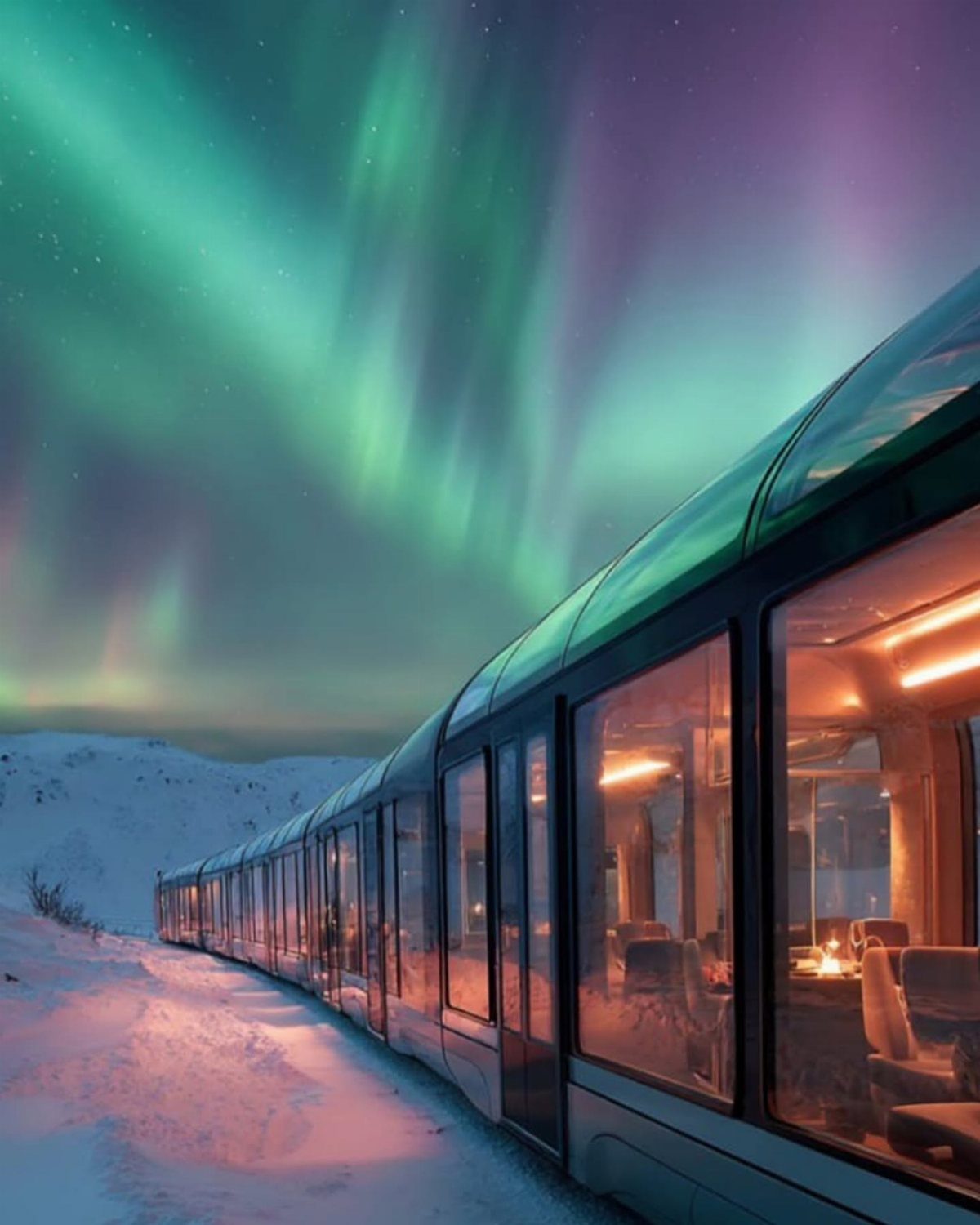
Glass roofs on a train let the sky come to you, and the warm cabin means no one stands in the snow. For a traveler with limited time, it covers distance and viewing in a single night.
I’d pick a seat by the window and ask whether the carriage has a roof panel before paying.
Interior lights glare on glass, so cup a hand against the pane or ask the crew whether the cabin lights can be dimmed.
Clouds still win, so book a trip with a spare night nearby.
8. Viewing from an Airplane Flight
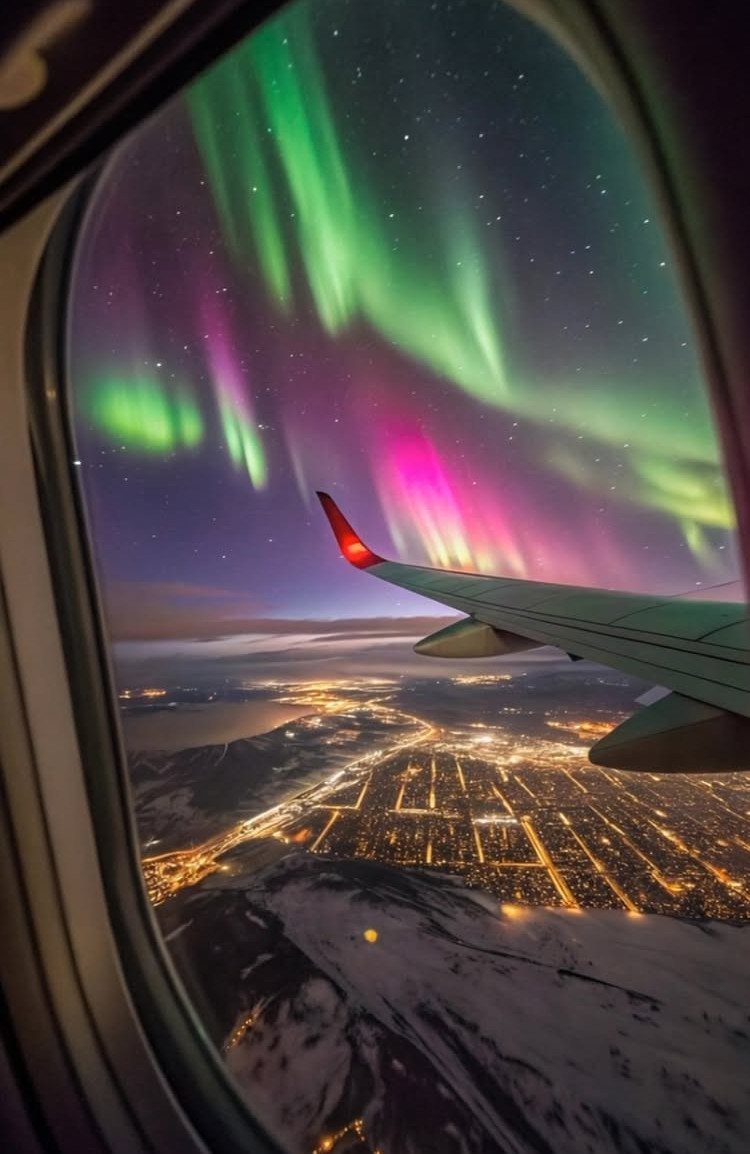
Flying above the weather is the one way to dodge cloud below you, and a window seat on the right side of the plane is the whole plan. City lights beneath and green ribbons above make an odd, memorable pairing.
Nothing about it is guaranteed. Flight paths are fixed, you can’t choose a route for the sky, and window glass reflects cabin light.
I’d press a jacket against the pane to cut glare, and treat any sighting as a bonus on a trip you’d take anyway.
9. Overnight in Waterfront Rorbu Cabins
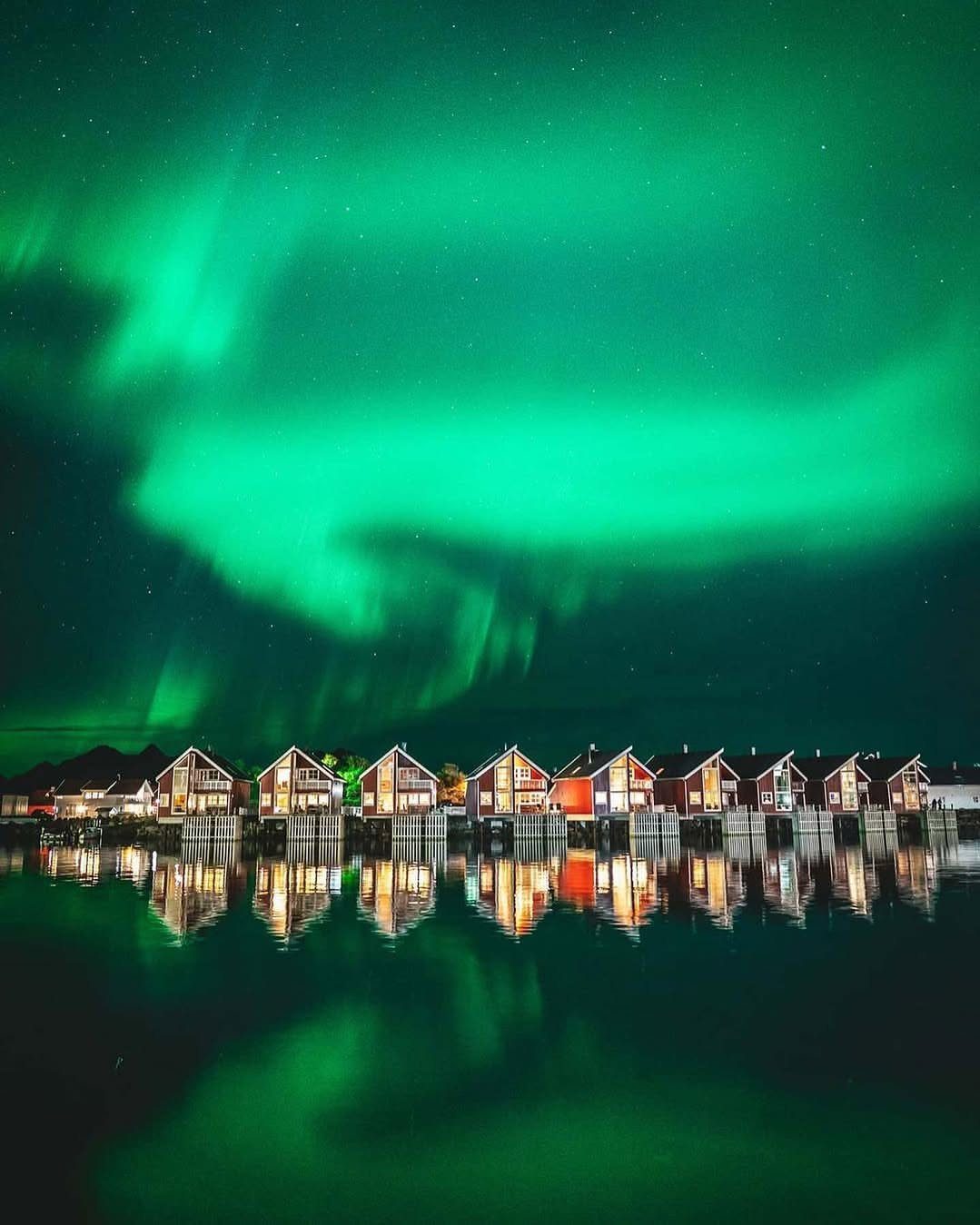
Wooden cabins on stilts over the water give you a dark shoreline, a still foreground and a bed a few steps from the show. That mix is why I’d choose a waterfront rorbu over a hotel in town.
Ask for a cabin facing open water, away from street lamps, so the sky stays dark and the reflections stay clean.
Rustic often means thin walls and simple heating, so confirm what the room offers, especially the heat source and the insulation, ahead of booking. Wake-up calls for aurora, if the host offers them, are worth asking about.
10. Romantic Northern Lights Proposal
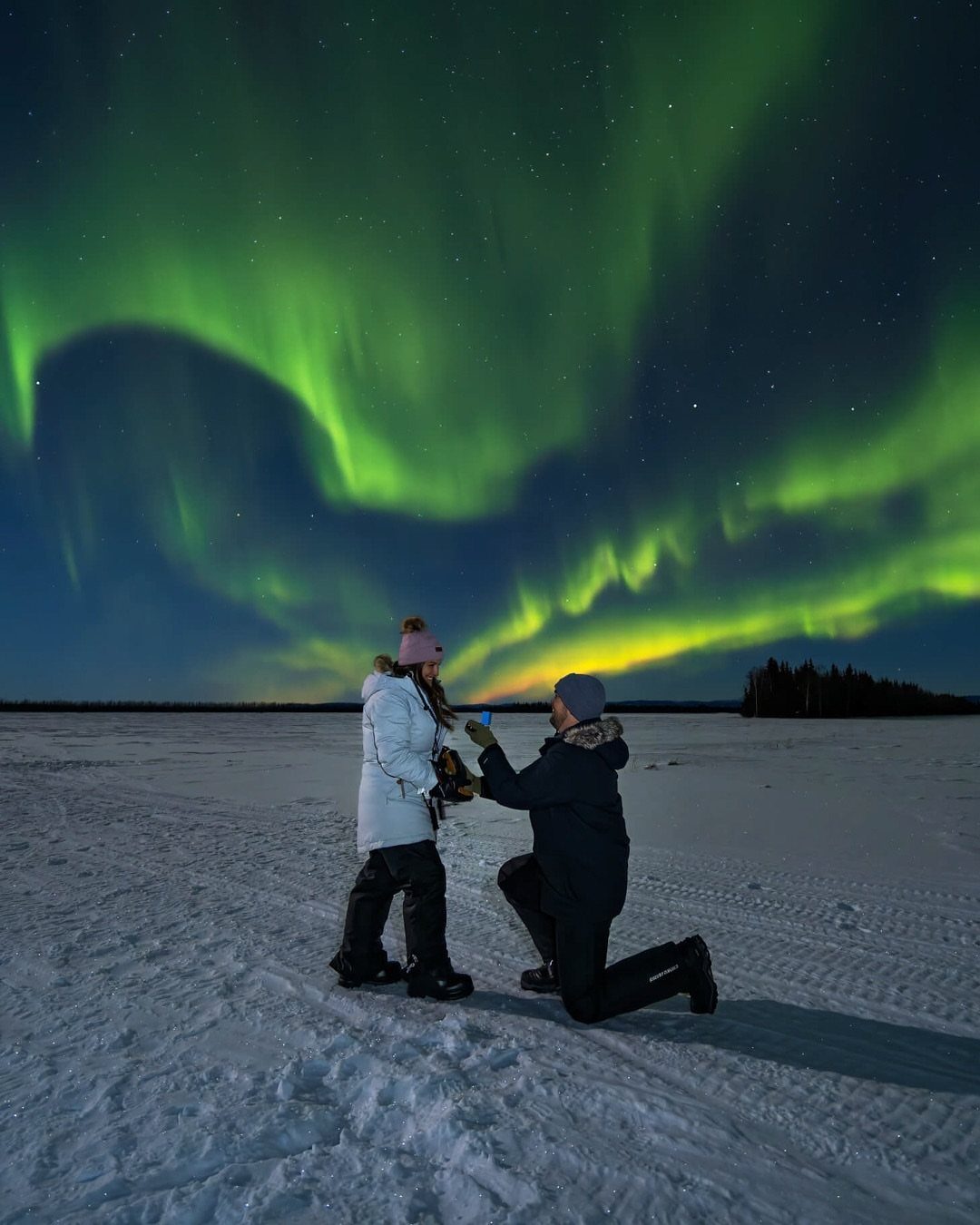
A proposal on open snow under green and yellow light needs very little else: a cloudless night, a quiet spot and a ring you can find with gloves on.
I’d keep the ring in an inner pocket, since cold fingers fumble small boxes.
Scout the location in daylight, then plan for several nights, because the sky sets the timing and not you.
Photos of the moment are worth planning for, either with a hired photographer or a camera set on a tripod ahead of time. Kneeling in deep snow is cold, so wear waterproof layers.
11. Lakeside Reflection Viewing
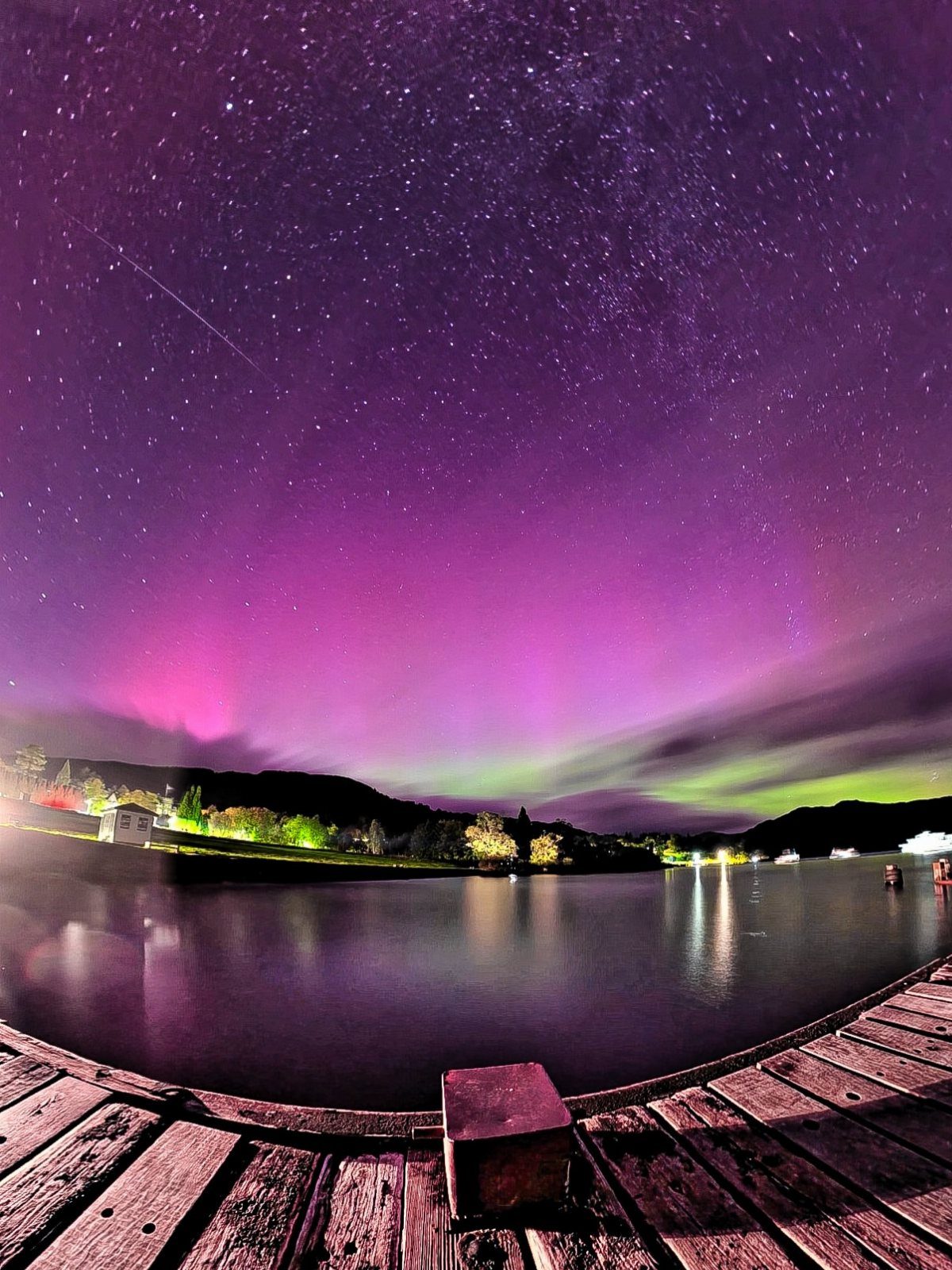
A calm lake doubles the sky, and a wooden pier gives the frame a line leading toward the lights. Of all the ways to watch, this one gives the best photos for the least money.
Still water matters most.
Bring a tripod, since reflection shots need long exposures. Then stay put; the color often builds slowly.
12. Guided Night Walking Tour
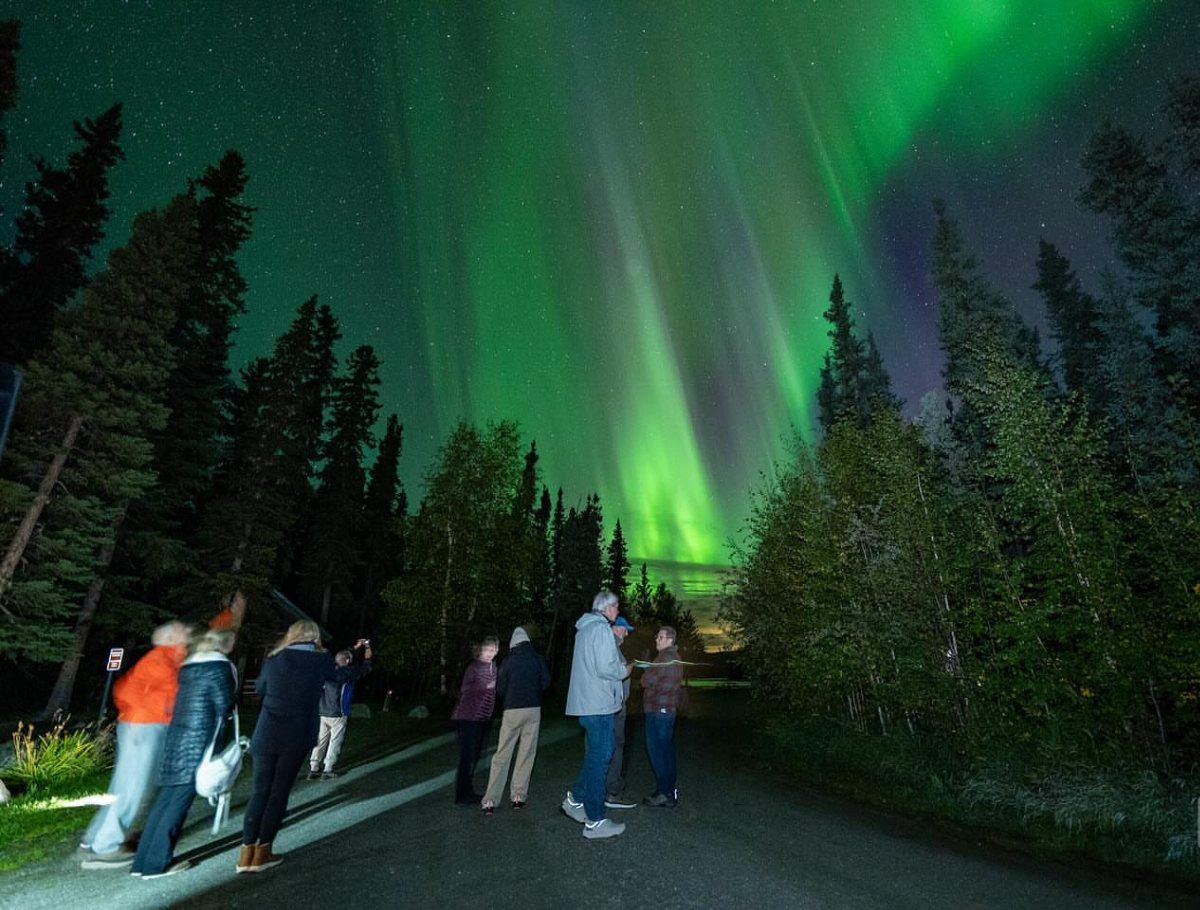
A guide takes the guesswork out of the hardest part: finding a dark road with open sky. For a traveler with a few nights and no local knowledge, I’d pay for that.
Group walks like this suit people who dislike driving unfamiliar roads in winter.
Dress in layers, and add warm boots, since you’ll stand still much longer than you walk. Ask how big the group is and whether the tour runs on cloudy nights, because cancellation terms differ and no sky is promised.
13. Winter Night Cliff Hike
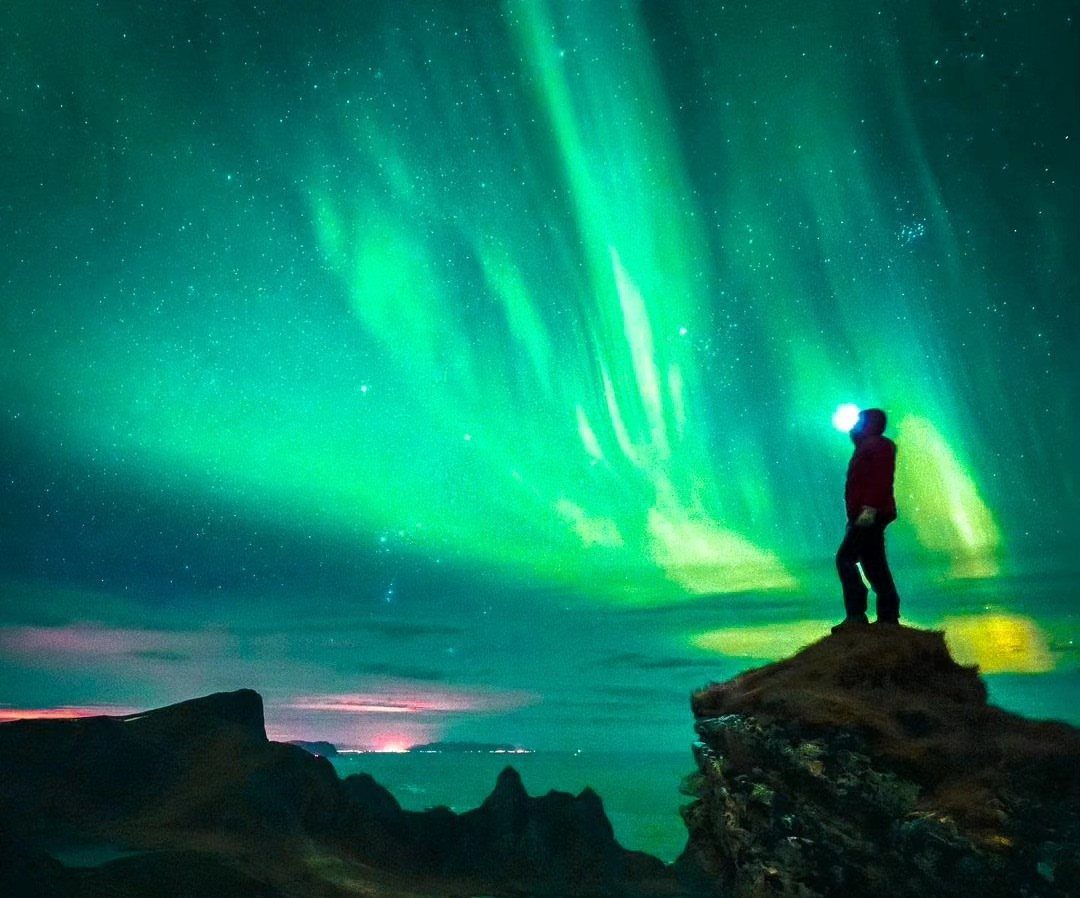
A headlamp is the one piece of gear this hike cannot go without, and I’d pick one with a red-light mode so white beam doesn’t ruin your eyes once the sky turns green.
Rock ledges above open ground give a wide view, but the footing is the real risk.
Walk the route in daylight first, and mark where the edge sits. In the dark, a cliff is easy to misjudge, so stay well back from the drop while you watch the sky.
Bring spare batteries, since cold drains them fast. Go with another person, and tell someone your route and your return time.
Factors Affecting Visibility
3 things decide whether you see anything: cloud, solar activity and light pollution. You control only the last one, so get well away from town lights.
Look up the moon phase for your dates and skip the full moon nights, since bright moonlight washes out the fainter displays. Plan to stay up late, because the best viewing usually falls between 10 p.m. and 2 a.m.
Displays are unpredictable in length. On active nights the lights can last all night, while on others they fade within minutes, so I keep a space weather app open and don’t wander off to bed early.
Solar activity rises and falls on a cycle of roughly 11 years, and the current peak is the reason recent winters have produced such strong shows. If you’ve been waiting, the odds are better now than they will be for years.
Best Months for Aurora Activity
Aim for November to March, when the dark is deepest. December, January and February give the best shot, though nobody can promise a sighting.
September and October are slimmer odds. They suit travelers who handle extreme cold badly, and I’d pick them only if cold would ruin the trip for you.
Equinox months in spring and fall are also worth a look, since NOAA’s Space Weather Prediction Center suggests timing a visit around them.
Strong displays have made demand high lately.
Plan a couple of aurora outings, like a snowmobile ride or a minivan tour, and add more after you land and see what the sky is doing. Most operators stay flexible day to day because the weather changes the odds.
Among travelers 50 and older, 67 percent list travel on their bucket lists, and 23 percent plan to visit unusual or off-the-beaten-path destinations, according to the AARP Travel Trends report. Seeing the northern lights, or aurora borealis, is a bucket list destination with broad appeal.
— AARP
Travel Tips
Treat your itinerary as a loose frame. Fix your flights and lodging, but leave evenings open so you can shift plans when a forecast changes.
Keep your days light. If the best viewing runs from 10 p.m. to 2 a.m., you’ll want a nap in the afternoon, not a packed sightseeing schedule.
Look at the moon calendar and pick dates around the new moon, not a full one. Get away from town lights, and base yourself under the auroral oval, the ring roughly 65°–70° geomagnetic latitude where activity concentrates.
Book early, then stay ready to adapt once you arrive.
Frequently Asked Questions
How much does a northern lights trip cost?
It varies widely by format. A single evening tour from Fairbanks, Alaska, runs about $150–$160 and includes a 30–45 minute transfer from your hotel to a dark viewing spot.
A 6-day independent trip based in Tromsø and Kilpisjärvi, Finland, shows up on one operator’s listing, and it runs from December to March.
Glass igloos run well above the price of a standard room, and clouds don’t earn you a refund, so check the cancellation terms before you pay.
Where is the best place in the U.S. to see the aurora borealis?
Fairbanks, Alaska, is the U.S. spot that shows up on the lists of top viewing areas.
Alaska sits under the auroral oval, the ring around the Arctic where the lights appear most often. Skip town lights by getting well away from them, since darker sky means brighter displays.
When is the best time to see the northern lights?
Dark skies run deepest from November through March, which makes those months the strongest pick for a sighting. Within a night, the best viewing usually falls between 10 p.m. and 2 a.m.
What should I wear for northern lights viewing?
For a top layer, I’d pick an insulated jacket that blocks both wind and water, worn over a few thinner layers.
Add gloves, a scarf, a warm head covering, thermal socks and warm boots, because you will stand or sit still far longer than you walk.
I dress warmer than seems sensible, and I choose gloves thin enough to work camera controls.





