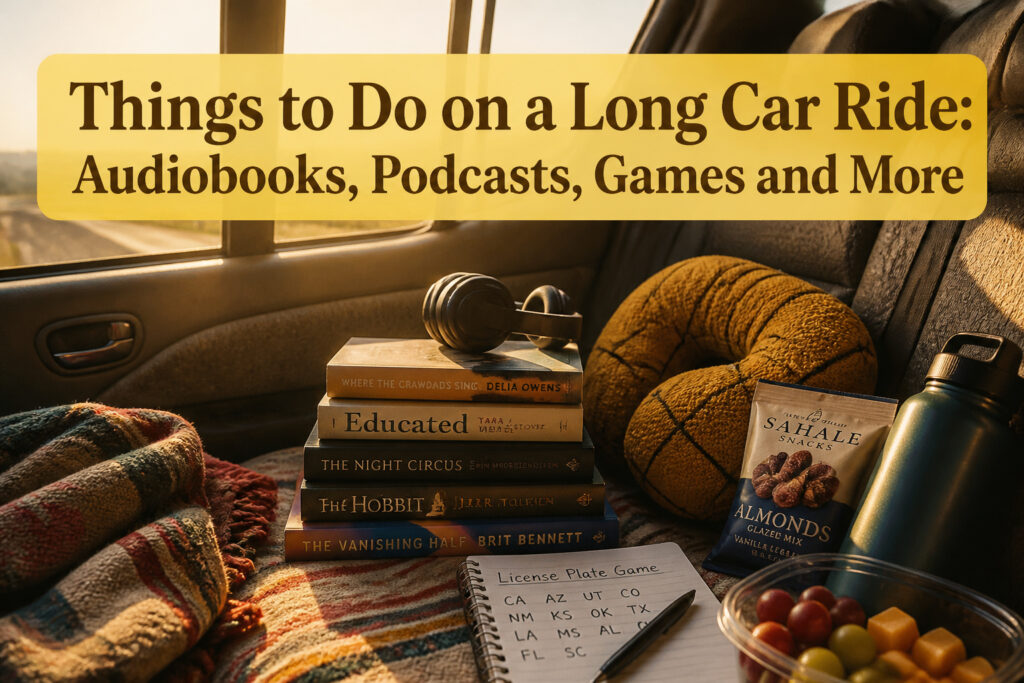
What to do on a long car ride depends on whether you’re behind the wheel or riding along. The driver gets podcasts and conversation; passengers can sink into audiobooks, knit, or track license plates across state lines. The real mistake is starting an audiobook too early, before the back seat goes quiet and the car finds its rhythm. Wait thirty minutes into the first leg, and that Harry Potter volume will carry you through four solid hours of highway.
1. Audiobooks
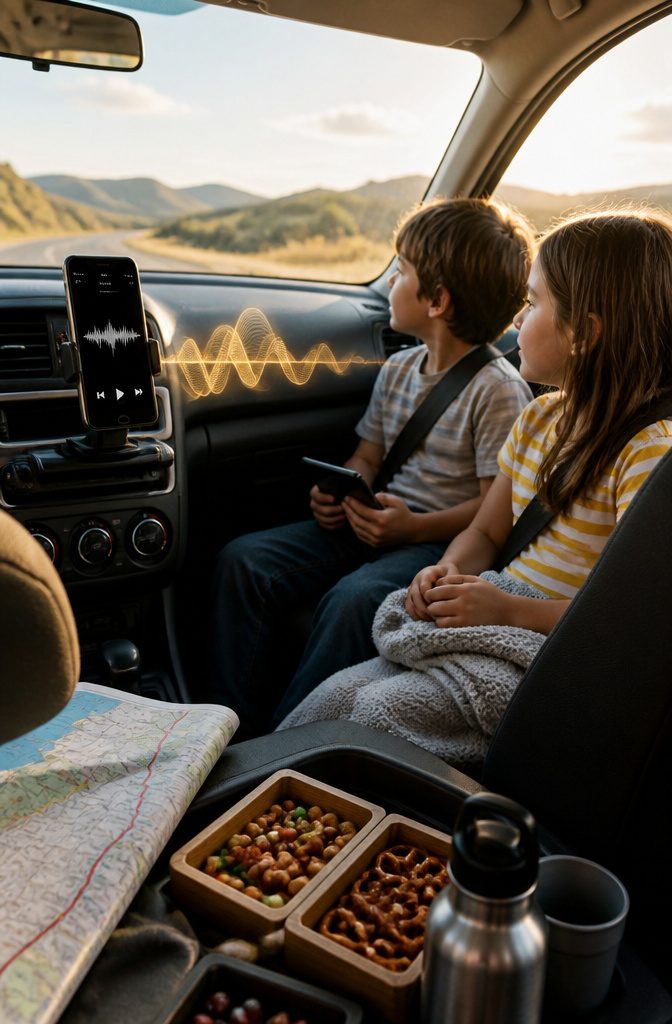
Borrowing audiobooks free through your library changes how a long drive works. The Hoopla and Libby apps only need a card from a participating library, and the selection runs deep enough that you are not stuck with whatever is left on a gas station spinner rack.
Harry Potter and Percy Jackson come up often for a reason. The narrators are skilled, the chapters break at natural stopping points, and a single volume can eat four to six hours of highway. A family with mixed ages tends to settle on these because adults catch details they missed at fourteen while younger passengers stay hooked by the pace.
Timing matters more than genre choice. I start an audiobook after the first fuel stop, once the initial excitement of departure has worn off and the back seat goes quiet. Beginning too early wastes the good material on chatter; beginning too late leaves everyone restless before the next stretch break. The sweet spot is roughly thirty minutes into a leg, when the car has settled into rhythm and attention is free for a voice other than your own.

High-Fidelity Stereo Audio: Featuring Bluetooth 6.0 chipset, this 3.5mm Bluetooth adapter provides stable connection up to 100FT (30m) without delay. Made for car use, this car Aux Bluetooth adapter supports SBC codec, delivering clear, functional, and enjoyable sound—both for listening and for speaking.
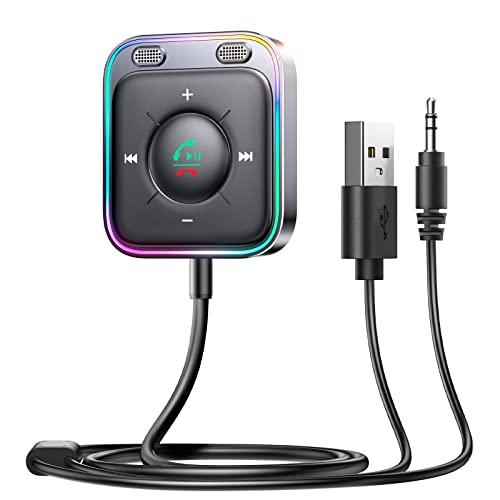
HiFi Stereo Audio: JOYROOM Bluetooth 6.0 AUX car adapter with the stable Bluetooth technology, solving the transmission delay and connection issues of older versions. Enjoy faster, more stable audio with minimal sound loss, plus a working distance of up to 100FT—ideal as car accessories for daily use

[Humanized Ambient Light Switch Design] - Indulge in a delightful driving experience with our trendy rainbow light design. Immerse yourself in fun while having the convenience of easily turning off the light by double pressing the red "B" button when not needed. Enjoy the captivating ambiance of the rainbow lights and have full control over your driving atmosphere.
2. Podcasts
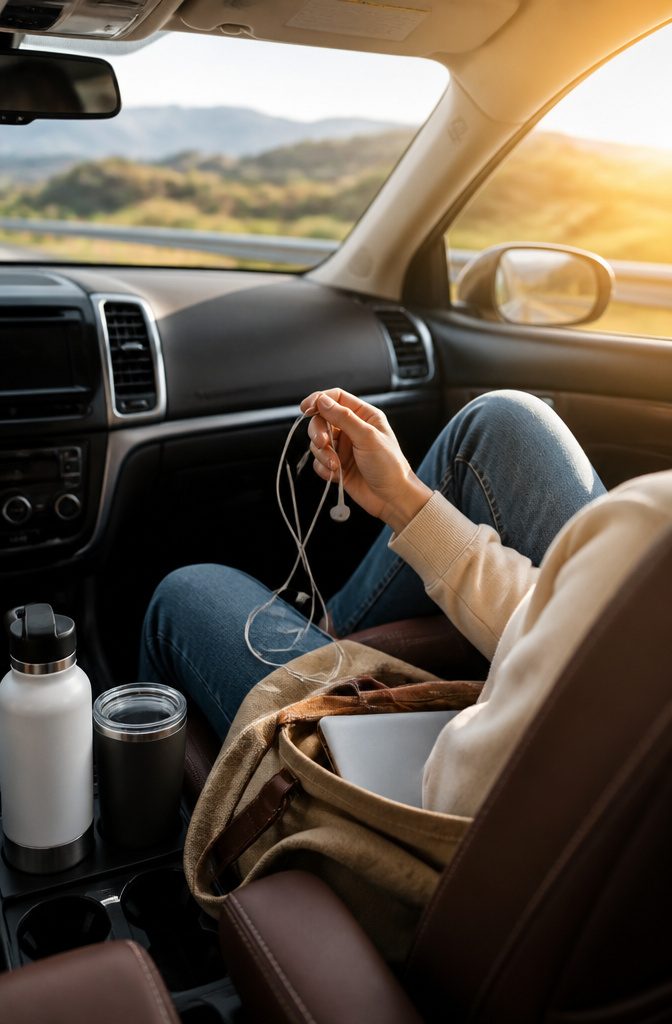
Podcasts pull you through a long drive with a different rhythm than audiobooks. Where a novel locks you in for twelve or twenty hours, a podcast episode wraps in forty minutes to an hour, so you can switch topics when the mood shifts or the kids in back get restless.
True crime works especially well for adult drivers and older kids who can handle the content. Shows like My Favorite Murder or Serial build across multiple episodes, and the breaks between installments give everyone in the car room to argue theories or predict endings. Comedy podcasts hit the same mark without the dark subject matter, though the language in some popular shows runs explicit enough that parents should preview first.
The real advantage is commitment. An audiobook demands you track characters and plot across hundreds of miles; a podcast lets you drop in for a single episode on business, dating, or some niche obsession you never make time for at home. Hook your phone to the car stereo by Bluetooth or USB, queue a handful of episodes before you leave cell range, and you’ve got entertainment that adapts to however the drive actually feels.

Pro Sound Chipset 192kHz/24Bit: This Condenser Microphone has been designed with professional sound chipset, which allows the USB microphone to hold high resolution sampling rate. Smooth, flat frequency response, Extended frequency response is excellent for studio, speech and voice-over. Performed well in reproducing sound, high quality mic ensures your exquisite sound reproduces on the internet
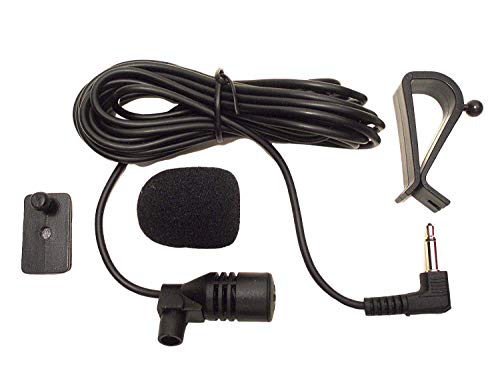
Adopting electret condenser cartridge with high sensitivity , low impedance , anti noise and ant jamming capability ,

【Easy Plug&Play Setup】 This upgraded podcast equipment bundle includes 1 condenser microphones, boom arms, and a multifunctional sound card with Bluetooth 5.1. Designed for dual-host live streaming, podcasting, or music recording right out of the box
3. Road Games
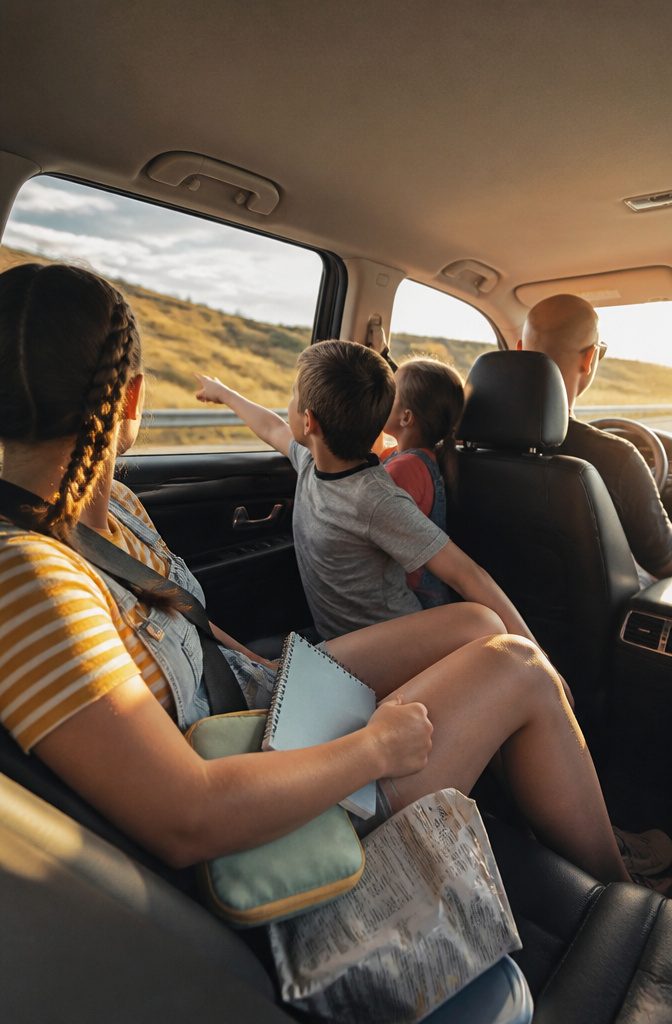
The Alphabet Game works best when the car is still full of morning energy. Someone calls out a letter found on a road sign, billboard, or passing plate, then the hunt moves to the next letter in sequence. "V" and "U" are the usual bottlenecks; by the time you hit them, the stretch of highway has often gone quiet and everyone is staring at the same three signs. Start this one early. It suits kids who are just learning letters and adults who need something low-stakes to stay awake, but it rarely survives a second full loop through the alphabet on the same drive.
The License Plate Game has more staying power. The goal is spotting plates from all 50 states, checked off a list as you find them. One version has each passenger tracking their own list; another pools every sighting into one shared tally. Either way, the game feeds itself for hours because rare plates, Alaska and Hawaii and the Dakotas, tend to appear late in the trip when you are already deep into Interstate territory. Adults and older children stay competitive longer here. Younger kids lose interest once their sheet stalls in the thirties.
I Spy burns through its fuel fastest. One person fixes on something visible from the car, gives a clue starting "I spy with my little eye," and the others guess. A few rounds in, the clues start repeating, the same red barn or blue truck cycling through, and the youngest players, the ones it was designed for, are usually the first to drift back to a screen.

【Rechargeable Battery, Long-Lasting Playback】 Built-in 2000 mAh rechargeable battery eliminates the need for frequent battery changes or constant plugging in; fully charges in about 3–4 hours and provides 3–4 hours of continuous playback. Equipped with a shockproof protection chip, making it ideal for outdoor walks, travel, and other on-the-go use. USB-C charging cable included.

CD Playback – Supports CD, CD-R/RW, CD-G, MP3 CDs, and audiobook CDs, and plays MP3, WMA, and WAV audio files. Includes resume play, shuffle, repeat, program, and introductory playback modes.

4. Snacks and Meals
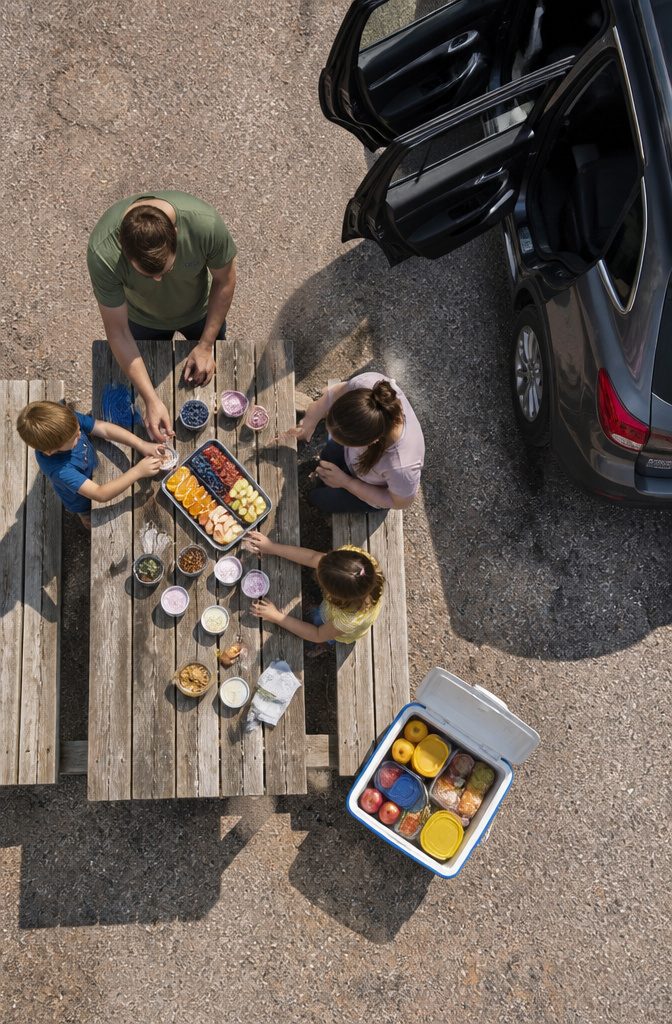
Heavy meals at a rest stop will put a driver under faster than the open road ever could. Eat light snacks every two to three hours instead of loading up on gas station burgers and hoping for the best. Fruit, nuts, and yogurt hold steady in a cooler and deliver steady energy without the crash. The beef jerky and candy bars by the register look like road trip fuel, but the sodium and sugar leave you groggy and reaching for the AC. Pack more than you think you need. Running low somewhere past the last decent exit means either white-knuckling hunger for an hour or paying double for chips that undo the alertness you were trying to keep.

A fun road trip essential: Combines four exciting travel card games to keep everyone entertained throughout the trip.


FOR THE WHOLE FAMILY: Turn family road trips and moments of in-between time into great family fun. Games on the Go is a collection of 50 games and activities that can be played anywhere at any time.
5. Movies and TV Shows
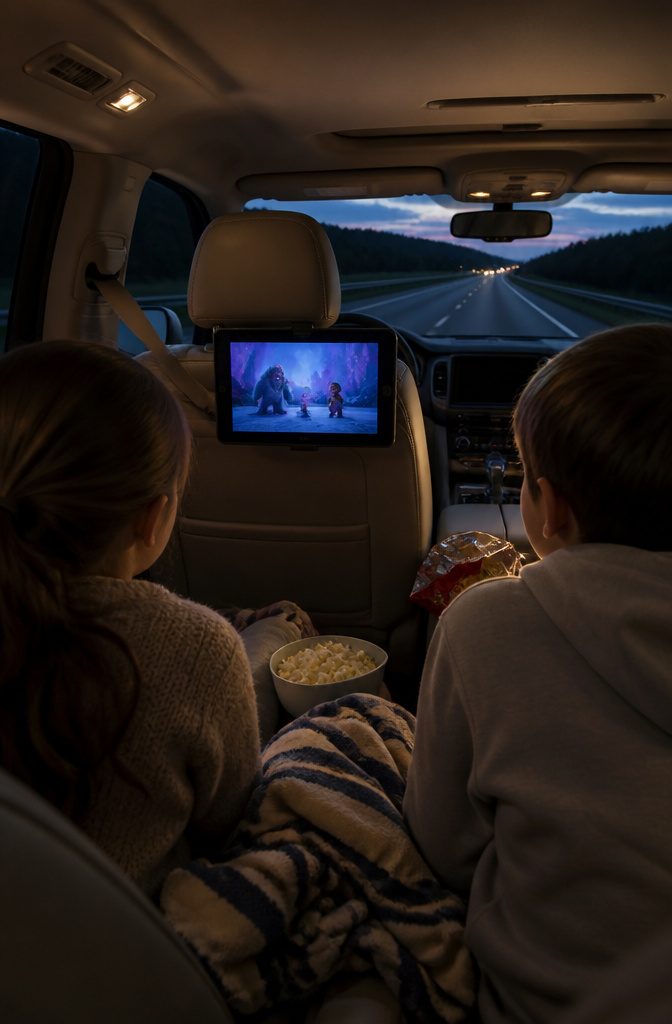
Screens in a moving car split cleanly between passengers who can use them and a driver who cannot. Downloading movies or full seasons before leaving home matters more than the choice of show; cell service drops on mountain highways and rural stretches without warning, and a buffer wheel at 70 miles per hour helps nobody. Battery banks earn their space in the seat-back pocket. A tablet pulling down a high-bitrate stream drains fast, and most cars still lack enough working outlets for everyone.
The driver is the reason this option has hard limits. Passengers get a reliable distraction from restlessness, but the person behind the wheel gets nothing from a screen except temptation to glance over. Audio-only formats exist partly for this gap. For everyone else, downloaded comedies or short cartoons can salvage a trip sliding toward disaster, though the guilt some travelers pack about screen time usually costs more energy than the screens themselves. Save the battery, lose the guilt, and accept that the driver lives in a different category for the next few hours.

🔎 Are you a parent looking for a fun and exciting way to keep your kids entertained during your next road trip? Look no further than Road Trip Scavenger Hunt!

🔎 Looking for an exciting way to keep both kids and adults entertained during your road trips? Look no further than the trivia game "Smartest in the Car"!

🚗 Engaging Conversations: Features 100 thought-provoking questions to spark meaningful discussions during your travels.
6. Conversation Starters
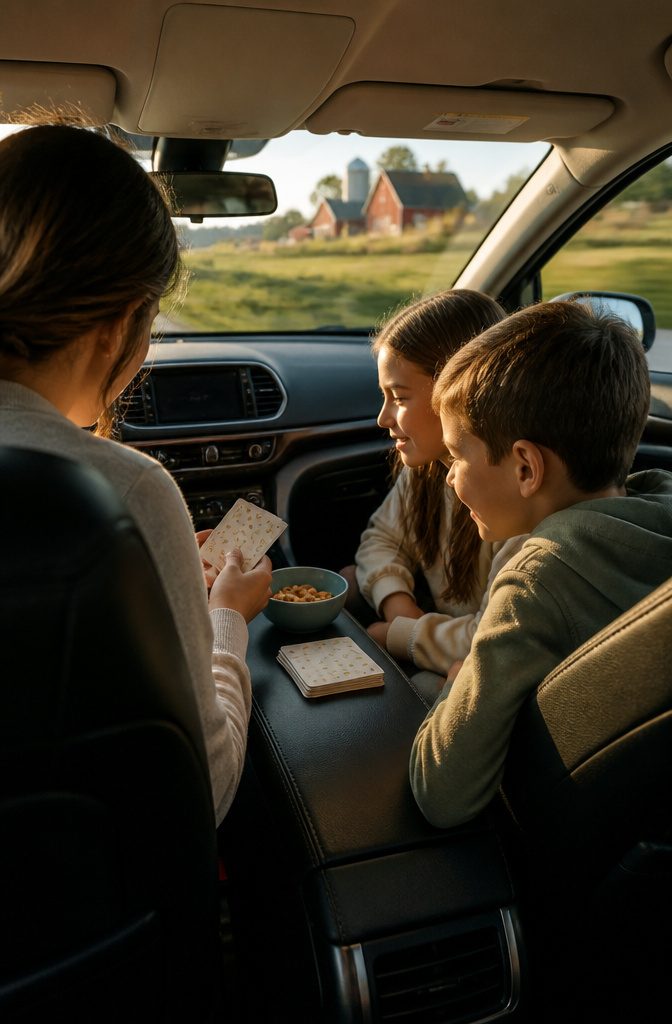
Prepared questions pull a car ride out of the rut of weather reports and schedule updates. What convinced me, reading through a dozen of these suggestions, is how much the format matters: a printed deck or a small book like the Book of Questions sits in the console and rescues the moment when the road goes quiet. The ones worth printing ahead lean on specifics rather than abstractions. "What would you do with a free month?" lands better than "talk about goals," and the dating-style prompts pulled from Pinterest lists tend to surface stories even longtime partners have never heard. With kids or friends, lighter questions work; with a spouse, the deeper ones sustain the miles. The risk is timing. A forced deep talk at hour one of a six-hour drive can feel like homework, and the same question at hour four, when everyone is slightly looser, opens something real. Calling a relative outside the car helps too, though the sources treat it as backup rather than main event: fresh voices arrive with fresh topics, and the person in the passenger seat gets a break from performing. The trick is having the questions ready before the lull hits, not scrambling after the silence has already settled in.
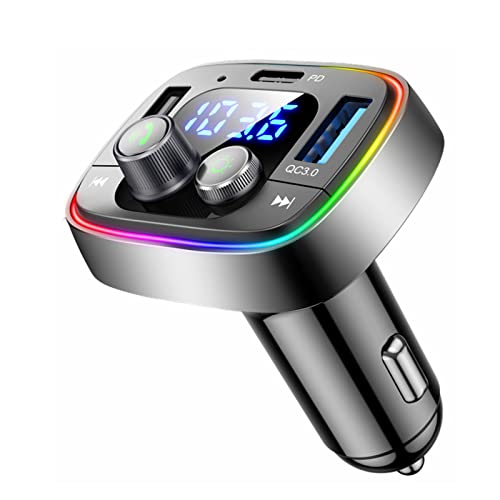
[Upgrade any non-Bluetooth or non-AUX jacks car in 30 seconds]: Turn any vehicle into a wireless Bluetooth audio system in seconds. No new stereo, No dongle hunting.

54W High Power Fast Charging, 4-Port Synchronous Charging: Nulaxy Bluetooth car adapter integrates PD36W and QC18W, offering a high-speed and efficient charging solution. Its innovative four-port design supports parallel charging of multiple devices, effortlessly overcoming battery anxiety and enhancing charging efficiency.

[Drive & Listen Wirelessly, Universal Compatibility] Seamlessly connect to non-Bluetooth car audio systems, home stereos, speakers and wired headphones via the 3.5mm AUX adapter. Equipped with advanced Bluetooth 5.3 chip, it ensures stable connection, fast transmission and wide signal range—no more intermittent audio during driving or listening. Pair with your phone in 3 seconds and enjoy your favorite music, podcasts or audiobooks anytime, anywhere.
7. Creative Activities
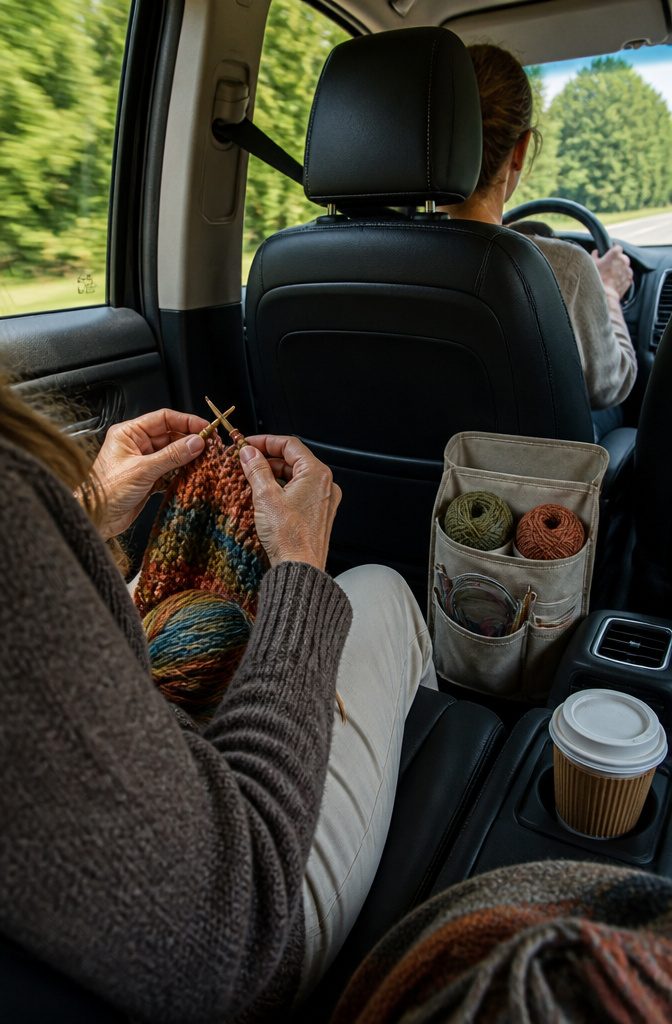
Knitting and crochet travel better than most crafts because the supplies fit in a small bag and the work itself tolerates stops and starts. A simple scarf or dishcloth in a basic stitch keeps your hands busy without demanding the focus that lace patterns require; complicated counting goes badly with bumps and curves. Yarn tangles are the main enemy, so wind your working ball into a center-pull cake before you leave and thread the strand through a small hole in a plastic bag or project pouch. The bag sits in your lap, the yarn feeds cleanly, and dropped stitches stay in one place.
Drawing with pencils or colored pencils works too, but charcoal and wet media are a mess in motion. A hardbound sketchbook with a rubber band around it keeps pages from flapping, and a pencil case that zips flat onto your lap prevents the hunt for the 2B that rolled under the seat. Avoid anything that needs a flat table; your knees are the only workspace you get.
The real preparation happens before you turn the key. Wind the yarn, sharpen the pencils, choose a project two skill levels below your best. A moving car is not where you learn new techniques; it is where you repeat what your hands already know.

USB/XLR Connectivity-AM8T comes with a dynamic microphone and a boom arm stand. Versatile PC gaming microphone kit with USB compatibility plug and play for PC in streaming or recording, without additional drivers. And also, while in XLR compatibility for mixer or sound card connection, the XLR studio vocal microphone is good at vocal, podcast, or musical instruments creation.

[Authentic Sound Integrity] Experience natural sound reproduction with the podcast microphone with boom arm, preserving audio without distortion. The XLR dynamic microphone boasts a SPL of 120dB-handling extreme instrument sound pressure and sharp transients—delivering original and consistent recordings. Cardioid pattern reduces ambient noise, ensuring your voice takes center stage. (For better input volume, record within 2'' to 6''.)
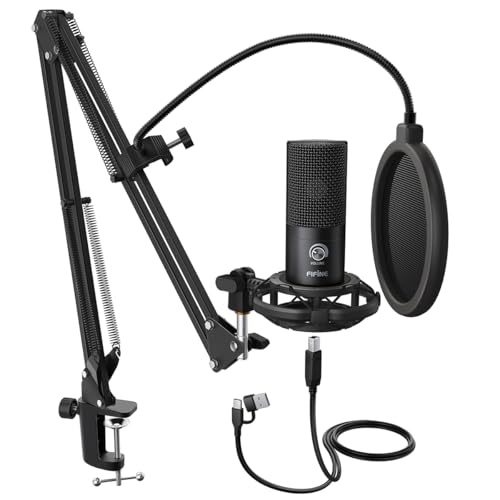
[USB Output] Enables simple setup. USB studio recording microphone kit provides a direct convenient plug-and-play connection to pc and laptop without any additional hardware or drivers for recording vocals, podcasts and Skype. Studio microphone for recording vocals is never been easier to get high-quality sound for your voice and computer-based audio recordings. (Incompatible with Xbox)
8. Rest Stops and Stretching
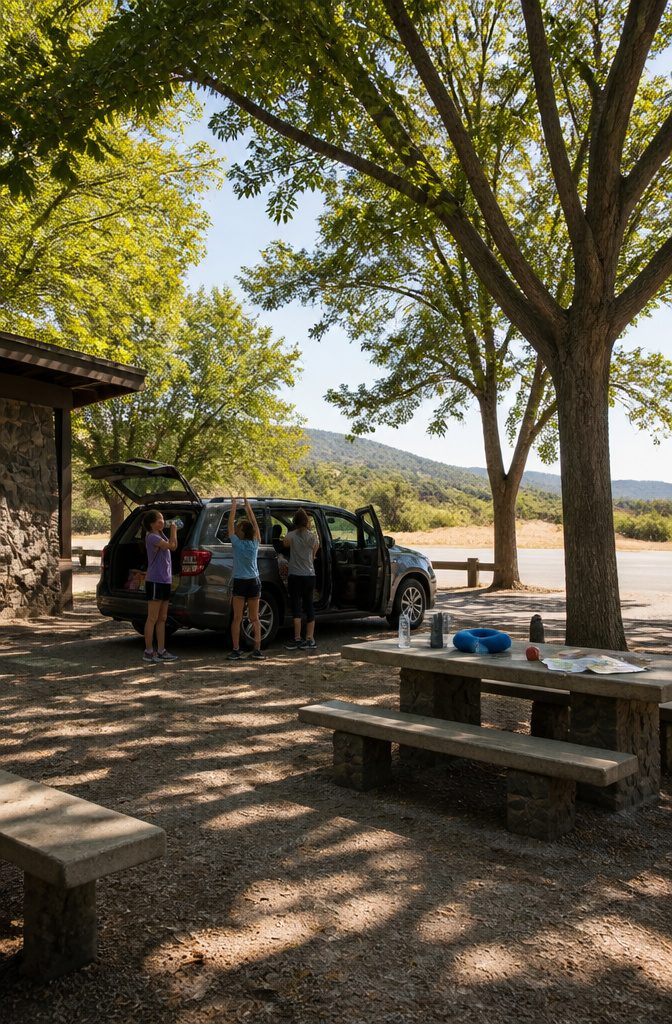
The two-hour mark is where the body starts to rebel against the seat. Blood pools in the legs from sitting still that long, and the driver’s focus slips before they notice. A stop every 2–3 hours breaks that cycle, not for the passengers but for the person at the wheel. The passenger can nap with a travel pillow; the driver needs to walk.
Five to ten minutes of walking at each stop is the minimum that actually changes how you feel. Stretching the legs, resting the eyes, moving against gravity, this is what prevents the headache and drowsiness that a bathroom-only stop does nothing for. Compression socks help with the pooling, but they do not replace the walk.
Finding stops before you need them matters more than it sounds. The moment fatigue hits is the moment you are already making worse decisions. Mapping rest areas in advance, knowing which exits have a real place to move around versus a gas station sliver of asphalt, this is the difference between a stop that works and one that just delays arrival by ten minutes.

SIMOLIO IR headphones (Not Bluetooth) are compatible with most car DVD systems. For a quick confirmation, please search for your car model in sections of Product Description and Product Image, where surely-compatible models are listed. Be sure to order if your model is listed. If not, pls double check by referring to manual of DVD system. Note: Our headphones work well with any universal-frequency car DVD; for non-universal ones, SIMOLIO IR transmitter is recommended to boost your joy on a road trip.

【Audio Cable for iPhone 17】Seulliya USB Type C to 3.5mm Aux Cable has completed MFi certification requirements. This iPhone 15 aux cord built with original terminal and smart chip, promise no warning message pops up, ensure completely and securely connect with your devices

Compatible with Honda Odyssey 2003 2004 2005 2006 2007 2008 2009 2010 2011 2012 2013 2014 2015 2016 2017 2018 2019 2020 2021,Chevy Suburban 2002-2016,Tahoe(Trim) 2000-2016,Chrysler Town & Country 2006-2018,Pacifica 2002-2016,GMC Yukon 2002-2016,Dodge Grand Caravan 2002-2020,Durango 2006-2021,Toyota Sienna 2004-2019,Ford Escalade 2001-2017,Expedition 2001-2017,Nissan Armada 2004-2021,uConnect VES.
9. Scavenger Hunts
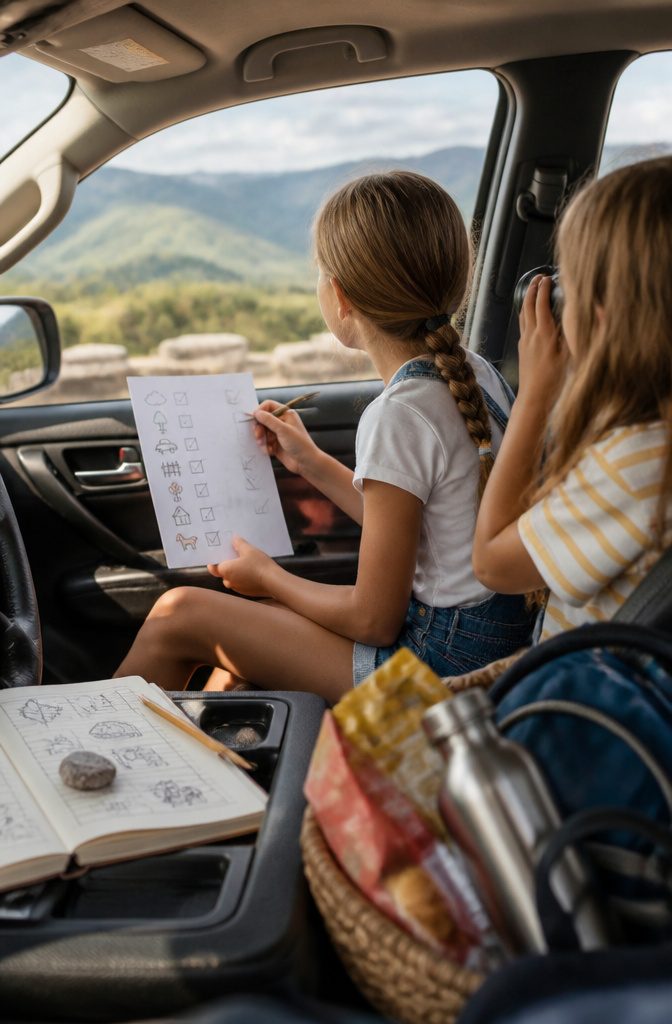
A scavenger hunt differs from a road game in one clear way: preparation. Road games need nothing but passengers and a rule, while a hunt demands a list made before the engine starts. That list is what makes or breaks the hour.
The best lists mix the easy and the nearly impossible. A red barn, a license plate from Montana, someone riding a horse: those keep everyone watching. Lists heavy on chain restaurants or common car colors go dry in twenty minutes. Scorekeeping works simplest with one point per find, though half-points for partial sightings (a dog in a truck bed, not the full cowboy) keep arguments from ruining the mood. Some families run team-based hunts, driver versus passengers, which risks carsickness from the back row leaning forward. I have seen that go wrong on the Pacific Coast Highway.
Scavenger hunts fail on the interstate. The scenery repeats, the list goes untouched for forty miles, and phones come out. Two-lane highways through small towns, mountain passes with pullouts, coastal routes with odd roadside fixtures: those are where the format earns its keep. The hunt forces attention outward, which is the whole point, but the route has to give you something to notice.


WHAT’S IN THE BOX: Meet the Tales Teens Edition Conversation Deck: a curated set of 150 fun and relatable conversation starters designed specifically for teenagers. These prompts help spark authentic discussions, encourage meaningful connections, and inspire teens to open up in a way that feels natural and enjoyable.

10. Learning Activities
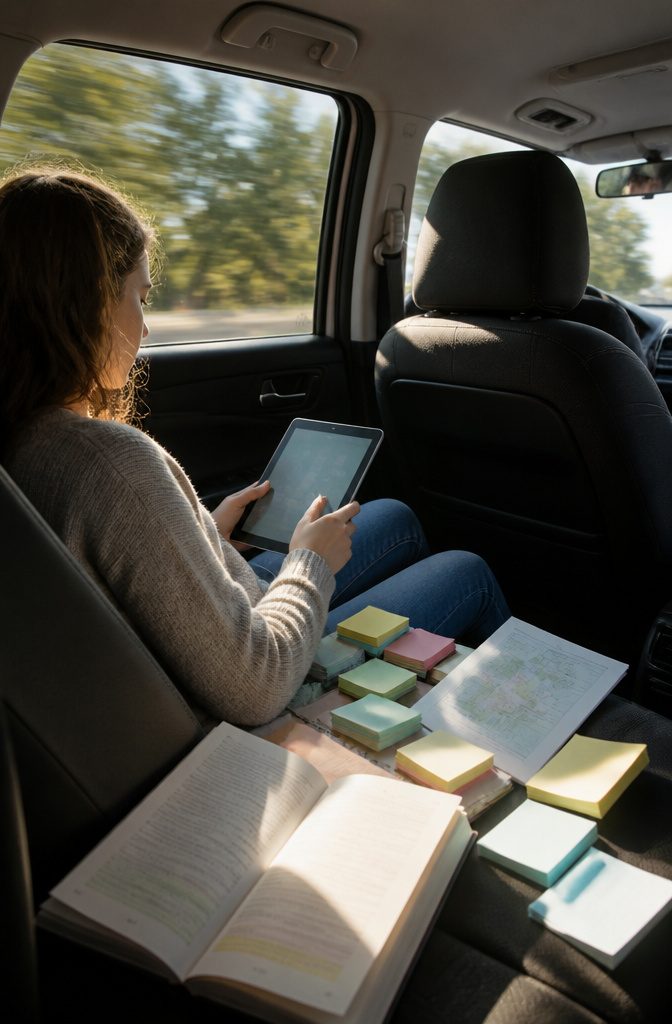
Duolingo fits a car ride better than most language tools because it breaks lessons into chunks that feel finished before the next rest stop. The app covers more than 30 languages, and the streak mechanic turns repetition into something you want to keep alive rather than homework you want to avoid. Kids who have started Spanish or another language at school can review with Stories by Gus on the Go, which frames vocabulary inside actual narratives instead of flashcard drills. That shift matters: a child repeating "el gato" thirty times notices the miles, but one trying to follow a story about a cat who lost his hat forgets to check the clock.
Rosetta Stone works too, though the immersion approach demands more attention than a backseat passenger sometimes has. The real question is when the app stops feeling like school. For most people, that line sits somewhere around the third or fourth lesson, once the novelty of hearing yourself mangie pronunciation wears off and the brain starts treating the language as a puzzle rather than an assignment. Drivers can listen along without interacting, but passengers get the full value only when they speak back. If the car is loud or the road is winding, audio-only courses from the library fill the gap, no screen required and nothing to prep beyond popping in a CD.


3 Free Kids Games in one (The full version includes 10 games for children!)
What to Pack Before You Leave
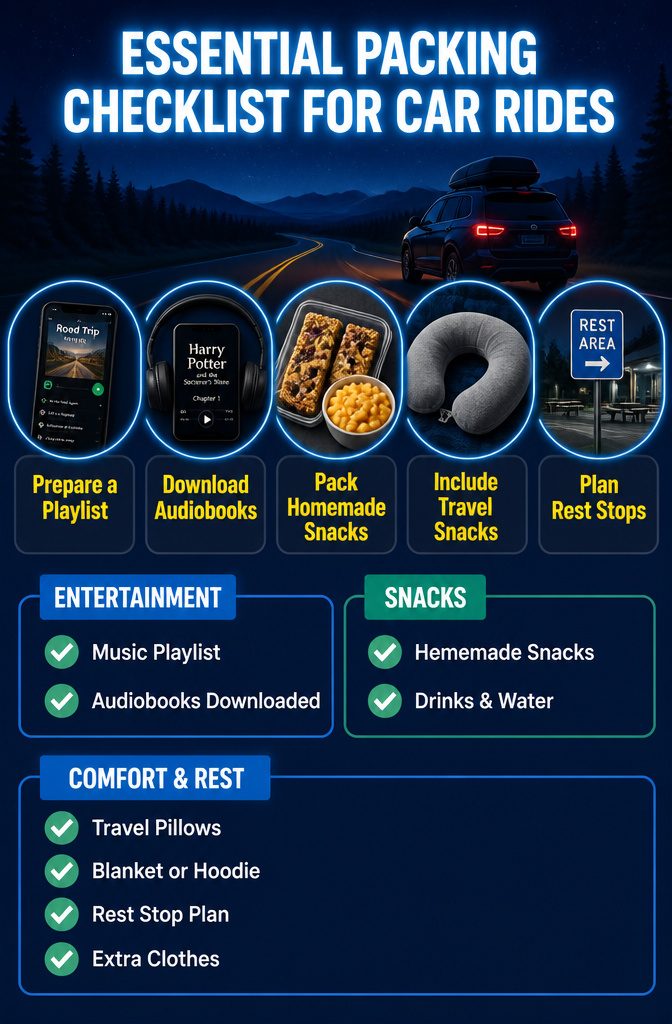
A playlist built to the trip, not just dumped from your library, changes how the miles feel. I learned that driving the Road to Hana: the backside stretch needed something dramatic, not the same shuffle I use for commuting. Download it before you leave, because dead zones outlast phone batteries and streaming apps love to buffer exactly when the view gets interesting.
Audiobooks demand the same foresight. Those Harry Potter volumes your kid keeps falling asleep to at bedtime? Eight hours in the car solves that. Load them at home on Wi-Fi. Nothing kills a backseat peace treaty faster than a download hanging at 73 percent somewhere past cell range.
Snacks work the same way: prepared beats purchased. Cherry-almond granola bars or mac-and-cheese bites made the night before cost less than gas station markup and keep blood sugar steadier than the chips and candy at every pump. String cheese travels fine. Pouches of whatever your kids tolerate travel better.
Rest stops need planning too. Every two to three hours, legs stretch, eyes rest, drivers nap if they need it. Passengers with a travel pillow actually sleep instead of complaining. The rhythm of the stops matters more than the length.
How to Dress for the Drive
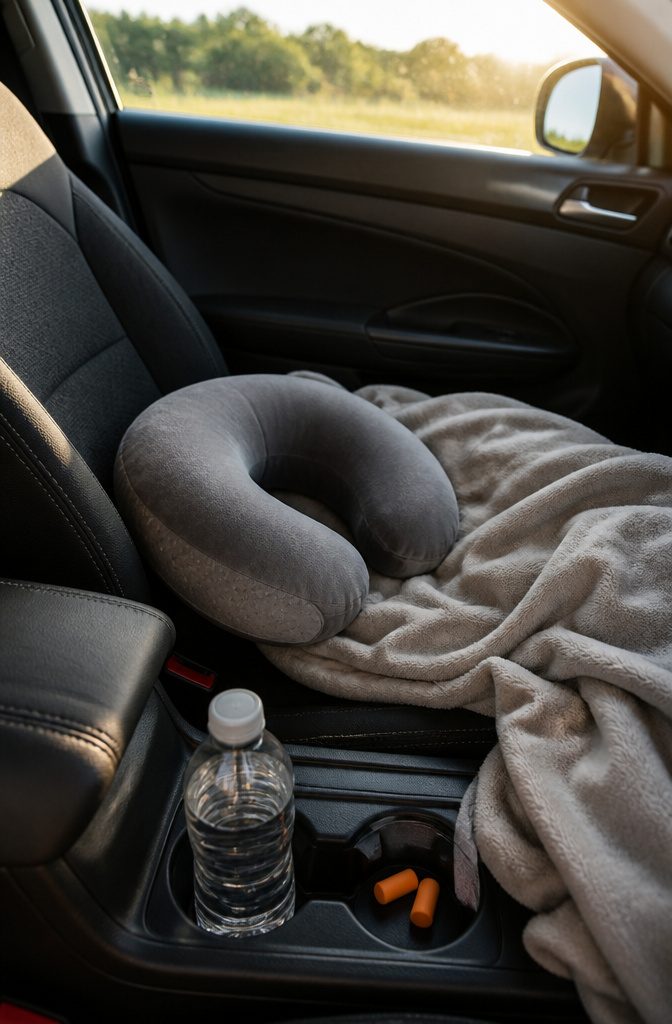
A memory foam neck pillow makes the difference between arriving limp and arriving stiff. The one that ranks highest on Amazon bundles in a sleep mask and ear plugs, which turns out to matter more than the packaging suggests: blocking light and road noise together gets you actual rest instead of that half-aware drowse that leaves you groggy. I pack it even for daylight drives now, because the pillow itself keeps my head from tipping into the window or shoulder positions that used to cost me three days of neck recovery.
For clothing, layers beat anything fixed. The passenger seat runs ten degrees warmer or colder than the driver wants, and the back seat can be its own climate. A soft blanket or a jacket you can ball up behind your lower back changes the geometry enough to prevent the ache that sets in around hour three. The small items matter more than the outfit: a pillow that fits your neck width, a blanket with some weight to it, something to adjust the lumbar gap the seat designer left.
How to Keep the Driver Alert
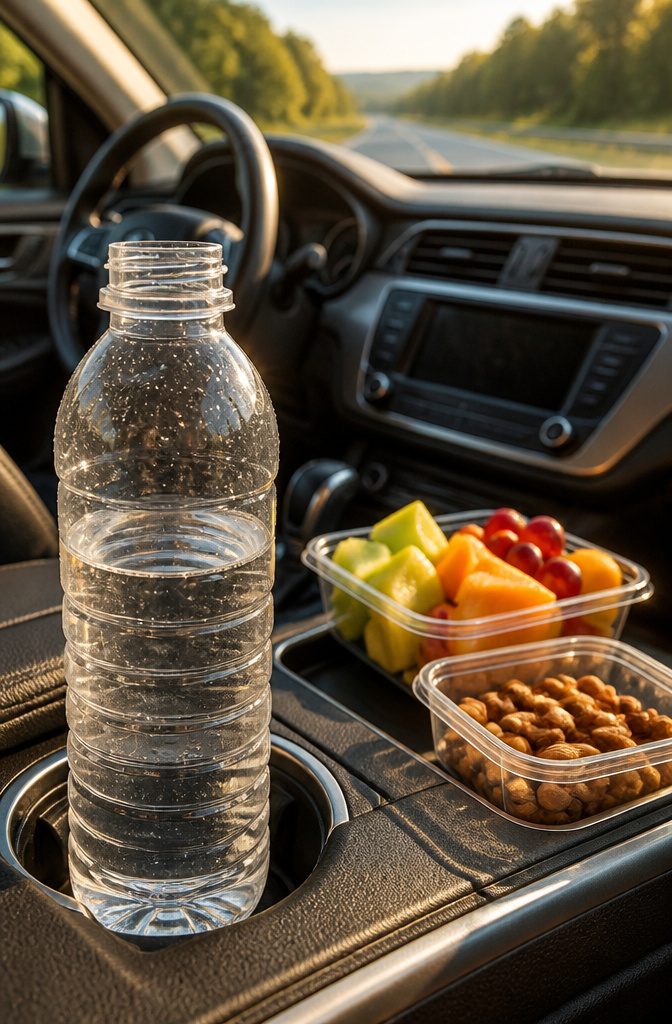
Hydration keeps a driver sharp in ways that are easy to overlook until the headache sets in. Dehydration drags down focus, speeds up fatigue, and can leave you with muscle cramps or a pounding head hours from the next exit. I keep a water bottle within reach and take a sip every 20–30 minutes rather than waiting for thirst. Liquid I.V. packets or similar electrolyte mixes help on longer hauls; the B vitamins and gentler formula mean less stomach trouble than some powders.
Light snacks beat heavy meals for staying alert. Fruit, nuts, or yogurt keep blood sugar steady without the crash that follows a burger and fries. Heavy food pulls blood toward digestion and away from the brain, which is the last thing you want at 70 miles per hour.
Breaks matter too. A two-to-three-hour rhythm of stopping to stretch, walk, and rest your eyes resets concentration better than pushing through. Adjust your seat and mirrors before you start; comfort cuts muscle strain and keeps the mind from wandering to your aching lower back.
The real trick is engagement. Passengers get audiobooks and games. The driver gets conversation, a podcast to follow, or even just narrating the scenery aloud. Silence lets the mind drift; something to track keeps it on the road.
Why the Passengers Matter Too
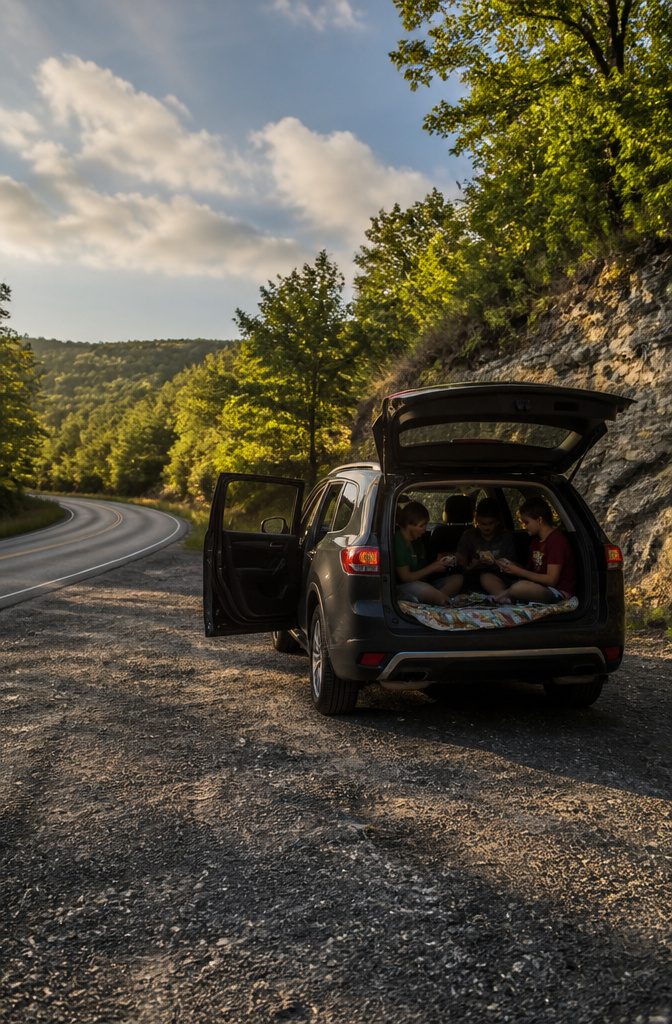
A restless back seat quickly becomes the driver’s problem. Fidgeting, complaints, and the constant reach for phones pull attention from the road even when no one means to. That is why games and conversation belong in the same toolkit as podcasts and audiobooks: they keep everyone in the car, including whoever is steering, in a steadier state.
20 Questions works because it runs on voices, not screens. One person thinks of a celebrity, place, or object; the others burn through twenty yes-or-no questions to corner it. The rules fit in a sentence, and a round can last two minutes or twenty. For something rowdier, Mad Libs still functions with adults, even the ones who roll their eyes before the first noun. Reading spooky stories aloud hits the same shared frequency, though the timing matters more here; a tense passage at midnight on a rural highway lands differently than the same words at noon.
The ABC game and license plate tracking need only paper or a phone for scorekeeping, so they stay available when the signal drops. The real measure of any of these is whether the driver can follow along without looking away from the road. If the front seat can play or listen, the back seat’s energy stays attached to the car instead of leaking out as distraction.
Frequently Asked Questions
What are some fun things to do on a long car ride?
Listen to audiobooks or podcasts, play road games like the License Plate Game or Alphabet Game, queue downloaded movies for passengers, try conversation starters, or set up a scavenger hunt with a mix of easy and hard items. Audio formats work best because the driver can follow along without looking away from the road.
How can I keep kids entertained on a long road trip?
Family audiobooks like Harry Potter or Percy Jackson hold mixed ages because adults catch details they missed while kids stay hooked by the pace. Road games, printable conversation decks, and scavenger hunts also keep backseat energy attached to the car instead of leaking out as distraction that pulls the driver’s attention.
What snacks should I bring on a long car ride?
Pack fruit, nuts, and yogurt in a cooler for steady energy without the crash. Heavy meals at rest stops pull blood toward digestion and away from the brain, which is dangerous at highway speeds. Avoid the sodium and sugar in gas station chips and candy bars that leave you groggy and reaching for the AC.
How often should I take breaks during a long drive?
Stop every 2–3 hours to walk for five to ten minutes, stretch your legs, and rest your eyes. Blood pools in the legs after sitting that long, and the driver’s focus slips before they notice. A bathroom-only stop does nothing for the headache and drowsiness that a real break prevents.
What are some good audiobooks for road trips?
Harry Potter and Percy Jackson come up often because skilled narrators, natural chapter breaks, and four-to-six-hour volumes suit long highway stretches. Start the audiobook about thirty minutes into a leg, once the initial excitement of departure has worn off and the car has settled into rhythm.