Seven folding methods will get your clothes to the hotel in wearable shape, but the real cost is the five minutes of prep most people skip. If you start with fabric that is already creased, every technique fails before it begins, and that damp shirt from the dryer will smell like mildew by day two. Only once the stack is actually flat does the choice between rolling and folding even matter.
1. Start With Flat, Clean Clothes
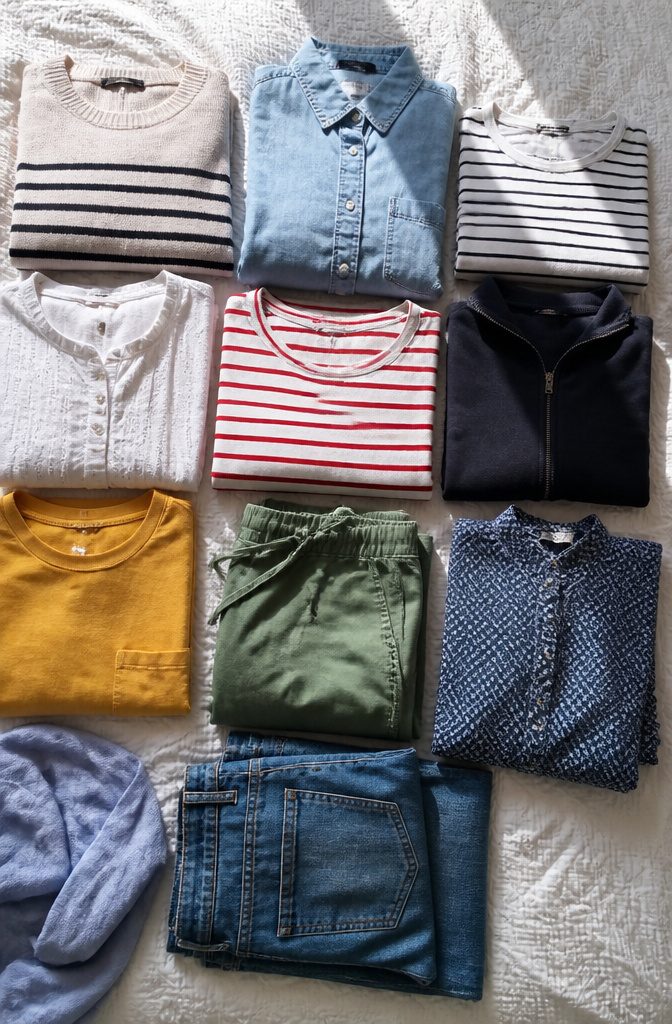
Every packing method falls apart if the starting fabric is already creased. I spread each piece on the bed and run my palm across it like I’m smoothing a bedsheet, feeling for ridges that will set in hard after hours in a bag. A collar that needs the iron now will still need it at the hotel, only the hotel iron will be worse or missing entirely.
Light from a window helps. I catch wrinkles I missed in overhead light, especially along seams and hems where they hide. Button every button and zip every zipper first; flat means the shape it was cut to, not the shape it crumpled into in the drawer. If something is damp from the wash, it waits. Packing even slightly moist clothing guarantees mildew smell by day two.
This step takes five minutes and saves twenty at the other end. Only once the stack is actually flat do I decide what becomes a fold and what becomes a roll. The method follows from the state of the cloth, not the other way around.

KEEP ORGANIZED - Perfect for minimizing clothing wrinkles clean when traveling ! A must-have traveling suitcase accessory, keeping your clothes compartmentalize and organized
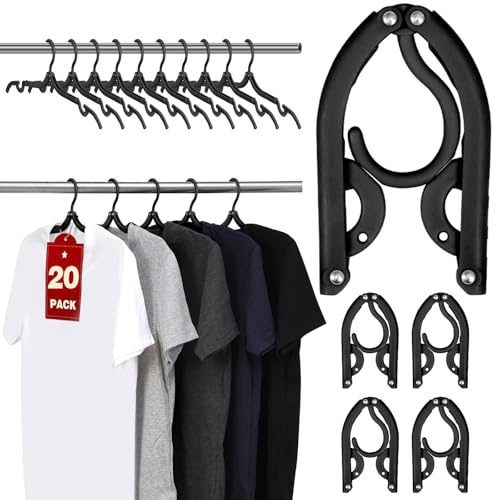
Foldable and Compact: With its compact foldable 3.5 X 5.1-inch size and weighing a mere 0.98 oz, it's designed for travel lifestyles
2. Classic Folding for Structured Items
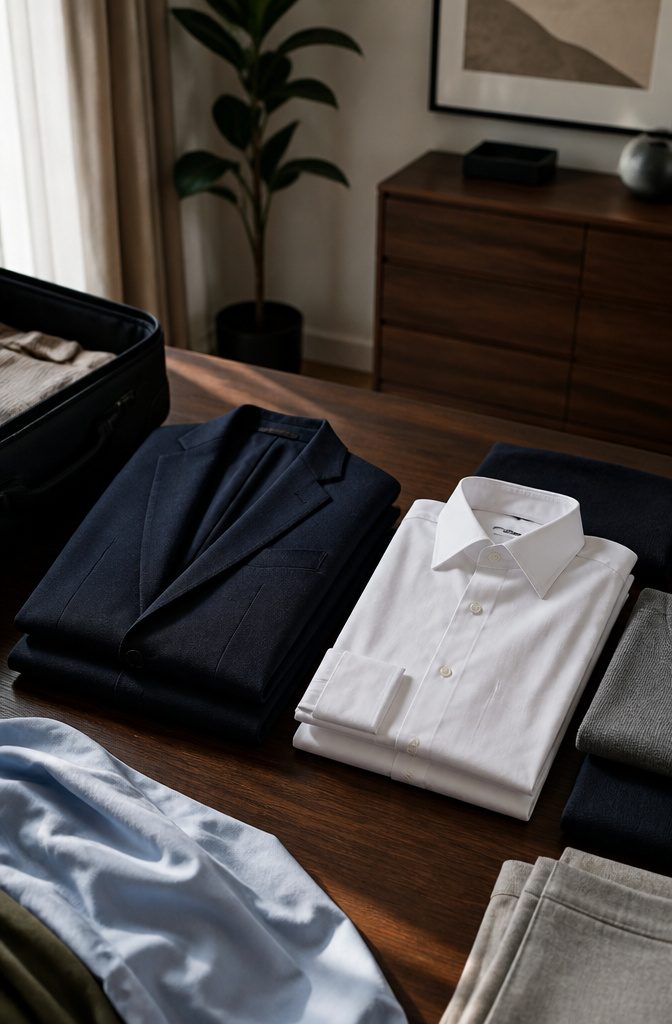
Blazers and dress shirts do not take well to rolling. The seams, shoulder padding, and collar construction are meant to lie flat, and forcing them into a cylinder creates creases that steam will not lift. Fold structured garments the same way you would for a dresser drawer, squaring each piece so the shoulders, cuffs, and hems align. Stack these folded items in a single layer on top of your rolled clothes rather than cramming them down the sides.
Cotton button-downs and anything with internal structure travel better this way because the fold follows the garment’s own lines rather than inventing new ones. Rolling works against the fabric’s memory; folding respects it. I pack blazers last, laid flat across everything else, and they arrive ready to wear.

A Laundry Game Changer – Had a hard time folding shirts? This folding board will up your laundry game! The clothes board makes folding much easier, quicker and fun!

A shirt folding board designed to fold T‑shirts, polos, and dress shirts uniformly

【3.5" Gusset】43 inches travel suit bag with 3.5" gusset which holds 5 suits or dresses while traveling with ease. with uspto Patent: US D897,101 S;
3. Rolling Casual and Lightweight Fabrics
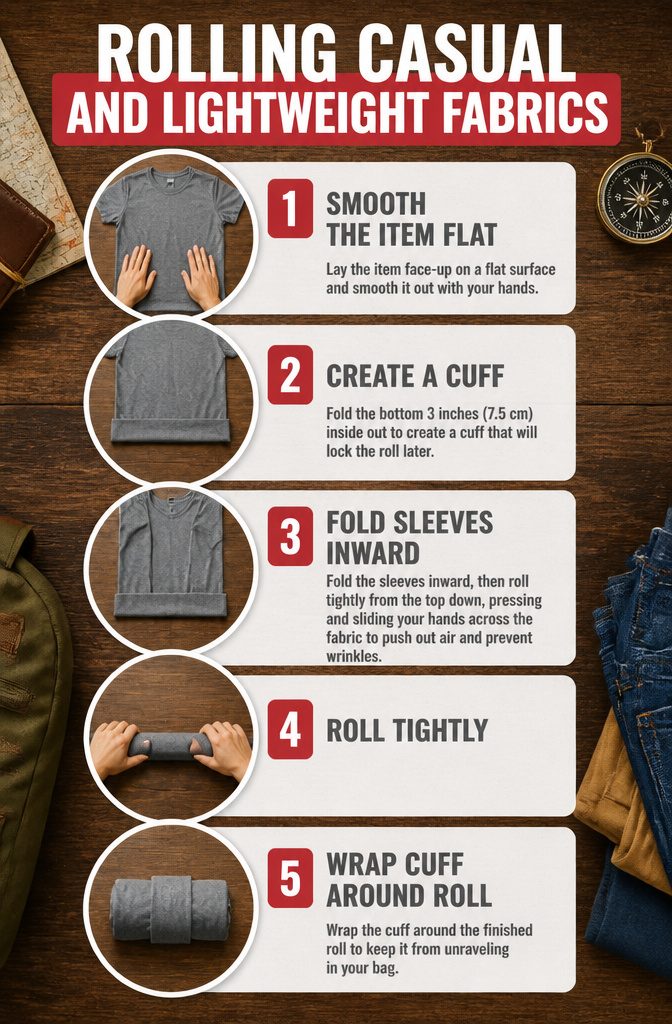
- Lay the item face-up on a flat surface and smooth it out with your hands.
- Fold the bottom 3 inches (7.5 cm) inside out to create a cuff that will lock the roll later.
- Fold the sleeves inward, then roll tightly from the top down, pressing and sliding your hands across the fabric to push out air and prevent wrinkles.
- Wrap the cuff around the finished roll to keep it from unraveling in your bag.
- A loose roll is what ruins this method: gaps let the bundle spring open, and the fabric shifts enough to crease against itself. The roll needs to be tight enough to hold its shape under slight pressure.
- Reserve this for t-shirts, shorts, casual pants, underwear, socks, denim, knits, and synthetic fabrics like spandex. The technique compresses well and the slight stretch in these fabrics helps wrinkles fall out.
- Skip rolling for natural fabrics like cotton or silk, which wrinkle regardless of how tight the roll is, and for anything structured where you need to preserve a collar or shoulder line.

✨ 【Elegant Pearl Pointed Toe Flats for Every Chic Occasion】 Faux suede upper with delicate pearl trim and a classic pointed toe—this pair instantly lifts any outfit and flatters your foot shape! Perfect for wedding guest looks, office commutes, casual parties, or daily outings, and it pairs seamlessly with dresses, blazers, jeans, and midi skirts.

【Non-Inflatable Sleep System】It provides an instant resting area designed for Chevrolet Blazer 2019-2026 that requires no air pump or blowing, saving setup effort after a truck weekend. The sturdy built-in wooden board supports your back firmly during a cold snap, reducing the sagging common in standard air beds. This offers a practical alternative to expensive hotel stays on your journey

【Non-Inflatable Sleep System】It provides an instant resting area designed for Chevrolet Blazer 2019-2026 that requires no air pump or blowing, saving setup effort after a truck weekend. The sturdy built-in wooden board supports your back firmly during a cold snap, reducing the sagging common in standard air beds. This offers a practical alternative to expensive hotel stays on your journey
4. KonMari Folding for Visibility
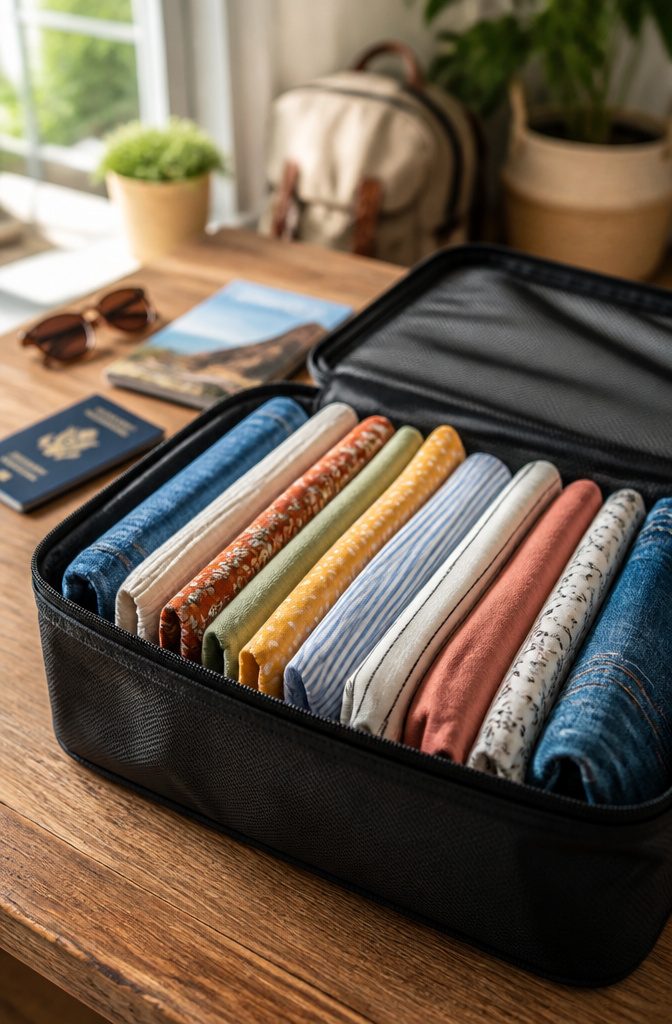
The KonMari method turns clothes into small rectangles you stand upright like books on a shelf, not layers you dig through. Classic folding stacks everything flat, which means the shirt you want is always at the bottom of the pile and comes out creased from the weight above it. Standing rectangles let you see every item at once and pull one free without disturbing the rest.
This works best for trips where you are living out of a suitcase for several days and want to grab a specific blouse or pair of jeans without unpacking everything. The folding itself takes more time than rolling. You fold each side toward the center, tuck sleeves, fold in half lengthwise leaving a small gap at the edge, then fold again into halves or thirds until the piece stands on its own. For packing cubes, some people add one extra fold in half before the final thirds to get the rectangle small enough.
The method suits button-downs, blazers, and nicer fabrics that wrinkle badly when rolled. It also pairs naturally with packing cubes sorted by category: one cube for pants, another for tops. That added organization is worth the upfront folding time if you value being able to assess your whole wardrobe at a glance.

TRAVEL ACCESSORIES - Each of our vacuum storage bags passes strict quality control standards and ensures long-term compressed storage. Including 2 sizes, 6 Pcs Medium (20x16)”, 6 Pcs Large (24x16)”

TRAVEL STORAGE BAGS: Roll-up travel storage bags for space-saving storage of garments, towels, and more; not recommend duvets or bulky clothes
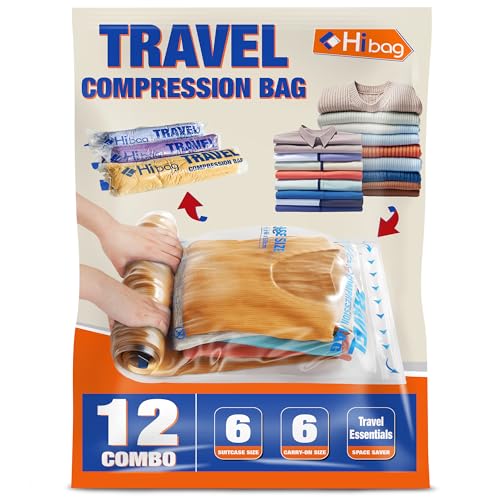
Travel Essentials: the combo includes 12 bags (6 M size & 6 L size), saving up to 80% space no vacuum needed, providing a perfect storage solution for travel and home.
5. Ranger Rolling for Compact Bundles
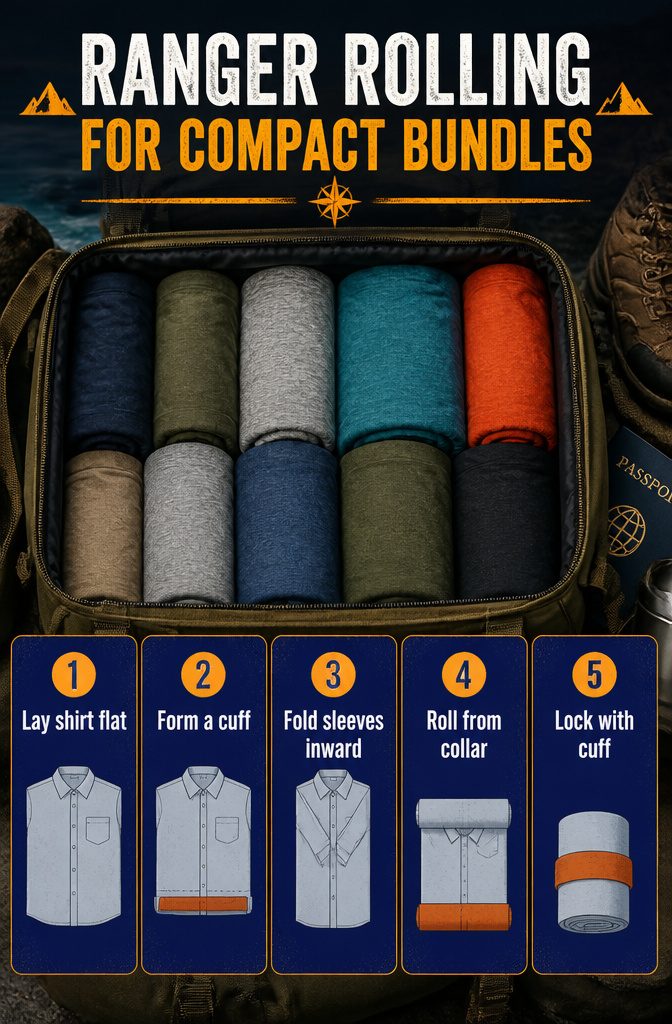
Ranger rolling turns a loose cylinder into a locked bundle that survives being tossed around in a bag. The cuff is what makes the difference.
- Lay the shirt flat and smooth it out.
- Fold the bottom hem up about two inches, inside-out, to form a cuff.
- Fold the sleeves inward so the shirt becomes a long rectangle.
- Roll tightly from the collar down toward the cuff.
- Pull the cuff over the entire roll to lock it in place.
The result is a firm "clothing sausage" that will not unravel if your bag shifts in transit. This outperforms simple rolling for anything slippery or shapeless, like tech-fabric running gear, because the self-contained wrap does not depend on friction against other clothes to stay tight. It also stacks neatly in packing cubes like firewood.
For pants, the process is nearly identical: create the cuff at the waistband, fold one leg over the other, roll from the ankles up, and wrap the waistband cuff around the finished roll. Casual items that do not need creases are the best candidates here.

DON'T JUST COVER UP ODORS, ELIMINATE THEM: Damp Check Fragrance Free Hanging Moisture Absorbers attract and trap excess moisture from the air, getting rid of musty odors MORE...
6. Bundle Wrapping Around a Core
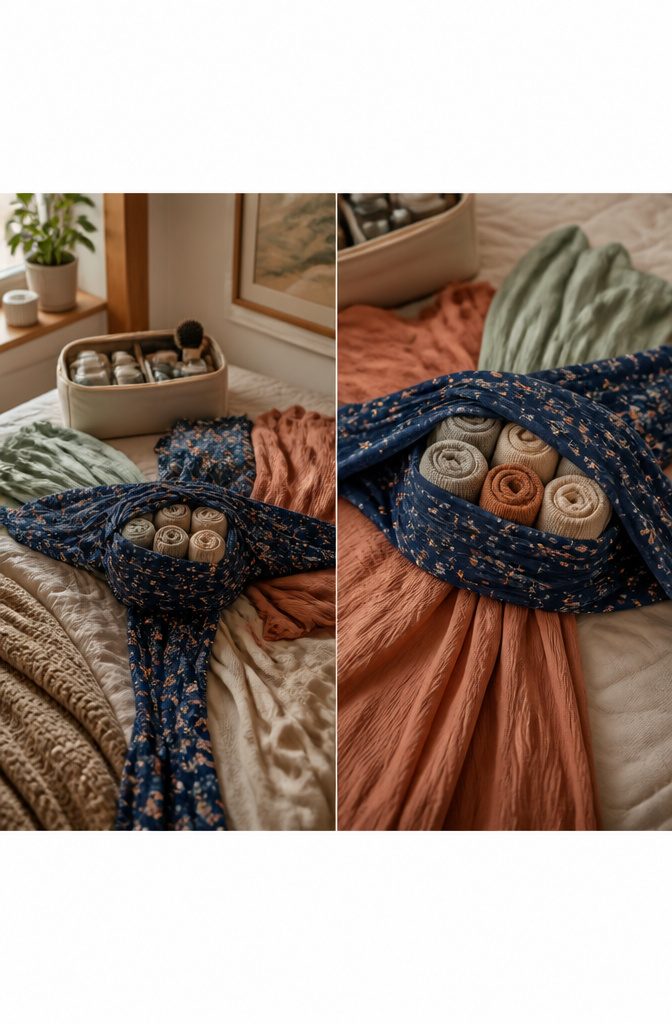
Bundle wrapping trades compression for surface area, and that trade is worth it when the goal is stepping off a plane with a blazer or dress that does not look like it spent six hours in a ball. The method is simple in concept and finicky in execution: every garment gets its own loose wrap around a central core, so folds become gentle curves instead of sharp creases.
The core should be small and soft, like a packing cube stuffed with socks or a travel toiletry pouch. Hard edges defeat the purpose. Start with your longest pieces, laying pants, maxi skirts, or dresses horizontally across your work surface, alternating which side the waistband sits on so the legs extend to opposite edges. Then place tops vertically across that layer, rotating each 180 degrees from the last until you have a crisscross. The smoothest fabrics sit closest to the core; textured or heavier pieces go on the outside where their bulk protects the delicate layers within.
Working from the topmost garment down, wrap each piece around the core one at a time. The result is one cushioned bundle rather than a stack of folded rectangles. It takes practice to keep tension even and avoid pulling anything too tight, which sets wrinkles just as surely as a hard crease would. For anyone packing a suit with no time to hunt down a hotel steamer, the extra ten minutes at home pays off at the other end.

3-Section Travel Organization: Three spacious compartments help organize clothing and travel essentials, making packing and unpacking simple and efficient

Measures 18×28×1 inches when hanging, perfect for organizing underwear, socks, and small accessories. Folds down to 18×14×1.5 inches. Weighs just 8 oz — as light as a folded t-shirt.

✅ PORTABLE HANGING TRAVEL SHELVES - UNPACK WITHOUT UNPACKING. Turn your suitcase into a mobile closet. The Stow-N-Go hanging travel organizer lets you unpack instantly — just hang, access, and go. No digging through your bag.
7. Packing Cubes for Organization
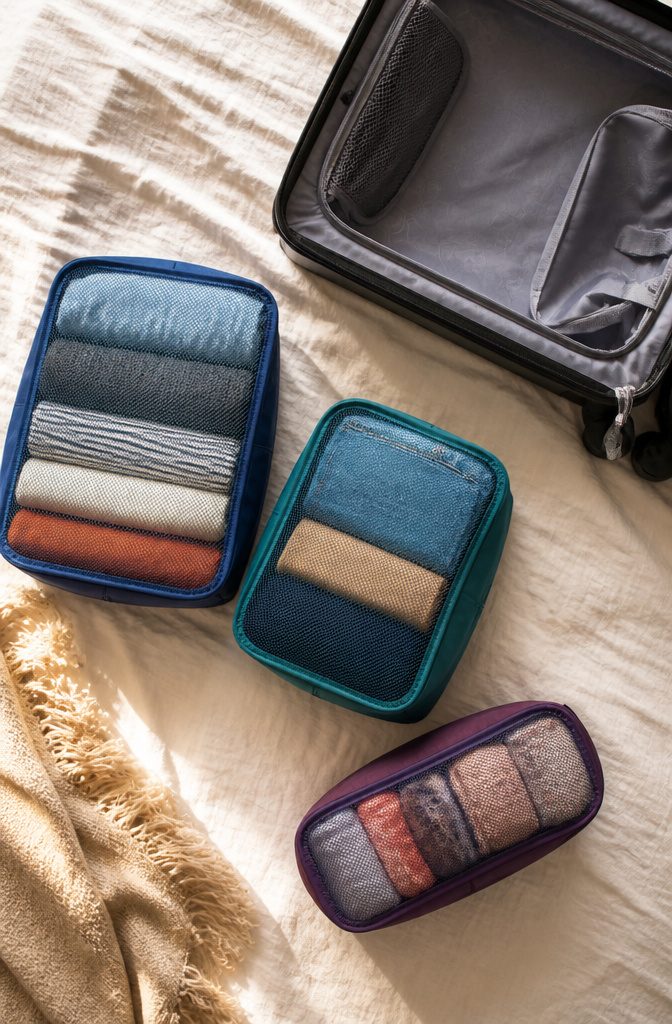
Packing cubes work best when the folding method inside them matches the cube type. Standard zippered cubes pair cleanly with flat-folded clothes; the rigid sides hold that stack in place and keep shirts from sliding into a lump by day three. Rolled items stay put too, though the deep zipper helps more than the structure itself.
Compression cubes with that second zipper are where bulky pieces like sweaters and fleece earn their keep. Folded flat, then cinched, they lose the dead air that normally eats half a suitcase. The space saved is real, but the bigger payoff is time and sanity at the hotel. Pull out a cube labeled "tops" and you have what you need without unpacking the whole bag.
I sort by category, not outfit. Tops in one cube, bottoms in another, socks and underwear in a slim cube wedged into the gap the others leave. The suitcase stops being a single compartment and becomes a set of drawers you lift straight into the hotel dresser. Whether that counts as "saving space" depends on the trip. For a week in carry-on, the compression cube for my one jacket matters. For longer trips with checked luggage, the organization matters more than the cubic inches.

【Folds to 1/3 In 3 Seconds】This 2-pack of 65" garment bags for travel for women folds down to a third of its size in seconds flat. Each has 2 sturdy handles so you carry it like a duffel bag — no more struggling to lug around a bulky dress garment bag at the wedding or awkward balancing acts at the airport


Protective Coverage: These bags offer a shield for gowns and suits, safeguarding them from dust and damage during storage and transport.
What to Roll and What to Fold
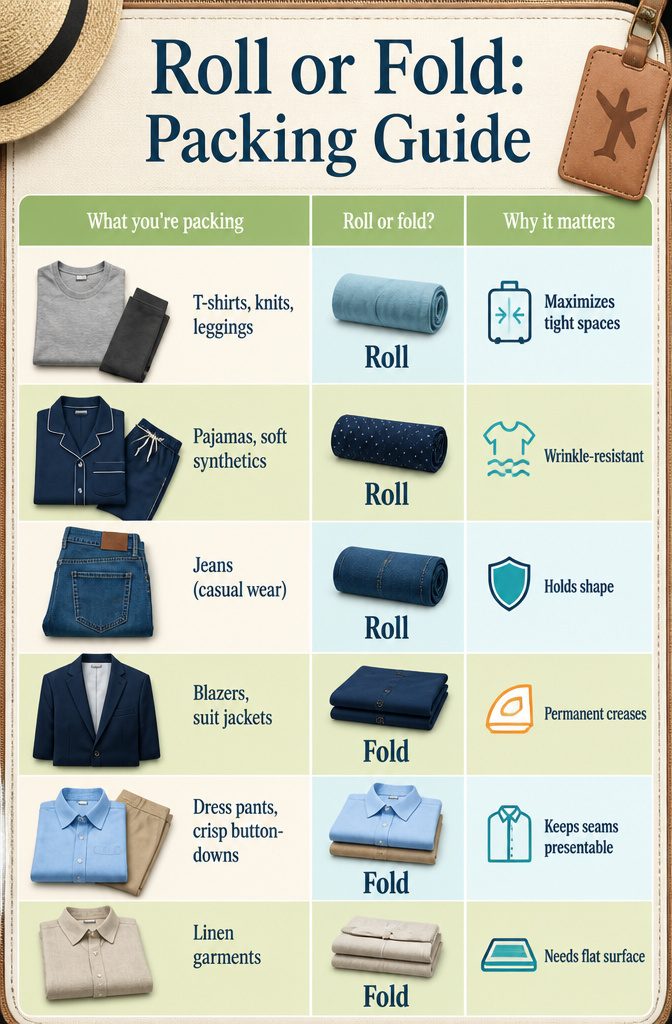
The fabric in your hand tells you which method wins. Rolling beats folding for knits, synthetics, and anything already soft; the slight stretch lets you squeeze out air and wedge the cylinder into dead space. Cotton t-shirts, workout leggings, pajamas, and casual jeans all behave this way. Folding is the safer call for woven fabrics with a crisp finish or built-in structure. Blazers, dress pants, and button-down shirts crease along forced curves, and those creases set deep in a suitcase. Flat folding follows the seams the garment already has, which keeps it presentable longer.
| What you’re packing | Roll or fold? | Why it matters |
|---|---|---|
| T-shirts, knits, leggings | Roll | Wrinkle-resistant; maximizes tight spaces |
| Pajamas, soft synthetics | Roll | Same forgiving behavior as above |
| Jeans (casual wear) | Roll | Dense but pliable; rolls hold shape |
| Blazers, suit jackets | Fold | Structure creases permanently if rolled |
| Dress pants, crisp button-downs | Fold | Seams exist for a reason; use them |
| Linen garments | Fold | Easily mussed; needs flat surface |
A hybrid suitcase is the only kind I’ve ended up with in practice. Rolled items fill the gaps along sides and corners; folded pieces sit flat on top where nothing presses them from above.

PREMIUM MATERIAL Made of alloy, these buttons feature a smooth silver metal finish. They are sturdy and durable, combining decorative charm with practical functionality for a...
Preventing Wrinkles in Transit
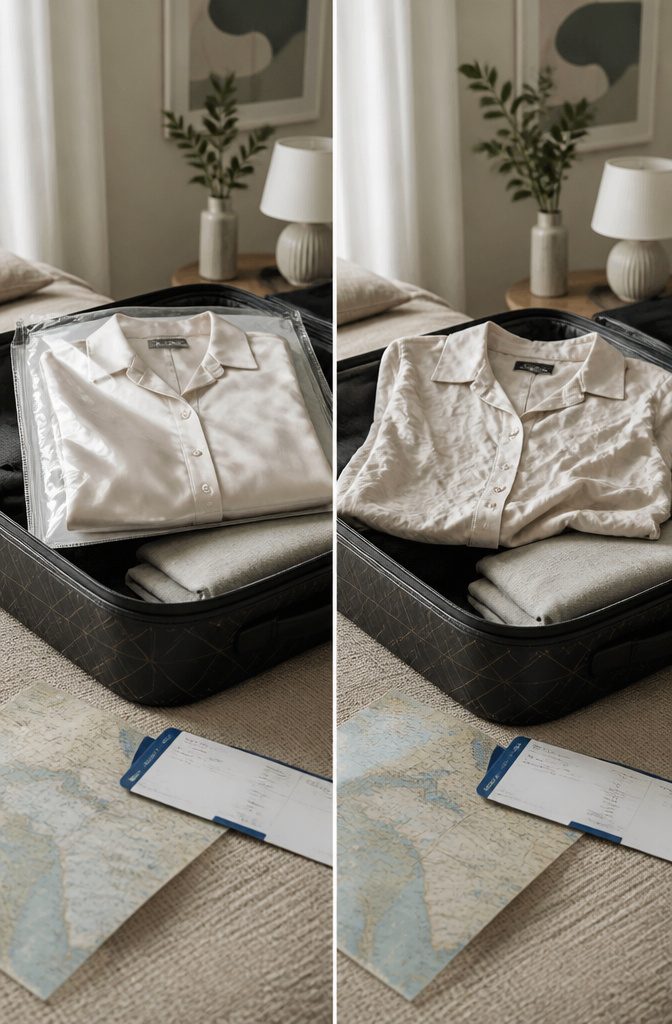
A dry-cleaner bag is the cheapest wrinkle insurance you can buy. The slick plastic lets fabric glide instead of grind against itself, which matters for anything structured: blazers, suit jackets, dress pants. Slip the garment inside before you fold it into a carrier or lay it flat.
Rolling works for casual items because it avoids the hard edges that folding presses into cotton and synthetics. T-shirts, leggings, soft knits: roll them, tuck them into gaps. But rolling a dress shirt ruins the collar and front placket, and a rolled blazer arrives as a cylinder of creases you cannot steam out.
I learned the hard way after opening a suitcase in Portland. A silk blouse I had folded flat looked fine; a linen shirt I had rolled looked like I had slept in it. Delicate fabrics and anything you would hang at home need a careful flat fold, period. Pack them on top, above the rolled items, so nothing presses down on them during the trip.
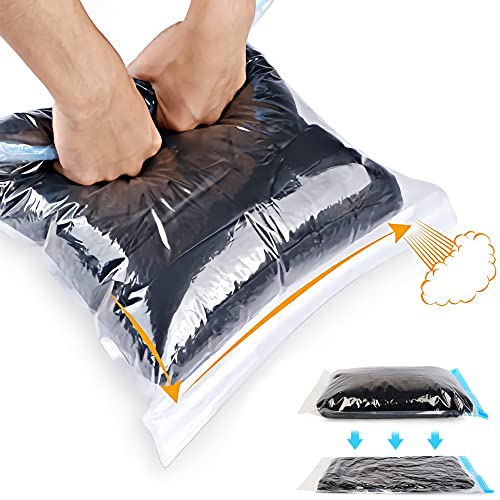
TRAVEL ACCESSORIES - Each of our vacuum storage bags passes strict quality control standards and ensures long-term compressed storage. Including 3 sizes, 4 Pcs Small 20x14”, 3 Pcs Medium 20x16”, 3 Pcs Large 24x16”

One-Button Vacuum Compression System: Say goodbye to manual pumps and easily lost accessories. Featuring a built-in electric pump, our vacuum backpack travel with pump compresses clothes by 30%-50% with a simple long-press, easily accommodating 5-7 days of clothing. Includes a USB cable for charging, ensuring that you can use this travel backpack with vacuum system to compress clothes at any time in campsites, dormitories, airports, never be left helpless with a bloated bag you can't re-compress

12 compression bags for travel with green double-zip seals: 4 large size - 28x20 inch (70x50 cm) and 8 medium size - 24x16 inch (60x40 cm).
Frequently Asked Questions
Is rolling or folding clothes better for packing?
Both. Roll casual, wrinkle-resistant items like t-shirts, knits, and leggings to squeeze out air and fill tight spaces. Fold structured pieces like blazers, dress pants, and crisp button-downs along their existing seams to prevent deep creases that steam won’t lift. A hybrid suitcase with rolled items in the gaps and folded pieces on top works best in practice.
How do I prevent wrinkles when packing?
Start with clothes that are already flat and completely dry; even slight dampness guarantees mildew by day two. Roll casual fabrics to avoid hard edges, and fold structured or delicate pieces flat. Slip blazers and suit jackets into dry-cleaner bags before folding so the plastic lets fabric glide instead of grind against itself.
What types of clothing should I roll?
Roll t-shirts, knits, leggings, workout gear, pajamas, soft synthetics, and casual jeans. These fabrics are pliable and wrinkle-resistant enough that a tight cylinder works in your favor. Skip rolling for structured items like blazers, crisp button-downs, and linen, which crease along forced curves and need flat folding instead.