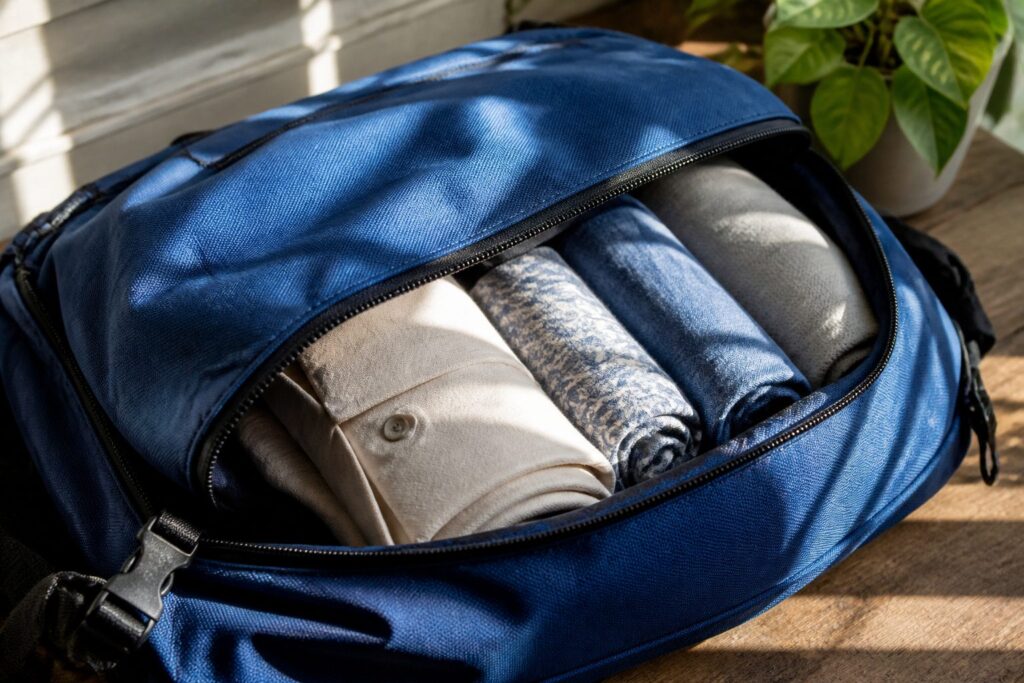
A fully packed carry-on and no checked-bag fee takes five minutes of folding and one critical discipline: smoothing the garment before the roll.
Most people rush that step, and most people spend their first morning of vacation hunting down a hotel iron.
The Ranger Roll locks each cylinder closed without rubber bands, but only if the initial two-minute press removes the creases already there.
1. Prepare the Garment
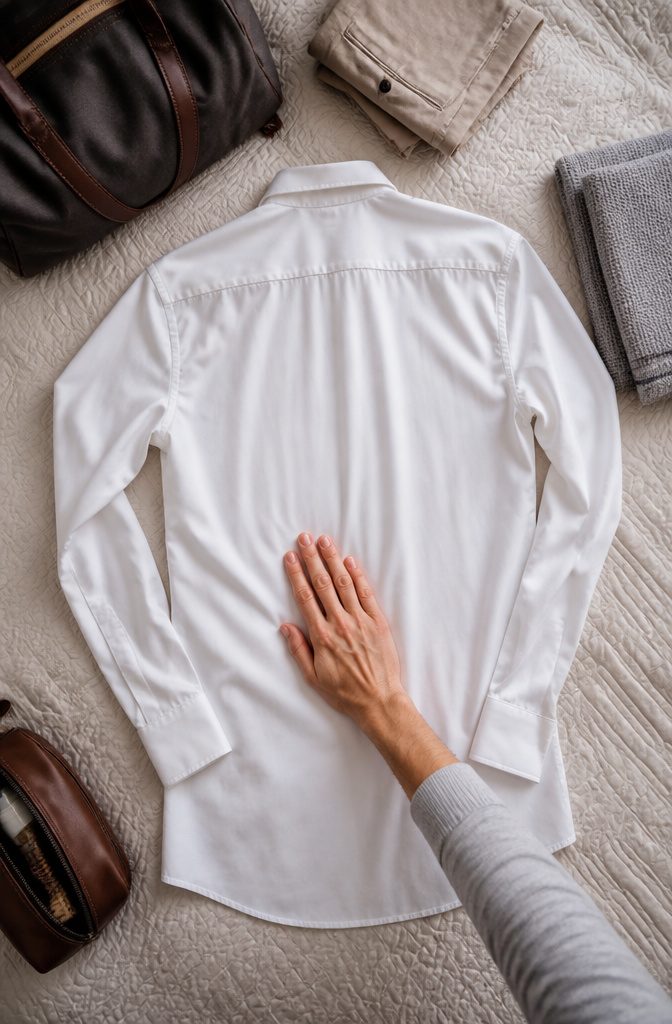
A bedspread or a clean tabletop works better than a hotel desk still cluttered with yesterday’s receipts. Lay the garment face-down, then run your hands from shoulder to hem and across each sleeve, pressing out the creases already there.
Rolling a wrinkle in means ironing it out later, and nobody boards a plane hoping to spend the first morning of vacation hunting down a hotel iron.
This two-minute smoothing is the step most people rush, and it is the one that determines whether the shirt comes out ready to wear or ready for the laundry bag.
Delicate fabrics, silk especially, need the extra pass: a fold that catches an existing crease will set it hard against the tissue paper you may add later.
2. Fold Sleeves to Center
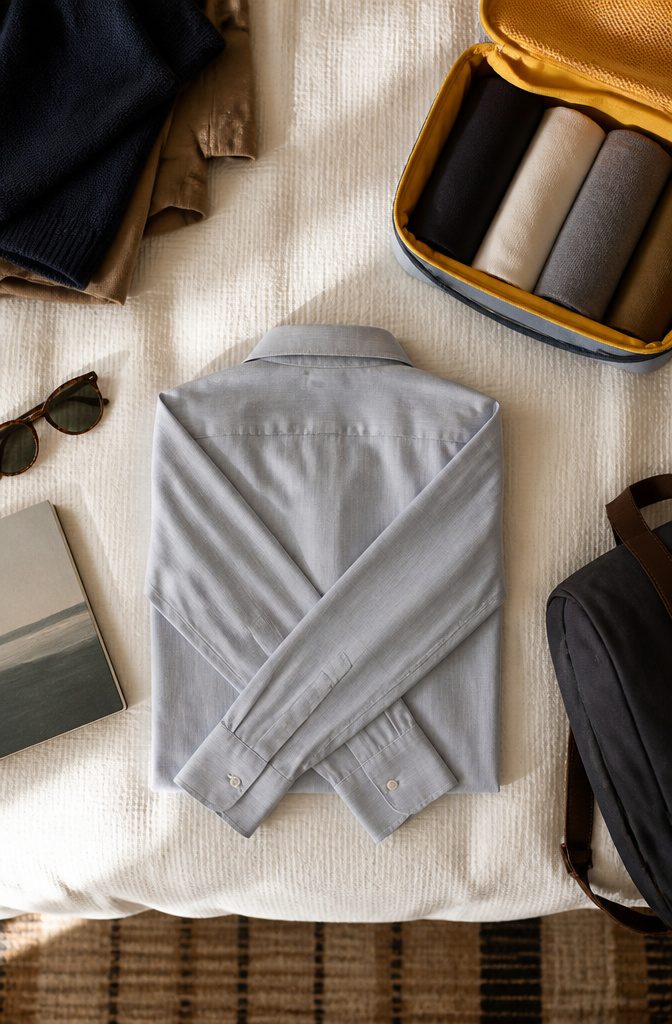
Long sleeves need a diagonal angle to lie flat. I fold them across the back of the shirt in an X-shape so the cuffs meet near the opposite hem, which keeps the fabric from bunching at the shoulders.
Short sleeves are simpler: fold them straight across so the outer edge lines up with the shoulder seam.
Either way, you want the same width as your packing cube, roughly an inch or two of fabric folded in from each side, more for larger sizes.
Sleeveless tops skip this step entirely; their shoulders are already the clean edge you want.
Smooth everything as you go. A wrinkle pressed in now sets until laundry day.
3. Fold and Roll the Bottom
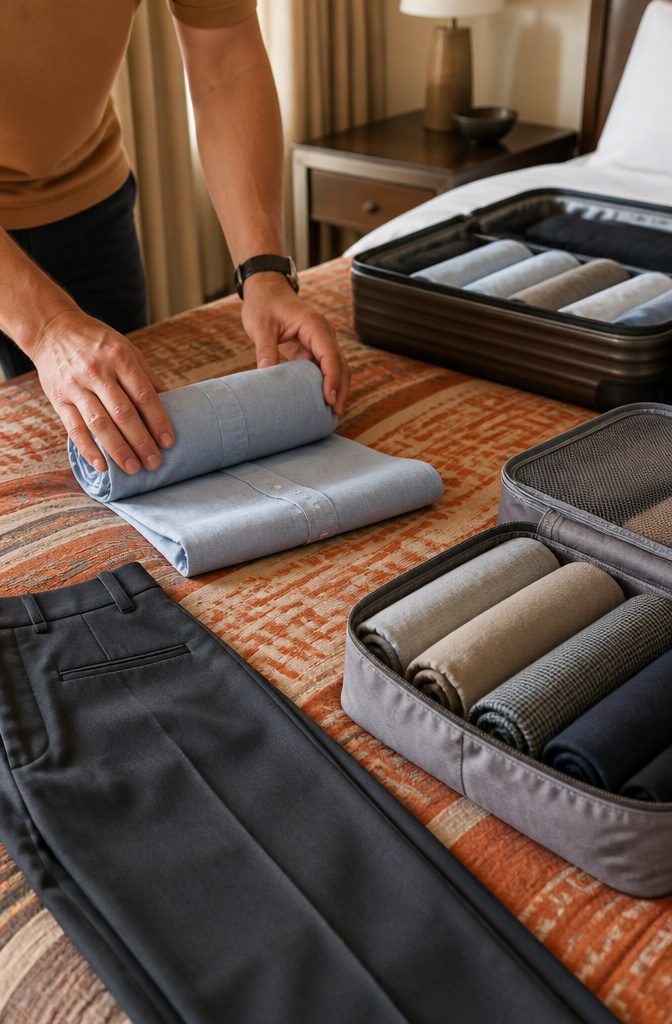
A folded hem makes the rolling part clean. Turn the bottom edge of a shirt up about 1 to 2 inches against the outside, not tucked in, so it forms a cuff you can use later.
Roll from that folded edge toward the collar, keeping tension even; the tighter the cylinder, the less space it takes in your bag.
For pants, stack the legs lengthwise first, smoothing wrinkles as you go, then roll from the cuff up to the waist. A loose roll leaves gaps between turns that collapse in transit and cost you room.
The Ranger Roll technique works the same way: that initial cuff becomes the wrap that locks the bundle closed once you reach the end. Either approach, the roll itself does the compression, and a sloppy one undoes everything.
4. Secure the Roll
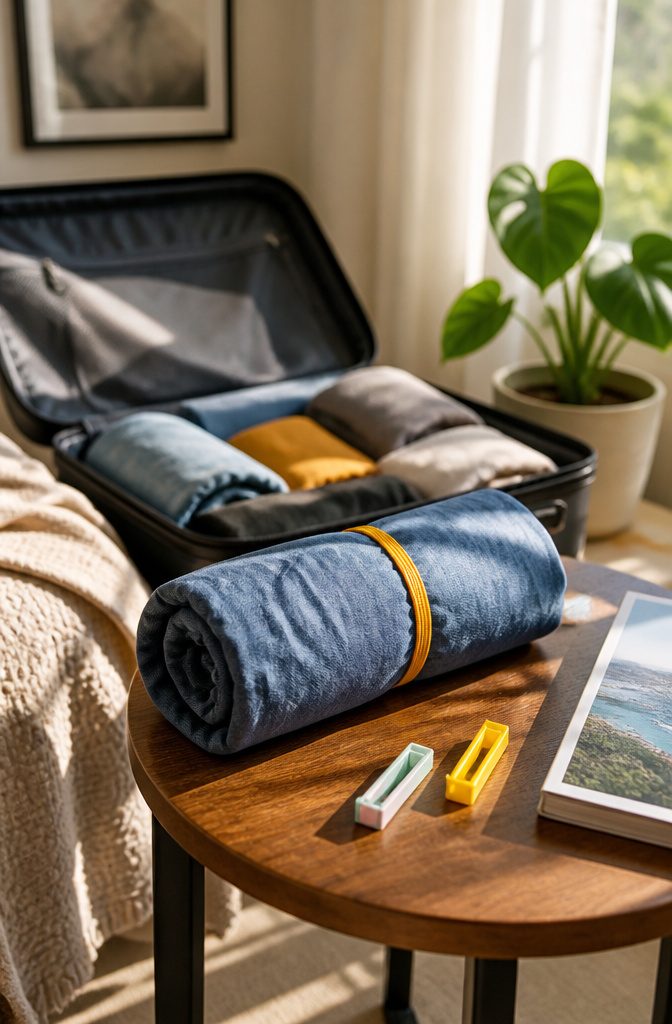
A loose roll undoes every compression gain the moment it hits the road.
Two ways to lock it down. The faster route is a rubber band or hair elastic cinched around the middle, a trick pro-packers keep in their kit for speed and reliability.
The cleaner method borrows from military packing: the Ranger Roll, sometimes called the Army Roll. Before you start rolling, fold the bottom hem up and inside-out to create a cuff a couple of inches wide.
Roll the garment tightly from the opposite end, then wrap that cuff around the cylinder and tuck the loose end through to create a self-securing bundle.
No extra gear, and the finished roll is firm enough to stack edge-to-edge in a packing cube without gaps.
T-shirts and tops take to it naturally; jeans work the same way, using the waistband as the locking cuff instead of the hem.
The technique forces out excess air as you roll, which is where the space savings actually come from.
5. Arrange in Packing Cubes
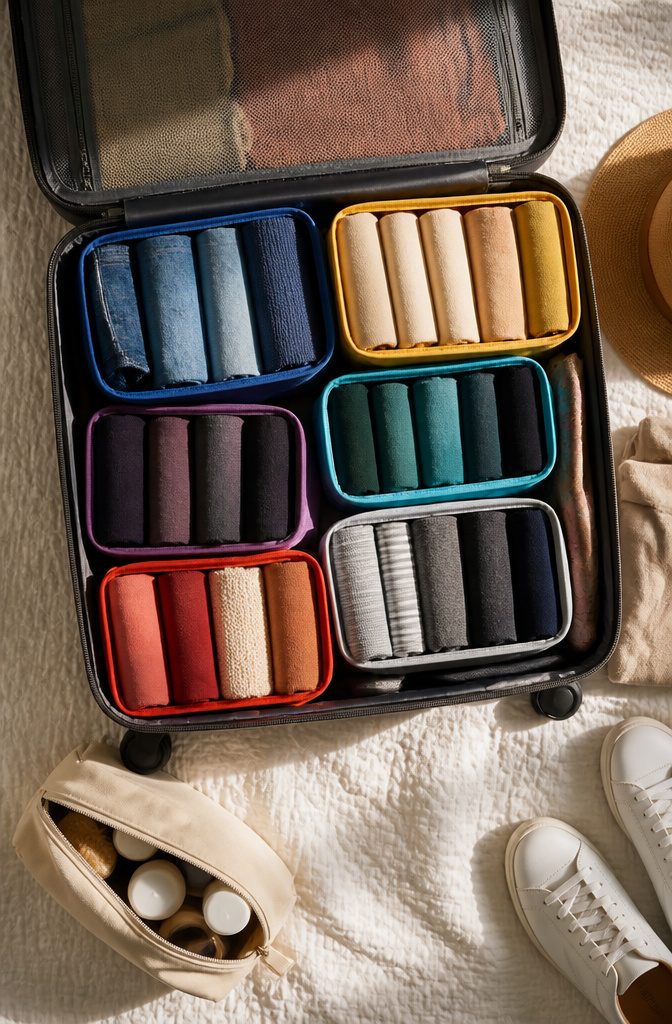
Compression cubes can shave 20–30% off clothing volume once the second zipper cinches out the air.
That is the difference between checking a bag and carrying on for a long weekend. I use them for bulky layers, the fleece or the thick jeans that rolled tight still eat space.
Standard cubes organize without squeezing; they keep tops separate from bottoms so I pull one rectangle out instead of excavating the whole suitcase.
Standing rolls vertically inside the cube lets me see every item at a glance, the spine of each roll visible like books on a shelf.
Corners of the suitcase where nothing else fits become useful real estate, a slim cube or a few loose rolls wedged in.
I sort by outfit when the trip moves fast, by type when I will mix and match; either way, nothing unpacks onto the hotel chair just to find one shirt. The cube comes out, the drawer opens, the system holds.
Rolling vs. Folding
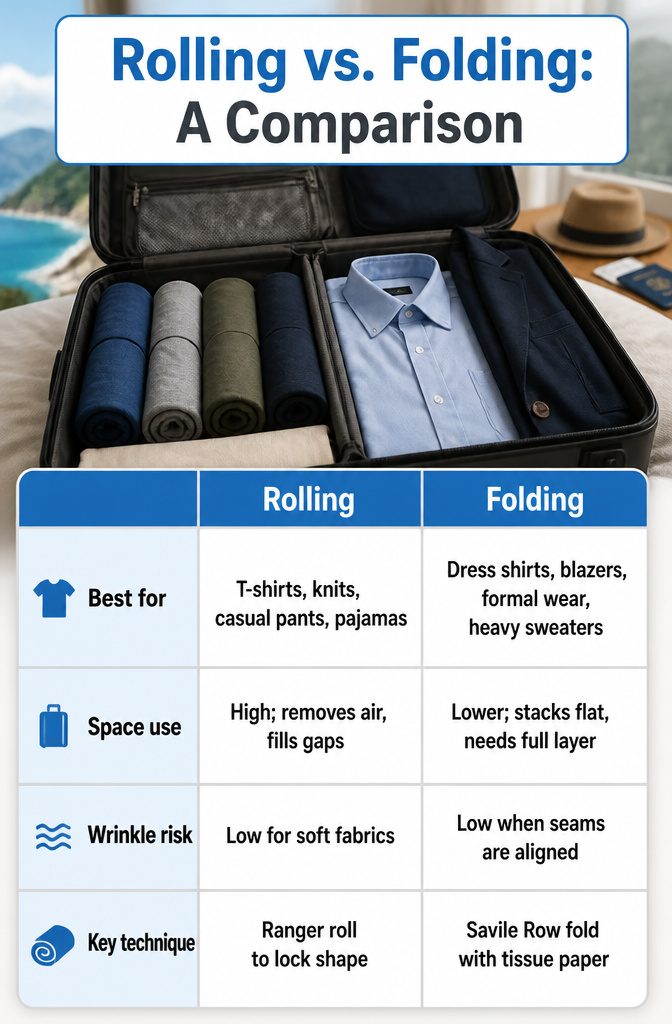
Rolling squeezes air out of casual knits and cottons, turning t-shirts, leggings, and lightweight pants into tight cylinders that slot into corners and packing cubes.
I reach for it first on any trip where I am living out of a bag.
But rolling a dress shirt or blazer is a fast way to arrive looking like you slept in it. Structured pieces need the protection of a flat fold, with seams aligned and nothing crushed.
For dress shirts specifically, the Savile Row fold works around tissue paper placed at the center, letting the fabric fold along the shoulder seams rather than creasing down the middle.
I have seen the difference between a shirt packed this way and one folded in half the usual way, and the former needs no hotel iron.
Most trips call for both methods. Roll the casual layer, fold the piece that has to look pressed.
| Rolling | Folding | |
|---|---|---|
| Best for | T-shirts, knits, casual pants, pajamas | Dress shirts, blazers, formal wear, heavy sweaters |
| Space use | High; removes air, fills gaps | Lower; stacks flat, needs full layer |
| Wrinkle risk | Low for soft fabrics | Low when seams are aligned |
| Key technique | Ranger roll to lock shape | Savile Row fold with tissue paper |
Best Items to Roll
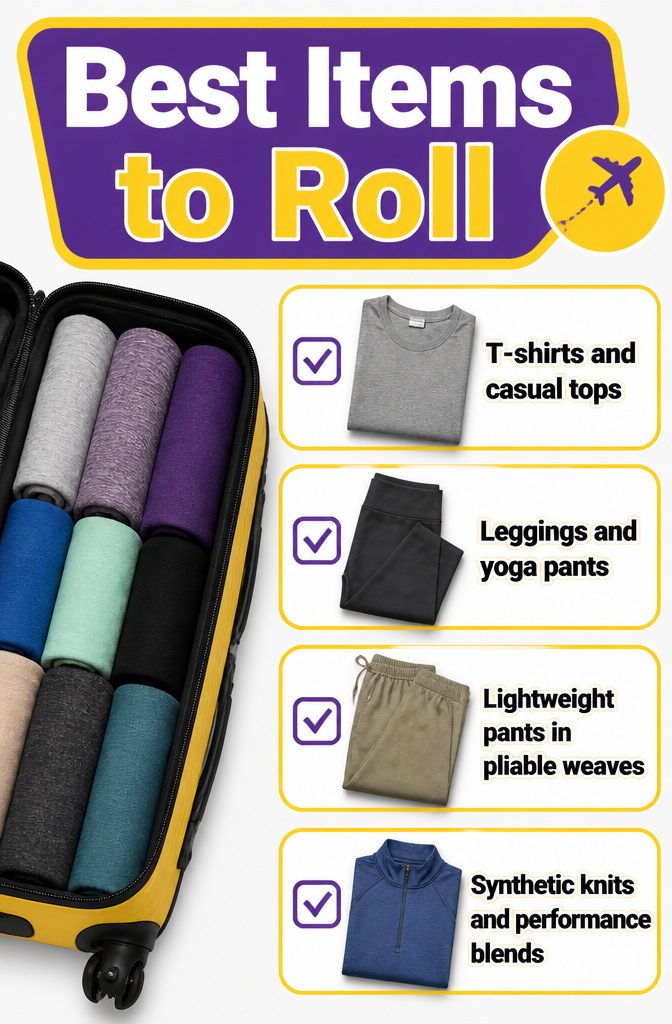
T-shirts, lightweight pants, leggings, and synthetic knits are the fabrics that actually reward rolling.
Cotton jerseys and performance blends compress into tight cylinders and spring back at the destination without holding wrinkles. These materials forgive the tension of the roll in a way stiffer fabrics refuse to.
The items that belong in your rolled layer:
- T-shirts and casual tops — uniform logs that fill gaps between shoes and bag frames
- Leggings and yoga pants — the synthetic content lets them compress to almost nothing
- Lightweight pants in pliable weaves — not structured trousers, but soft cuts that bend
- Synthetic knits and performance blends — polyester and nylon activewear bounce back instantly
Reader’s Digest puts the dividing line plainly:
The best candidates are soft clothing and/or lightweight cotton items.
The warning in that same guidance matters too: forcing heavy or bulky items into a roll backfires. Winter coats and thick knit sweaters stay folded flat, placed at the top of the bag where weight sits without fighting the fabric.
Items to Fold Flat
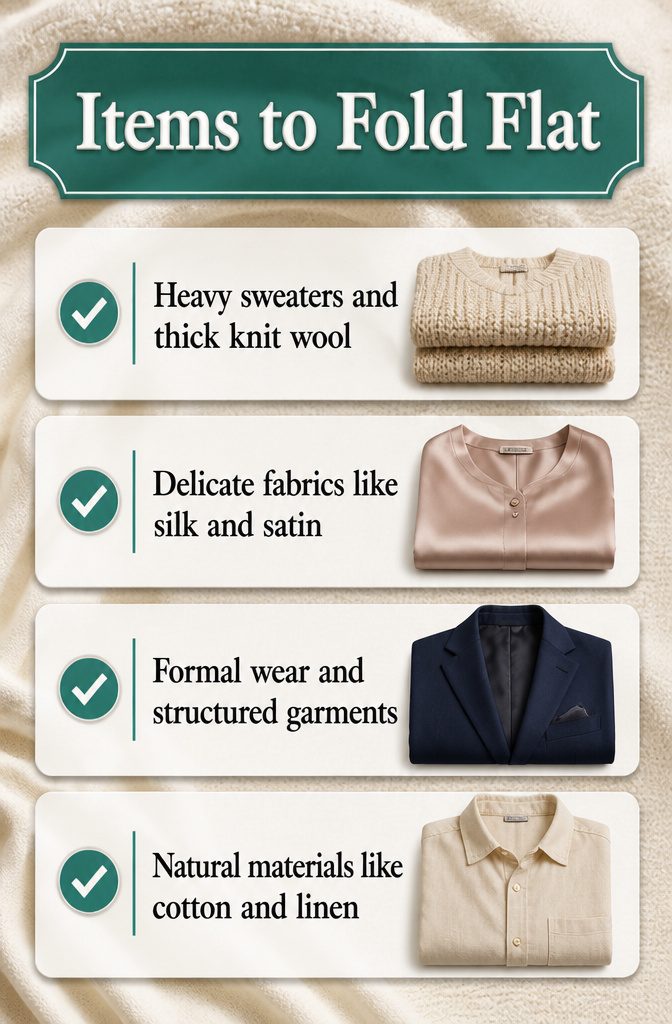
Some garments simply refuse to cooperate with rolling, and forcing them only creates problems at the destination.
- Heavy sweaters and thick knit wool lose their shape rolled into a cylinder; the bulk bunches and the knit stretches under its own weight. Folding them flat and placing them at the top of the bag keeps the structure intact.
- Delicate fabrics like silk and satin wrinkle under the tension of a tight roll. Lay them flat, place acid-free tissue paper over the garment, then fold around the paper. The tissue acts as a soft buffer against sharp creases and reduces friction that can snag the fabric.
- Formal wear and structured garments with seams, darts, or padded shoulders follow their built lines rather than fighting them. The Savile Row Fold for button-down shirts avoids the vertical center crease by folding along the shoulder seams instead. For suit jackets, turning one shoulder inside-out and tucking the other shoulder into it protects the lapels before the final lengthwise fold.
- Natural materials like cotton and linen crease easily and benefit from the fewer, flatter folds of folding over rolling. Where those fold lines fall matters; they will still show when the garment comes out days later.
The Ranger Roll Technique
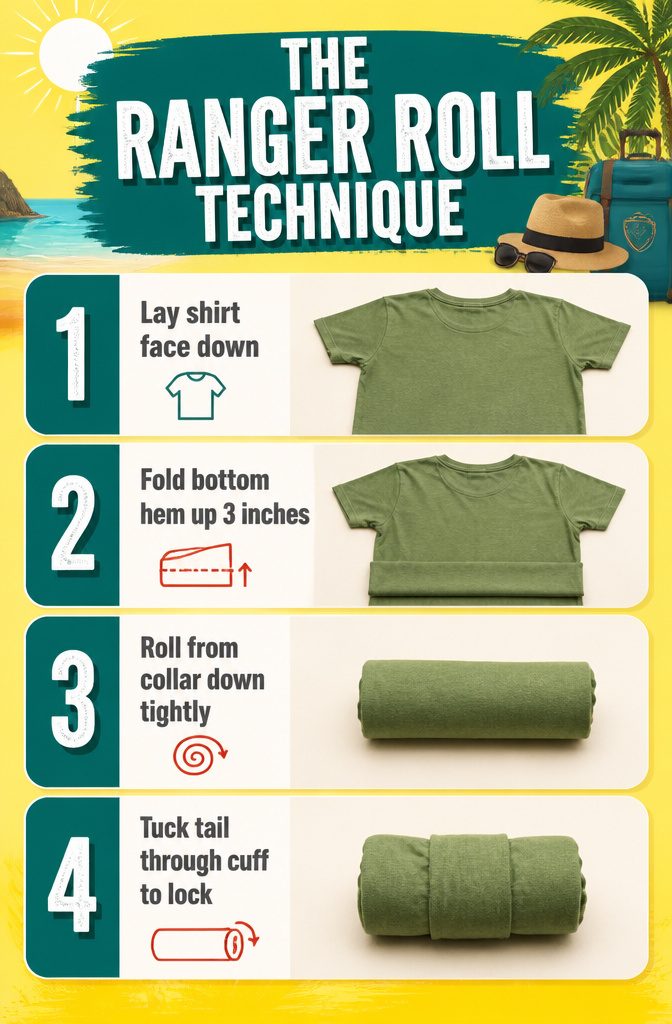
The Ranger Roll works best on t-shirts and casual knits you do not mind rolling tight.
Lay the shirt face down, fold the bottom hem up about 3 inches and flip it inside out to form a cuff, then fold the sleeves back to the center so the body makes a clean rectangle.
Roll from the collar down as tightly as you can, forcing air out as you go.
When you reach the end, wrap that last 6 inches of fabric around the cylinder and tuck the tail through the cuff to lock it closed — no rubber bands, no clips.
The finished bundle is a firm cylinder, about the size of a burrito, that holds its shape when you toss it in a bag.
I line these up in packing cubes or stand them on end in a carry-on so I can see every shirt at a glance without digging.
The compression is real; you are basically squeezing the air out and replacing it with fabric tension.
This method is sometimes called the Army Roll, and it is not ideal for everything.
Button-downs will crease at the fold points, and bulky items like sweaters fight the tight roll. For t-shirts, workout gear, and thin knits, though, it is the most space-efficient move I know.
Preventing Wrinkles
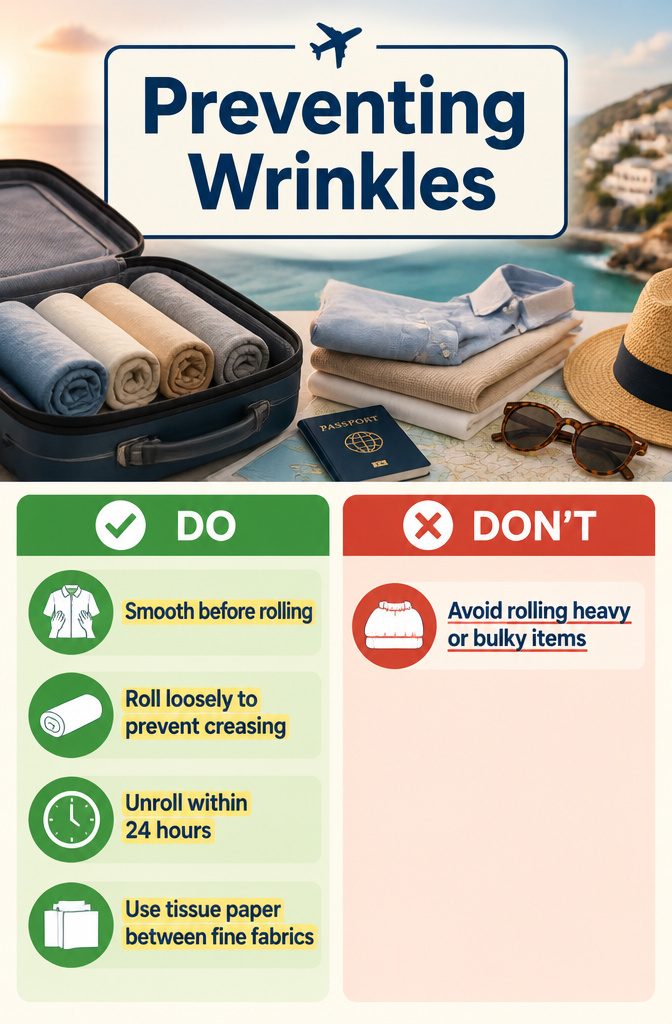
Smoothing fabric happens before the roll, never after. Once a crease is rolled into cotton or linen, the pressure of a tight cylinder sets it hard, and the heat of a trunk in transit bakes it in.
I lay the garment flat, run my palms from collar to hem, then roll from the bottom up with enough tension to keep the cylinder from shifting but not so much that the fibers compress into new creases.
The military packs this way to keep uniforms presentable in duffels; the same logic holds for a carry-on.
The roll needs to come undone within 24 hours of arrival. Gravity and time turn a tight cylinder into a permanent spiral if you leave it.
For silk, cashmere, or anything fine enough to snag on its own weave, a sheet of acid-free tissue paper between each fold line absorbs the friction that causes pilling and deep creasing.
The tissue costs almost nothing and saves a trip to the dry cleaner.
Hybrid Packing Strategy
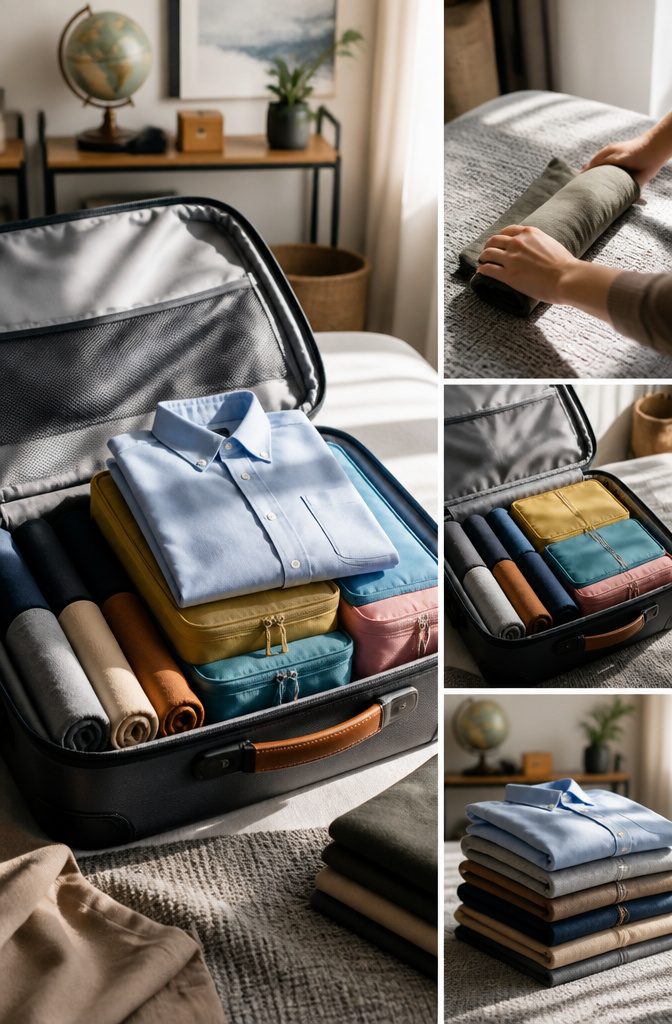
Most trips need both techniques rolled together. I roll the casual layers, jeans and knits and tees, and pack them into compression cubes where the tight fit squeezes out air and fills the main compartment without gaps.
For the one pressed shirt or linen trousers that need to arrive crisp, a flat fold laid on top protects the fabric from creasing where rolling would ruin it.
Garment folders with tissue lining hold those flat pieces better than cubes can; the paper buffer keeps the fold intact through a long haul. The combination uses space fully without sacrificing what needs to stay crisp.
Frequently Asked Questions
Is it better to roll or fold clothes for packing?
Both. Rolling saves space and works best for casual, wrinkle-resistant items like t-shirts and knits.
Folding protects structured pieces like blazers and dress shirts from hard creases. Most trips call for a hybrid approach: roll the casual layers, fold the pieces that need to look pressed on arrival.
What types of clothes should I roll?
Roll t-shirts, leggings, lightweight pants, pajamas, and synthetic knits.
These soft fabrics compress into tight cylinders and resist wrinkling. Avoid rolling heavy sweaters, delicate silks, or structured garments; the bulk bunches or the tension damages the fabric.
How do I roll clothes without getting wrinkles?
Smooth out every wrinkle with your hands before you start; rolling a crease in sets it hard.
Roll with even tension, tight enough to hold shape but not so tight fibers compress into new folds. Unroll within 24 hours of arrival, or gravity turns the cylinder into a permanent spiral.
What is the Ranger Roll?
A self-securing roll that needs no rubber bands. Fold the bottom hem up 2 to 3 inches and flip it inside-out to form a cuff, fold sleeves to center, then roll tightly from collar to hem.
Wrap the cuff around the cylinder and tuck the tail through to lock it closed. The finished bundle is firm, about the size of a burrito, and stacks neatly in packing cubes.
How do I fold a dress shirt for travel?
Use the Savile Row fold. Button the shirt, place acid-free tissue paper at the center, then fold along the shoulder seams rather than down the middle.
This avoids the vertical center crease that ordinary folding creates. Lay the folded shirt flat on top of rolled items or inside a garment folder so nothing crushes it in transit.
What is the 3-3-3 rule for packing clothes?
It focuses on matching the folding technique to the fabric: roll casual and knit items, fold structured and formal pieces flat, and use compression cubes to cut clothing volume by 20 to 30 percent.
What is the 5 4 3 2 1 rule when packing?
It focuses on matching the folding technique to the fabric: roll casual and knit items, fold structured and formal pieces flat, and use compression cubes to cut clothing volume by 20 to 30 percent.
What is the 3-5-7 rule in packing?
It focuses on matching the folding technique to the fabric: roll casual and knit items, fold structured and formal pieces flat, and use compression cubes to cut clothing volume by 20 to 30 percent.





