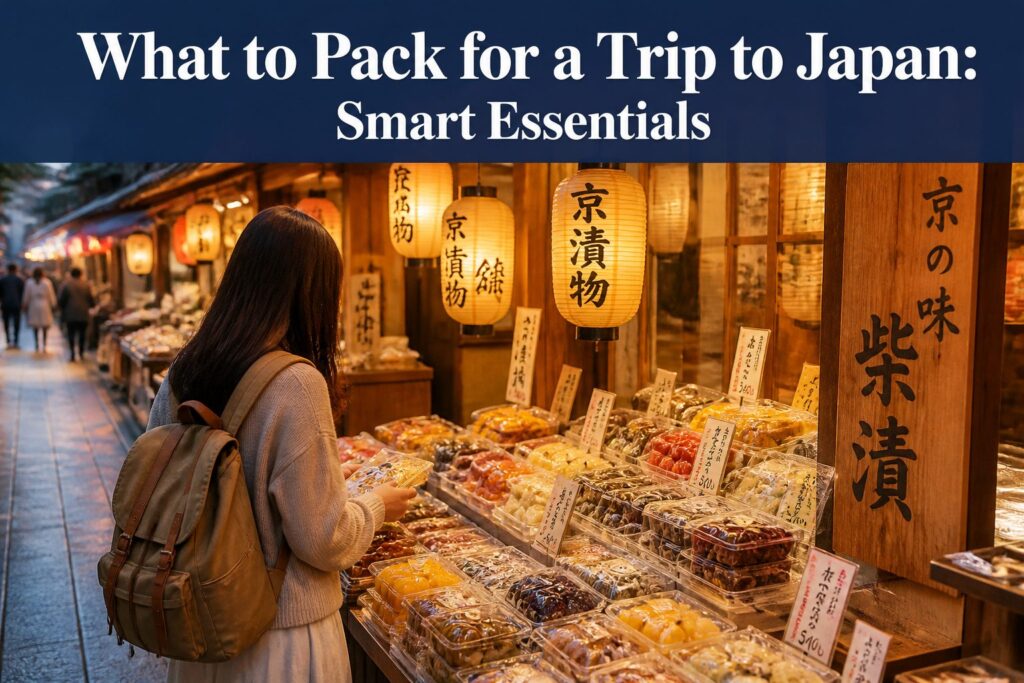
Pack ten smart essentials for Japan and you will still need cash in your pocket, because rural shops and small restaurants often take yen and nothing else.
The same 7-Eleven ATMs that save you abroad run 24 hours with foreign cards, yet showing up without physical currency is a risk I would not take.
A single ¥500 coin covers more than three dollars, and the change piles up fast enough that a zipped coin purse earns its keep by day two.
1. Passport and Travel Documents
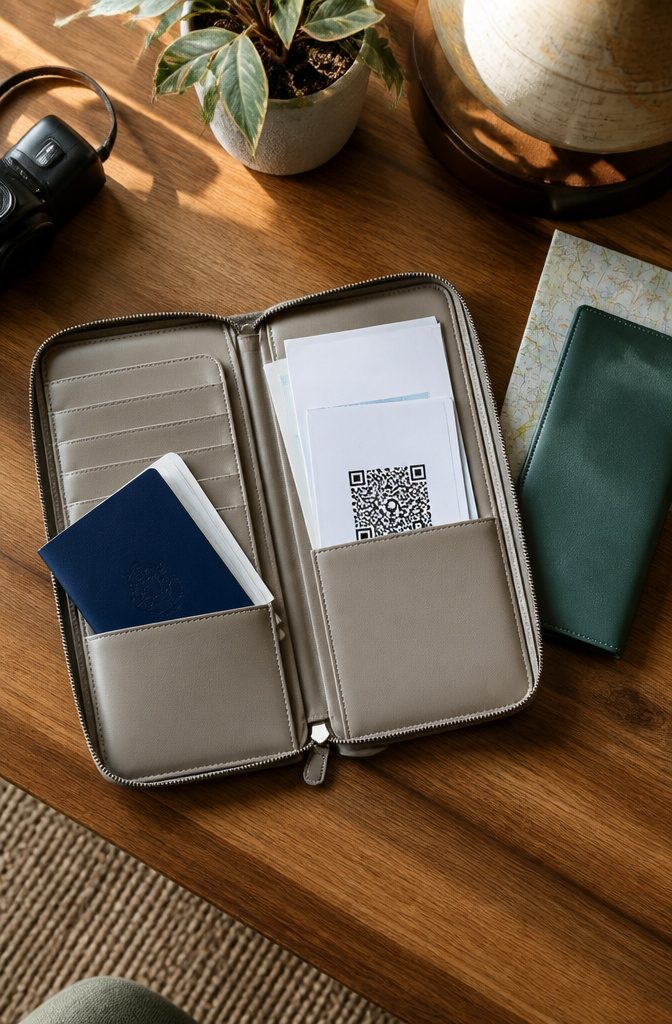
A passport with at least six months of validity beyond your trip end date is the hard line Japan will enforce at immigration, and having two to four blank visa pages is the safer margin.
Some nationalities enter visa-free; others need to apply in advance, so checking with the Japanese Embassy or Consulate is worth the ten minutes.
Travel insurance belongs in the same folder as your passport, not because you expect to use it but because Japan’s healthcare, while excellent, is expensive for non-residents.
Cover trip cancellation as well as medical, since flights and accommodation in Japan run high enough that losing the booking hurts. Buy the policy when you book your flights, not the week before departure.
Paper copies matter. Japan’s systems generally work, but a phone with a dead battery or a stolen bag leaves you proving who you are to a consulate or a hospital.
Keep physical copies separate from the originals and digital copies in cloud storage you can reach from any device.
Registering with Visit Japan Web before you fly gets you a QR code for immigration, customs, and tax-free shopping; it is optional, but the time saved at Narita or Haneda is real.
2. Japan Rail Pass
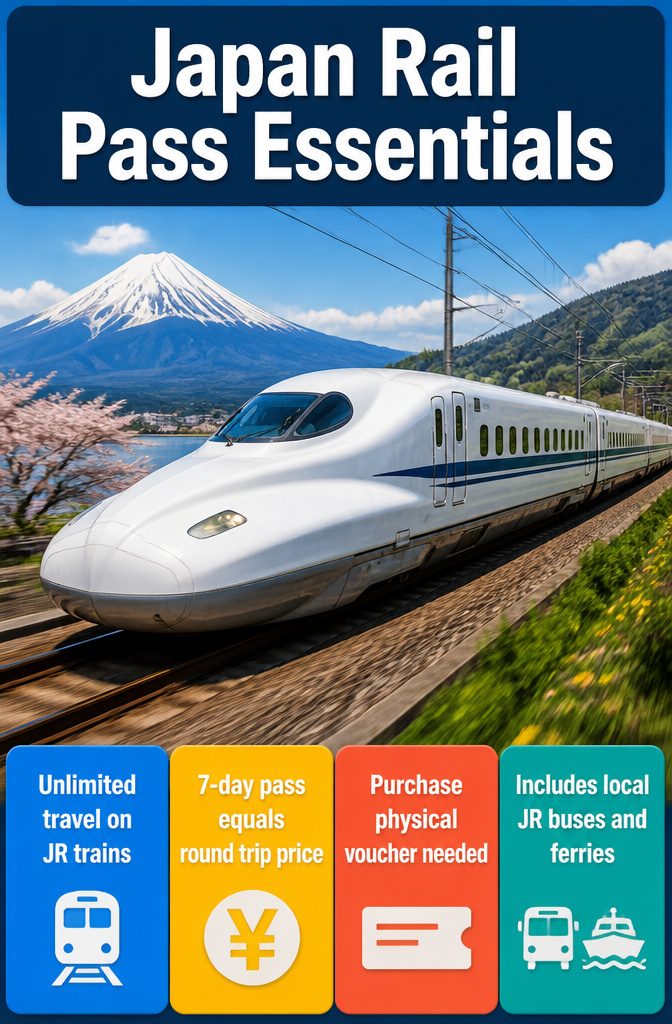
A Japan Rail Pass covers unlimited travel on Japan Railways trains nationwide, including the Shinkansen bullet trains that connect Tokyo, Kyoto, Osaka, and Hiroshima.
The 7-day pass costs approximately what you’d pay for a single round trip between Tokyo and Kyoto on its own, so the math only works if your itinerary hits multiple cities.
Passes come in 7, 14, and 21-day durations, and you must purchase the physical voucher before arriving, with two weeks lead time for shipping.
Local JR buses, some ferries, and the Tokyo Monorail are included too, though you’ll still want an IC card for non-JR subway lines and buses in cities.
For a Tokyo-Kyoto-Osaka triangle or any route stretching to Hiroshima, this is the option that wins.
3. Cash in Japanese Yen
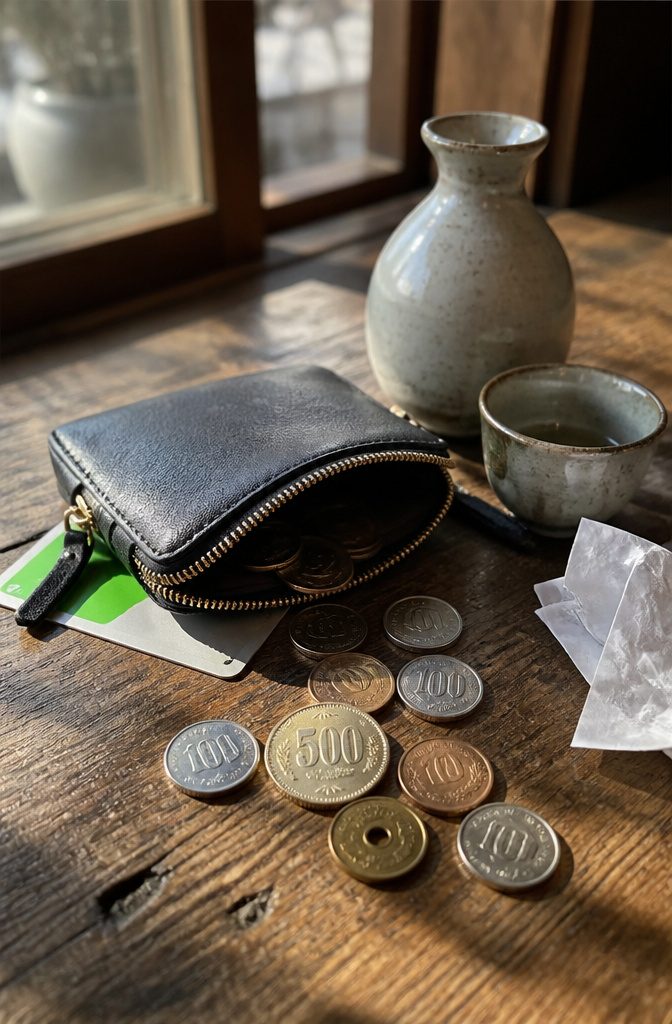
Japan runs on cash far more than the United States does, and the numbers on the coins add up fast.
A single ¥500 coin is worth more than $3, and even the ¥100 coin sits at roughly $0.70, so the change you collect in a day of small purchases carries real weight.
I always carry a small zipped coin purse to keep from losing track of them in a bag pocket.
The coins pile up whether you buy coffee, temple admission, or ramen from a machine, and fumbling through loose change at a counter slows everyone down.
You can pull yen from 7-Eleven ATMs once you land, those run 24 hours and accept most foreign cards, though postal ATMs are an alternative with shorter hours.
Some travelers order yen from their home bank before departure to save time on the ground.
Either way, rural shops and smaller restaurants still operate cash-only often enough that showing up without physical currency is a risk I would not take.
4. Comfortable Walking Shoes
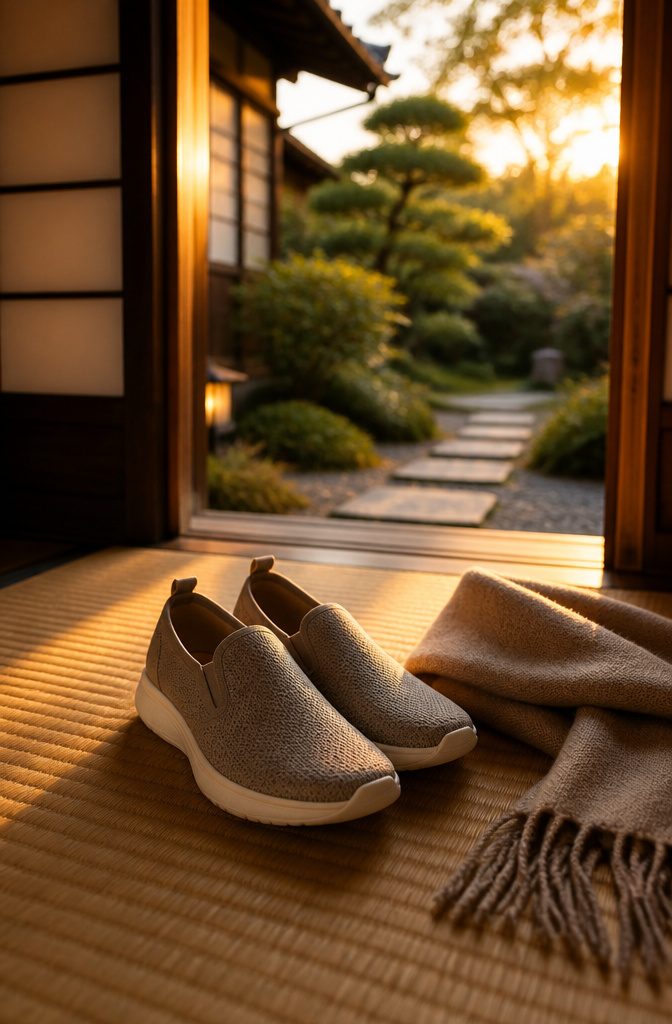
The right shoe for Japan spends more time in your hand than on your foot. Temples, traditional inns, certain restaurants: all of them expect you to leave your shoes at the door.
Slip-ons save you from lacing and unlacing half a dozen times a day, and from the awkward balancing act on a narrow genkan step.
A shoe that slides on also needs to walk.
Tokyo covers more ground than its subway map suggests, and Kyoto’s best streets are the ones you reach on foot. One pair that handles both jobs beats two specialized pairs that each fail half the time.
Socks matter almost as much as the shoe itself. Bare feet on tatami mats read as impolite, and those same straw floors run cold from fall through spring.
Keep an extra pair in your daypack, and check them for holes before you leave the hotel. Japan’s sock shops are everywhere if you forget, but starting the day with intact socks costs nothing.
5. Lightweight Rain Jacket and Umbrella
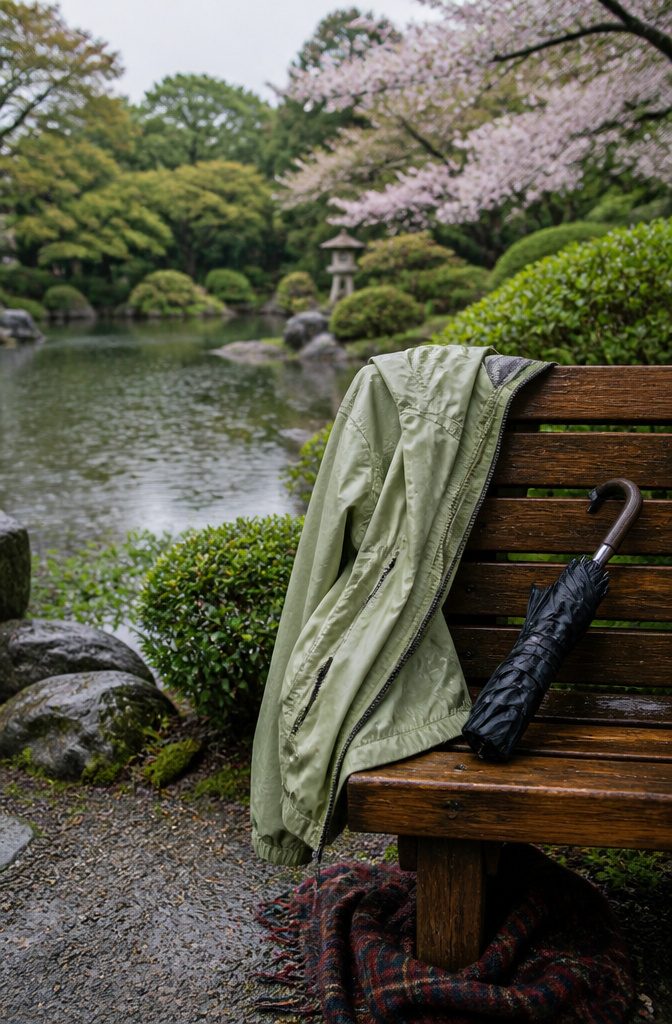
Rain in Japan does not announce itself with a forecast you can trust. A clear morning in Tokyo turns into a soaked afternoon, and the humidity hangs around even when the drops stop.
A packable rain jacket or a compact umbrella belongs in your bag on every trip, not just during the June-to-July tsuyu season.
The jacket should be lightweight and easy to carry; a packable design that stuffs into its own pocket saves space when the sun returns. Quick-drying fabric matters more than heavy waterproofing, because humidity will make a lined coat unbearable.
I lean toward the jacket over the umbrella for walking through crowded streets, where a canopy at face level is a weapon against everyone around you.
A travel-size umbrella has its place, though. It shields a camera or a paper map better than a hood does, and buying one after arrival is an option; most convenience stores stock them for sudden storms.
The models that come with a slim travel case work best for light spring showers, while a sturdier frame makes more sense if you are visiting in the heavier rain of late April or May.
Either way, carry one. Getting caught without protection means damp clothes for hours, and hotel air conditioning against wet fabric is a fast track to a miserable afternoon.
6. Layered Clothing for Varying Weather
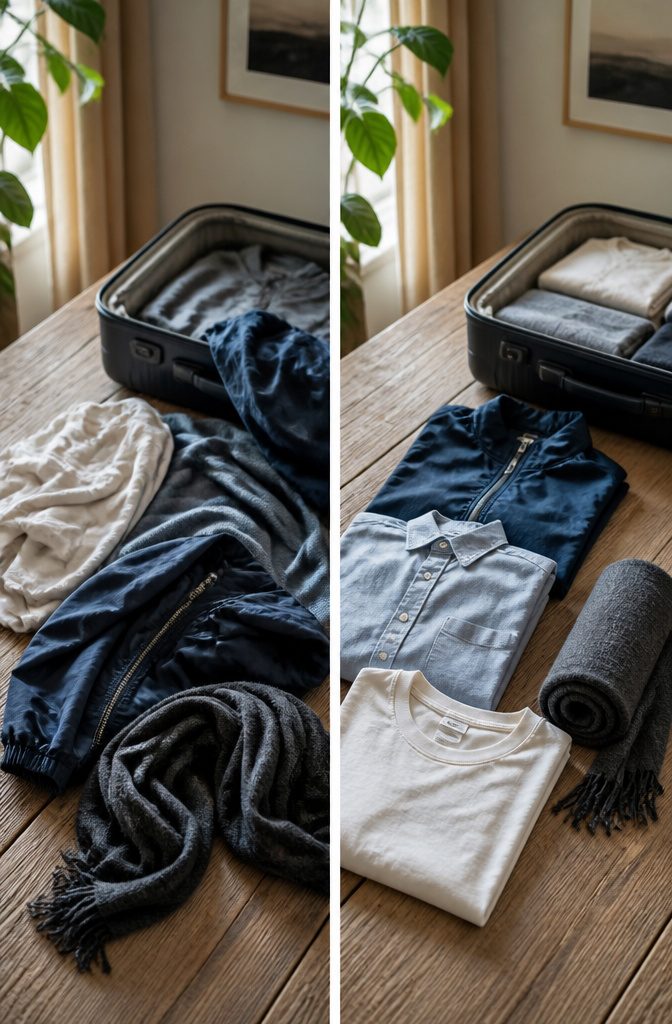
Summer in Japan hits 35°C (95°F) with punishing humidity, and spring or fall can swing from the 40s to the 70s within a single day.
Dressing in layers beats packing for one temperature because the weather simply will not hold still.
In spring, daytime temperatures sit in the 60s to low 70s while nights drop into the 40s.
A light jacket or hoodie covers you for most of the day, and a scarf earns its keep once November approaches. Fall works almost identically, which means the same layering strategy carries straight through both shoulder seasons.
The real move is carrying pieces you can add or strip off without a complete outfit change.
Think long-sleeve and short-sleeve shirts you can stack, plus one reliable mid-layer. This keeps your luggage tight and your options open when the bullet train platform is sweltering and the evening temple visit is not.
7. Toiletries and Personal Items
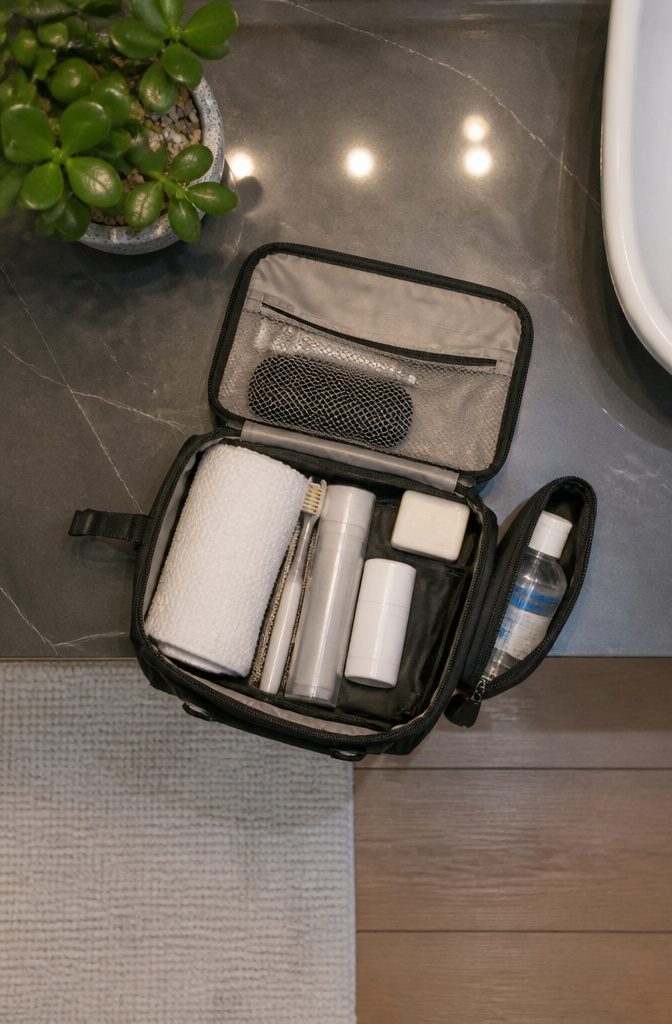
A handkerchief or small towel belongs in your pocket, not your bag. Japanese public restrooms are clean and modern, but many lack paper towels or hand dryers.
The towel you packed for summer humidity, wiping sweat from 35°C days in Tokyo or Kyoto, doubles as the only way to dry your hands after washing.
Bring your own deodorant. Japanese formulations run milder than most Western versions, and stronger antiperspirants can be hard to track down outside major drugstores.
Toothbrush, toothpaste, dental floss, and the rest of your daily kit are easy to find at convenience stores, so a travel-sized supply for the first few days is enough.
I pack a hanging toiletry bag with a suction hook backup, since hotel bathrooms sometimes offer nowhere to hang it.
For contact lens wearers, solution is the one item not to risk running out of.
Japanese equivalents exist, but the label format differs and the active ingredients may not match what your eyes tolerate. Pack your full supply.
8. Portable Charger and Electronics
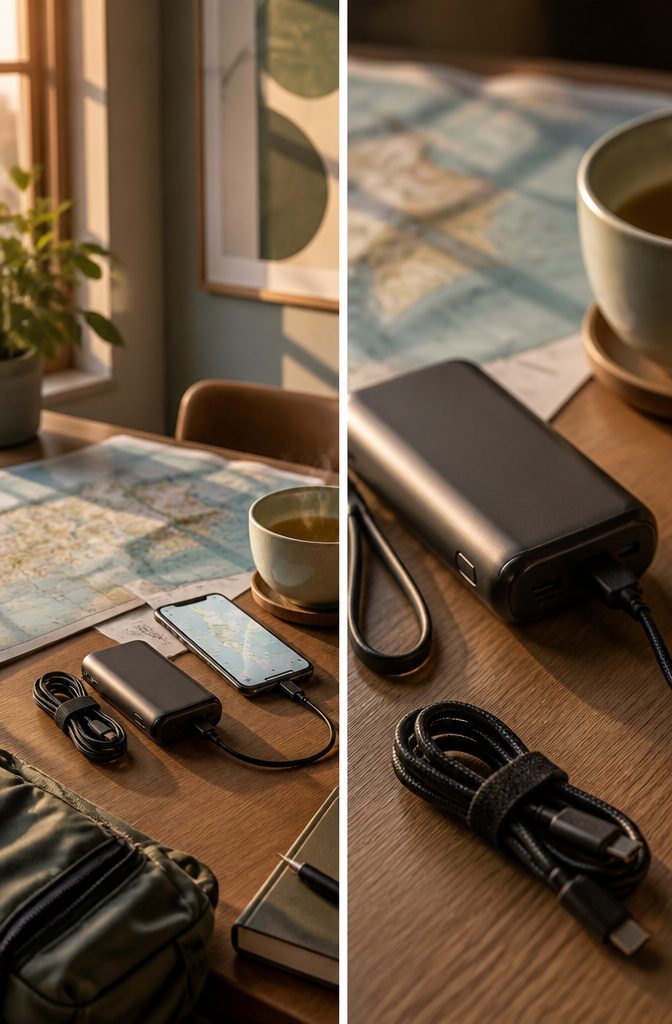
Japan runs on 100V Type A and Type B plugs, the same two-prong style as the US but with lower voltage.
Most chargers for phones, tablets, and laptops handle 100–240V automatically, so they work without a step-down converter. A three-prong plug does need an adapter, since Japanese sockets lack the ground pin.
A portable charger is non-negotiable.
Between Google Maps on Tokyo’s subway, translation apps at restaurants, and camera use, a phone battery drains fast. Anker’s slim power bank or something similarly compact fits a daypack without adding bulk.
One adapter strategy: a universal travel adapter covers Japan and any stopover, but a simple Type A plug adapter is lighter if Japan is the only destination.
I pack both, because hotel rooms never have enough outlets near the bed, and splitting one socket between a phone and a power bank gets old by night two.
9. First Aid Kit
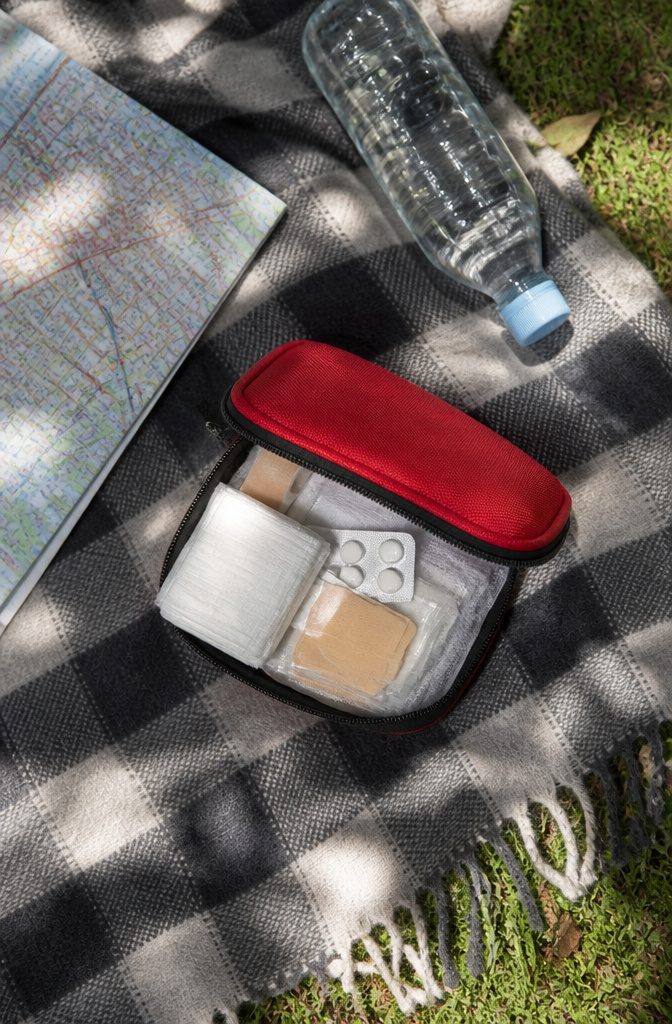
A small first aid kit with basics for cuts, stomach issues, and pain relief saves time when you need it most.
Pharmacies in Japan stock familiar products, but the packaging is in Japanese and reading labels quickly is not realistic when you are already feeling off.
I pack bandages, gauze, and wound-care items for minor cuts, plus my own pain relievers, motion sickness pills, and any antihistamines I use at home.
Japanese equivalents exist, but the formulations, dosages, and active ingredients differ from what my body is used to. That difference matters more than it sounds when you are jet-lagged and trying to function.
Prescription medications need enough supply for the entire trip and a copy of the prescription note. Some medications are restricted in Japan, so checking clearance requirements well before departure is the move here.
I also keep a copy of my medication information on my phone and a paper backup in my wallet, because a dead battery should not strand me in a conversation with a pharmacist.
10. Lightweight Daypack
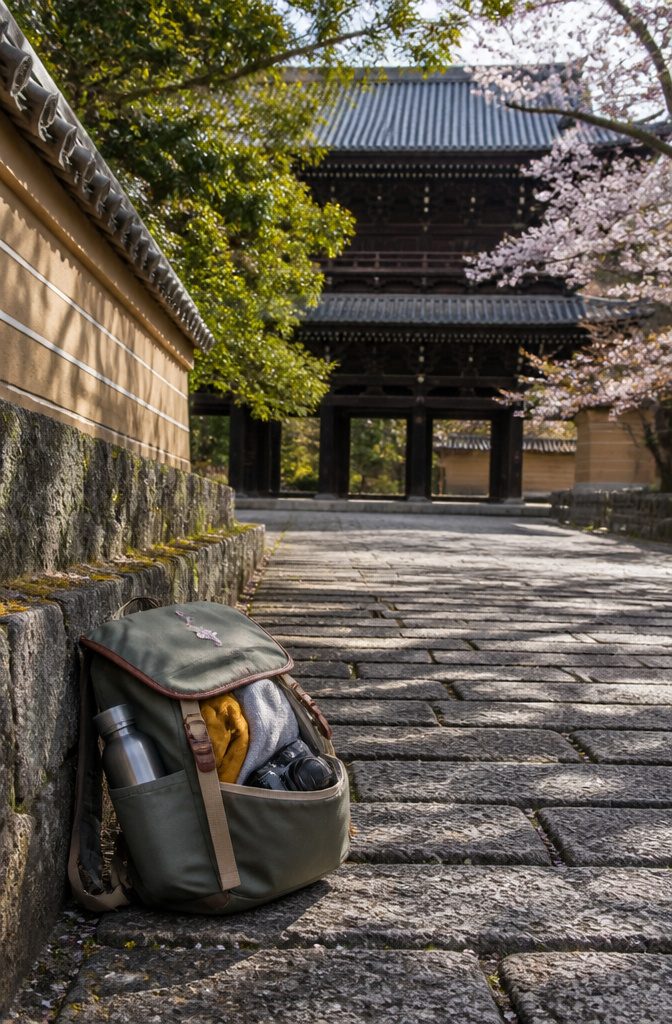
A packable daypack earns its space by doing two jobs: vanishing into your main luggage on the flight over, then carrying water bottles, charger cables, and whatever you pick up during full days out.
A packable daypack folds to the size of a fist and carries what you need for a temple visit or a convenience-store run.
A small daypack with side pockets for water bottles, a zippered top pocket for small items, and some kind of secure compartment for documents handles temple visits and shopping districts equally well.
One notes Japan’s low crime rate, which means you are not designing around theft so much as around convenience.
The hidden side pocket for passports and cash matters more than the look of the bag.
Gender-neutral styling has practical value if you are traveling with a partner and want to trade off who carries it. For evenings, the same sources suggest switching to a smaller crossbody or purse rather than hauling the daypack to dinner.
If you are using a luggage forwarding service like Yamato’s Ta-Q-Bin between cities, the daypack becomes your entire kit for those transition days.
Storage lockers at major stations fit large suitcases, so the daypack is what you carry while the rest of your gear waits for you at the next hotel.
What Removing Shoes Means for Your Packing
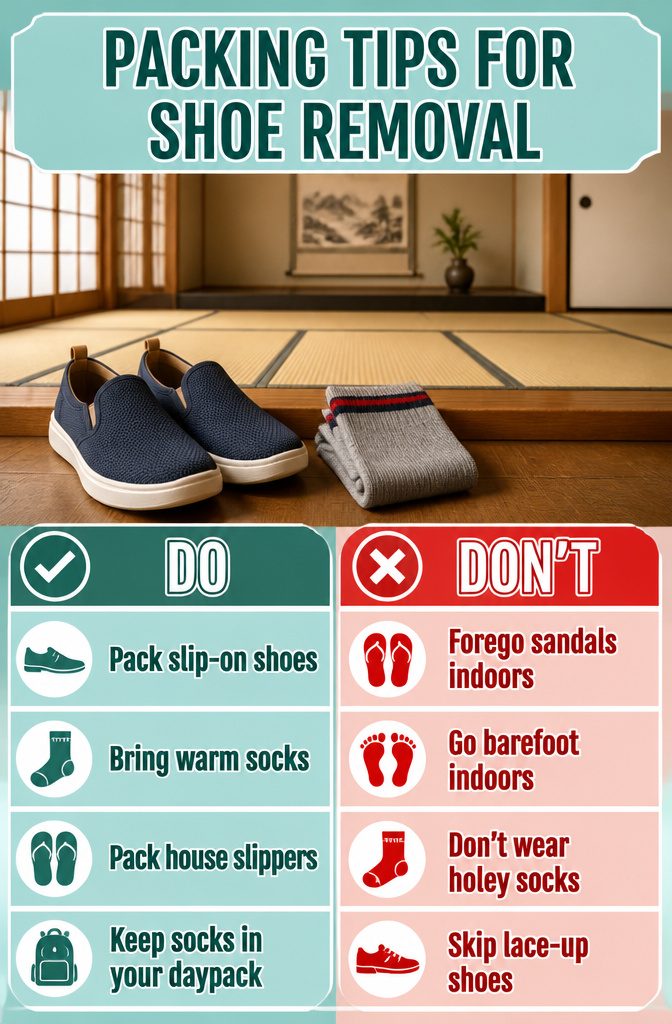
Tatami mats mean shoes off, every time. Homes, temples, ryokan, and some restaurants all follow this rule, so slip-on shoes or zip-off sneakers save you from untying laces five times a day.
Sandals split opinion: one traveler found them necessary for 80°F October days, while another warns against going barefoot after wearing them.
My read is pack socks regardless, because bare feet on cold temple floors reads as impolite, and traditional buildings run chilly in fall through spring.
Hole-free socks matter more than you think.
Several sources mention the embarrassment of showing worn heels, and Japan’s sock shops are everywhere if yours need replacing. For ryokan stays, one traveler suggests packing house slippers to wear inside, though most lodgings provide their own.
The real packing move is keeping a clean pair of socks in your daypack, not back at the hotel, so you’re never stuck in sandals at a temple entrance or shuffling in stocking feet across a drafty wooden floor.
Checking Weather Before You Pack
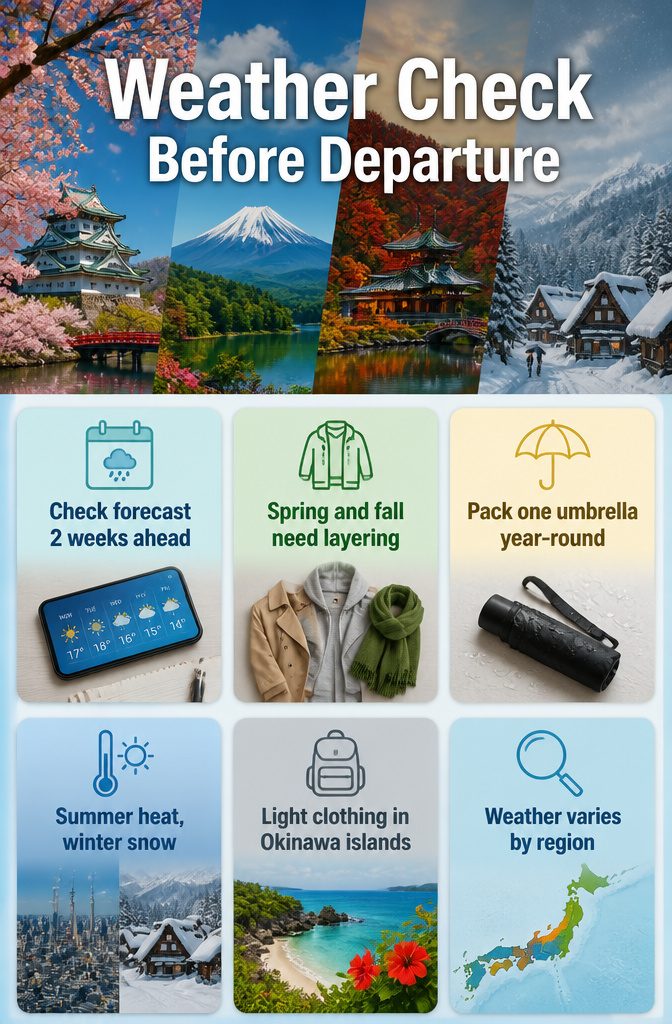
Japan’s four distinct seasons pull a lot of weight in travel brochures, but the weather you actually meet can swing hard from the forecasted average.
Checking the forecast a couple of weeks before departure is the single move that prevents a suitcase full of regrets, and if the itinerary spans multiple regions, each stop needs its own look-up.
Spring and fall are the trickiest windows: a day that starts warm and sunny can turn wet and cold enough to chill bone, so layers earn their keep then more than any other season.
Summer across most of Japan brings genuine scorching heat and humidity; winter can drop heavy snow in mountain regions while the Okinawa islands stay mild enough for lighter clothing.
One umbrella and a compact rain layer stay useful year-round, though they are non-negotiable in those unpredictable shoulder seasons. The research is straightforward, costs nothing, and beats discovering the mismatch after you land.
Doing Laundry to Pack Lighter
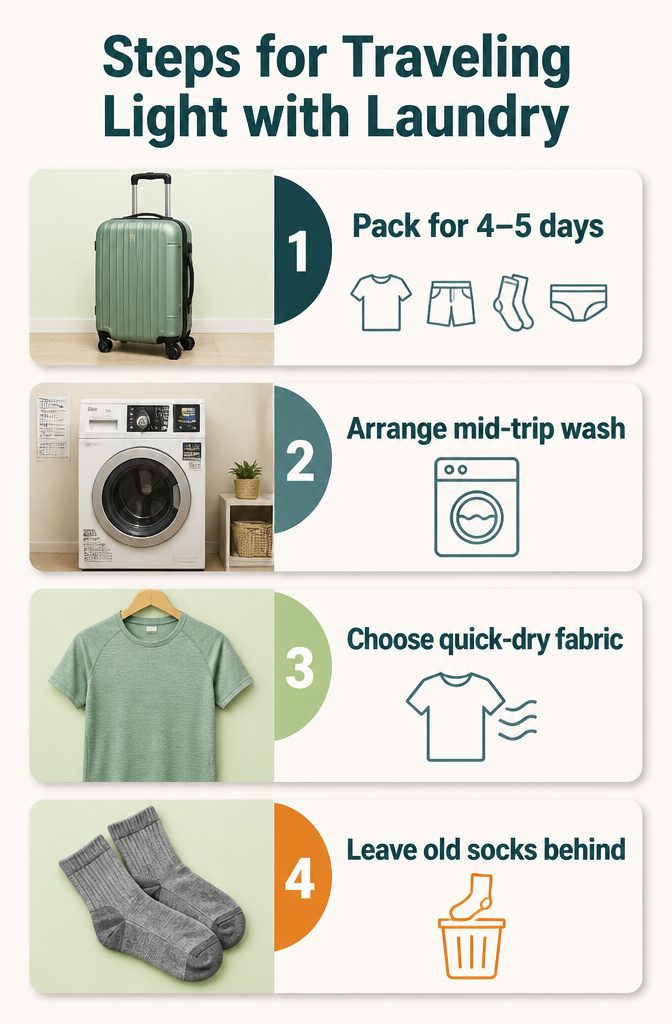
Coin laundries sit in most business hotels across Japan, and packing for 4–5 days instead of two weeks becomes practical once you plan on one mid-trip wash.
The machines usually have detergent built in, though anyone with allergy sensitivities should email ahead to confirm the brand; dryers in the single-unit washer-dryers only handle 1–2 large items well, so small loads save both coins and damp frustration.
Dryer-friendly fabrics make the evening-wash, fold-by-bedtime rhythm actually work. I skip heavy cotton that needs three cycles and lean toward quick-dry synthetics or light merino.
A few travelers I have watched deliberately pack old underwear and socks, wash them through the trip, and leave them behind; the suitcase gets lighter as the journey goes on, not heavier.
Most hotels also provide pajamas, so two sets of sleepwear is plenty.
The real math is simple: a 22-inch carry-on beats checked luggage when you are hopping Shinkansen platforms or stowing bags in capsule hotel lockers. Laundry access is what tilts that math in your favor.
Cash Versus Card in Japan
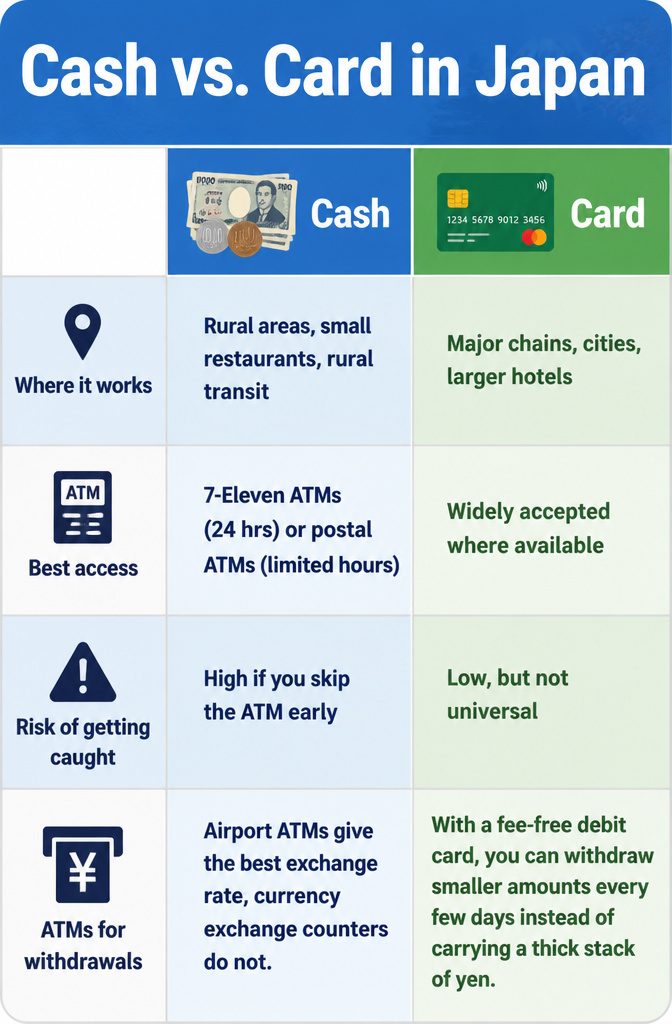
Japan runs heavier on cash than almost anywhere else you are likely to travel. Small restaurants, rural transit, and shops outside the major cities often take yen and nothing else.
The 7-Eleven ATMs are the reliable fallback, open 24 hours and built to accept foreign cards; postal ATMs work too but only during post office hours.
Major chains and city centers have shifted toward cards, so the mix matters for how you budget each day.
| Cash | Card | |
|---|---|---|
| Where it works | Rural areas, small restaurants, rural transit | Major chains, cities, larger hotels |
| Best access | 7-Eleven ATMs (24 hrs) or postal ATMs (limited hours) | Widely accepted where available |
| Risk of getting caught | High if you skip the ATM early | Low, but not universal |
I would not land without a plan for cash.
Airport ATMs give the best exchange rate; currency exchange counters do not. With a fee-free debit card, you can withdraw smaller amounts every few days instead of carrying a thick stack of yen.
Cash means stopping at ATMs or convenience-store machines more often. For me, two or three ATM visits a week beats the stress of a cash-only noodle shop with a hungry line behind you.
Why Travel Insurance Belongs in Your Documents
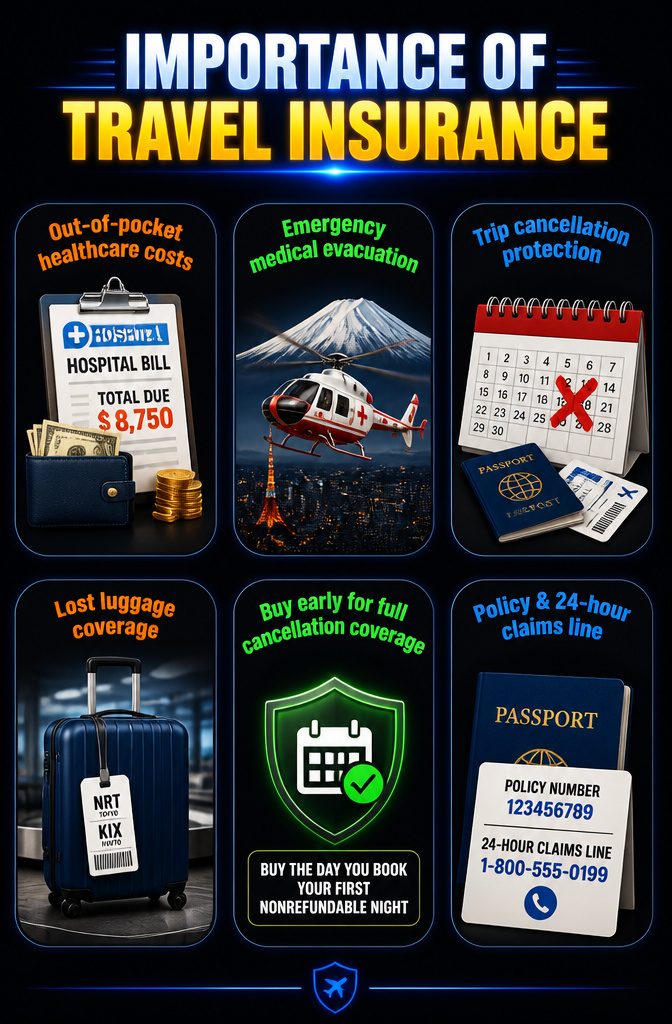
Japan’s healthcare system is excellent, but visitors pay out of pocket, and a serious injury or illness can run into thousands of dollars before you clear a hospital lobby.
Travel insurance belongs in your carry-on for three reasons: emergency medical evacuation, trip cancellation, and lost luggage coverage. Japan is not a cheap destination to cancel, and flights plus accommodation typically cost enough that eating the full fare stings.
I buy a policy the day I book my first nonrefundable night, not the week before departure, because coverage for cancellation only protects what you booked after the policy was active.
For medical, check that your plan includes evacuation back to the US; local treatment is world-class, but you may want to recover on home ground, and that flight on a stretcher is not something you want to price at the time.
Lost luggage matters more in Japan than many places because you will move between cities, and a bag gone missing between Tokyo and Kyoto leaves you buying clothes at full retail in a country where your size may not rack easily.
A printed copy of your policy number and the 24-hour claims line goes with your passport; the app is useful, but a dead phone at check-in is not rare.
Sending Luggage Ahead With Takuhaibin
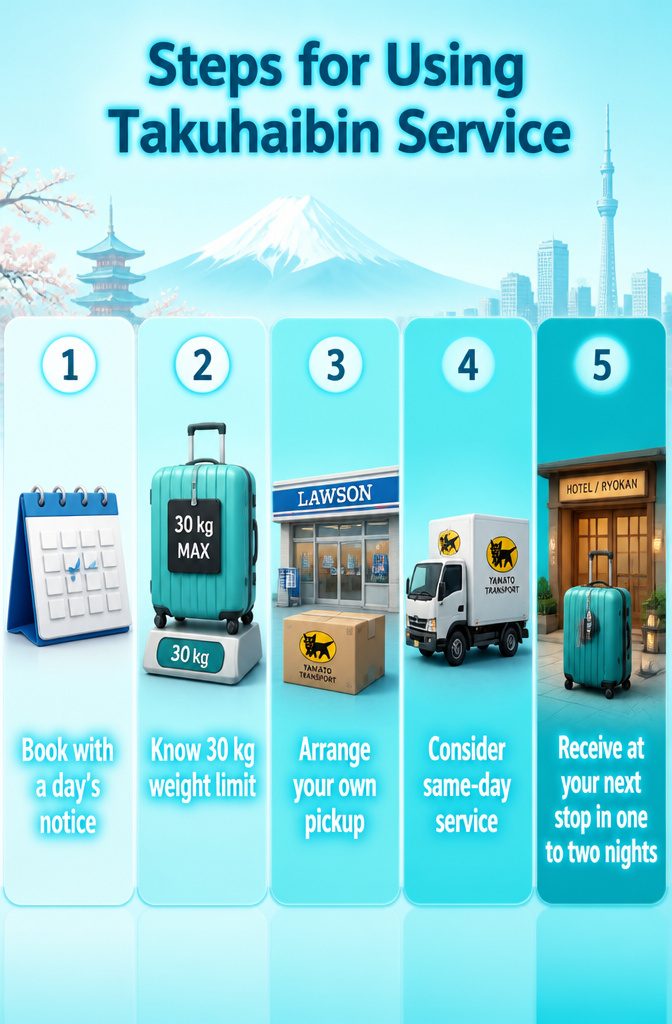
Japan’s luggage forwarding system, called takuhaibin or takkyubin, runs about $15 to $30 per suitcase and buys you something no packing list can: the ability to move between cities carrying only a daypack.
Most hotels and ryokans handle the booking with a day’s notice, and your bags meet you at the next stop in one to two nights.
The weight limit sits at 30 kg with a 200 cm size cap, so a heavy hardshell might need splitting.
Budget lodgings or private rentals leave you to arrange pickup yourself, either at a convenience store or directly through Yamato Transport. Same-day service exists but costs extra, and the standard timing means planning one light-travel day between stops.
I skip forwarding on short hops, but for a ryokan stay in the country it pays for itself.
Rural transit with a full suitcase is awkward, and most properties provide yukata robes anyway, so your overnight needs shrink to almost nothing.
Two travelers can also share one forwarded bag and split the cost, keeping a single small carry-along between destinations.
Portable Wi-Fi for Navigation and Translation
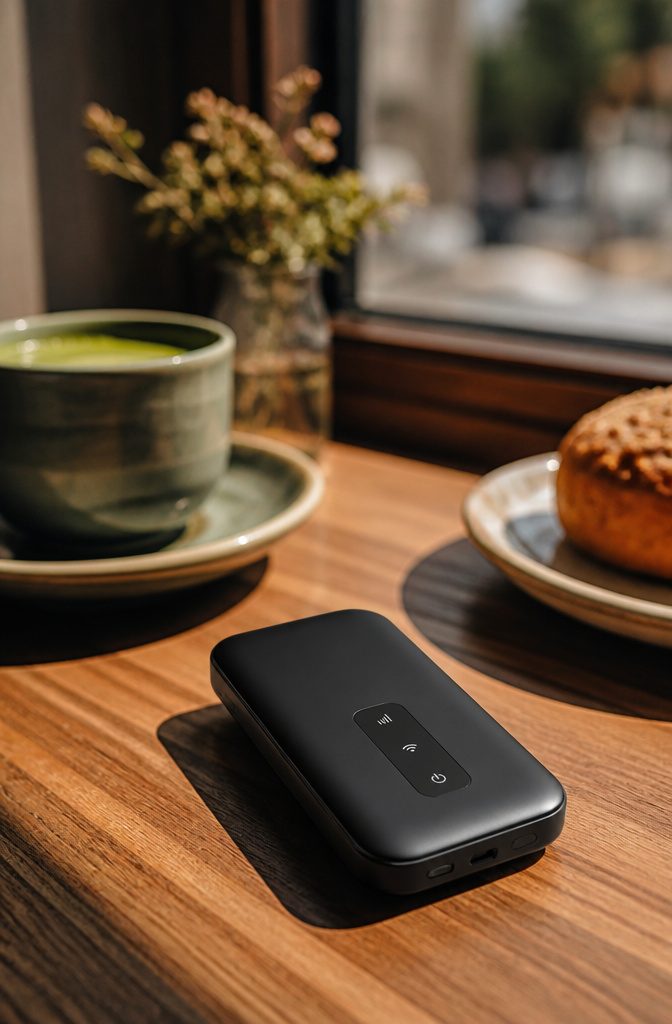
Free Wi-Fi in Japan is not as widespread as most travelers expect, and trying to navigate Tokyo’s subway lines or translate a handwritten menu without a constant connection is a frustration you can avoid entirely.
Renting a pocket Wi-Fi device before you land outperforms relying on hotel or café networks by a wide margin, giving you Google Maps, real-time translation, and restaurant lookups anywhere you actually need them.
eSIMs have gained ground for solo travelers since they activate instantly and spare you carrying a second gadget.
For groups or anyone running multiple devices, though, a pocket Wi-Fi hotspot still wins; one unit covers several phones and a laptop without burning through your personal data plan.
Either way, arrange it before departure and collect it at the airport. The small step of pre-booking beats hunting down a rental counter after a long flight, and it keeps you connected from the moment you clear customs.
Seasonal Clothing Breakdown
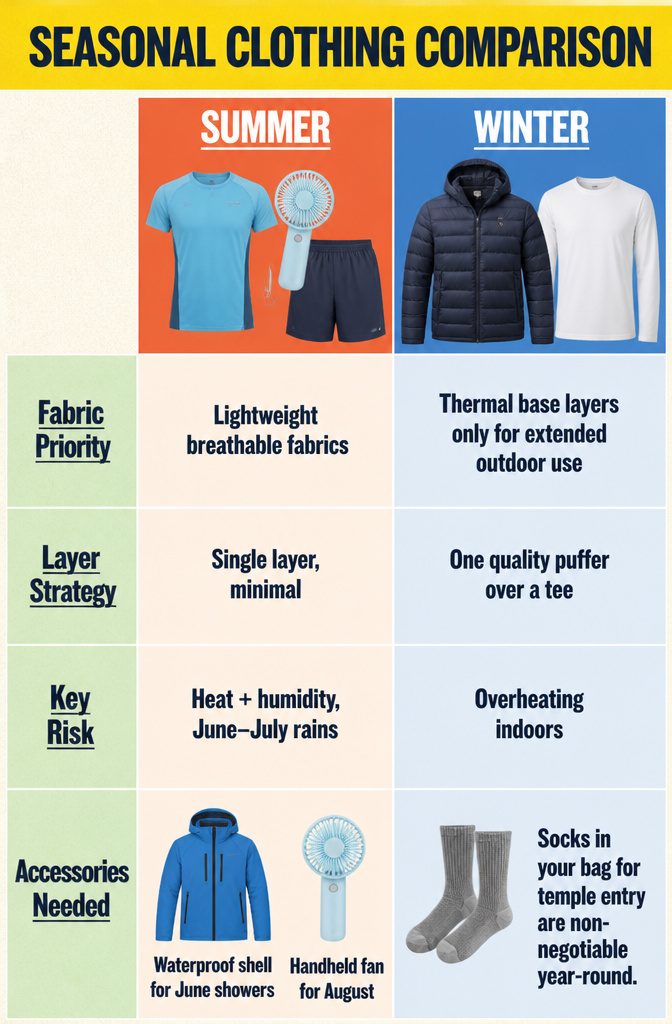
Quick-dry everything is the baseline for any Japan trip, not just summer.
Humidity hangs in the air from the rainy season in June through July, and lightweight breathable fabrics are what separate comfortable days from ones spent peeling damp clothes off your skin.
Cotton that takes half a day to dry becomes a liability fast.
Winter flips the problem entirely. A puffer jacket that layers over a single long-sleeved tee beats stacking multiple sweaters, because indoor heating runs aggressively hot.
Thermal base layers work if you are outside all day or heading to ski resorts in Hokkaido, but for city walking they become a sauna the moment you step into a shop or train car.
| Season | Fabric Priority | Layer Strategy | Key Risk |
|---|---|---|---|
| Summer | Lightweight breathable fabrics | Single layer, minimal | Heat + humidity, June–July rains |
| Winter | Thermal base layers only for extended outdoor use | One quality puffer over a tee | Overheating indoors |
The handheld fan for August and the waterproof shell for June showers are small additions that matter more than most clothing choices. Socks in your bag for temple entry are non-negotiable year-round.
Face Masks and Health Items
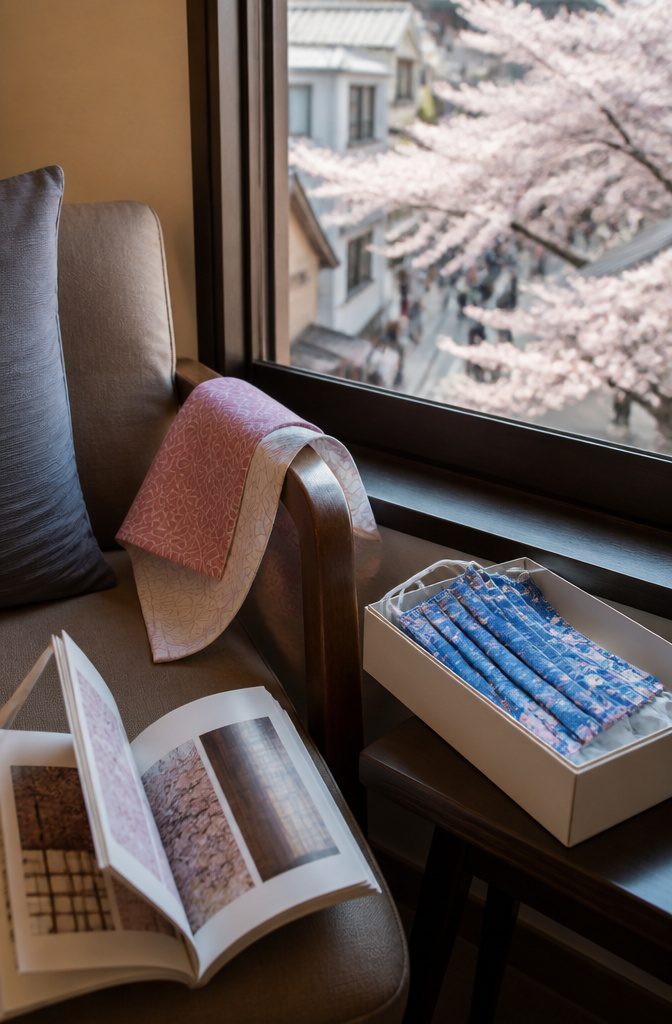
Masks still show up everywhere in Japan, even though the mandate ended. Crowded trains in winter, cedar pollen blowing through the Kanto plain in spring, or just a personal preference for breathing filtered air in a packed Shibuya crossing.
The pharmacies stock them, but the hunt for a specific fit, the right ear-loop tension, or a black disposable versus a 3-ply white box eats time you could spend at a ramen counter.
Bringing 100 of the disposables you already trust costs almost nothing in luggage weight and removes the decision entirely.
For health items more broadly, Japanese drugstores carry most of what you need, yet the formulations differ.
Deodorant skews milder here, antiperspirant weaker, and tampons sit in fewer aisles. Pain relievers and antihistamines use active ingredients in ratios that may not match what your body expects.
Pack your own prescriptions in original bottles, bring a copy of the script, and skip the pharmacy detective work on your first jet-lagged morning.
Snacks for Long Transit Days
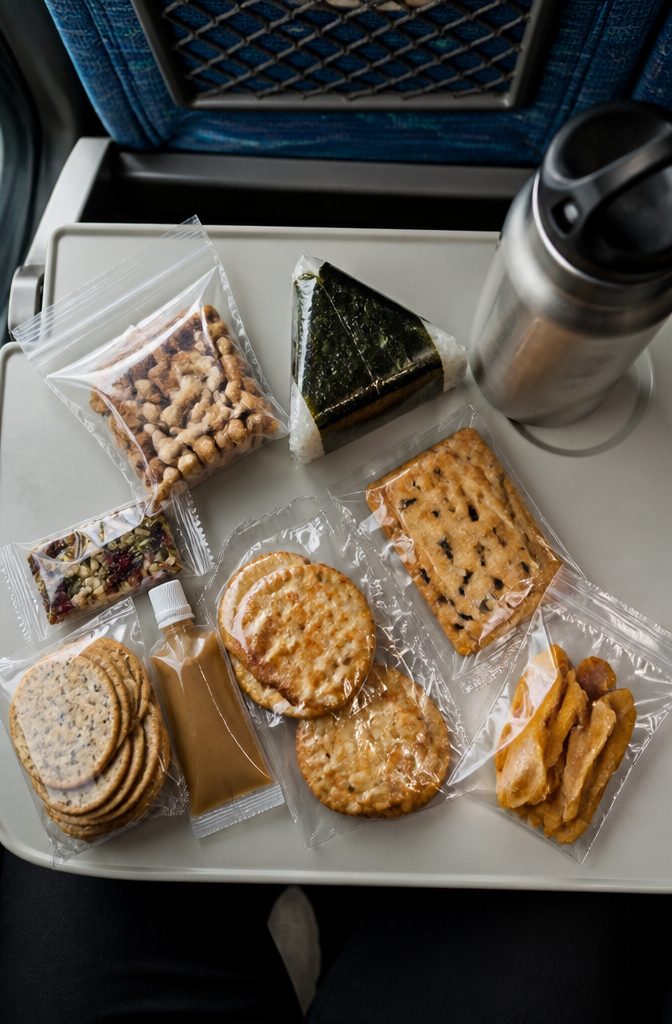
Shinkansen schedules do not wait for anyone’s blood sugar. A few portable snacks from home bridge the gap between a 6:30 AM hotel breakfast and a 2:00 PM ramen stop, or between any two meals when a train change eats your window.
This matters more with children, since Japanese convenience stores stock excellent options but unfamiliar packaging can slow a hungry kid at the wrong moment. Familiar crackers or a small peanut-butter packet buy time while everyone adjusts.
Ziplock bags earn their space here. A half-finished onigiri from a Kyoto station kiosk, saved for later instead of trashed, beats hunting for the next open vendor in a temple district that shuts down at dusk.
The same bag handles the wrapper from a convenience-store onigiri eaten on the platform, keeping your hands free for tickets and maps.
For travelers with dietary restrictions, spontaneous purchases are riskier.
Labels in Japanese, even with translation apps, miss nuance. A snack you packed and verified at home removes that gamble from a long transit day.
Travel Guidebook or Offline Maps
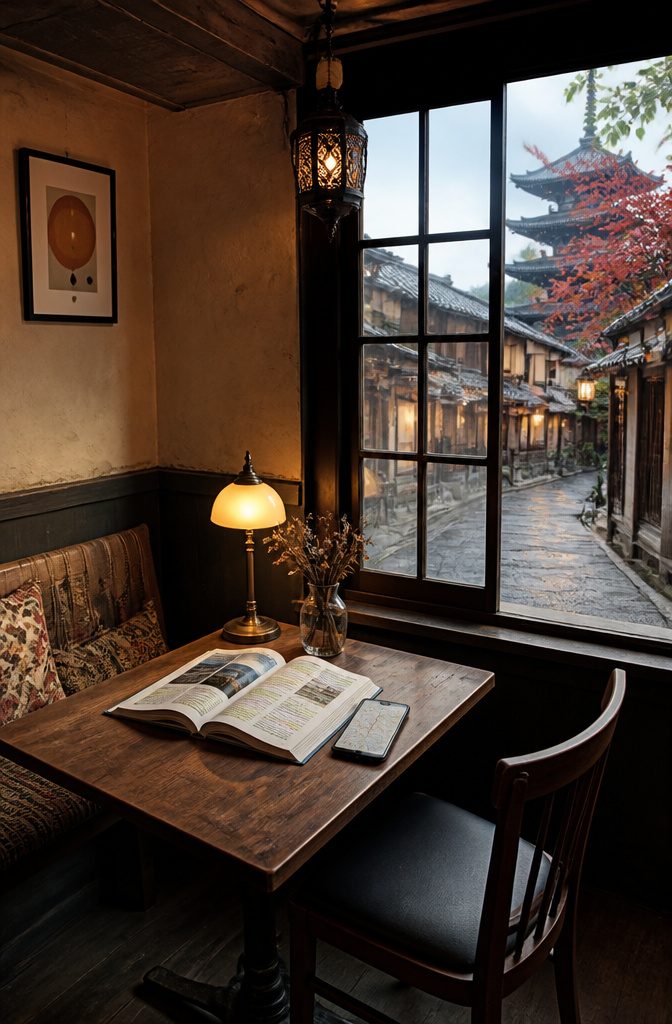
A physical guidebook still works when your phone does not: dead battery, no signal in a subway station, or a data plan that ran dry three days early.
The maps inside give geographic context in cities dense enough to disorient even competent navigators, and the historical notes keep temples and shrines from blurring into one another after the fourth or fifth stop.
Offline maps downloaded to your phone cover the same gaps with less weight in your bag. Google Maps and MAPS.MEI both let you cache whole regions over hotel WiFi before you leave for the day.
Your phone becomes your map and your camera and your translator, and one device doing all three runs dry faster than most travelers plan for.
Paper wins for me when I am underground or moving fast through a full day.
The guidebook lives in the daypack, the offline maps stay on the phone, and either one saves a half-hour of confused circling when the signal drops.
Frequently Asked Questions
What should I pack for a trip to Japan?
Pack a passport with six months validity, travel insurance, cash in yen, comfortable slip-on shoes, a lightweight rain jacket, layered clothing, a small towel, portable charger, basic first aid supplies, and a packable daypack.
Japan runs on cash more than the US, and you’ll remove shoes frequently at temples and restaurants, so plan for both.
Do I need a Japan Rail Pass?
The 7-day pass pays for itself if you’re traveling between multiple cities like Tokyo, Kyoto, and Osaka, since it costs roughly the same as one round-trip Shinkansen ticket.
You must buy the voucher before arriving in Japan with about two weeks for shipping. Stick to an IC card for city subways and buses, since those aren’t covered.
What is the weather like in Japan during summer?
Summer hits 35°C (95°F) with heavy humidity that makes the air feel thicker than the temperature suggests.
June and July bring the tsuyu rainy season, so a lightweight rain jacket and quick-dry fabrics matter as much as anything in your bag. Indoor spaces blast air conditioning, which makes damp clothes miserable fast.
Is travel insurance necessary for Japan?
Yes. Japan’s healthcare is excellent but expensive for visitors, and a serious issue can cost thousands out of pocket.
Buy coverage when you book your flights, not later, so trip cancellation protects everything. Check that your plan includes medical evacuation back to the US.
What kind of shoes should I wear in Japan?
Slip-ons or zip-off sneakers save you from lacing and unlacing at temples, ryokan, and restaurants where tatami mats mean shoes off.
The same shoe needs to handle full days of walking in Tokyo and Kyoto. Pack hole-free socks in your daypack, since bare feet on tatami reads as impolite and traditional floors run cold half the year.
What is the 5 4 3 2 1 rule for packing?
This rule suggests packing 5 sets of socks and underwear, 4 tops, 3 bottoms, 2 pairs of shoes, and 1 hat or accessory.
Is $5000 enough for 2 weeks in Japan?
Your spending power depends heavily on lodging choices, whether you buy a Japan Rail Pass, and how often you eat at higher-end restaurants versus convenience store meals.
Are there any colors to avoid wearing in Japan?
Focus instead on fabrics that layer well and dry quickly, plus socks without holes for temple visits.





