Which items earn space depends on the trip you’re actually taking, and the items below run from a toiletry bag and a lightweight jacket to snorkel gear, camera gear and basic travel safety.
Boat days call for snorkel gear, a long trip calls for a bigger first aid kit and extra health precautions, and a rental with no room safe makes the travel safety section matter more.
Everything else is a question of weight: the bulkiest pieces ride on your body, and the small stuff goes in cubes.
1. Toiletry Bag
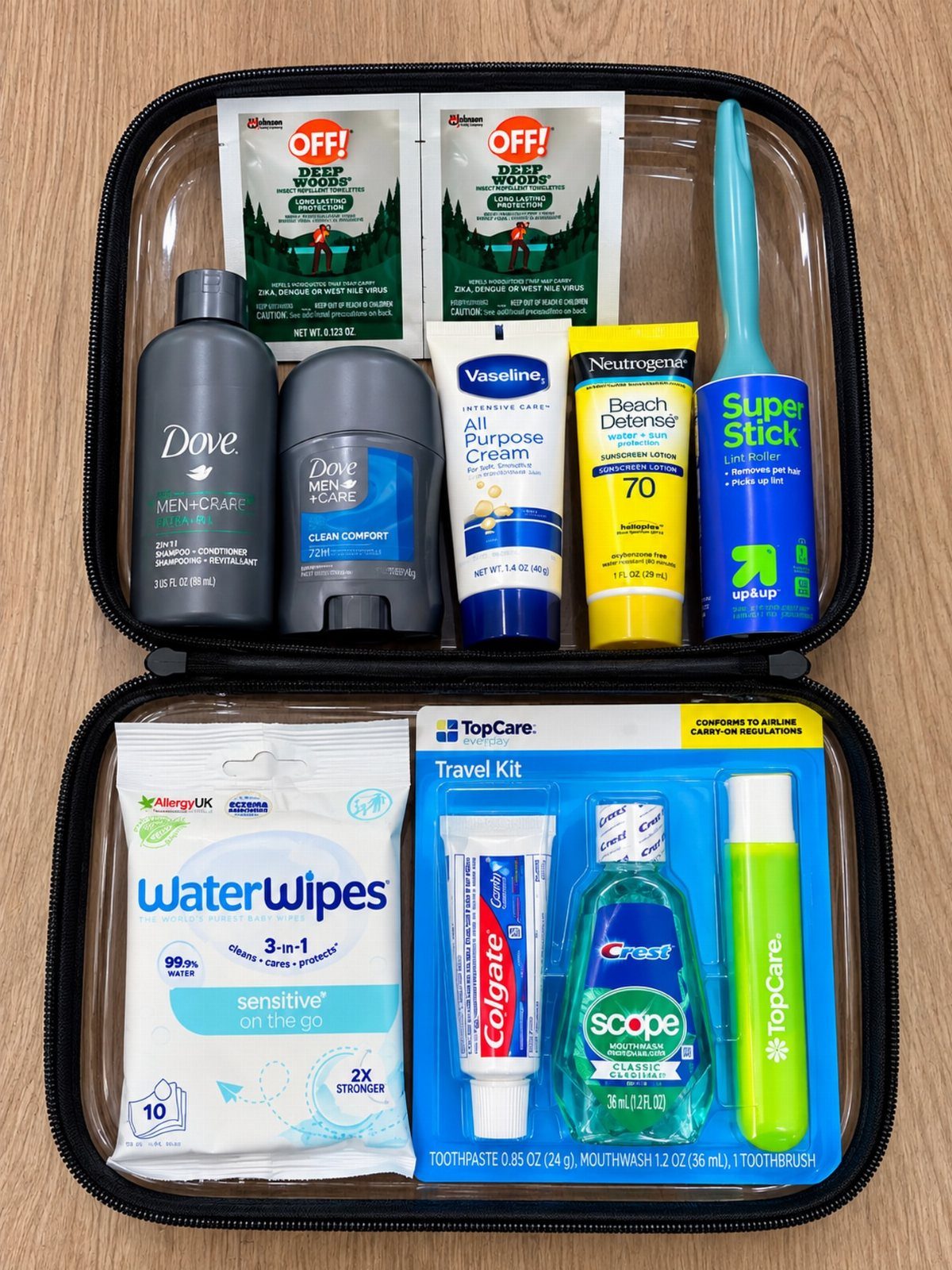
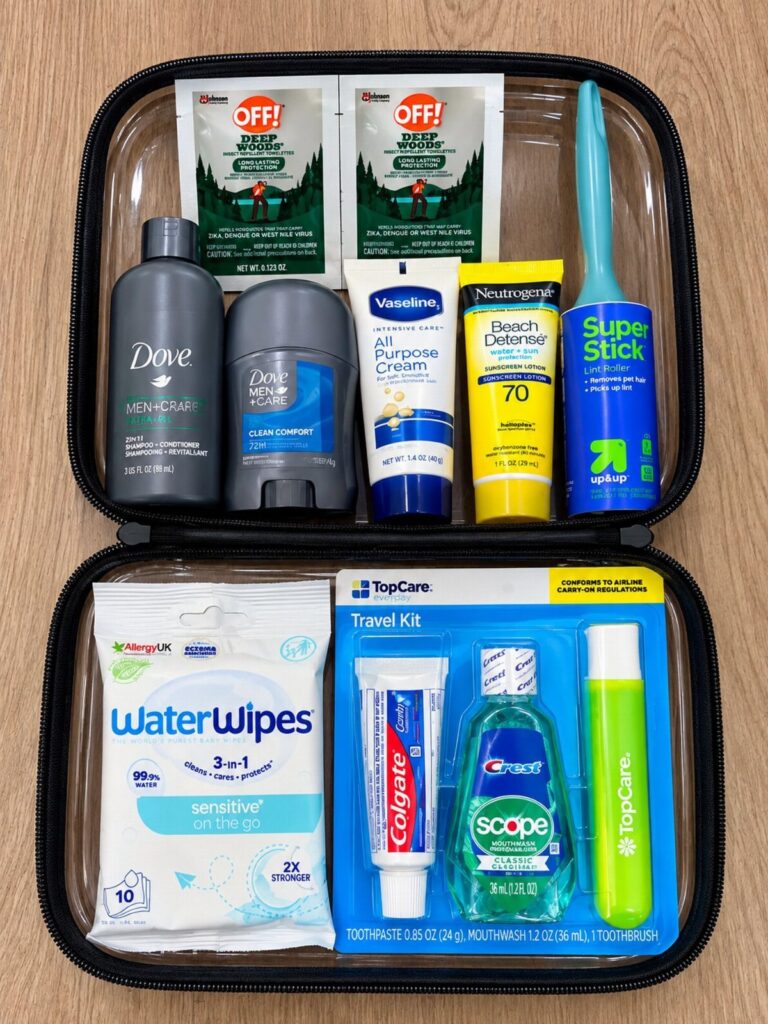
Decanting beats buying a fresh set of minis every trip. Travel-size Dove, Colgate and Neutrogena run out fast, so refill them from full bottles and keep the bag packed between trips.
Group the dental items, skin care and sunscreen together so nothing hunts around loose. Bug repellent belongs in the bag too, and a lint roller earns its small space after a day in dark clothes.
I like a black bag because spills and stains disappear into it. Pack it near the top of your carry-on, where you can reach it fast.
2. Lightweight Jacket
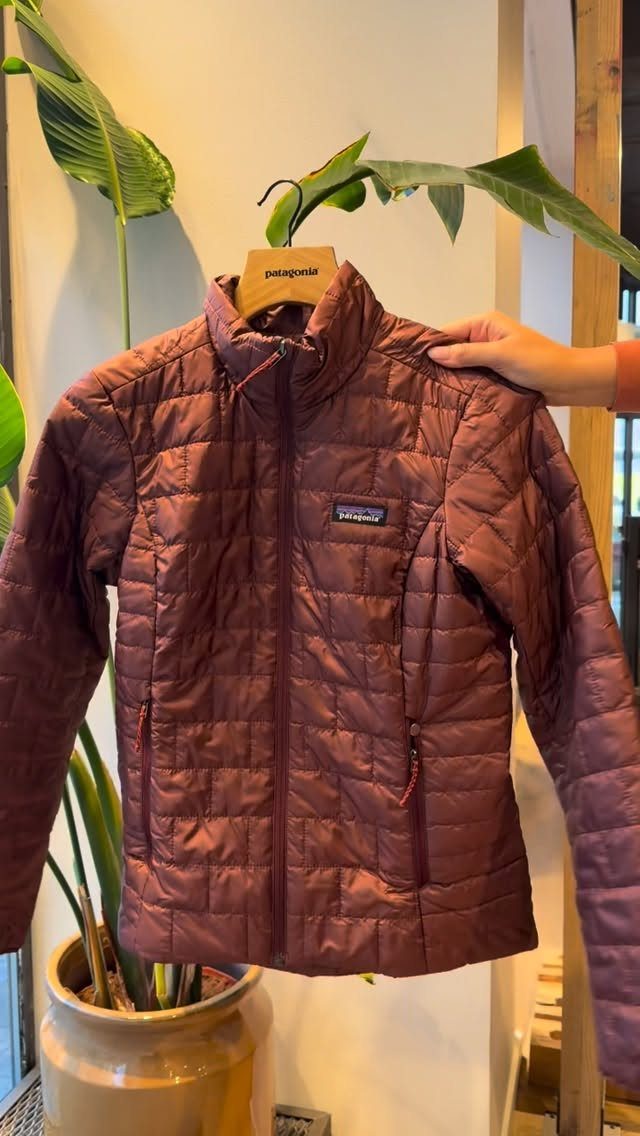
A quilted jacket in maroon hides dirt better than pale colors, and it works over almost any outfit. That is the real case for packing one: it covers cool mornings, air-conditioned planes and evening wind without taking much room.
Wear it on travel days instead of packing it, so it never eats suitcase space. Hang it as soon as you arrive so the quilting keeps its loft.
If your trip has serious rain, this is not the piece to rely on. Add a shell instead.
3. Snorkel Gear
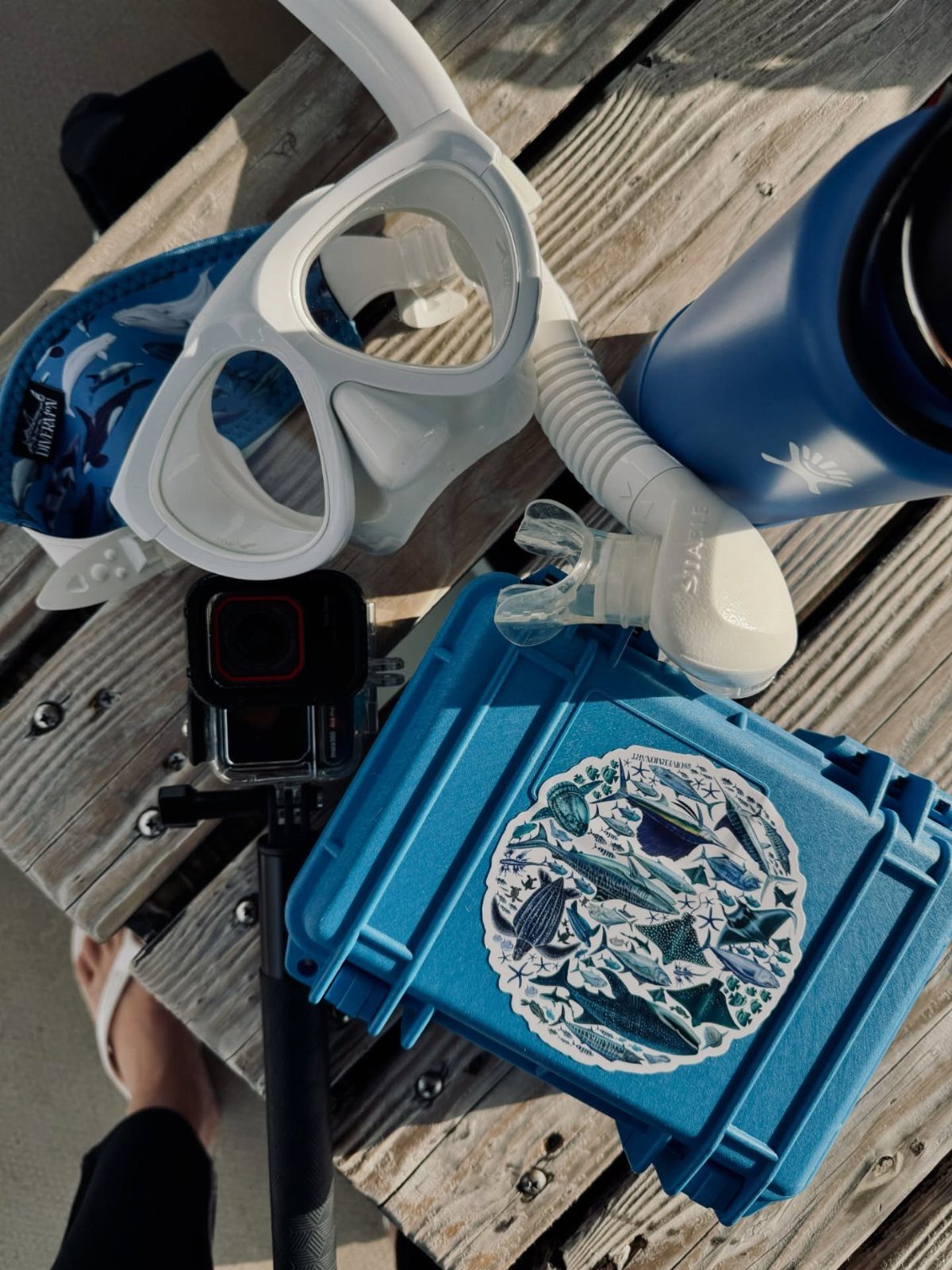
A mask and snorkel tube take up little room, and owning your own beats renting a shared set at every stop. A mask that fits your face matters more than anything else on the list.
Keep everything in a waterproof case, like the blue one with the fish sticker, so wet gear stays away from your clothes. Rinse the set with fresh water after each swim and let it dry before packing.
Bring a water bottle onto the deck too. Your skin and lips lose moisture fast out on the water, so pack lotion and lip balm.
Waterproof pouches or dry bags come in handy for a day at the beach, especially when you’re with little ones. Use them to protect your phone or other tech, or to keep a wet bathing suit away from the rest of your things.
4. Portable Charger
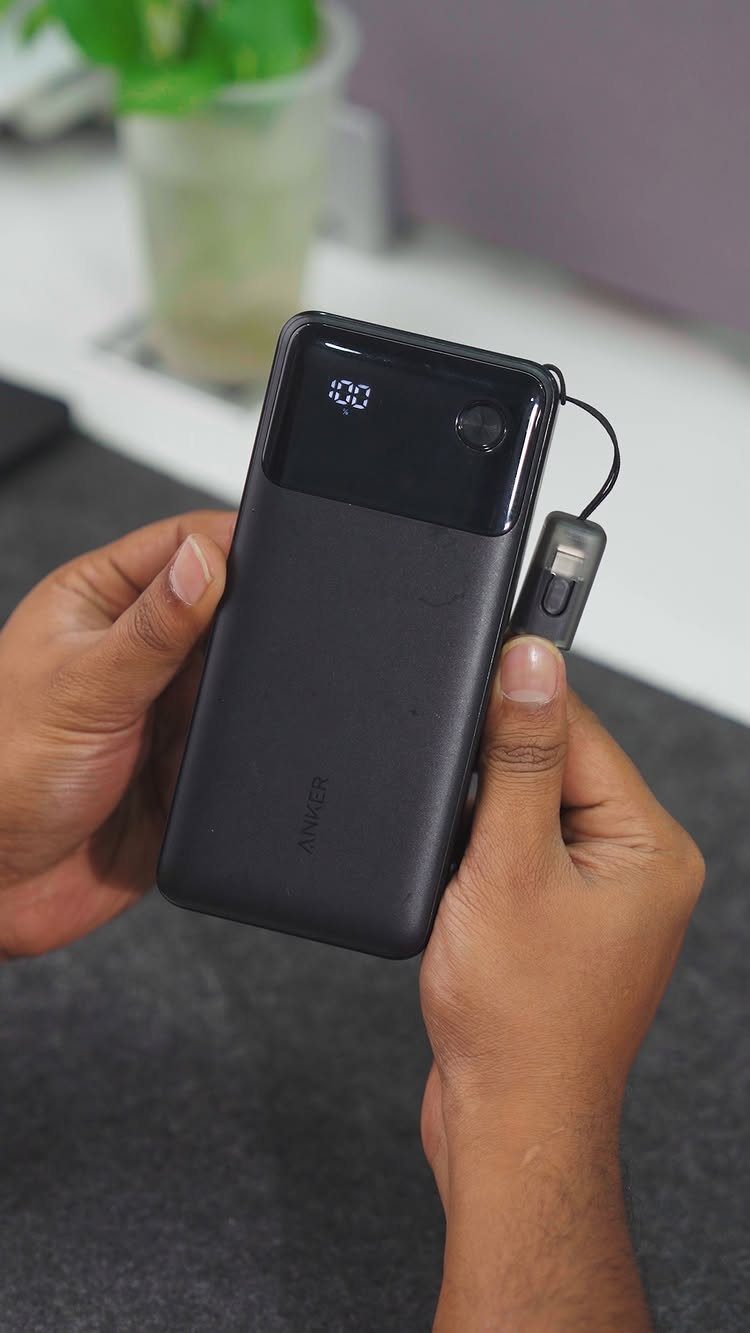
A power bank with a digital readout, like the Anker showing 100, tells you exactly how much charge you have left. I prefer that over a few vague indicator lights.
Charge it fully the night before departure, and pack the right cable for your phone. Keep it in your day bag, not checked luggage, since you will reach for it on long travel days and during map-heavy sightseeing.
Plug your phone in while it still has a good chunk of battery left, instead of waiting until it is nearly dead.
5. First Aid Kit
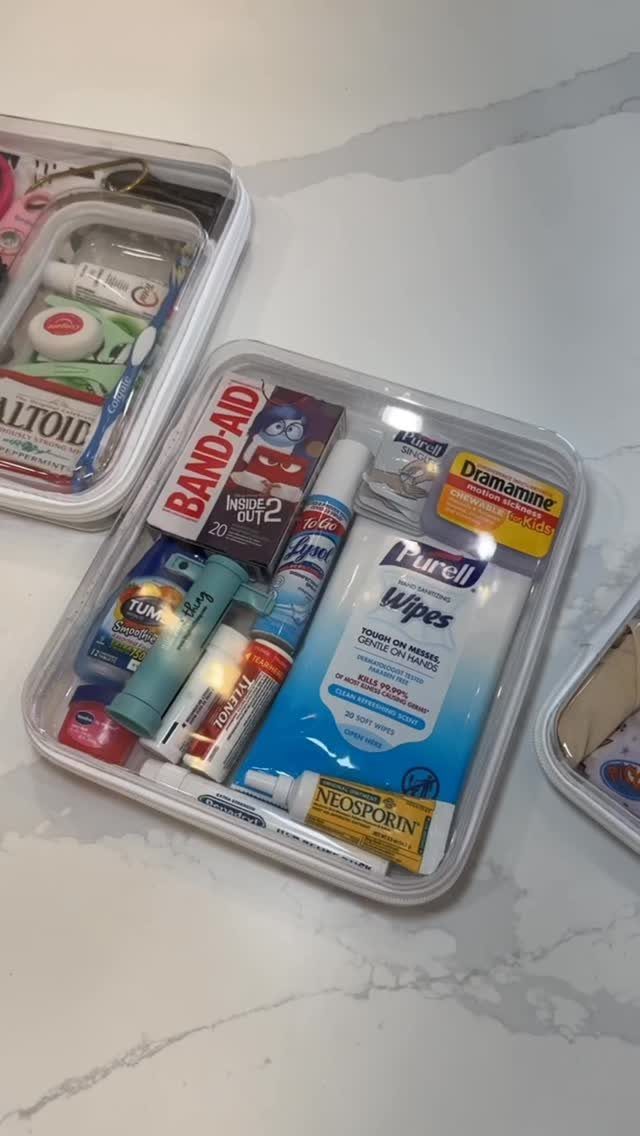
A clear plastic container works well for a first aid kit because you can see everything at a glance, even half asleep in the dark.
Fill it with Band-Aids, Neosporin, Purell wipes, Dramamine for motion sickness and Tums for upset stomachs.
Pick items for the trip you are actually taking. Boat days call for Dramamine; rich food calls for Tums.
Check expiration dates before you leave, and restock whatever you used last time.
6. Camera Gear
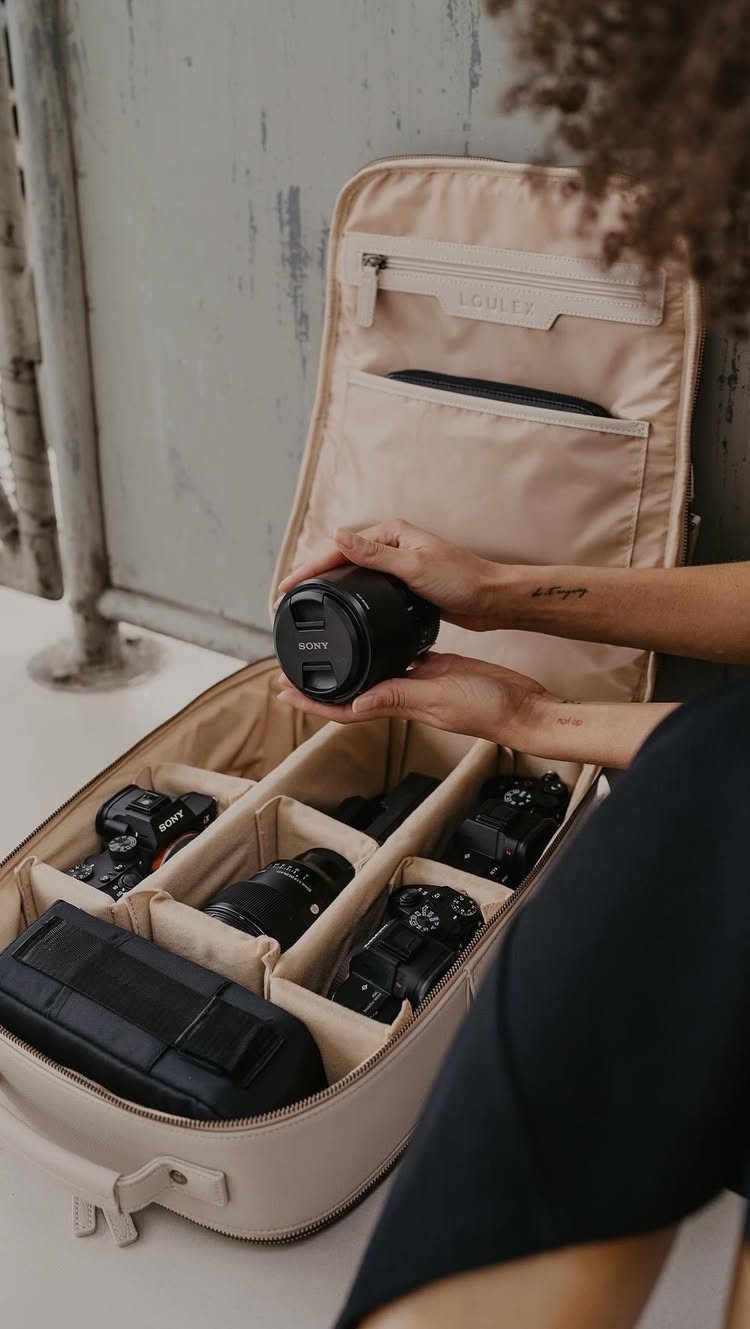
Padded dividers decide whether camera gear survives the trip. A beige padded bag like this one keeps several lenses and bodies apart, so nothing knocks together in transit.
Bring only the lenses you will use. Every extra one adds weight you carry all day, so I’d limit myself to two or three and leave the rest at home.
Carry the bag on board with you instead of checking it. Do a quick check at the door: each lens cap on, and every body in its own slot.
7. Beach Totes
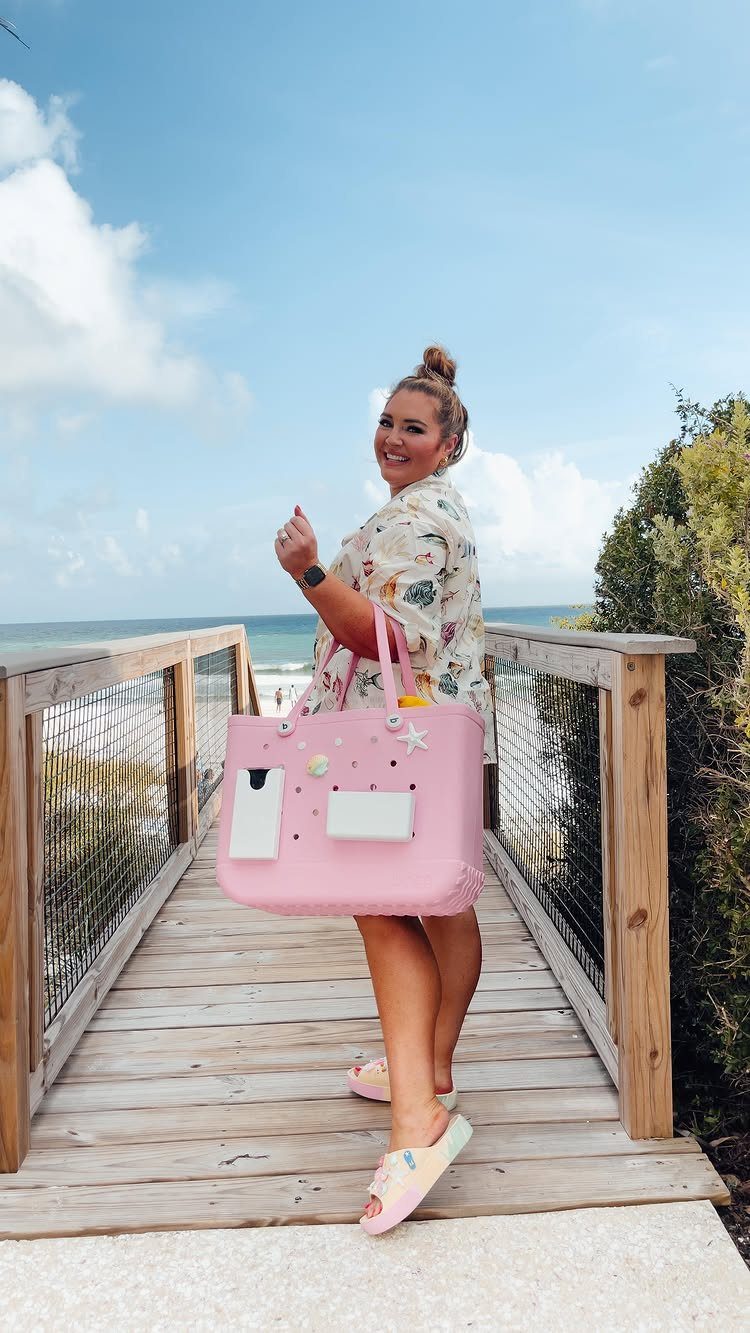
A neoprene tote holds its shape and shrugs off wet towels and sandy sunscreen bottles, which is why I like it for the walk down to the water.
The big pink one here has room for a towel, a book and a full water bottle.
Rinse a beach tote after each use, then hang it somewhere breezy until it’s fully dry, or the damp neoprene will make your suitcase smell like low tide. Skip anything with a cloth lining that traps damp sand.
Pack it flat in your luggage, then load it on arrival.
8. Layering Clothing

Layers beat a single heavy piece because you can adjust to the weather in seconds.
Pick pieces that mix with each other, like black trousers that suit both layers. Two or three combinations from the same few items cover more days than a pile of one-off outfits.
Put your heaviest jacket or sweater on your body at the airport instead of packing it, since it saves the most suitcase space that way.
9. Snacks for Travel
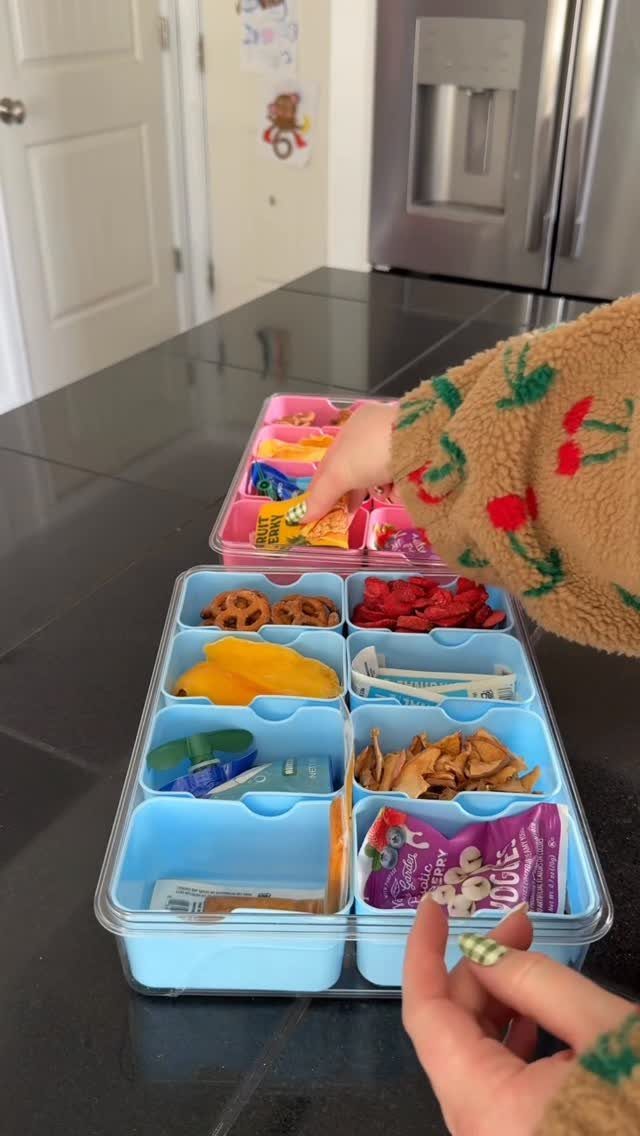
Divided containers keep snacks from turning into one crushed mess at the bottom of your bag.
Pretzels, dried fruit and a yogurt cup cover salty, sweet and protein in one grab, and small boxes of each pack flat in a personal item.
Portion everything at home so you can eat without digging around. Mix quick sugar with filling items, since long travel days run on steady energy more than sugar spikes.
Keep the boxes in your day bag, within reach.
Packing Strategies
Packing cubes fix the rummaging problem. Packing cubes in 3 sizes cover your clothes; bring the sizes that suit the length of the trip and leave the rest at home.
Bulky items go on your body during travel days, which keeps them out of the bag entirely.
Choose lightweight layers that are easy to add or remove. They give you flexibility when the weather shifts or you cross between climates, without hauling heavy clothing.
Travel Safety
Hard copies matter even if everything is saved on your phone. Carry paper versions of your tickets, insurance info, itinerary, reservations and passport or visa copies, and keep them apart from the originals.
Plenty of rooms come with no safe at all, and the ones that do often hold little more than a passport.
A portable safe like a Pacsafe is my pick for stopping the grab-and-go thief, who causes most of the losses travelers report.
Before you buy anything new, read your home contents policy.
A few policies also cover items taken away from home, so a camera stolen out of a locked hotel room could be reimbursed. Check the terms first.
Health Precautions
Keep masks and hand sanitizer in one dedicated pouch or an outer pocket of your carry-on, so you can find them in seconds.
Toss in one extra mask, since straps snap and a seatmate may be glad to borrow a spare.
Use hand sanitizer after you touch rails, handles or kiosk screens in crowded spots.
Prescriptions should cover every day of the trip, so count the doses and pack the full amount.
On a trip longer than 30 days, ask your doctor for a larger supply at the last appointment, and allow a week or two for the pharmacy and insurer to approve it.
A pain reliever such as Advil, Tylenol or Motrin covers headaches and body aches. Antacids are easy to find at local pharmacies, so they are the one item I’d buy on arrival if space is tight.
Frequently Asked Questions
Should I roll or fold clothes?
Roll casual pieces like T-shirts, jeans and sweaters, since rolling saves space and cuts down on wrinkles.
Fold dress shirts, blazers and suits, which hold their shape better that way. Packing cubes keep either style organized so you aren’t rummaging through the bag.
What to pack for a 10 day trip checklist?
Start with versatile clothing, toiletries and travel documents. Pick clothes that mix with each other, such as black trousers that work with every layer, so two or three combinations come from the same few items.
A small first aid kit and a power bank earn their space in any bag, and so does a folder of printed backups: tickets, insurance details, reservations, and copies of your passport or visa, stored in a different spot than the originals.
How do I pack for a month long trip?
For a month away, a week of clothes is plenty if you plan a laundry stop every 7–10 days and pick items that work in several outfits. Hand wash underwear and socks in the sink when no laundry is available.
Three or four bottoms in neutral colors will cover most of your tops, and packing cubes keep each category easy to find when you are living out of one bag.
If your trip runs past 30 days, ask your doctor at the last visit to write for an extended supply, and start early, since the pharmacy and your insurer can take 1–2 weeks to sign off.





