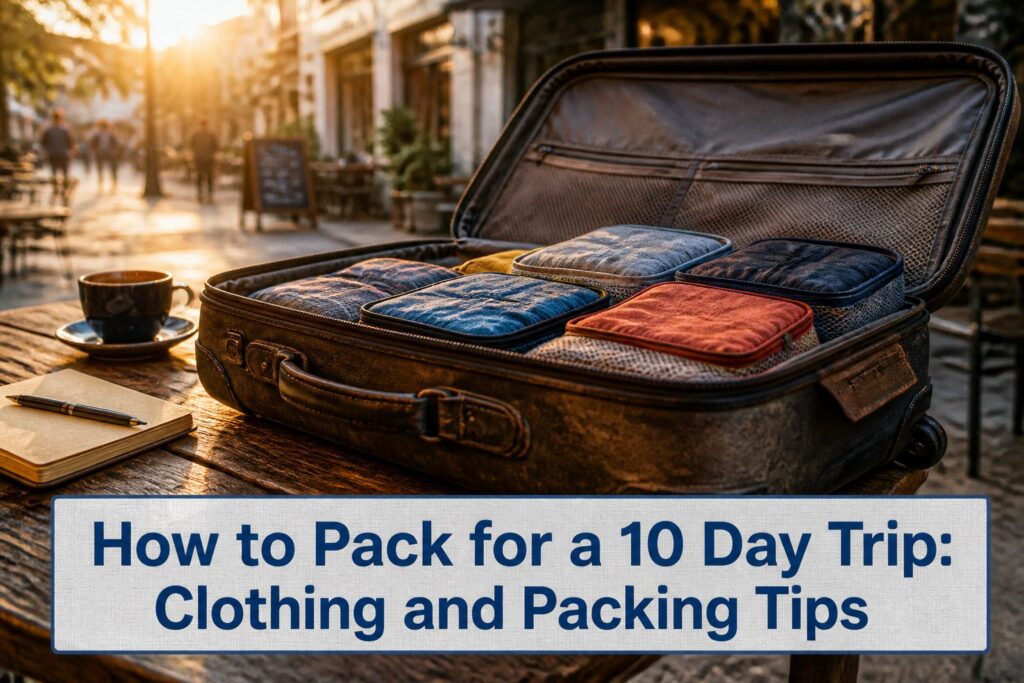
Packing a 10-day trip into a single carry-on takes about an hour of planning and one mid-trip laundry stop.
Most people fail at the shoe limit: three pairs is the hard ceiling, and wearing the bulkiest pair through the airport is what makes everything else fit. The real condition is fabric choice.
Quick-drying, wrinkle-resistant merino or synthetic blends let you wash in a hotel sink and wear again the next morning, which is how five tops and four bottoms stretch across ten days without repeating an exact look.
1. Tops That Cover Casual and Dressy Both
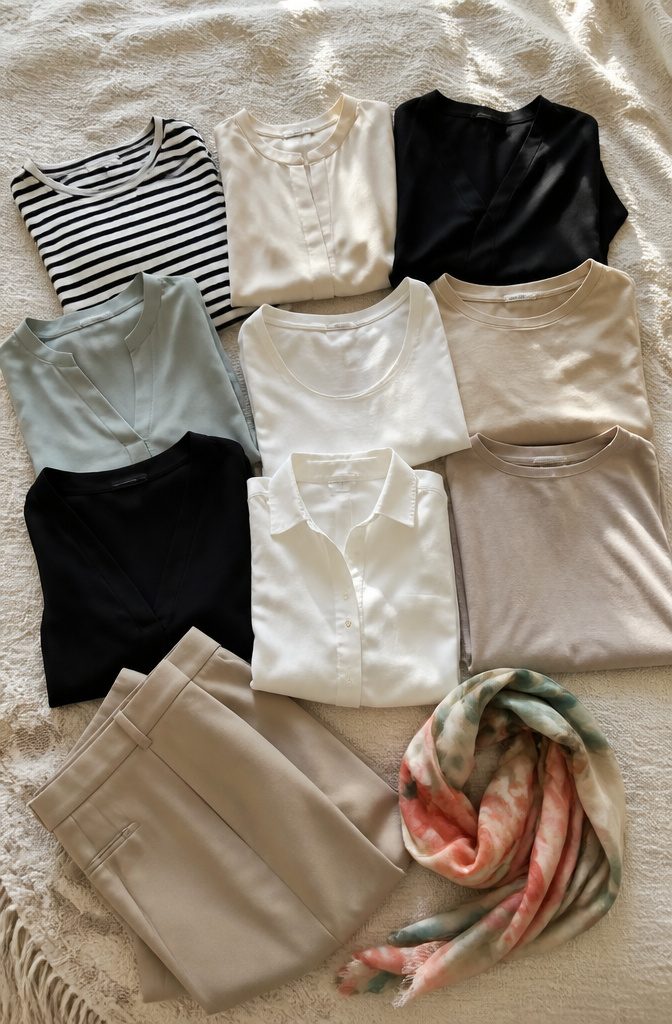
Five to seven tops handles a 10-day trip if every piece earns its place. I build around a tight color palette: mostly neutrals like white, black, and beige, with one or two accent colors at most.
Each top works with every bottom in the bag, so one shirt might pair with three different pants or skirts across the trip.
The fabric matters as much as the color. Quick-drying, wrinkle-resistant material saves the morning routine in a hotel with no iron and keeps a hand-washed piece ready by the next day.
A couple of basic tees handle casual walking and daytime; one blouse or button-up dresses up for dinner; a single statement top covers the one evening that calls for something less plain.
If a top does not work with at least three bottoms, it stays home. That rule keeps the carry-on honest.
2. Bottoms You Can Wear More Than Once
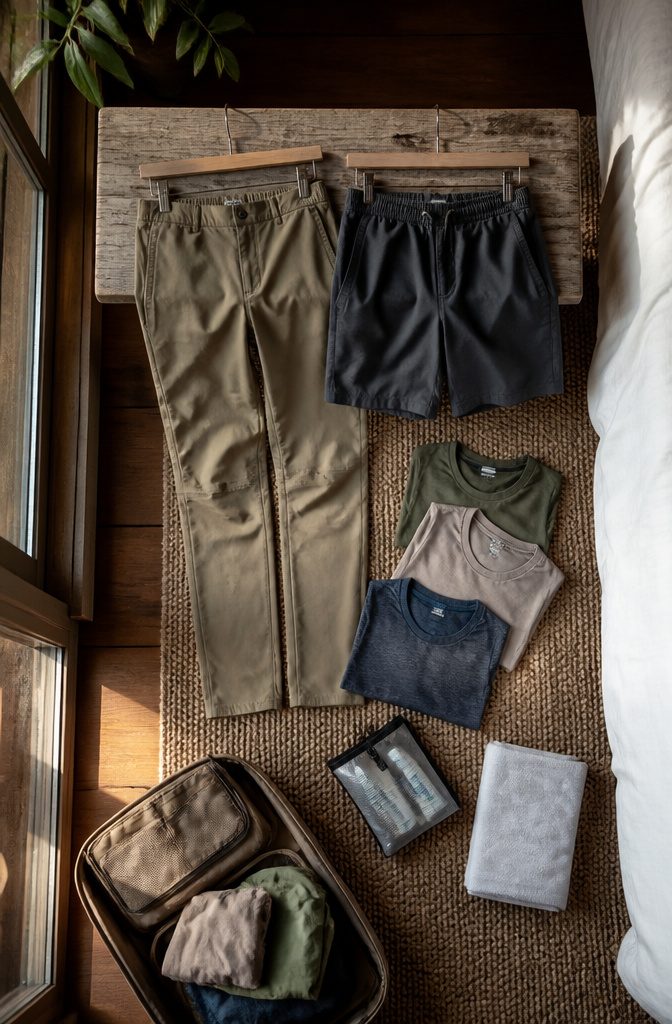
Two to four pairs of bottoms will carry you through ten days if you choose pieces that work overtime.
I lean toward pants or shorts in performance fabrics that resist wrinkles and odors through three or four wears, because that means fewer items in the bag and less time worrying about laundry.
The same logic applies to skirts if that is your preference, though I would make sure each one coordinates with at least two tops already packed.
Quick-dry material matters more than most travelers think. Hotel sinks are the more realistic option for mid-trip washing; a machine in your room is unlikely, and apartment rentals with one still eat up vacation time you would rather spend elsewhere.
Performance fabrics dry overnight when hung up, so a sink wash in the evening leaves you with clean bottoms by morning. Spot cleaning handles the small stuff between full washes.
A hybrid short that works for both swimming and hiking earns its place as a single item pulling double duty. Joggers or sweatpants serve the flight and lounging hours without counting against your outfit rotation.
The real win is bottoms that pair across your entire top selection, which is where a restrained color palette pays off more than any single standout piece ever could.
3. Two or Three Pairs of Shoes Maximum
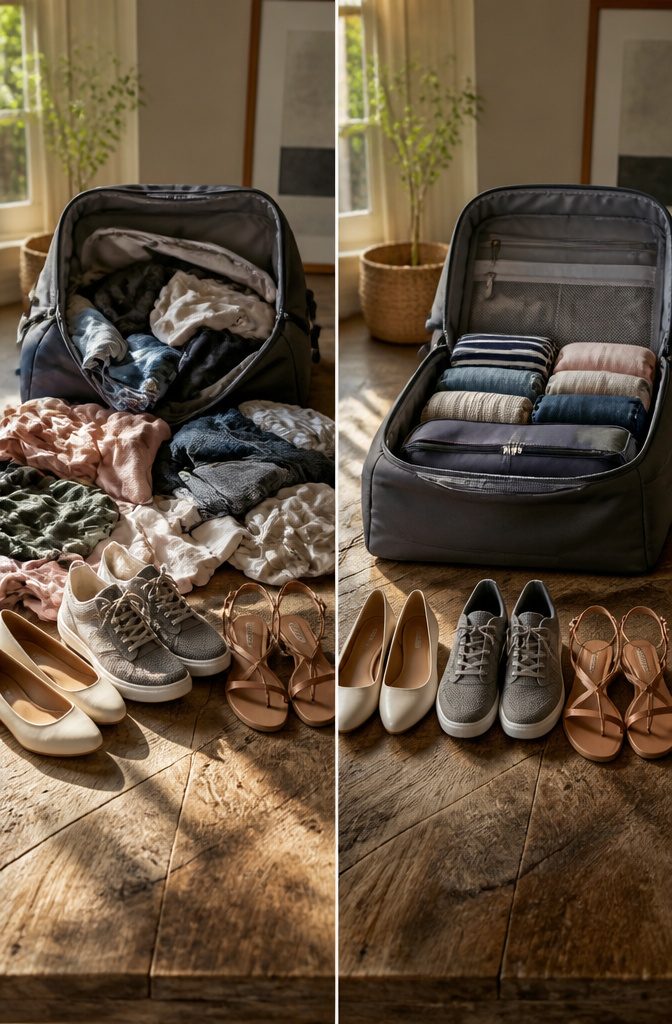
Shoes eat more suitcase space than anything else you pack. One bulky pair can easily swallow the room three shirts would take, which is why two or three pairs total is the limit that actually works for a 10-day trip.
The math is simple: comfortable walking shoes handle most of your day, and one dressier option, sandals or flats, covers evenings out.
Some travelers stretch to three by adding athletic shoes for a specific hike or activity, but that third pair needs to earn its place against the clothing you sacrifice.
Wear the bulkiest pair on the plane. Boots or running shoes belong on your feet, not in your bag.
This single move frees up the most awkward corner of your carry-on and keeps your heaviest item off the scale at check-in. The pair you pack stays lighter and more flexible: sandals, flats, or a low-profile sneaker that folds flat.
I have watched people try to pack four or five pairs for variety, then spend the trip in the same two anyway. The dead space in a suitcase is almost always where the extra shoes went.
4. One Dress or Jumpsuit for Versatility
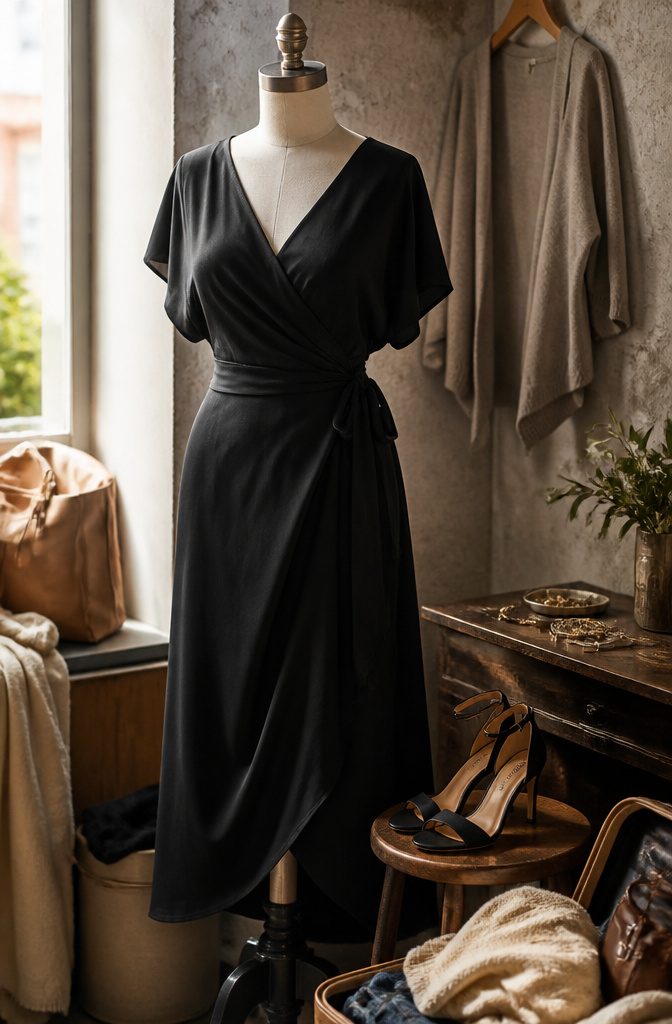
A single dress or jumpsuit that reads both ways saves more space than almost any other swap in the bag.
The same piece covers a dinner reservation, a gallery afternoon, and a market morning if the fabric falls right and the cut does not lean too hard toward either extreme.
I look for a midi length in a mid-weight material, something that does not wrinkle into shame after 10 hours rolled in a cube.
Black or a deep navy wins here, not because it is interesting but because it accepts any shoe and any jewelry you packed. A wrap silhouette or a belted waist adjusts to bloated travel days without announcing them.
If the trip includes any chance of a nicer evening, a jumpsuit edges ahead of a dress; the lines read sharper and the bathroom logistics are a fair trade.
One is enough. Two only if the itinerary splits evenly between cities that demand polish and towns where you want ease.
The second should differ in shape or sleeve so they do not feel like copies. For a 10-day carry-on, plan to wear each at least twice, three times if laundry is part of the plan.
5. One Layer for Changing Weather
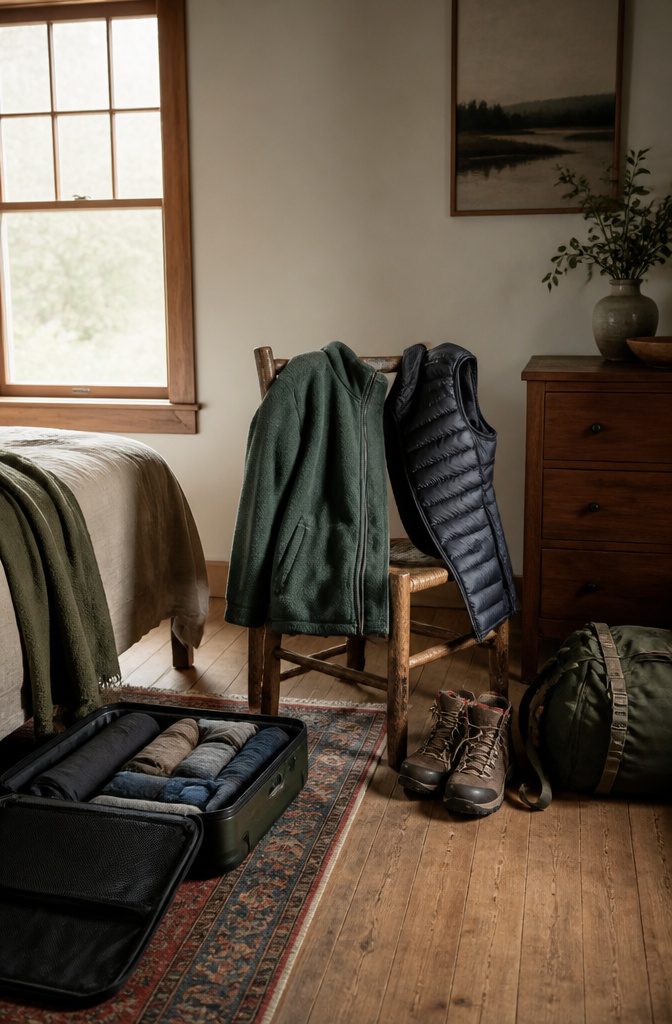
A single lightweight jacket or sweater does the work of three if you choose right. Merino or a thin synthetic fleece packs to the size of a grapefruit and handles everything from breezy ferry decks to over-air-conditioned restaurants.
For a 10-day carry-on, I skip the full base-mid-outer shell system unless I’m heading somewhere genuinely cold. That three-layer setup works for mountain weather, but it eats space fast.
One adaptable mid-layer plus whatever you’re already wearing on the plane is usually enough. If the forecast looks iffy, I wear the bulkiest layer boarding and let the plane carry the weight.
The real test is whether that one piece works with every bottom you’re packing. A neutral zip-up fleece or a compact down vest layers over a T-shirt for hiking or under a light jacket for dinner.
Cardigans look sharper but take longer to remove when temperatures swing. For Salt Spring in shoulder season, I lean toward a jacket with a collar that stands up against wind; the Gulf Islands turn breezy without warning.
6. Underwear and Socks for 10 Days
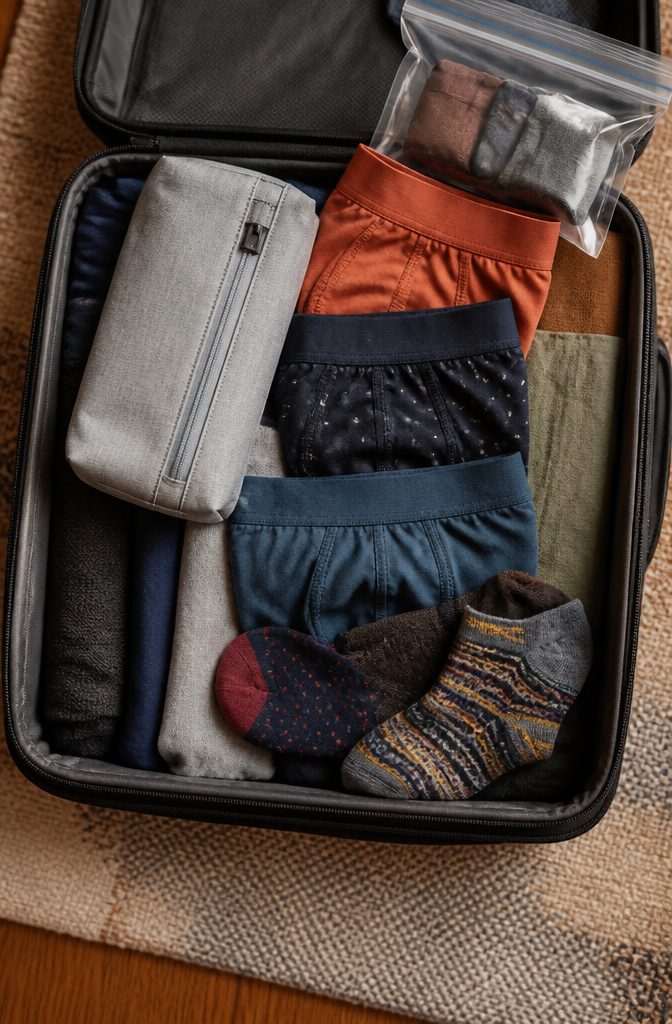
Five to ten pairs of underwear and socks will cover a 10-day trip, depending on whether you plan to wash or wear fresh daily.
The minimalist 5-4-3-2-1 method starts with 5 pairs of each, which works if you can do laundry mid-trip or hand-wash in a hotel sink.
Some travelers prefer the security of packing one per day and skipping the chore entirely.
I lean toward fewer pairs and a travel laundry kit.
Quality matters more than quantity here: look for underwear with antimicrobial properties that stay fresh through long travel days, and socks with cushioning and ventilation that handle both city walking and light hiking without swapping pairs.
These small items take up minimal space, so the real decision is whether you value suitcase simplicity or the convenience of never thinking about it.
7. Toiletries in TSA-Approved Sizes
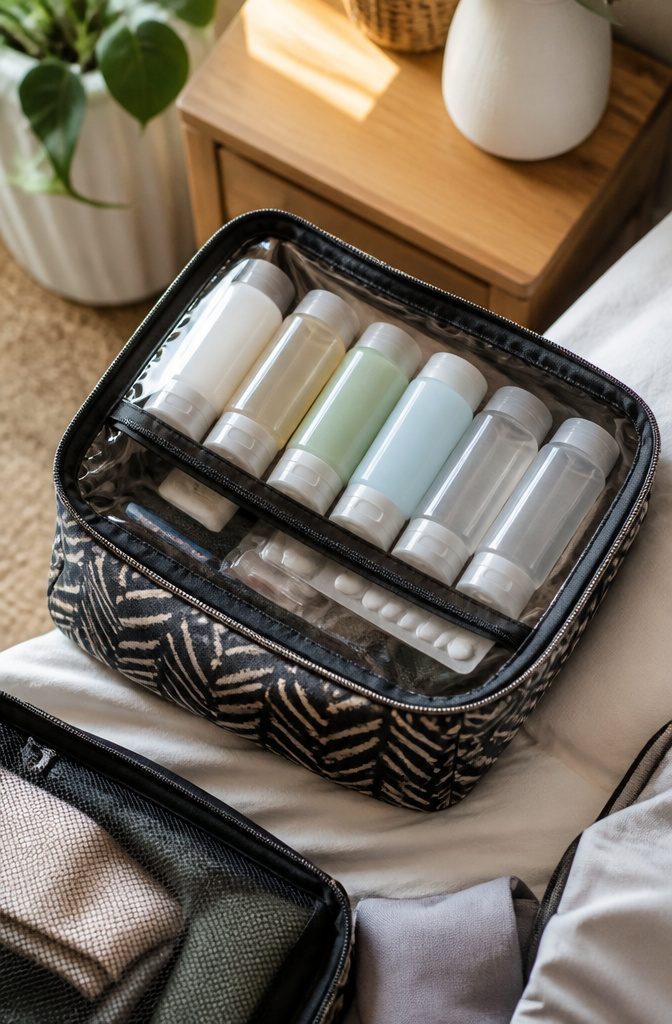
Travel-sized containers that meet TSA’s 3.4 ounce limit for liquids keep your toiletry kit light enough for a carry-on-only trip.
Most hotels supply shampoo, conditioner, and body soap, so the real question is whether their products work for your hair and skin.
If they do, you can leave half your bottles at home. If they don’t, decant what you need into reusable travel bottles, or buy travel-size versions at a drugstore.
The items worth carrying yourself are the ones hotels never have: prescription medication, contact lenses and solution, and any specific skincare that would be hard to replace mid-trip.
A lightweight toiletry kit with a zippered closure beats a rigid case for fitting into tight corners of your bag.
Leaks are the main risk with small containers. A screw-top travel bottle is not enough.
Either use bottles with locking flip-caps, or seal each one inside its own zip-top bag. The bag catches what the bottle spills, and you will not spend your first evening cleaning moisturizer off your only pair of jeans.
8. One or Two Accessories That Change the Look
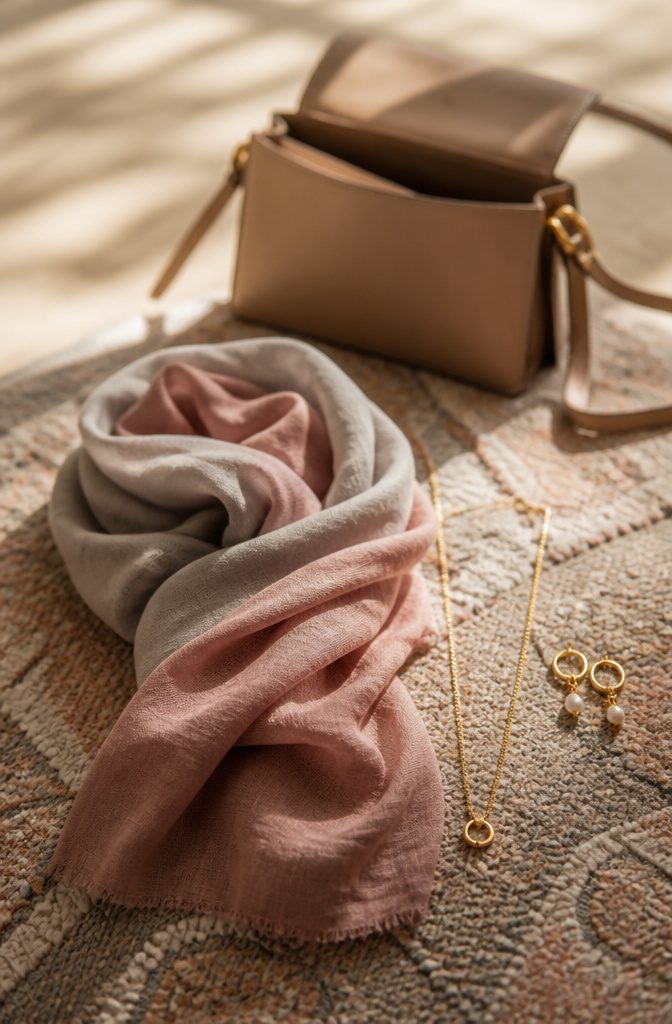
A single reversible scarf does more wardrobe work than any other item you can stuff in a corner of your carry-on.
A reversible piece that flips to a second color and wraps multiple ways lets the same neutral top and pants read as a new outfit in every photograph without you repeating the exact look.
I would choose this over a hat unless the destination demands sun coverage, because a beanie or sun hat serves only one purpose and still has to survive the crush of a packed bag.
Jewelry follows the same less-is-more rule: one to two pairs of earrings, a single necklace, maybe a bracelet or watch.
The temptation is to pack options, but a small crossbody or evening clutch already eats space that could hold a second layer. A single belt to cinch a dress or add structure to a loose top stretches the silhouette further.
The scarf wins again here, though, since it layers for warmth, doubles as a blanket on a cold plane, and covers your head if a site requires it. No belt does all three.
9. Packing Cubes or Compression Bags
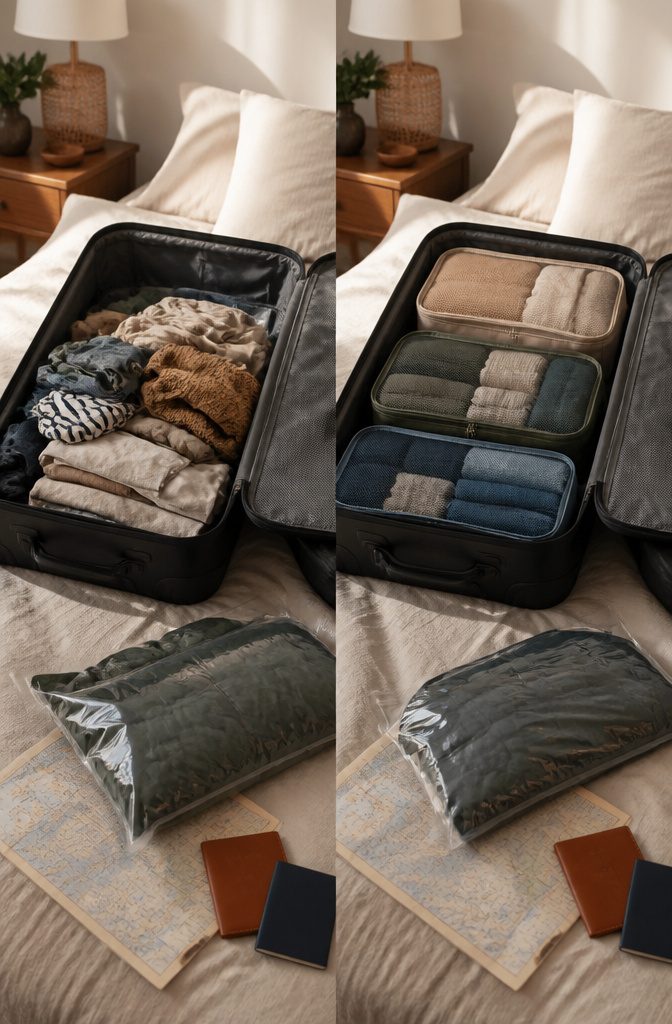
Folding clothes flat into a suitcase leaves gaps that shift and grow by day three of a trip. Packing cubes beat that system by turning loose stacks into solid blocks that slot together like drawers.
I typically reach for one to three cubes depending on how I want to group things: t-shirts and dresses in one, bottoms and layers in another. The medium and small sizes handle most of a 10-day load without overthinking it.
Compression bags win back space bulky items eat, especially a sweatshirt or rain layer you need but do not wear daily. Compression bags leave fabric wrinkled, looking slept-on, which matters for a dress but not for a fleece.
For a carry-on-only 10-day trip, I would take cubes over compression for everything except that single bulky layer, and I would wear the other one onto the plane.
At the hotel, unpacking takes thirty seconds: lift the cubes straight into dresser drawers, skip the re-folding ritual entirely. Airport security moves faster too, since you can pull a cube rather than dig through a jumbled bag.
Plan Outfits Before You Pack
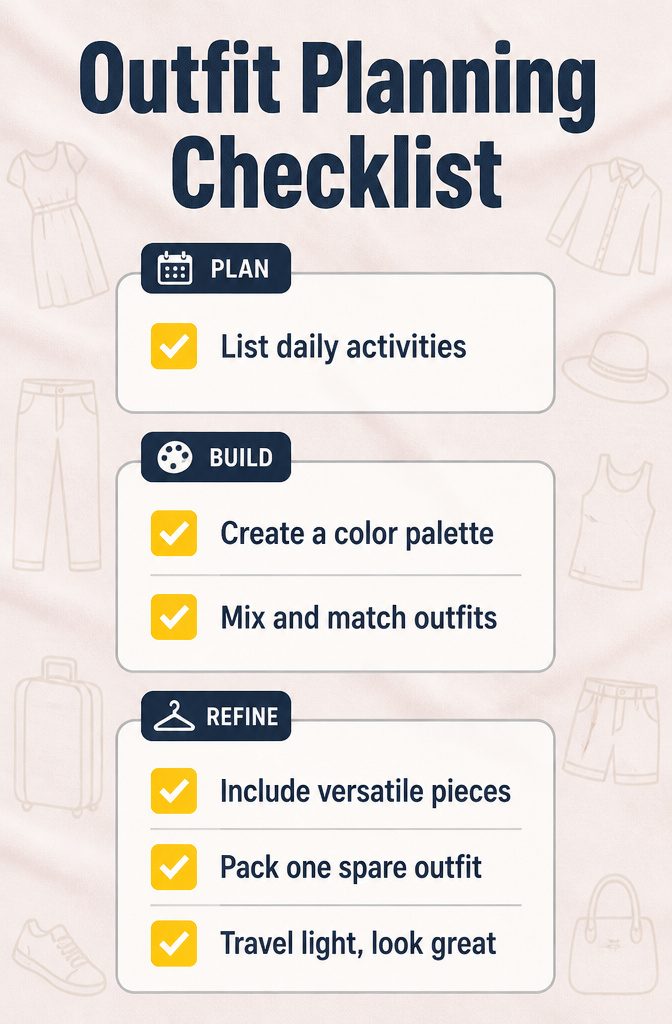
The mistake that turns a carry-on into a checked bag is packing clothes instead of outfits.
I start every trip by listing what I will actually do each day, then build the look for it. Beach days, dinner reservations, sightseeing tours: each activity gets a purpose-built combination, not a maybe-I’ll-wear-this pile.
From that list, a color palette emerges.
Neutrals do the heavy lifting, white and black and beige, with one or two accent colors that tie the separates together. Every top has to work with at least three different bottoms, or it stays home.
The same jacket should pull a daytime look together and dress up the same trousers for evening. If a piece does not mix and match at least two ways, it does not make the cut.
Some travelers map each day garment by garment; others keep the plan looser but hold to the palette rule. Either approach beats the alternative: arriving with a suitcase full of favorites and nothing that coordinates.
Wear the Bulkiest Items on the Plane
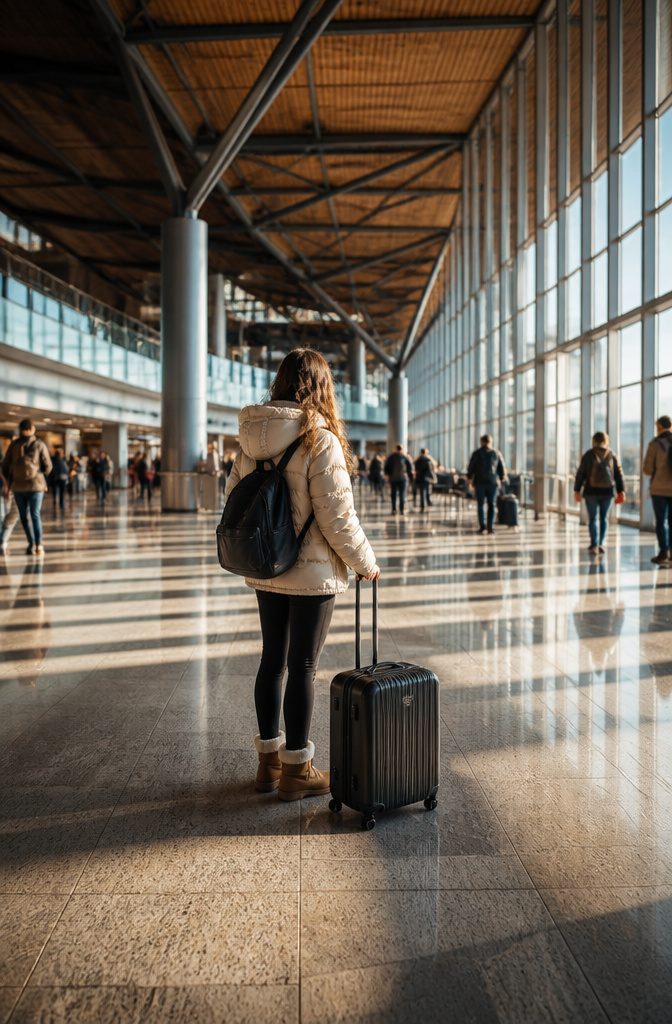
The heaviest shoes and the bulkiest jacket in your bag are space you paid for and cannot use for anything else.
Wear them through the airport instead. Boots or running shoes eat the room of two or three folded shirts; a down coat or thick sweater fills a quarter of a standard carry-on by itself.
Boarding in your bulkiest layer is the fastest way to reclaim that space.
Temperature is the real complication. Walking through a hot departure city in a parka is miserable, and the plane itself may run warm.
The move is to carry the jacket tied at your waist or draped over your arm until you are through the gate, then layer up once the cabin chills.
I have sat sweating in a fleece-lined coat for twenty minutes on a jetway and still counted it a fair trade for the extra room in my bag.
The discomfort is brief and predictable; the space stays useful for the whole trip.
Two limits shape the decision. First, the shoes you wear must be comfortable enough for a full day of airports and connections, because you are committing to them for travel day no matter what.
Second, one heavy layer is enough; stacking a coat over a sweatshirt over a long-sleeve shirt turns you into a furnace and leaves no clean top for arrival.
Pick the single bulkiest item that serves your destination, wear it, and pack everything lighter.
Doing Laundry Mid-Trip
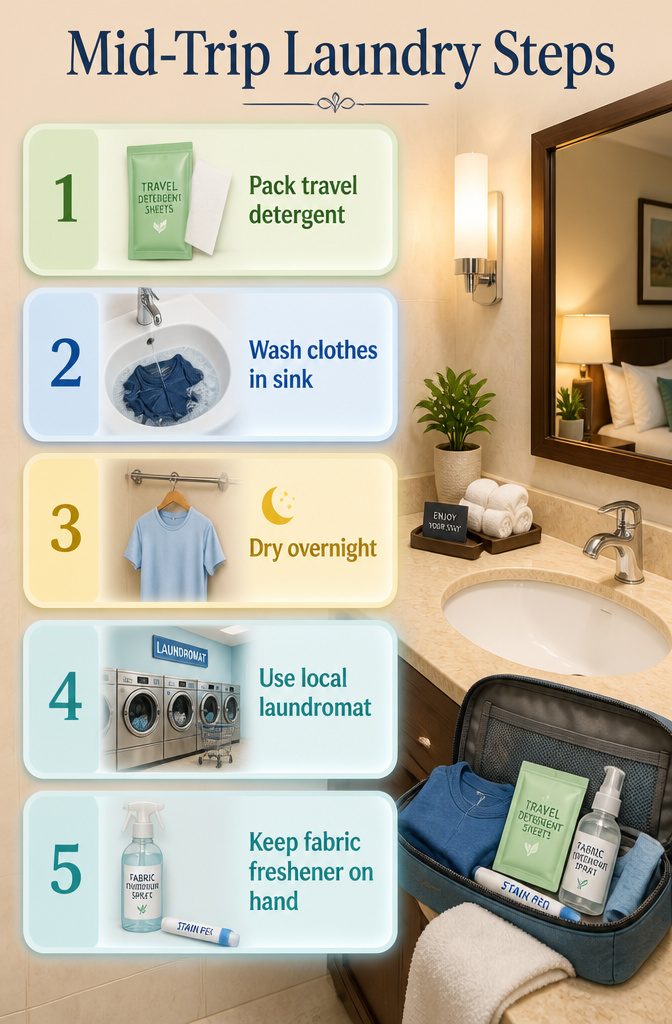
Travel detergent packets or sheets fit in a corner of your toiletry bag and let you wash a shirt or underwear in a hotel sink, dry it overnight, and wear it again two days later.
Most lodgings also keep laundry facilities on-site or nearby, and a local laundromat mid-trip buys you a full refresh without the bulk of packing ten days of clothing.
The 5-4-3-2-1 method only works if you plan on this; otherwise the math falls apart by day six.
Fabric freshener spray helps between washes, and a stain pen keeps one accident from sidelining a piece for the whole trip.
I pack one spare outfit beyond what I need for a week, wash once, and end up with less total luggage than if I’d tried to cover every day fresh out of the bag.
How the 5-4-3-2-1 Rule Works
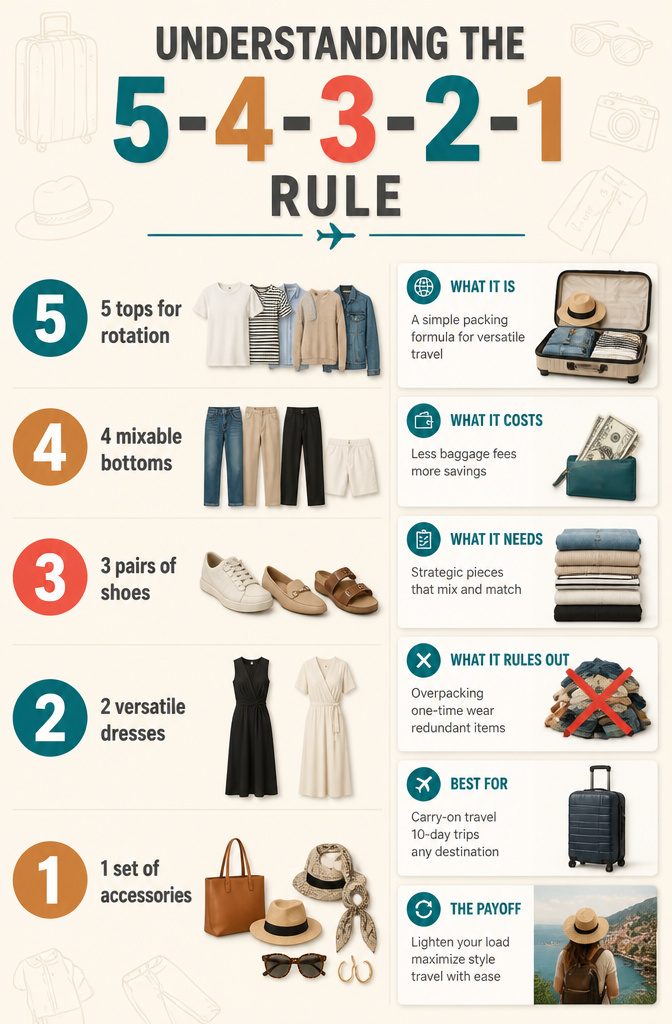
The 5-4-3-2-1 rule breaks down to 5 tops, 4 bottoms, 3 pairs of shoes, 2 dresses, and 1 set of accessories.
For a 10-day trip I treat it as a ceiling rather than a quota. I keep the 5 tops and 4 bottoms intact, since that gives me enough rotation for a wash midway through.
The 3 shoes I hold to strictly: one walking shoe, one dressier flat or loafer, and one weather-specific pair, like sandals or boots depending on where I am headed.
Where I deviate from the standard formula is the dresses line. For 10 days I bring 1 dress, not 2, and I swap the second slot for a jumpsuit or a third top layer.
One source frames the formula as 5 sets of tops and bottoms plus 4 dresses, which for my purposes overweights formal options. The egoshoes version gets closer to what actually fits in a carry-on: 5 tops, 4 bottoms, 3 shoes, 2 dresses, 1 accessory set.
Adjusting that 2-dress slot down to 1 and converting the other piece to something I will wear three or four times keeps the bag under the limit without giving up versatility.
What Goes in Your Personal Item
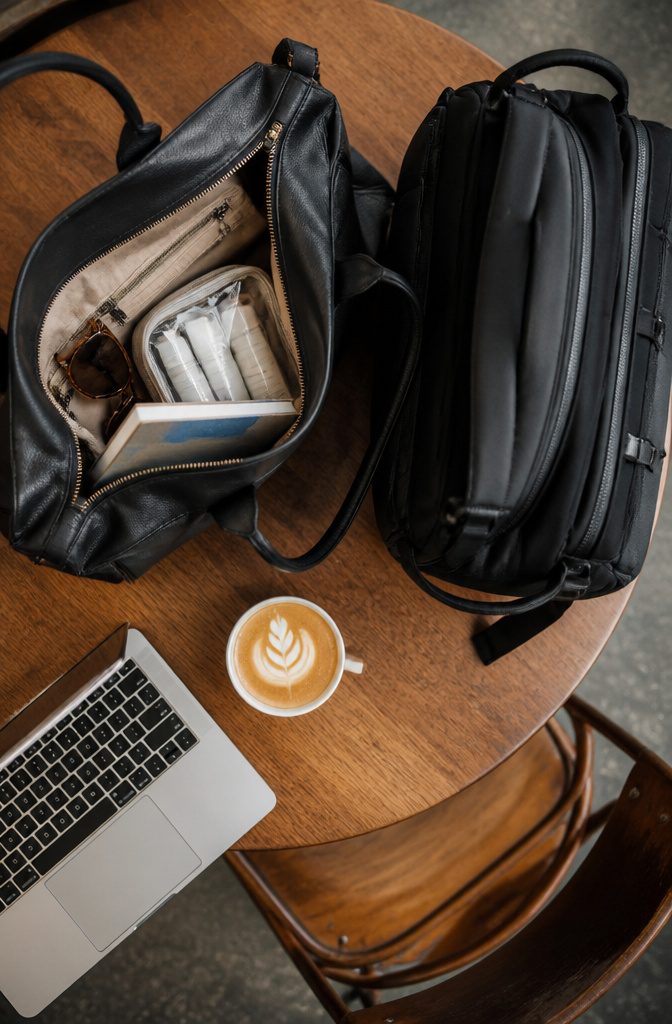
A personal item is extra packing space you can actually use, not just a slot for your phone charger and a paperback. For a 10-day carry-on trip, that distinction matters.
The shape of the bag itself decides how much you gain. A large tote with zippered compartments swallows a liquids toiletry bag, electronics, sunglasses, the overflow your main bag cannot fit.
A travel backpack does the same work while keeping both arms free, which I find worth the trade on longer travel days. Pack it full on the way out and reserve slack for the return.
Souvenirs are the classic return-trip problem. Stashing them in the personal item keeps them under the seat and off the gate-check roulette, where a rolling bag might get forced into the hold.
The only catch is the space you reserved has to stay reserved, which means packing the outbound personal item tight but not maxed.
Frequently Asked Questions
How many clothes do I need for a 10-day trip?
Bring 5 to 7 tops, 2 to 4 bottoms, and 5 to 10 pairs each of underwear and socks.
The exact count depends on whether you plan to do laundry mid-trip; washing once lets you pack roughly half of what you would need for fresh outfits every day.
What is the 5-4-3-2-1 packing rule?
The rule suggests 5 tops, 4 bottoms, 3 pairs of shoes, 2 dresses, and 1 set of accessories.
For a 10-day trip, treat it as a ceiling rather than a quota; many travelers swap the second dress for a jumpsuit or extra layer to better fit a carry-on.
How can I avoid wrinkles in my clothes?
Choose quick-drying, wrinkle-resistant fabrics for every item you pack. Rolling instead of folding also helps, though the fabric itself matters more than the technique.
What about laundry during a 10-day trip?
Pack travel detergent packets or sheets for hotel sink washes, or use on-site laundry facilities when available. Quick-dry fabrics dry overnight when hung up, so a single mid-trip wash keeps a small wardrobe rotating cleanly.
How do I pack this so it actually fits in a carry-on?
Use 1 to 3 packing cubes to compress clothes into solid blocks, and wear your bulkiest shoes and jacket onto the plane. Rolling or folding into cubes beats loose stacking, which leaves gaps that shift and waste space.
What is the 5 4 3 2 1 rule when packing?
It is the same guideline: 5 tops, 4 bottoms, 3 pairs of shoes, 2 dresses or dressy pieces, and 1 set of accessories. Adjust the numbers to your actual itinerary rather than treating them as mandatory quotas.
What is the most forgotten item when packing for vacation?
A travel laundry kit, including detergent packets and a stain pen, often gets overlooked. Having one lets you wash in a sink mid-trip, which is what makes a small carry-on wardrobe actually work across 10 days.





