Pack for eight core categories and you will cover 70-plus items without the usual bloat, but only if you treat every piece as a swap rather than an add.
Clothing is where most travelers lose the game, doubling up on items that could serve dual purposes; one pair of trousers that works for both temples and dinner out replaces two bulky alternates.
The real test comes at security, where the 3.4-ounce liquid limit forces hard choices about what actually earns its tube.
Clothing
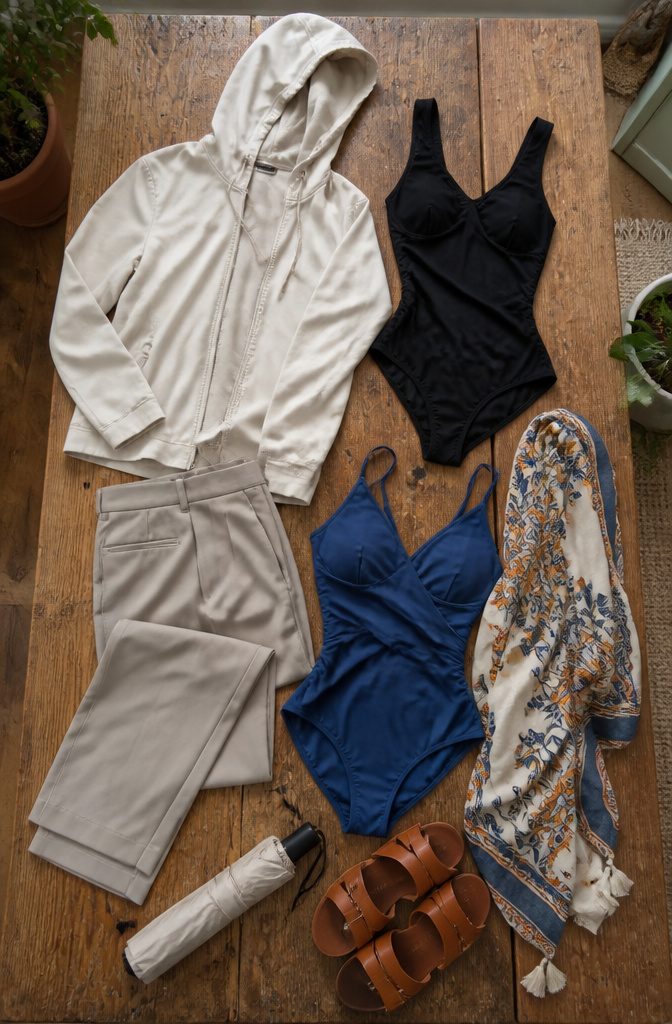
Clothing eats space faster than anything else in a bag, so pieces that pull double duty are what make the difference.
A hoodie or fleece in a neutral color layers over everything. One pair of trousers that works for temples and for dinner out saves a second bulky item.
Two swimsuits means one can dry while the other wears, and a sarong or shawl covers shoulders where dress codes require it without adding a dedicated piece.
Shoes are where most travelers overshoot. Comfortable walking shoes are non-negotiable; sandals or flip-flops handle beaches and hostel showers.
One pair of nicer shoes only if the itinerary actually calls for it. Athletic shoes only if exercise is genuinely planned, not aspirational.
Rolling clothes instead of folding them compresses fabric and leaves fewer gaps in the bag. It also cuts wrinkles on synthetics and light cottons.
Weather-appropriate gear follows the forecast, not the season.
A lightweight waterproof jacket beats a bulky sweatshirt for unpredictable conditions. Cold-weather trips need thermal layers and a scarf that doubles as a blanket.
Warm destinations call for a hat and sunglasses. A compact umbrella or rain jacket stays in the bag if rain is even a chance.
Toiletries
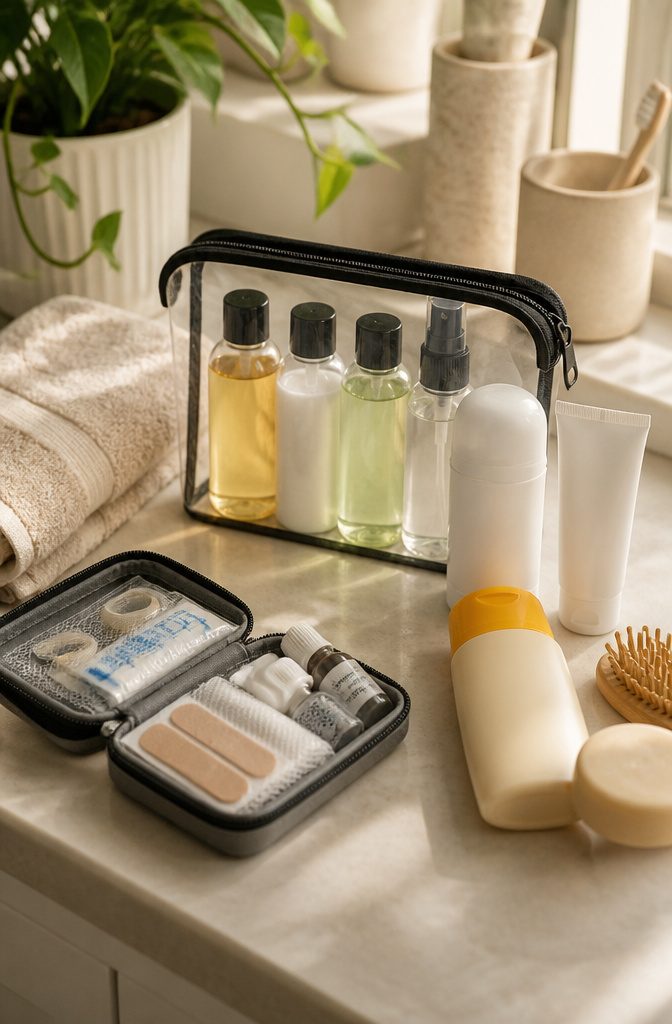
The 3.4 oz limit on liquids governs what actually makes it past security in a carry-on, and that single rule reshapes every choice in this category.
I transfer shampoo, conditioner, body wash, and face moisturizer into travel-sized containers rather than hoping hotel stock matches my skin. Toothpaste, deodorant, and sunscreen round out the daily kit; anything over the limit goes in checked luggage or stays home.
First-aid supplies belong in the same bag, not scattered across pockets. A compact kit with band-aids, antiseptic, and pain relievers handles the small injuries that derail days if ignored.
I add hand sanitizer and insect repellent as non-negotiables, plus any prescription medications in original packaging. Cold medicine, anti-diarrhea pills, and antihistamines fill the gaps a pharmacy visit would otherwise cost you an afternoon to address.
Electronics
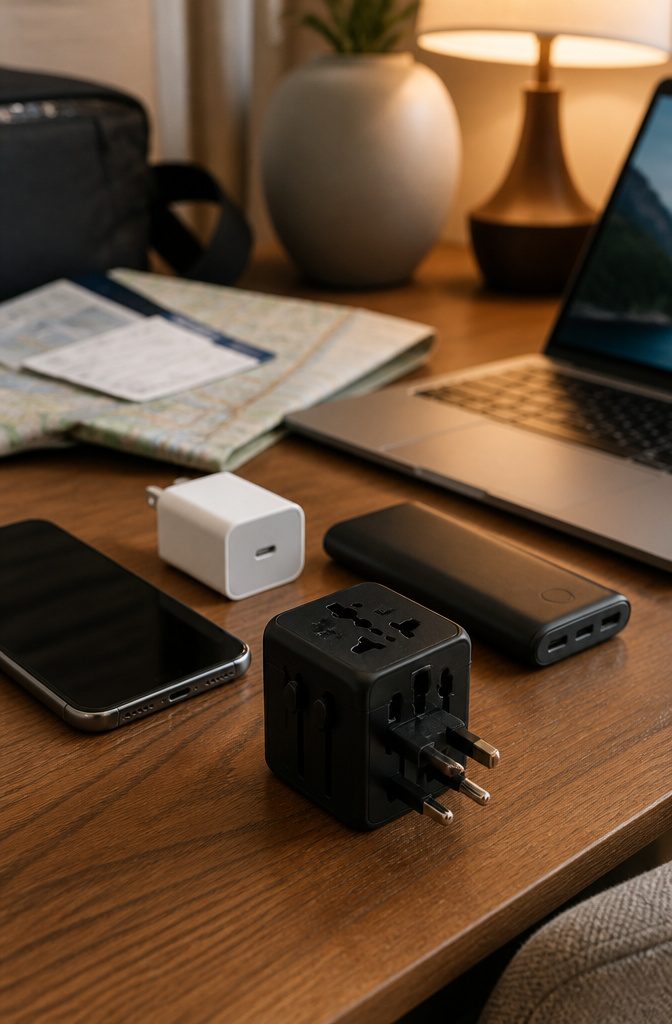
The smartphone and its charger sit at the center of every trip now, and the charger belongs in your carry-on, never checked luggage where a battery fault goes unnoticed until it is a real problem.
A USB-C charger with the right cables handles most devices; pack this first.
Power banks follow the same rule for the same reason. Airlines restrict these to carry-on bags, and the watt-hour limit varies by carrier, so checking your airline’s posted limit takes two minutes and saves a gate-side argument.
I keep one rated for at least two full phone charges; dead navigation on a foreign street is the failure mode that matters.
Plug adapters are where research pays off. Outlets differ country to country, and a single universal adapter rarely covers every configuration well.
Carrying two adapters spreads the load across hotel rooms with stingy outlet counts, though one suffices for most travelers. An eSIM or roaming plan set up before departure keeps maps and messaging live without hunting airport SIM counters.
Headphones, item trackers like AirTags, and any camera or tablet with its charger round out the kit; each charger adds weight, so I pack only the ones for devices I will actually use.
Travel Documents
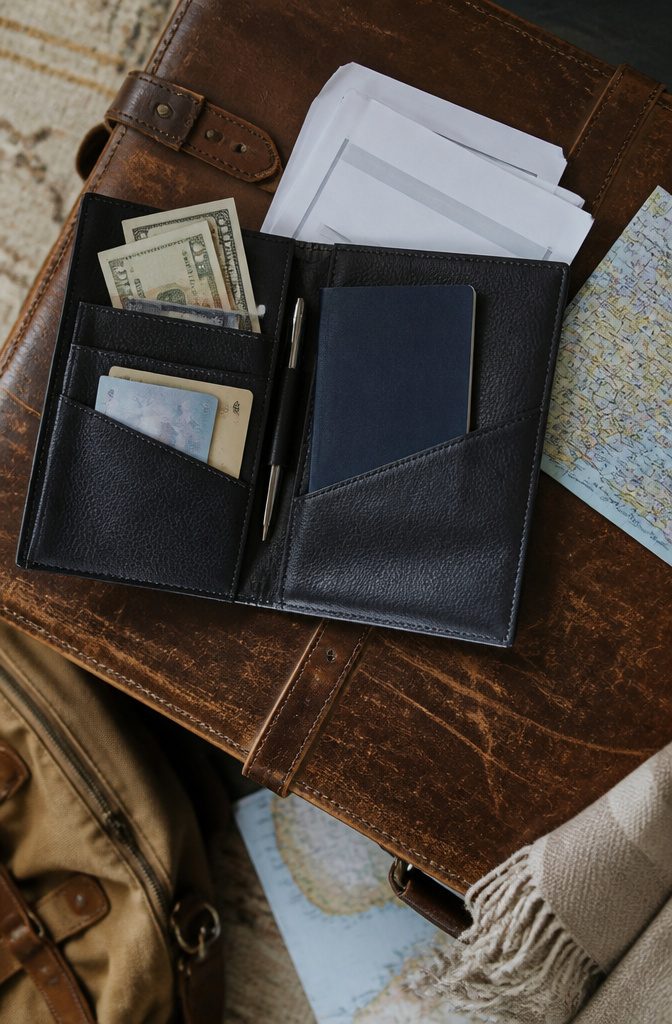
The passport stays valid for just 5 years for children under 16, so a family trip can sneak up on you faster than you think.
Most countries in Europe want 6 months of validity left after your travel dates, not just through them. That gap has turned people back at the gate.
A visa sits in a separate category.
Some destinations hand them out at arrival; others make you visit an embassy weeks ahead. The only way to know which is which is to check, early, then check again a month out.
Paper copies of everything matter more than the apps suggest. One set travels with you, kept apart from the originals.
Another set stays with someone you trust at home. Photos on your phone help, but a paper backup works when the battery dies or the border agent wants something tangible.
Travel insurance cards and your full itinerary belong in the same folder. Not the confirmation email buried in your inbox; a printed sheet with policy numbers, dates, and the 24-hour claim line.
Some countries –especially in Europe – require that your passport be valid for at least 6 more months after your travel dates.
That six-month rule is the detail that wrecks the most carefully planned trips. Pull your passport now, check the date, and renew it if you’re cutting close.
Money
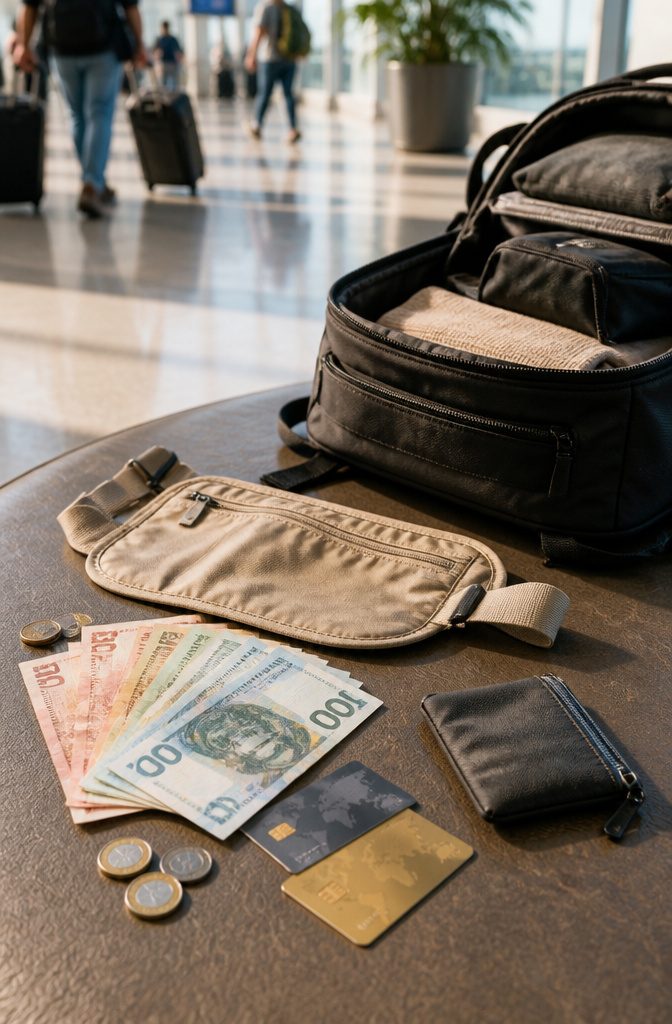
Cash reserves the moment you land matter more than most travelers expect.
At least $50 in local currency covers the taxi, the street snack, or the guesthouse that does not take cards. I order that amount from my bank before departure, because airport exchange counters hand out the worst rate.
Credit and debit cards handle the rest, but the details decide whether they help or hurt. A card with no foreign transaction fees saves roughly 3 percent on every purchase.
I carry two cards total, and I keep the backup in a separate bag. Theft happens; a spare source of funds turns a disaster into an inconvenience.
For physical cash, splitting is the rule. Some goes in a money belt or pouch worn under clothing, some stays in the hotel safe, and a small emergency stash hides elsewhere in my luggage.
The money belt itself should sit flat and silent; bulky ones announce themselves under a shirt.
A neck wallet works for some, a leg wallet for others. The best system is the one you will actually wear every day, not the one that sits in your bag because it chafes.
Comfort Items
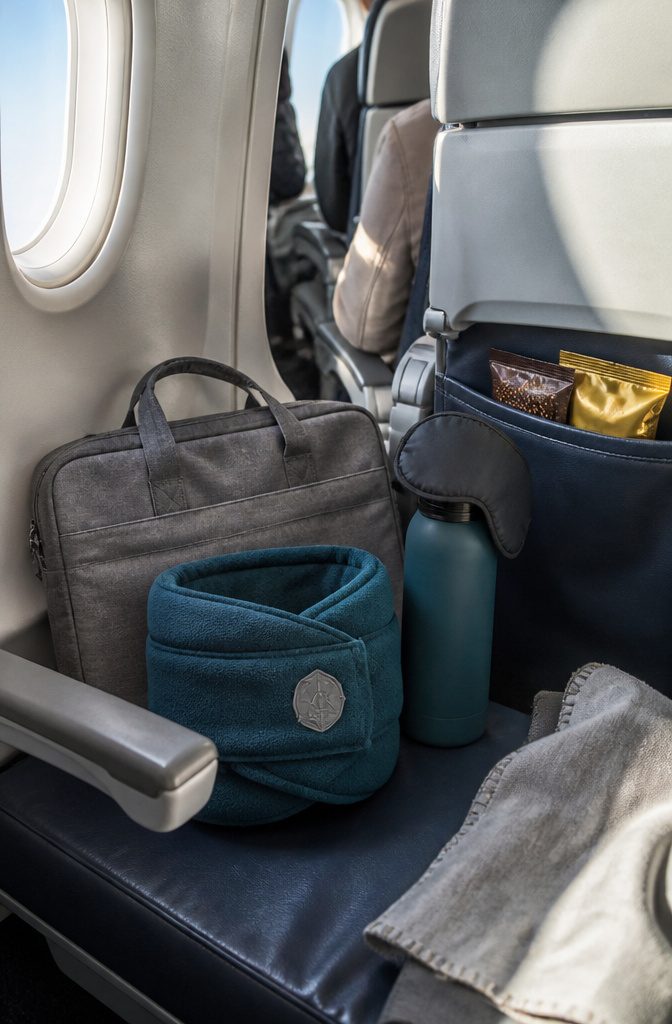
A neck pillow makes the difference between arriving functional and arriving sore, and the TRTL style wins over the inflatable kind for anyone who actually sleeps sitting up.
The source material calls it a neck support rather than a pillow, which tells you what it does: holds your head in place instead of letting it loll.
An eye mask completes the sleep kit; cabin crew will hand one over if you ask, but having your own means the fit is right and the elastic has not been stretched by a hundred previous passengers.
Snacks belong in the seat-back pocket, not in the overhead.
Werther’s candies and a chocolate bar are the specific combination one long-haul traveler packs; I would add something with protein, since airport prices start at $4 for a handful of almonds and only climb from there.
A reusable water bottle is non-negotiable on a plane, where the air runs desert-dry and attendants pass plastic cups in thimbles.
Fill it post-security; a built-in filter is worth the weight if your destination tap water is questionable, but any bottle beats buying disposable at gate prices.
Safety Items
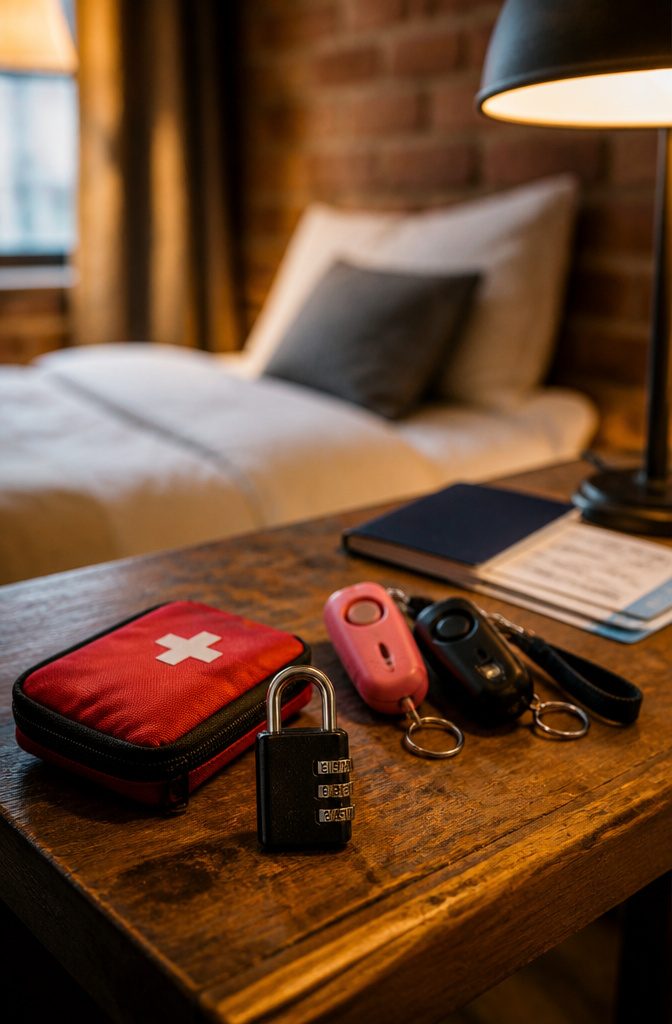
A combination padlock belongs in every bag if hostels are on the itinerary, but the real safety work happens before you leave the room.
Store emergency contacts in two places: a printed card in your wallet and a cloud note you can reach from any browser.
Phones die, phones get stolen, and the number you need at 2 a.m. is the one you cannot remember.
I write my 24-hour travel insurance hotline on the same card as my policy number, then photograph that card and email it to myself.
An AirTag in checked luggage has saved me once already; the airline’s tracker said my bag was still in Frankfurt when the ping put it on a carousel in Chicago.
Personal safety devices divide travelers. A whistle costs nothing and draws attention, but a door wedge buys real sleep in a ground-floor rental with a weak lock.
I carry both and use the wedge more. The power bank belongs here too, not just in electronics: a dead phone is a safety item that failed.
Check your airline’s milliamp-hour limit before you pack it; the cutoff is usually 100Wh, and the better brands print the number on the casing.
Miscellaneous Gear
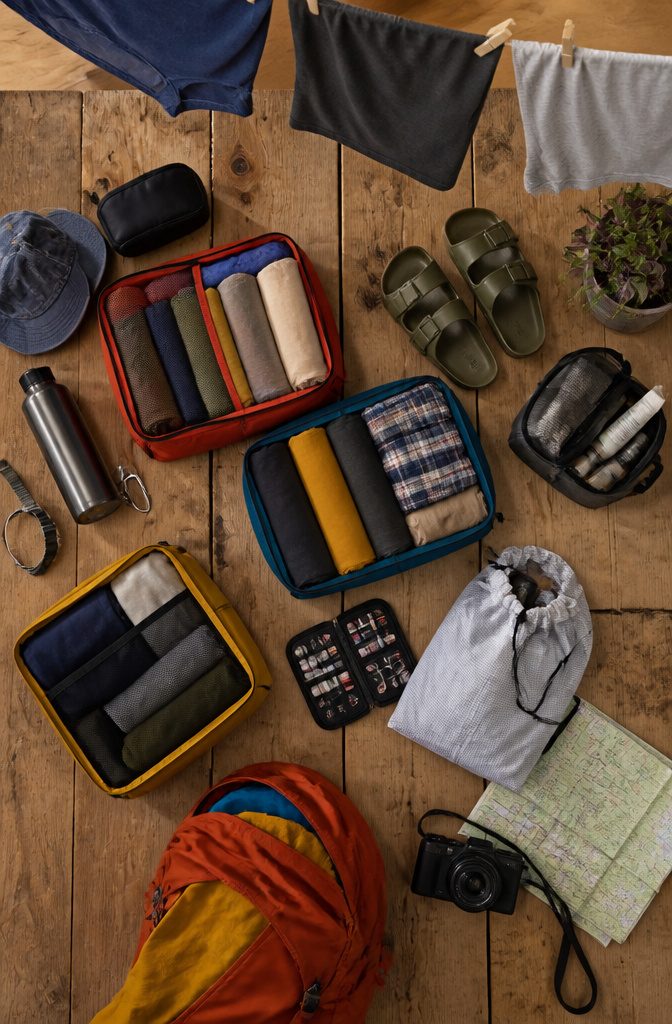
Packing cubes earn their space by turning one bag into several.
I group shirts in one, bottoms in another, and suddenly a single carry-on functions like a dresser with drawers. Compression bags do the same for bulkier items, though I find them overkill for anything under a week.
A small laundry bag keeps worn clothes from contaminating everything clean, which matters more than it sounds when you’re re-wearing pants in humid weather.
The small sewing kit rounds out the category. Missing buttons and popped seams happen, and replacing a shirt mid-trip costs more than the kit weighs.
Sources disagree on whether to pack travel detergent or a sink stopper; I skip both and use hotel shampoo for hand-washing, but a braided clothesline has its fans if you’re stringing it across a bathroom.
These items don’t do anything dramatic. They extend the life of what you already packed, which is why you bothered to pack well.
Packing Light
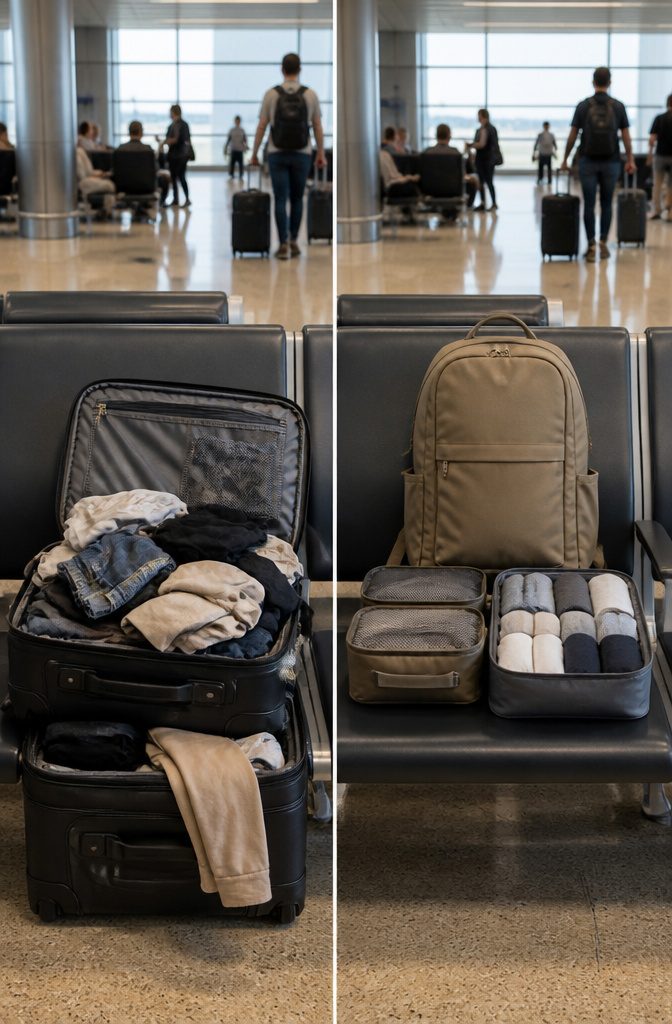
Packing light starts with a simple rule: limit shoes to two or three pairs, wearing the heaviest pair during transit to free up luggage space. Everything else follows from that constraint.
Packing cubes change how you use that space.
Compression cubes compartmentalize clothing by category, tops in one, bottoms in another, so you find items without unpacking the entire bag. They work especially well on longer trips where you need range without bulk.
Rolling clothes rather than folding them saves space and cuts wrinkles.
Heavier items like jeans go on the bottom, lighter fabrics on top, which distributes weight evenly when you’re hauling the bag through terminals. Wrinkle-resistant fabrics make this method practical; stiff cottons that crease when rolled defeat the purpose.
For toiletries, transfer liquids to reusable containers or buy them at your destination.
The weight you shed there offsets what the cubes add. A lightweight, collapsible laundry bag separates dirty clothes and lets you wash mid-trip rather than overpack.
Pre-Departure Checks
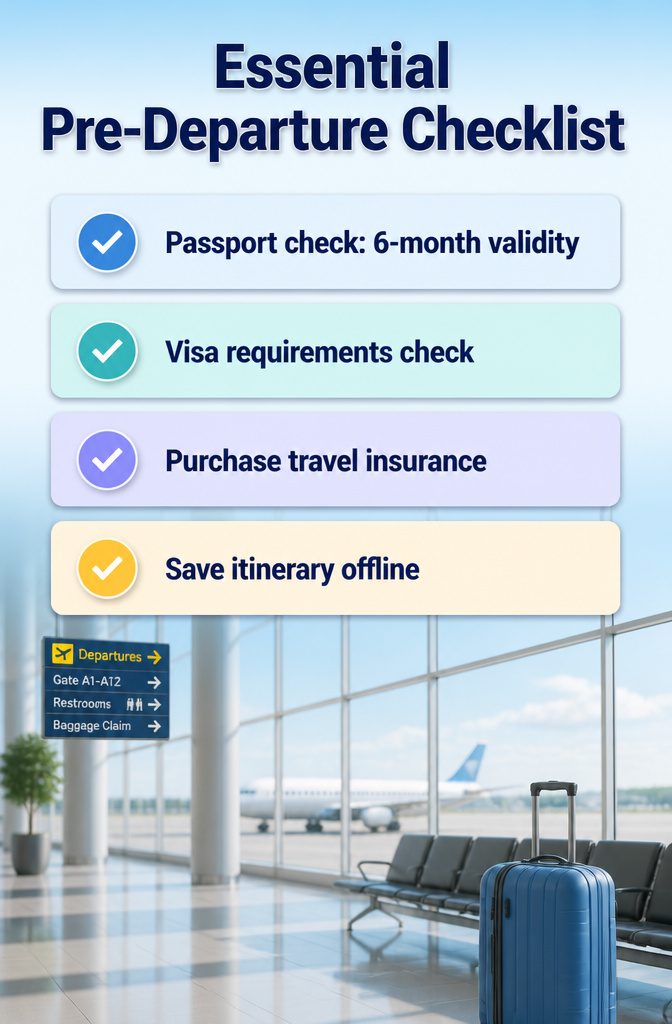
- Pull your passport and check the expiration date against the six-month validity rule many countries enforce; a passport that expires in five months can strand you at check-in even if your trip is only two weeks long.
- Look up whether your destination wants a visa, an electronic travel authorization, or neither; embassy websites and the State Department’s Entry, Exit, and Visa Requirements section carry the current rules, and requirements shift without much warning.
- Buy travel insurance before you book anything else nonrefundable. U.S. health insurance, Medicare included, generally does not cover care abroad, and the government will not pay medical bills or evacuation costs for you. A policy that bundles trip cancellation with emergency medical and medical evacuation coverage handles the scenarios that actually derail trips: a sudden illness, a canceled flight, a lost bag. World Nomads runs about $100–150 for a typical two-week international trip, though your exact cost depends on age and destination. Skip the brochure language and read the exclusions; pre-existing conditions and certain adventure activities often need a rider.
- Save your itinerary, confirmation numbers, and accommodation addresses in an offline note on your phone. Airport Wi-Fi fails exactly when you need to pull up a reservation.
Destination-Specific Additions
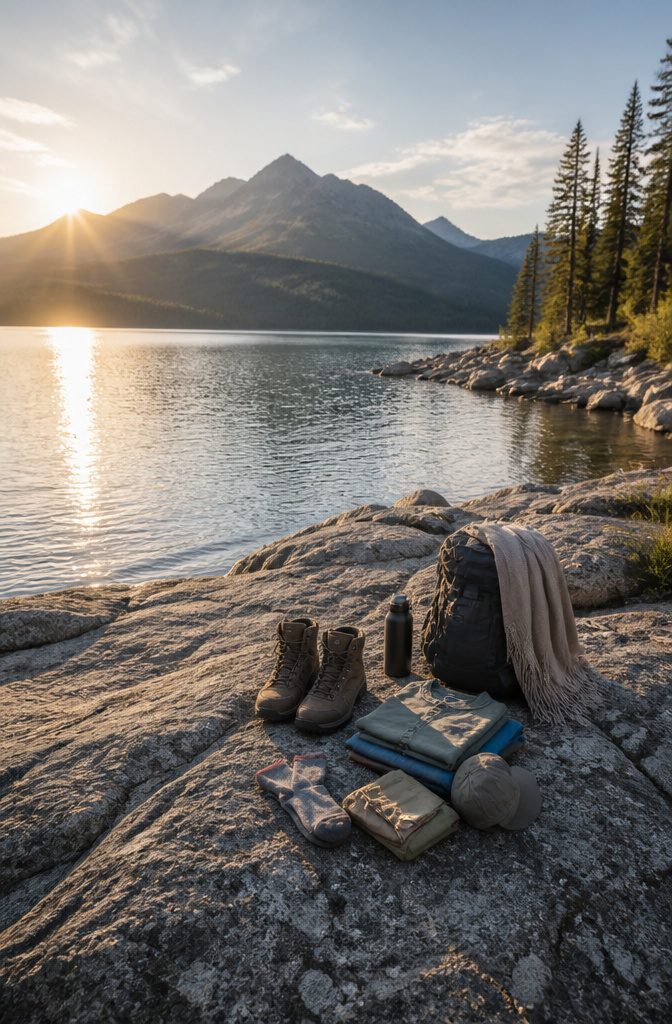
A sturdy pair of hiking boots and quick-drying clothing earn their weight immediately on any outdoor trip, with a day pack sized for snacks and any necessary equipment.
The boots matter most; blisters on mile two turn a trail into an ordeal, and cotton that stays wet will chill you fast at elevation.
Cruises demand their own logic. Formal wear and dress shoes are non-negotiable for the captain’s dinner, while seasickness remedies and a bathing suit see daily use.
The formal night catches first-timers off guard; the dress code is enforced, and the ship’s shop prices reflect the captive audience.
Religious sites require long sleeves and pants that cover shoulders and knees, even in heat that makes shorts tempting.
A lightweight shawl handles multiple contexts: draped over a tank top at a cathedral, or as a sun shield elsewhere. Technical hiking gear has its place, but the same quick-dry fabrics work for modesty layers without adding bulk.
Eco-friendly options show up most naturally in the reusable water bottle and clothing choices.
Synthetic quick-dry fabrics last longer and wash in a hotel sink, cutting the total pieces packed. A raincoat pulls double duty against weather and as a conservative top layer where bare arms would draw attention.
Carry-On Essentials
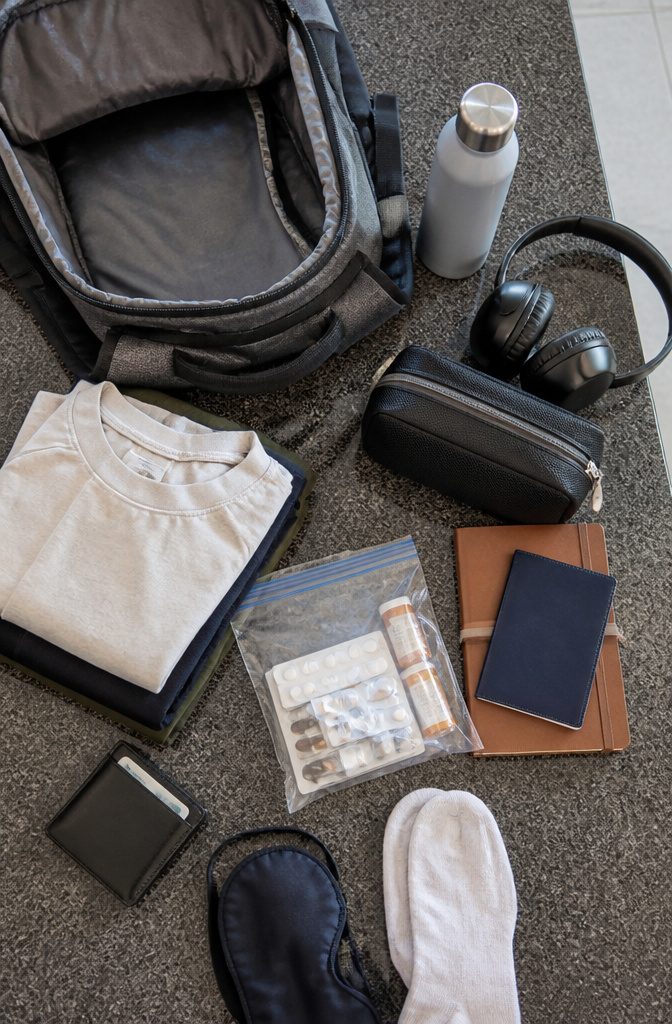
The items in your carry-on are what stand between a lost bag and a ruined trip.
Prescription medications belong here, in original packaging, along with a single change of clothes and the documents you cannot replace quickly: passport, ID, wallet, and a copy of your itinerary.
One approach says pack for comfort on the plane itself, adding a toothbrush, hairbrush, contact lens case, and any valuables you would not trust to the hold.
The other goes harder on survival, keeping phone, laptop, camera, cash, cards, house keys, and glasses with you at all times rather than risking separation from checked luggage.
I land closer to the second camp. A delayed bag is common; a stolen carry-on is not.
The comfort items can be bought or borrowed at your destination, a toothbrush especially, but a missing laptop or a night without your asthma inhaler is the kind of problem that does not wait for baggage claim.
For medications specifically, check current TSA guidelines before you fly; rules on liquids and documentation change, and original packaging is your proof at security.
A small first-aid kit with pain relievers, antihistamines, bandages, and ointment rounds this out without taking much space.
Frequently Asked Questions
What should I pack for international travel?
Pack across eight categories: clothing that layers and limits shoes to two or three pairs, toiletries in 3.4 oz containers for carry-ons, electronics with chargers in your carry-on, travel documents with six-month passport validity, local cash and fee-free cards, comfort items like a neck pillow and reusable water bottle, safety gear including a padlock and emergency contacts, and miscellaneous helpers like packing cubes and a small sewing kit.
How do I pack efficiently for a trip?
Roll clothes instead of folding them, use packing cubes to compartmentalize by category, and wear your heaviest shoes during transit.
Limit shoes to two or three pairs total, put heavier items on the bottom of your bag, and choose wrinkle-resistant fabrics so rolling actually works.
What travel documents do I need?
A passport with at least six months of validity remaining after your travel dates, plus any visa or electronic travel authorization your destination requires.
Carry paper copies of everything kept separate from originals, plus a printed itinerary and travel insurance card with the 24-hour claim line. Some travelers also need an international driving license or diving certification.
What should I include in my carry-on bag?
Prescription medications in original packaging, a single change of clothes, and irreplaceable documents: passport, ID, wallet, and itinerary.
Add your phone, laptop, camera, cash, cards, and glasses rather than risk them in checked luggage. A small first-aid kit with pain relievers and bandages rounds it out without much bulk.
What is the 5 4 3 2 1 rule when packing?
The packing approach it recommends instead limits shoes to two or three pairs, uses packing cubes to organize by clothing category, and rolls garments rather than folding them to save space and cut wrinkles.
What are 10 must-have travel essentials?
Ten items that earn their space: a hoodie or fleece for layering, comfortable walking shoes, travel-sized toiletries, smartphone and USB-C charger, passport with validity checked, $50 in local currency, neck pillow, eye mask, reusable water bottle, and a combination padlock for hostels.
What are 10 items I need for a trip?
Ten practical picks from the checklist: quick-dry clothing, sandals or flip-flops, sunscreen, power bank in carry-on, plug adapters, printed copies of documents, credit card with no foreign transaction fees, money belt or pouch, snacks for the flight, and a small first-aid kit with band-aids and pain relievers.
What is the 3-3-3 rule for travel packing?
The comparable guidance it offers focuses on the 3.4 oz limit for liquids in carry-on toiletries, which reshapes every choice in that category, and on limiting shoes to two or three pairs as the foundational constraint for packing light.





