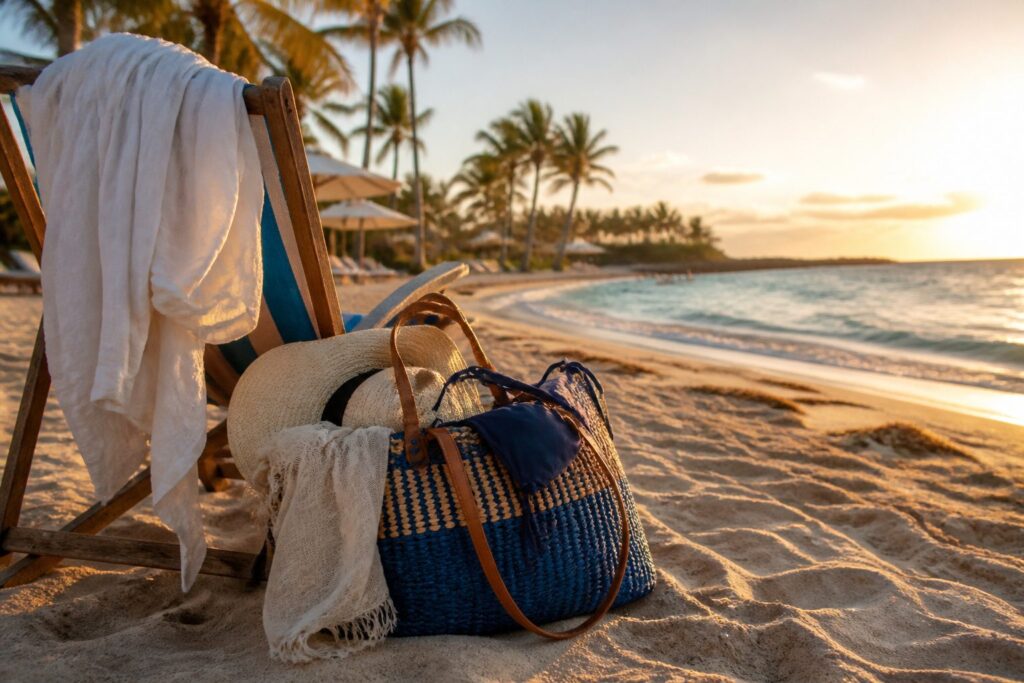
A packing list for Miami starts with the assumption that heat is the main problem, but humidity is what ruins clothes.
That damp swimsuit still wet by morning means two suits, not one, and a cotton cover-up that breathes instead of a synthetic layer that clings.
The concrete detail that changes everything: SPF 50, not 30, because Miami sits closer to the equator than almost anywhere else in the continental U.S., and standard sunscreen washes off in salt water before the afternoon is over.
Swimsuits
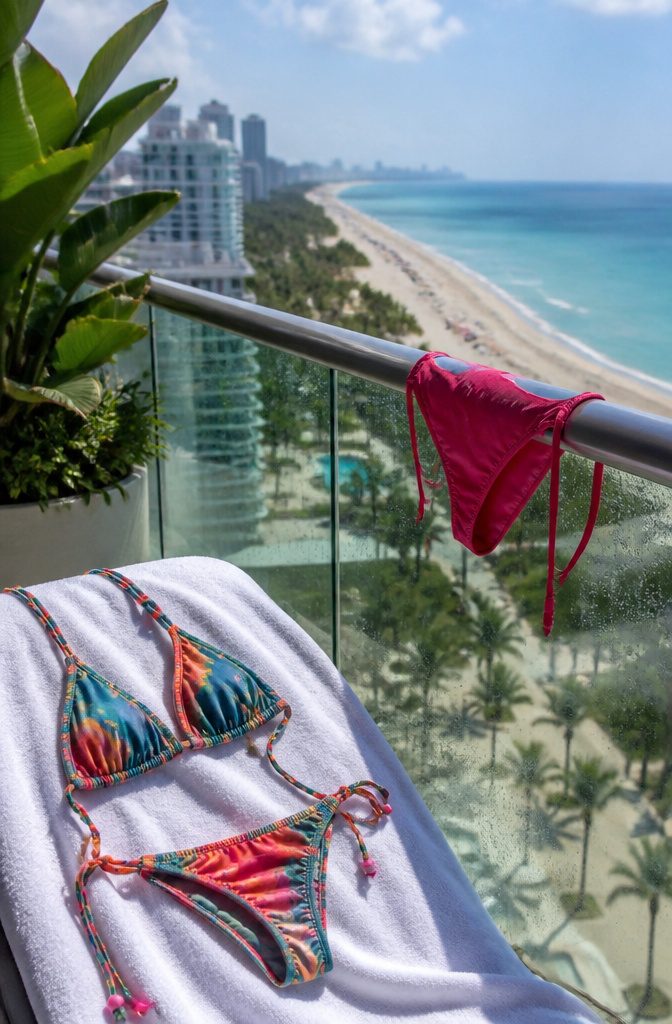
Two swimsuits is the floor for Miami, not the ceiling.
Humidity along that coast runs high enough that a suit hung in a bathroom or balcony can still feel damp the next morning, so one suit drying while the other is worn keeps you from pulling on cold, clingy fabric twice in a day.
The pool at your hotel and the beach you walked to may be separate stops with no real break between, which makes the swap practical rather than optional.
Style matters more than most travelers pack for.
A barely-there bikini works for lounging, but an afternoon that turns into kayaking or a hotel waterslide demands something that stays put through actual movement. I would bring at least one suit built for activity, not just appearance.
Beach Cover-Ups
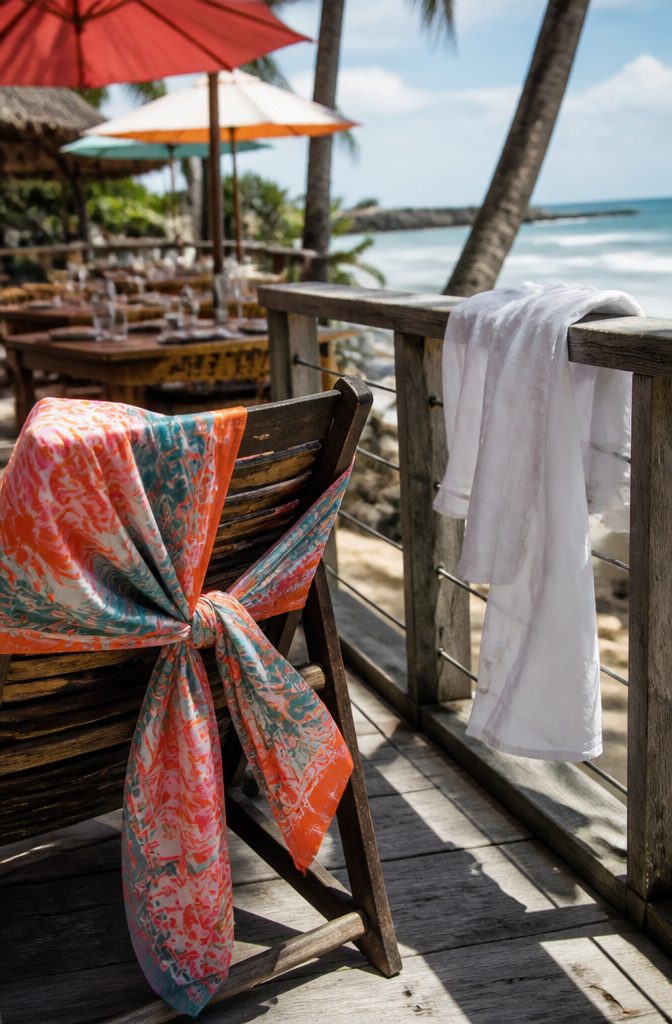
A cover-up does more in Miami than look presentable.
It keeps a wet swimsuit from soaking the seat of a rental car, saves your shoulders during the midday hours when the sun is strongest, and lets you walk straight from the sand into a restaurant without a costume change.
Styles run from a simple sarong wrap to a kaftan, a shirt dress, or even overalls worn open over the suit.
I would skip anything synthetic. Cotton or linen breathes in the humidity that hangs over the city most of the year, and a damp polyester cover-up will feel clammy against your skin within minutes.
A maxi dress or a button-down white shirt pulls double duty here: it covers the suit at the beach, then passes for a real outfit at dinner with sandals and a bag.
The practical win is the sarong or shirt dress you can tie on without leaving your lounge chair.
A romper looks cute in photos, but pulling it off over a wet swimsuit in a public restroom is a chore. Choose the option that goes on and comes off in under ten seconds.
Lightweight Clothing
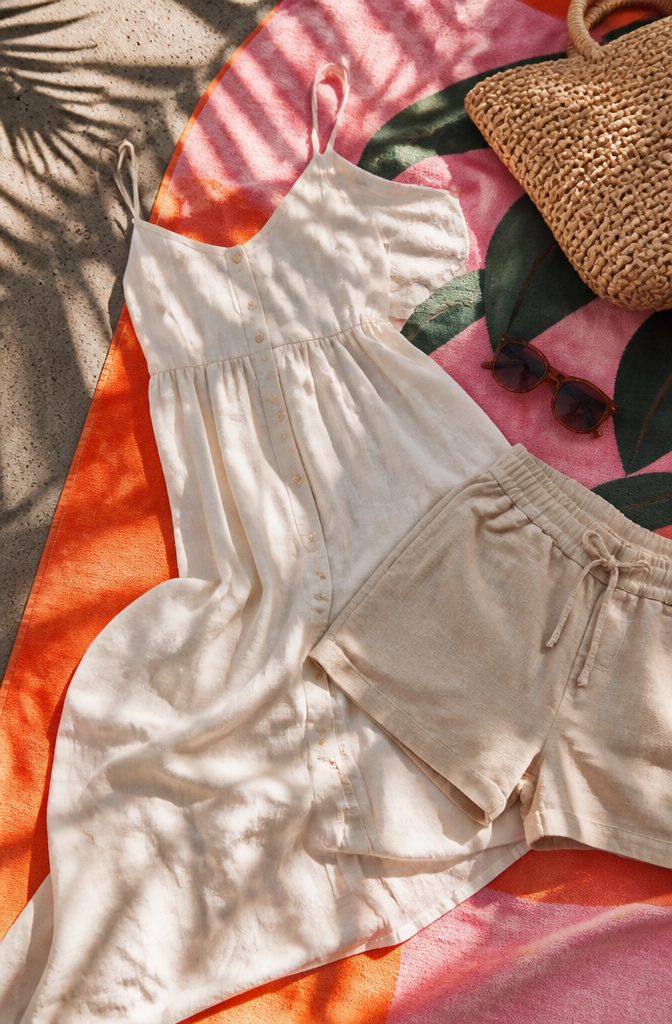
Miami’s 70–90°F heat means nothing if the fabric fights back. Linen and cotton win here because they let sweat evaporate instead of trapping it against your skin.
Synthetic blends that perform fine in dry climates turn clingy and sour within an hour of walking Ocean Drive or waiting in a Wynwood gallery line.
A sundress or loose tank top paired with shorts gives you the air movement you need when humidity pushes the real-feel temperature past the mid-90s.
I pack pieces that mix across outfits: two neutral bottoms, three tops in colors that all work together, one light layer for over-air-conditioned restaurants.
The math is simple. Fewer items, more combinations, and nothing that needs to be "aired out" in the hotel bathroom overnight.
Winter evenings can dip to 63°F, so that one layer earns its space.
But the core of the bag stays the same year-round. Breathable fabric isn’t a preference in Miami; it’s the difference between enjoying the afternoon and counting the minutes until you can change.
Comfortable Shoes
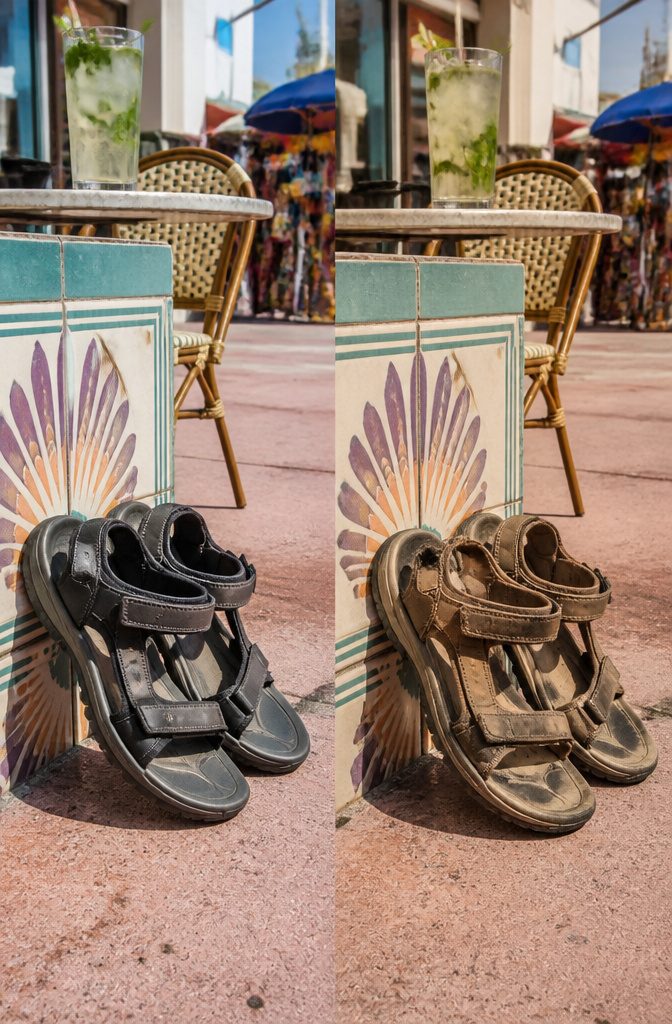
Miami pavement holds heat like a griddle, and the afternoon storms turn sidewalks slick without warning. The three shoes that earn their suitcase space are sandals with real arch support, flip-flops, and one pair of closed-toe walking shoes.
Sandals are the workhorse here, for beach access and the casual miles between cafés in Coconut Grove or Lincoln Road.
Leather or synthetic straps that dry fast and a footbed that does not fold in half when you pick it up: that is the difference between a shoe that survives the trip and one that gets left in the hotel trash.
I would skip anything with a cork sole; it warps and cracks in humidity.
Flip-flops belong in the bag for pool decks, hostel showers, and the moments when you want nothing between you and the sand.
They are not for walking distance. One cheap pair is enough; they are replaceable and they will smell by day four.
The walking shoes matter most for the Art Deco district and Wynwood, where you are on concrete for hours.
Breathable mesh uppers dry faster than leather after rain, and a rubber sole with some grip keeps you upright on wet tiles.
White soles mark up less than you would expect, but the heat will fade anything left on a balcony.
Sunscreen
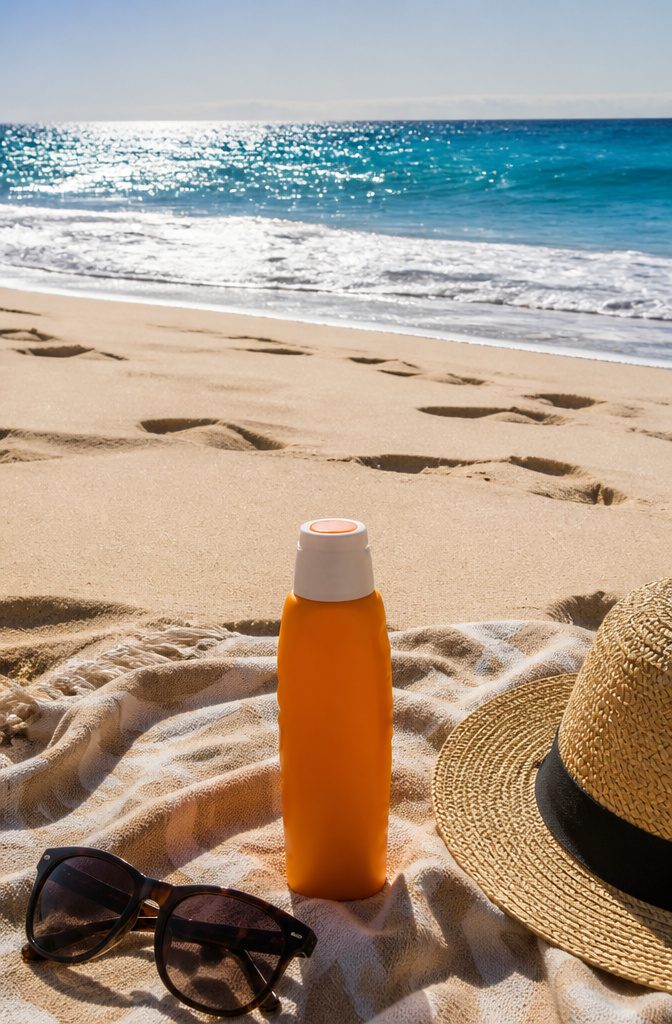
At Miami’s tropical latitude, UV intensity runs higher than most of the continental U.S., which is why I pack SPF 50 or higher rather than settling for the baseline 30.
The difference matters when you’re that much closer to the equator. A water-resistant formula is non-negotiable if you plan to swim; standard sunscreen washes off fast in salt water, and reapplying on wet skin wastes product.
I reapply every two hours, or immediately after toweling off. Buying before you fly saves money.
Airport and hotel gift shops mark sunscreen up sharply, and the selection tends toward generic brands in small tubes. Throw a full-size bottle in your checked bag at home and you’re set for the week without the tourist tax.
Hat
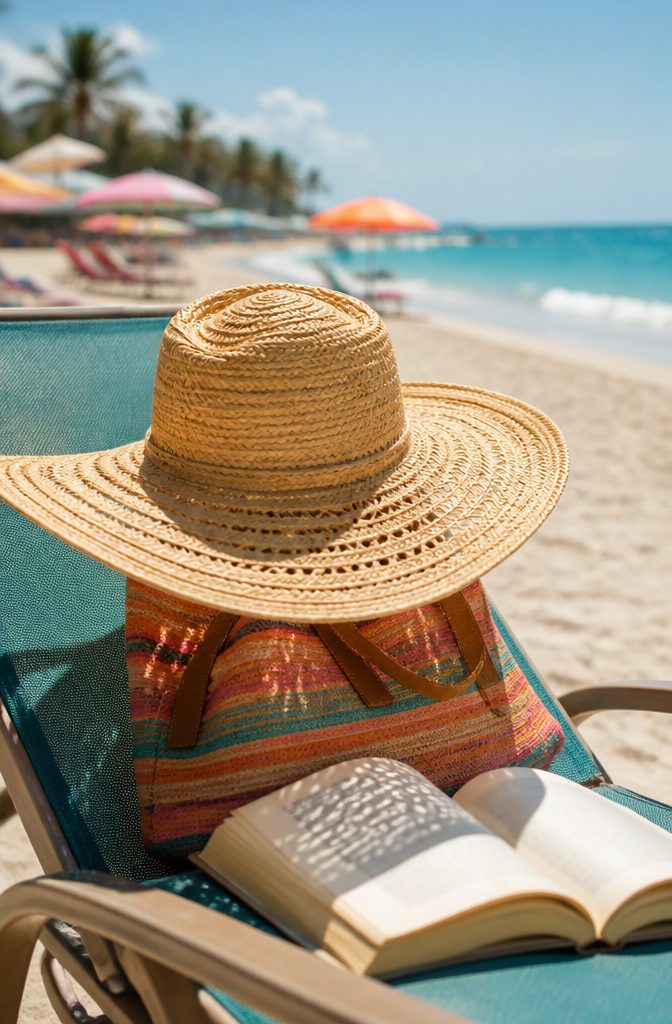
A hat with a three-inch brim or wider actually shields your neck and ears, not just your face.
In Miami, the sun sits lower in the sky than most travelers expect, and light bouncing off the water doubles what hits your skin. Sunscreen washes off with sweat and salt; a brim stays put through a four-hour boat trip.
Packable straw or a soft raffia weave travels best.
Roll it into your carry-on, let it spring back when you land. The stiff Panama style looks sharp for evening, but creases permanently if crushed.
For mornings on South Beach or an afternoon charter, the rollable one wins. It weighs almost nothing and costs you zero reapplication time.
Style points matter less than coverage here.
A baseball cap leaves your ears and the back of your neck open to reflected glare off the Atlantic. That gap is where people burn without noticing, sitting at the waterline with a book.
Toiletries
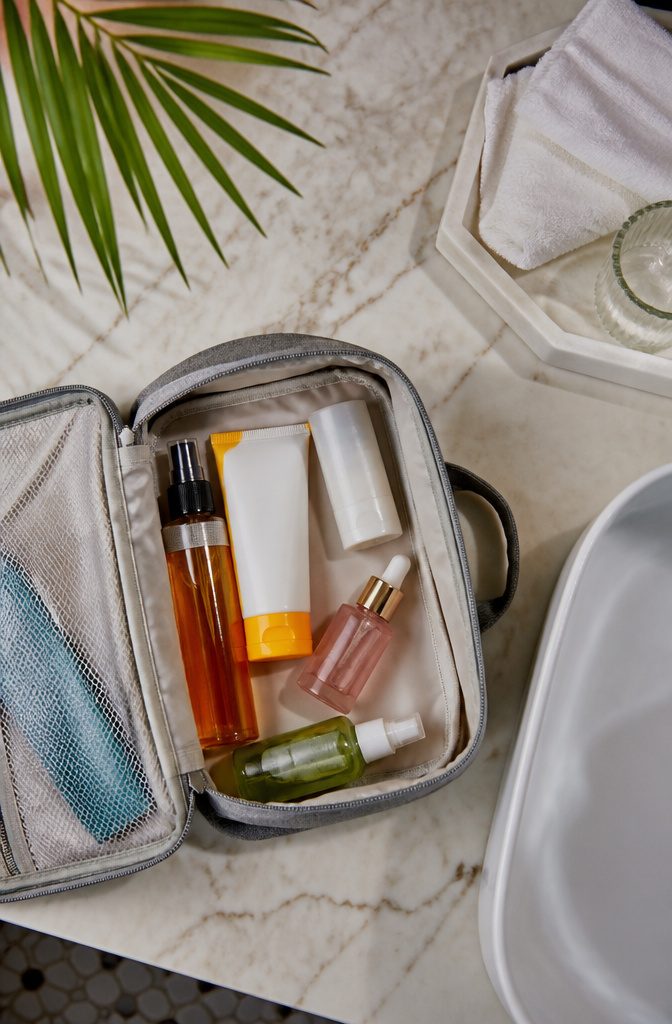
A Miami toiletries kit needs more than sunscreen to hold up against the salt, sun, and insects.
Travel-size bottles under 3.4 oz are non-negotiable for carry-on only trips; the TSA quart bag rule still applies, and buying full-size replacements at Miami tourist shops burns money better spent on dinner.
Even with a checked bag, travel sizes matter because hotel shampoo quality swings wildly from decent to dish-detergent harsh, and your hair pays the price after a few days of salt air exposure.
Bug spray belongs in the bag regardless of where you stay.
Mosquitoes concentrate near the water, and Florida’s bug population outnumbers its beaches. An anti-itch cream like cortisone or Benadryl saves a trip to the pharmacy when a bite swells anyway.
Moisturizer matters more here than most beach trips; salt and sun strip skin fast, and unscented lotion doubles as after-sun relief without competing with your perfume.
Prescriptions stay in original bottles, and EpiPens or daily medications travel outside the quart bag entirely.
Pack an extra day’s worth in a separate pocket. If you wear contacts, bring travel-size solution; the little hotel convenience bottles cost triple what they do at home.
Reusable Water Bottle
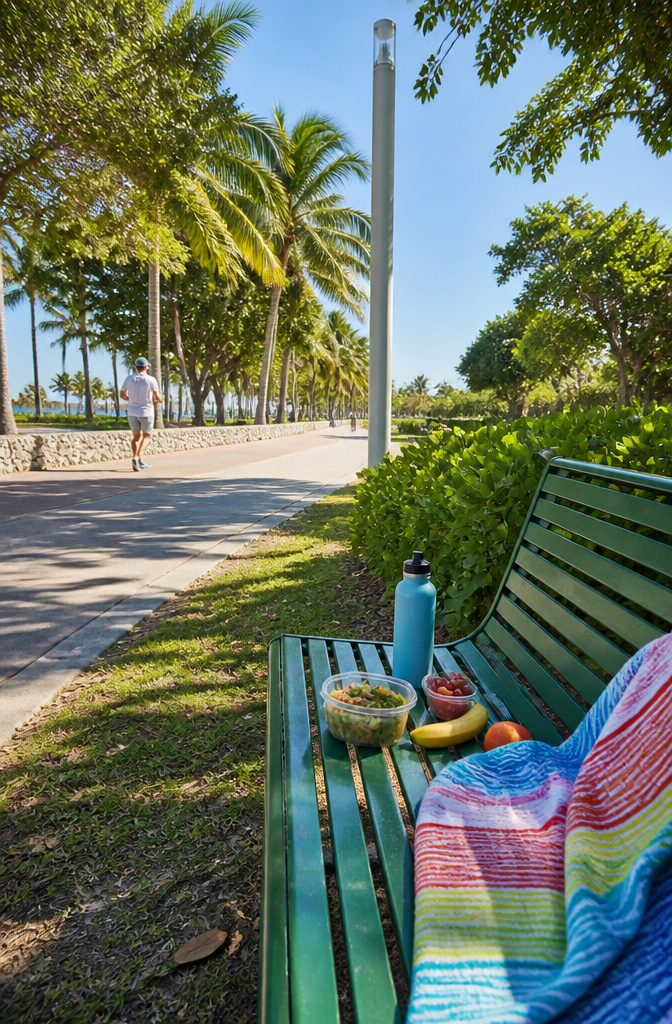
Miami humidity pulls water from you faster than you notice, and the heat makes a cold drink feel necessary, not nice.
A reusable water bottle with insulation solves both problems: it keeps refills actually cool instead of turning lukewarm in twenty minutes, and it removes the need to hunt down overpriced bottled water at every stop.
Filling stations have become standard at most hotels and major attractions, so carrying your own cuts daily costs without adding hassle.
For a multi-day trip, those savings add up to real money, and the environmental trade-off is obvious. I would not pack anything without double-wall insulation; single-wall metal or plastic bottles surrender to the heat before you’ve finished half.
Portable Charger
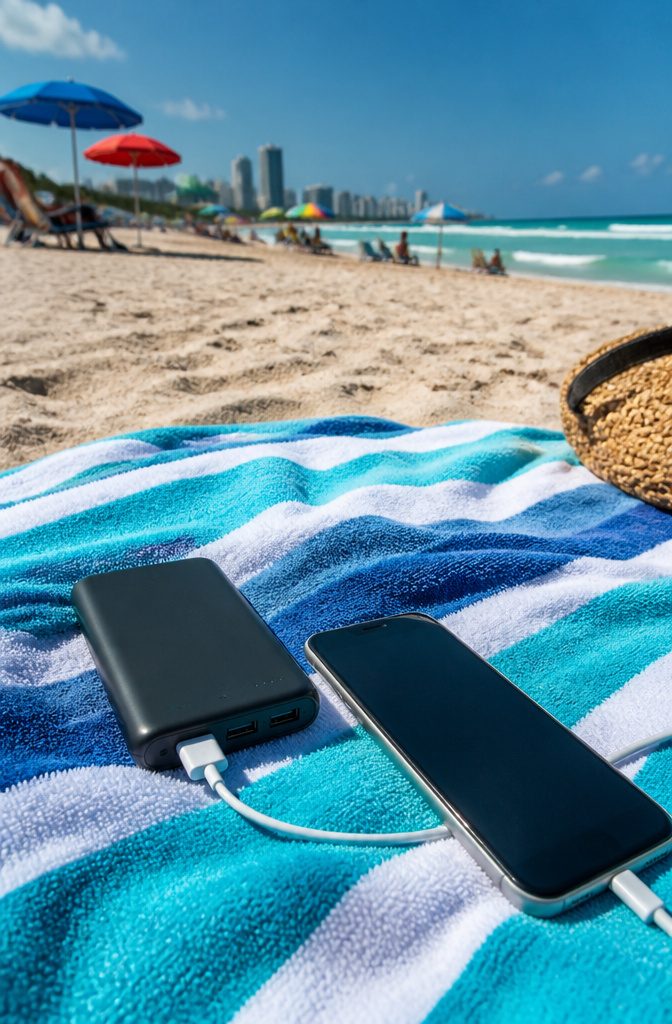
Phone battery life in Miami disappears faster than most travelers expect. GPS navigation for walking the Design District or finding your way to Wynwood Walls runs constantly, and the camera stays open for art deco details and pastelito close-ups.
Heat compounds the drain; lithium-ion cells lose efficiency above 80°F, which Miami clears by mid-morning most months. A full day outdoors, hopping from Little Havana to South Beach with no guaranteed outlet, turns a 20% afternoon battery into a real problem.
A 10,000 mAh pack holds enough for one complete recharge of most phones, with a little cushion for the second wind you’ll need after sunset.
Smaller lipstick-size chargers look tidy in a pocket but often top out around 3,000 mAh, barely half a charge when you actually need it.
A 10,000 mAh portable charger adds roughly half a pound to your day bag, so decide if that weight is worth the charge. For me, that beats the anxiety of hunting a coffee shop with open outlets during prime beach hours.
Bug Spray
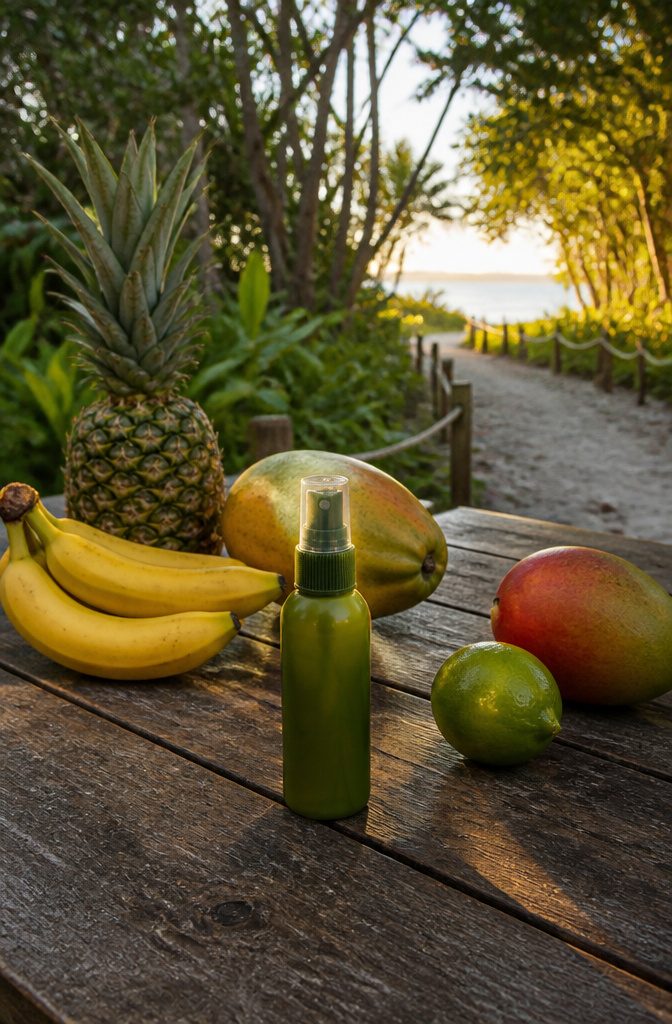
Bug spray matters most in Miami during the early morning and evening hours, especially anywhere near standing water.
The summer rainy season, May through September, pushes mosquito activity to its peak. Even winter mornings can surprise you if you’re walking through vegetated areas like Fairchild Tropical Garden, where dense foliage traps moisture.
Some beaches bring a problem standard repellents barely touch: no-see-ums. These biting midges pass right through the mesh of most beach tents and leave welts that itch for days.
A repellent with picaridin at 20% concentration handles them better than the typical DEET formulas most travelers already own, though nothing blocks them completely.
I keep a small spray bottle in my daypack from June through October and reapply before any outdoor dinner seating.
Bug spray leaves residue on your skin that feels worse in Miami’s humidity than it does in drier climates. For a short trip, a 3-ounce travel size lasts the week.
Light Jacket or Sweater
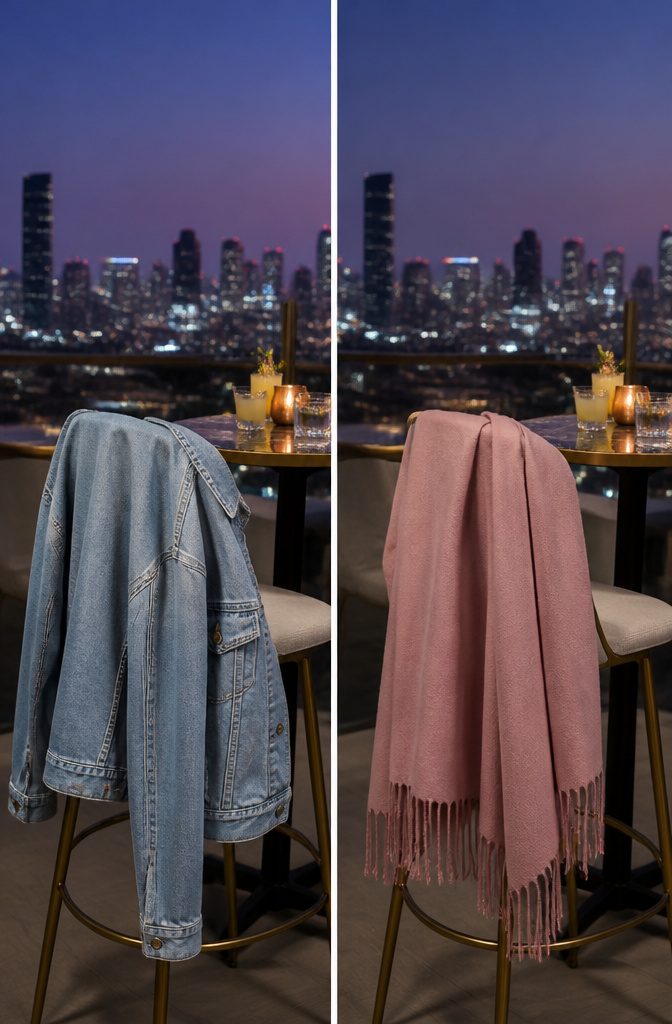
Restaurant thermostats in Miami sit at about 65°F, and that single detail has ruined more dinners than rain ever has. A sleeveless dress that felt perfect on Ocean Drive turns into a survival item the moment the AC kicks in.
The same layer saves you after dark from November through April, when evening temperatures drop to 70°F or lower, and on any boat ride where wind off the water adds chill you will not feel on shore.
A packable jacket wins here, and the material matters more than the brand. Nylon shells or a lightweight denim layer fold small enough to disappear into a daypack until you need them.
Skip anything that needs its own seat at the table; you want a piece you forget you are carrying until the restaurant vents start blowing.
Daypack
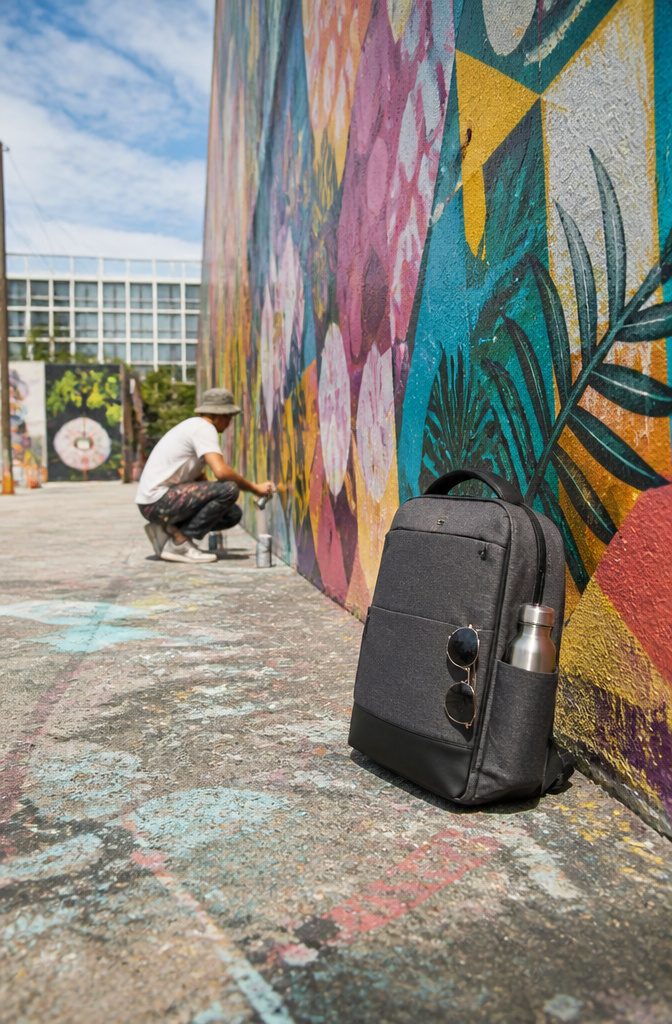
A theft-resistant daypack beats any beach bag once you leave the sand.
Urban Miami means hands on sunscreen, a water bottle, that light jacket for aggressive restaurant air conditioning, and a portable charger for mapping your way between Wynwood and Little Havana.
Beach bags leave everything exposed on a bus or café chair, and their open tops make easy targets in tourist-heavy spots.
Pack a daypack light enough that you will actually carry it. Some travelers add a packable rain jacket for summer afternoons; others get by with just the light layer for evening chill.
My call: the rain layer stays in the daypack June through September, when southern Florida sees almost daily afternoon storms.
The dry change of clothes and packable towel that some lists include belong back at the hotel unless you’re beach-hopping all day.
Keep valuables in a locked or zippered interior pocket, not the outer pouch where a quick hand reaches first.
Miami’s Tropical Climate
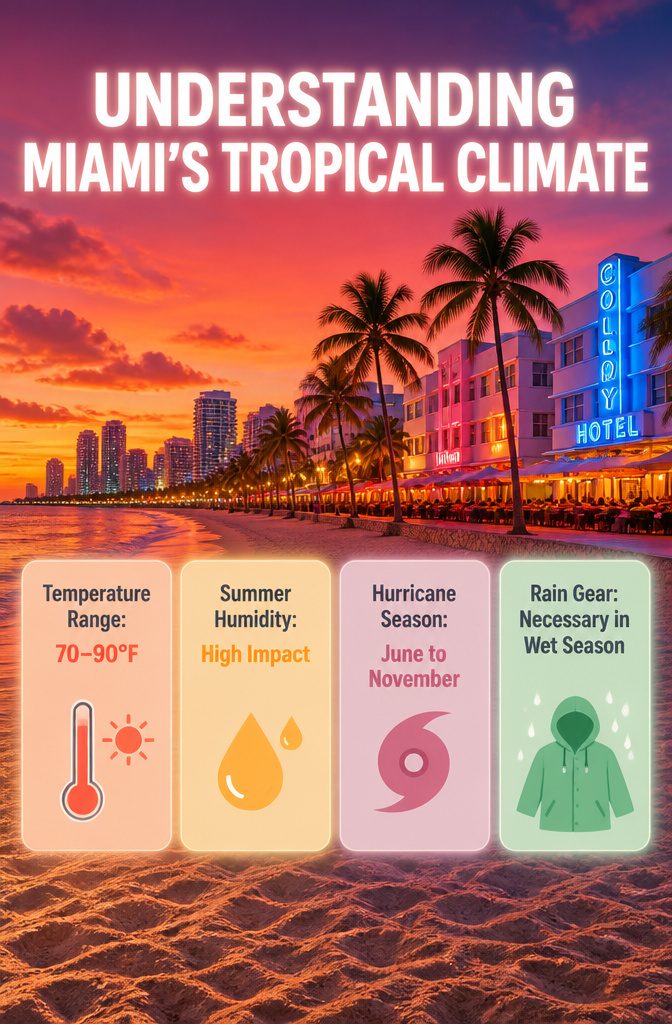
Miami sits in a tropical zone where temperatures rarely stray far from the 70–90°F band, winter lows bottoming out around 63°F in January and summer highs pushing into the mid-90s.
The humidity is the part that reshapes your bag. From April through October, and especially June to September, the moisture in the air makes those mid-80s afternoons feel much heavier than the number suggests.
Breathable fabrics are not a suggestion here; they are the difference between enjoying Wynwood and wishing you had stayed poolside.
June through November is hurricane season, a window that should change how you book, not just what you pack.
Travel insurance purchased before a storm is named is the standard move, and a loose contingency day or two built into the itinerary keeps a weather delay from unraveling the whole trip.
The wet season overlaps heavily with those months, with May through September delivering the bulk of the rain.
A compact poncho or packable rain shell earns its weight against a sudden afternoon soaking that can roll in off the Atlantic without much warning.
Dry season, mid-December through mid-April, is the easier half: milder, drier, and the stretch when most travelers choose to visit.
Even then, the humidity does not fully disappear, and the sun stays strong enough that a hat and sunscreen remain daily equipment.
Daytime Versus Nighttime Dress
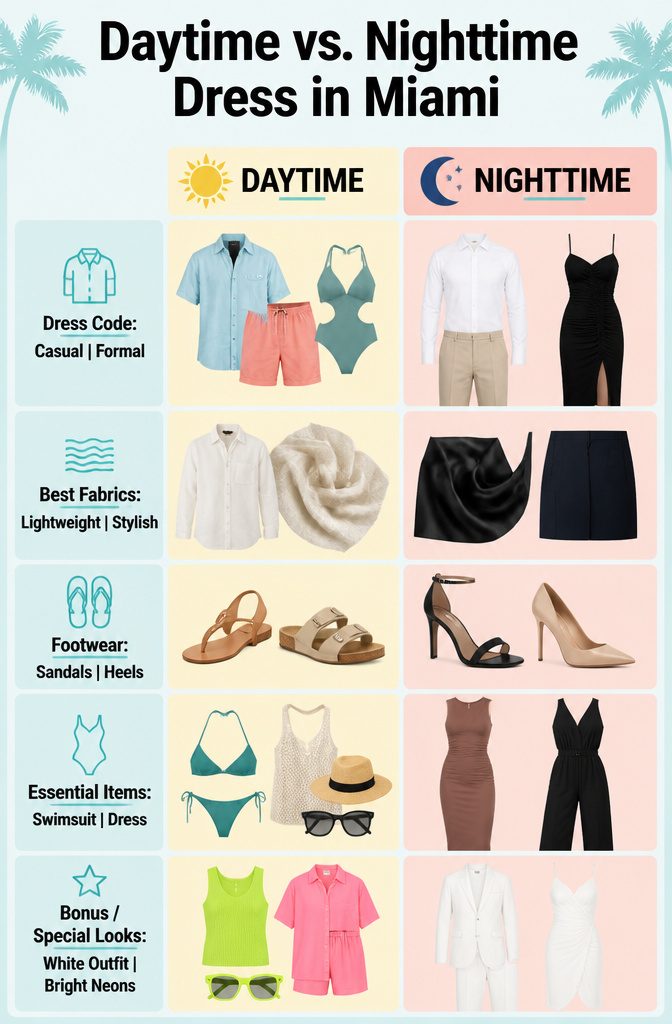
Miami’s daytime heat demands lightweight, breezy fabrics that keep you comfortable from the beach to Wynwood Walls. Sundresses, swimsuits, and sandals handle most hours, but athletic wear, shorts, and tennis shoes will get you turned away at night.
Most clubs and upscale restaurants enforce dress codes that forbid beachwear, ripped jeans, and hats after dark. Men need collared shirts and slacks; women should pack a form-fitting dress, a nice jumpsuit, or a two-piece skirt set with heels.
The bridge is simple: a crisp linen shirt that works over a swimsuit by day and tucks into trousers for dinner, or a midi dress that handles gallery walks and club lines alike.
One white outfit earns its spot if you hit a "white party," though bright neons fit the usual scene.
Toiletries Essentials
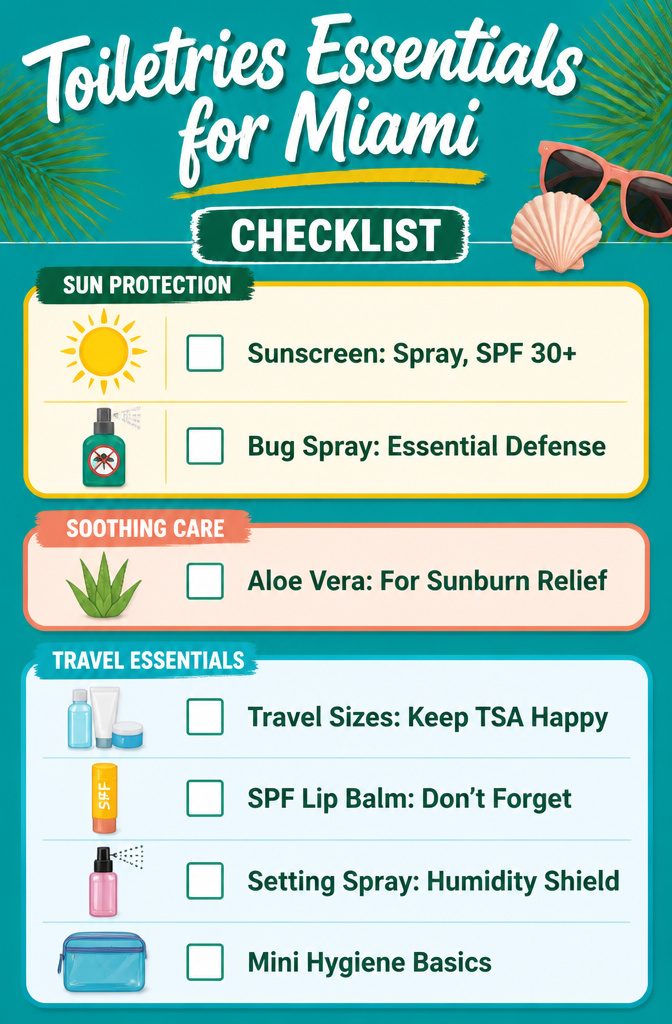
Sunscreen and bug spray are the two items I never risk finding at a hotel in Miami. The sun stays intense year-round, and mosquitoes cluster thick near the water.
A sport sunscreen in spray form wins over lotion here: it dries fast, resists water, and re-applies easily every two hours without the greasy film that makes you wait before swimming.
For your face, a separate formula designed for that skin keeps irritation down, and SPF 30 or higher is the floor, not the suggestion.
Bug spray matters just as much.
The mosquitoes are persistent enough that skipping it means bites, not chance. I pack both in travel size.
Hotel toiletries are unpredictable: a given property might stock shampoo, but sunscreen and repellent are gaps you cannot assume away. Aloe belongs in the kit too, for the near-certainty of some burn despite best efforts.
Travel sizes keep TSA happy and leave room for the basics: SPF lip balm, the setting spray that holds makeup against humidity, and your ordinary hygiene items in miniature form.
Packing Light for Miami Heat
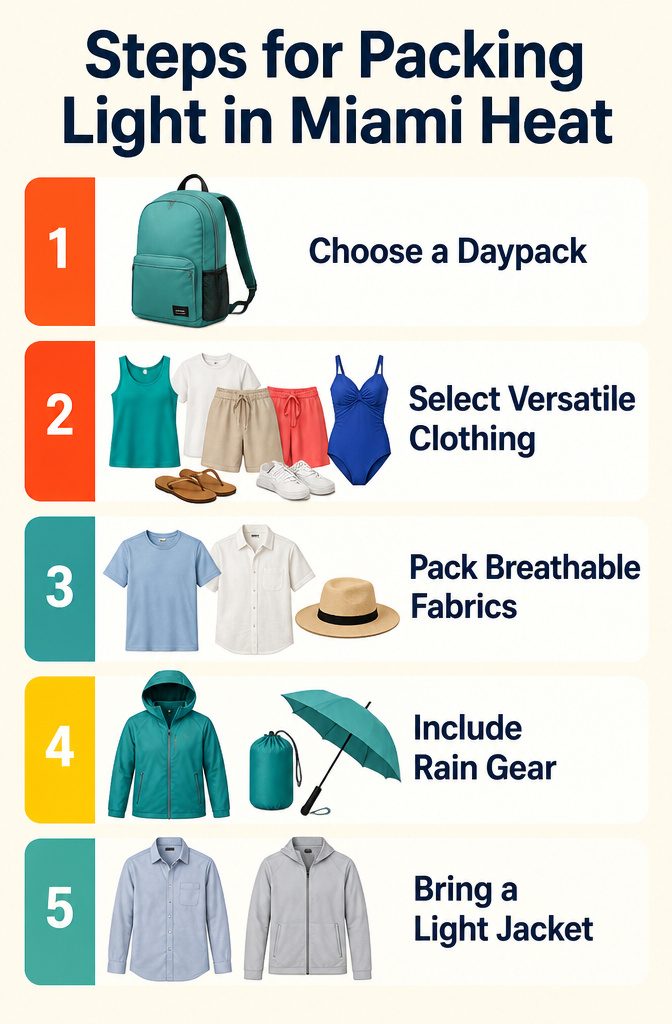
A daypack beats multiple bags for Miami’s afternoon rain and sun shifts. One 20-liter pack holds the packable rain jacket, dry change of clothes, and sarong the afternoon thunderstorms make necessary, plus sunscreen and aloe gel for the recovery after.
Versatile pieces cut the clothing pile fast. Three to five breathable tanks or tees pair with two to three shorts or skirts for daytime, then dress up with the one or two nightlife outfits for South Beach.
The same flip-flops work for beach and pool; sturdy shoes handle the walking that swollen feet from heat and drinks make painful by day’s end. Two swimsuits rotate so one dries while the other wears.
Fabric choice matters more in Miami than most U.S. cities. Breathable, loose-fitting pieces handle humidity that pushes summer highs into the mid-80s to 90s and makes those temperatures feel hotter still.
A single long-sleeve shirt and one sweater or light jacket cover January lows of 63 degrees and the air conditioning that runs hard indoors.
Packing light for Miami heat means you will look less styled than the Instagram crowd. Comfortable beats supermodel in heat this thick, and the walking and water time mean practical wins.
Frequently Asked Questions
What should I pack for a trip to Miami?
Pack two swimsuits so one dries while you wear the other, lightweight linen and cotton clothing, sandals with real arch support, flip-flops, one pair of closed-toe walking shoes, SPF 50 or higher water-resistant sunscreen, a hat with at least a 3-inch brim, bug spray, a packable light jacket, and a theft-resistant daypack.
Miami’s humidity and heat make breathable fabrics and rotation items essential rather than optional.
How should I dress for Miami’s nightlife?
Dress codes at most clubs and upscale restaurants forbid athletic wear, shorts, beachwear, ripped jeans, tennis shoes, and hats after dark.
Men need a collared shirt and slacks; women should bring a form-fitting dress, a nice jumpsuit, or a two-piece skirt set with heels.
One white outfit earns its spot if you hit a "white party," though bright neons fit the usual scene.
What are the best toiletries to bring to Miami?
Pack sunscreen SPF 50 or higher, bug spray with picaridin at 20% concentration for no-see-ums, aloe gel for after-sun relief, and unscented moisturizer to counter salt and sun damage.
Bring travel sizes under 3.4 oz for carry-on compliance, plus an anti-itch cream like cortisone. Prescriptions stay in original bottles, with an extra day’s supply in a separate pocket.
What to wear in Miami, Florida?
Daytime calls for sundresses, loose tank tops, shorts, and breathable fabrics like linen and cotton that let sweat evaporate.
Nighttime demands dressier outfits: no athletic wear or beachwear at clubs and upscale restaurants. A midi dress or crisp linen shirt pulls double duty, working over a swimsuit by day and tucking into trousers for dinner.
What is the 5-4-3-2-1 rule for packing?
For Miami specifically, the practical math runs differently: three to five breathable tops, two to three shorts or skirts, one or two nightlife outfits, two swimsuits, three shoes, and one light layer.
Versatile pieces that mix across outfits matter more than a fixed count.
How much should I bring to Miami for 4 days?
It does note that airport and hotel gift shops mark up sunscreen sharply, that filling stations at hotels and attractions let a reusable water bottle cut daily costs, and that carrying your own toiletries in travel sizes avoids the "tourist tax" on replacements.
How many days are enough to visit Miami?
It does suggest building a loose contingency day or two into your itinerary during hurricane season (June through November), so a weather delay does not unravel the whole trip.





